
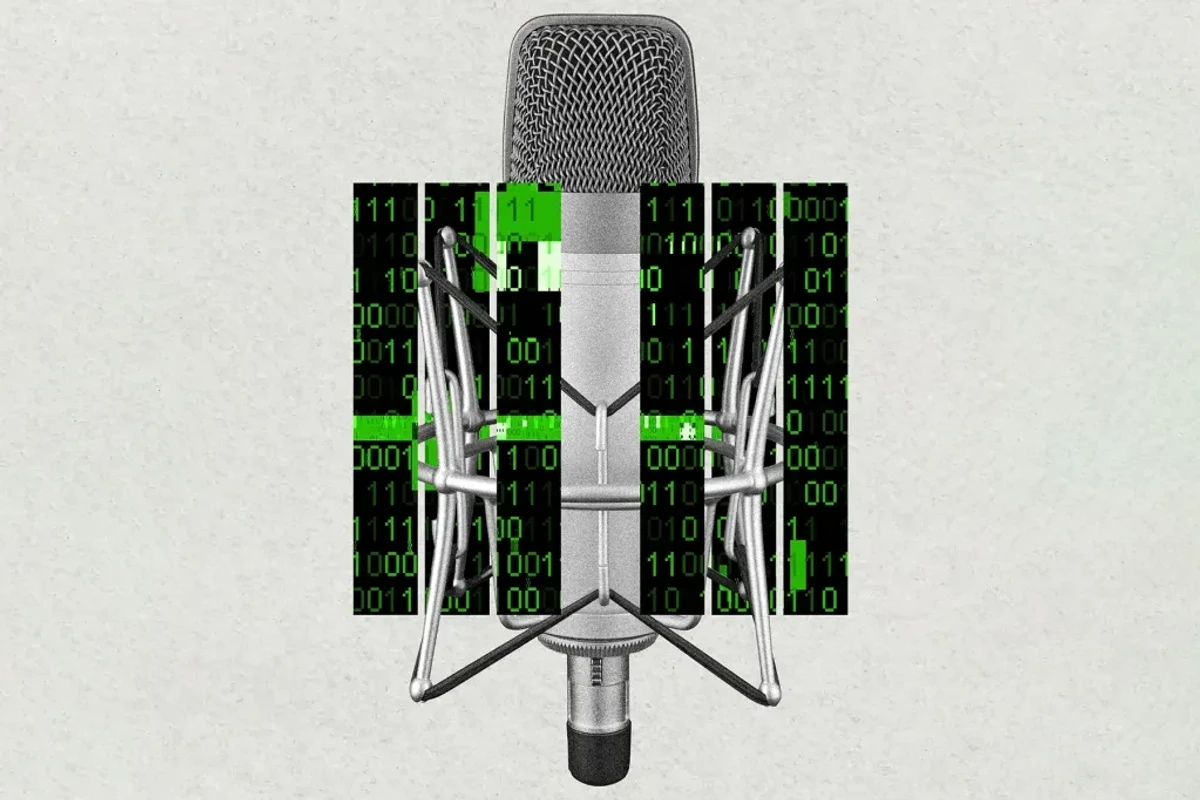

“It’s a really bad word in some circles,” says Lumineers producer David Baron. “I know people who hate AI with a passion, but wouldn’t say it out loud.”
“People don’t really admit to what extent they’re using it ,” says songwriter Michelle Lewis. She describes the atmosphere around AI with her peers as, “Don’t ask, don’t tell.”
The CEO of Suno, Mikey Shulman, recently described AI use as “the Ozempic of the music industry — everybody is on it and nobody wants to talk about it.”
It’s a fraught, almost pregnant moment in the music industry with AI. Baron admits that there can be a “social penalty” around using it. Teddy Swims experienced a version of that in November when he called AI music tools “truly amazing” — and faced a fan backlash online. At the same time, you don’t see the same level of public uproar from artists and industry people that we saw just a couple of years ago in the wake of the first shockingly convincing AI artist clones, like the Drake-Weeknd simulacrum “Heart on My Sleeve.” “No one wants to be left behind, or come across as old-school,” says Lewis, who has written songs for Cher, Hillary Duff, and others, and co-founded the nonprofit advocacy organization Songwriters of North America.
Mostly behind closed doors, AI-powered tools are causing profound shifts in how music is being made at all levels of the industry. It’s found a place in the studios and digital audio workstations of many of the biggest producers and songwriters in the world. Lauren Christy of the Matrix, who has written for everybody from Avril Lavigne and Britney Spears to Liz Phair, says, “The train has left the station.”
How much AI-assisted music is already on the Billboard charts? Baron hasn’t himself seen artists or producers submit fully or partly AI-generated music to labels, but says, “I guarantee that’s happened.” “We don’t have the detection software, really, that’s effective yet,” says Lewis. “So, if you can’t tell, then how can you enforce it?” The industry is essentially relying on the honor system. Speaking about a survey of music producers by the audio-tech company Sonarworks, the CEO reported “many anecdotes about artists submitting AI-generated songs as their own, and labels not being able to detect them.”
For the most part, professionals aren’t asking Suno for full songs and uploading them onto Spotify. But Jay-Z’s longtime producer, DJ, and engineer, Young Guru, says it’s become common for hip-hop producers to make funk and soul samples out of AI, rather than license original music or hire musicians. Guru guesses that “more than half” of sample-based hip-hop is being made this way now. He still pays for samples or hires musicians to interpolate them, but producers who don’t have the budgets or inclination now have a shortcut. “They’re getting really good at prompting now,” he says. “Where before it was just ‘Give me soulful 1960s whatever,’ now it’s ‘Give me 1960s music as if it was recorded in Motown and this person wrote it,’ or ‘Give me 1970s music as if it was recorded at Stax if this person wrote it and this person played bass.’”
In a recent survey of more than 1,100 producers, engineers, and songwriters by Sonarworks, seven out of 10 respondents said they were at least occasionally experimenting with AI tools, and one out of five were regular users. Most of them are using specific tools for narrow, time-saving tasks, such as restoring audio, isolating instruments and vocals within songs (a.k.a. stem separation), and mastering records. Baron says stem separation is “phenomenal”: “Last night, I isolated a vocal, and it sounded like it was recorded in a pristine studio by itself — something that was not possible, like, even two to three years ago,” he says. “That’s a humongous change.” Matching the sonic feel of another record, something that might have taken hours or days before, can now be done in minutes. “I can take an album that I love the way it’s mixed,” says Guru, “say, Dr. Dre’s 2001, pick a song that I want my mix to be tonally like, and apply that tone to my mix.”
Using AI to fix vocals, or even layer in AI-generated vocals, is something artists and producers are split on. “I’ve heard of people using AI vocals on big records to flesh out the backgrounds,” says Christy. She doesn’t use AI vocals on her own finished songs, but has been impressed by the quality of the voices. “The AI singing robots have swag and land right behind the backbeat,” she says. “One of the most amazing singers I work with told me, ‘I hate this robot. She’s singing it better than I am .’” Swims talked about fixing stray words on a song with AI while he was in Australia, which saved him “going [to] the studio and doing the line 15 times and spending time and money and effort.”
Charlie Puth used a tool called Replay to quickly try out ideas for his upcoming album, Whatever’s Clever. “There’s a setting [that makes] a mono vocal sound like eight to 10 people singing,” he told Rolling Stone recently. “I’m gonna use that to see if I even want the choir sound on there. And then we take it off and replace it with a real choir.
“That’s the correct way of using AI,” he said. But he draws the line at using generative-AI on a finished track: “Making a song, and then typing in ‘Make this sound different,’ and it’s spitting out a completely different production with stems is nauseating.”
Producer Nathan Chapman, who has worked with Taylor Swift, Keith Urban, and many others, hasn’t used AI for any vocals or instrumentation, but has gotten requests to change lyrics with it. “I said no, because I hadn’t learned how to do it yet. But it’s the artist’s call,” says Chapman. Still: “I would just rather have them sing it again.”
Songwriters in Nashville and Los Angeles will use tools like Suno to turn lyrics and chords into fully arranged demos that they can shop to artists and labels. “In private, songwriters are saying, ‘It’s kind of awesome,’” says Lewis. “You don’t have to split your copyright; you can write by yourself; and you don’t have to pay a producer. For a lot of songwriters it’s been very empowering.”
“It can make it a more fluid process,” says Lewis. Christy says she was recently texted by a “big star” she works with, asking if she had any songs for them. She was able to reply immediately with a demo. “All the melodies, lyrics, and chords [were] mine,” she says. The artist said on the spot that she wanted to record it. “I was like, ‘Whoa — that just saved me days.’”
OF COURSE, FOR every task that AI streamlines, there might be someone on the other end who isn’t paid anymore: a demo musician or producer, an assistant engineer who helps with mixes, a studio owner renting time, maybe a Seventies songwriter living off of licensing fees. Nashville native Chapman says he’s hopeful that the doors AI opens to amateurs will lead to a boom for musicians and studio owners down the road. But for now, “there are less sessions happening,” he says. “It’s hurting the demo community.”
“I work in the children’s-animation space,” says Lewis. “That’s kind of low-hanging fruit for being replaced by AI.” She says she is still getting jobs, but overall, “no one’s working.” Stock music, or production music — music licensed by companies for TV, radio, and other media — is “toast,” says Lewis. Some large companies, like Disney, won’t use AI music because of potential copyright issues, but smaller production companies that need to save money are “finding the line of what they can get away with.”
Baron worries about the pipeline of future producers. Mundane work that used to be the province of assistant engineers — the work that AI is replacing — is “where you’re training the next generation,” he says. “Our generation is going to go away eventually, right? And we need those 25-year-olds trained.” Aspiring producers have to be in the studio, see sessions, watch musicians interact. “Maybe in the best-case scenario, assistants will just be able to do more stuff,” he says.
Then there are the unintended creative consequences that AI can create. Recently, Lewis’ writing partner made a demo with AI, but the vocal wasn’t quite right. So Lewis decided to sing the part herself — and realized she couldn’t, because there were no pauses in the vocal for taking a breath. “You can end up writing a song that is technically unsingable by a human.”
Chapman worries about “demo-itis” — the tendency of artists to get attached to a demo and want to replicate it exactly. AI demos give that a strange new wrinkle, because they can sound both perfect and off. With human demos, “usually what you’re contending with is the demo is crappy, but it’s super cool,” says Chapman. “I haven’t heard a Suno demo yet that sounded, like, bad good,” Chapman says. “They’re all just … good.”
There are little AI sonic “tells,” the equivalent of ChatGPT’s tendency to use em dashes and certain phrases, that Baron notices. “It inserts strange measures,” he says, “like a weird 2/4 bar that no one would write.” Baron tells the story of a drummer friend, a virtuoso who plays with artists with billions of streams, being asked to replicate an AI drum part. “He found it humiliating.”
Christy mentors aspiring songwriters, and like Chapman, loves that AI can potentially make their path easier. She imagines “a young songwriter who can’t really sing who is potentially the next Diane Warren. And she has no money to make demos. AI is the perfect tool for her, because she can still retain ownership of her song and give an example of her songs that are produced at a pretty high level.” A darker scenario is that more pathways into the music industry for more music mean that the pie is going to get sliced up smaller and smaller: “We already have a flood of so much content,” says Baron. “It’s so hard to get noticed when there’s 60 to 100,000 songs being uploaded a day. So, what happens when AI music makes it so it’s 300,000 tracks a day? And I think that’s going to happen.”
“No one’s selling, like, 10 bricks of coke anymore,” says Young Guru, talking about music’s diminishing returns. “It’s just, like, a bunch of dime bags. It’s a numbers game.”
An enormous issue is that the copyright issues with AI remain mostly unresolved. There are ongoing questions on whose music services Suno and Udio were trained on; how to figure out what music is being recombined in their output; and how to pay artists and songwriters for it. Even AI enthusiasts say they aren’t going to use AI in their released music until that’s resolved. “I’m scared to use anything,” says Christy. “I would hate to have an AI detector detecting something.”
Meanwhile, the AI music services are making their pitch. “They’re hosting camps,” Lewis says. “Udio’s hosting camps, Suno’s hosting camps. Introducing this software to the pro class.” Big writers are getting invited to nice studios to learn about stem separation and customization. “They’re not dumb. They’re trying to get us to adopt.”
DESPITE SOME CONCERNS, David Baron is not among the people who thinks the sky is falling. He compares AI to pottery. “There are potters that make beautiful pieces that you buy for a lot of money, and they’re gorgeous and everyone’s different,” he says. “But you can also buy pottery at Target that’s all exactly the same and it’s fine. There’s nothing wrong with either one of them, and they both exist in the world together.”
Michelle Lewis’ priority is making sure songwriters have a voice as labels and AI companies get closer to resolving the many copyright issues. “What we learned from streaming is, if you’re not at the table during those conversations of how it gets split, you’re on the menu,” she says.
Young Guru leads Jay-Z’s Roc Nation school for aspiring music professionals at Long Island University in Brooklyn. He tells young people to focus on something AI can’t replace: “physical human interaction.” He tells students not to email him. “Meet me in person and then let’s talk.”
Interestingly, it’s young people who have the most hesitation about AI, according to some sources: In a survey of music producers by the sample library Tracklib, the youngest age group — respondents in their 20’s — had the most negative opinions of AI. Lauren Christy says that her early-twentysomething daughters, who are also musicians, “feel very strongly about how plastic it all sounds,” she says. They’re “having a very punk reaction about these technologies.”
“The new thing will be out-of-tune vocals done on an acoustic guitar, you know what I’m saying?” she says. “We’re going to zag instead of zig.”
“[AI] might become smart enough one day where it’ll mimic human imperfections, but I just don’t ever see it,” said Charlie Puth. “I see us humans getting smarter.”
 Anthony Orosz*
 Jeff Yeager*
 Jeff Yeager*
 Brett Murray*
 Brett Murray*
 Jeff Yeager
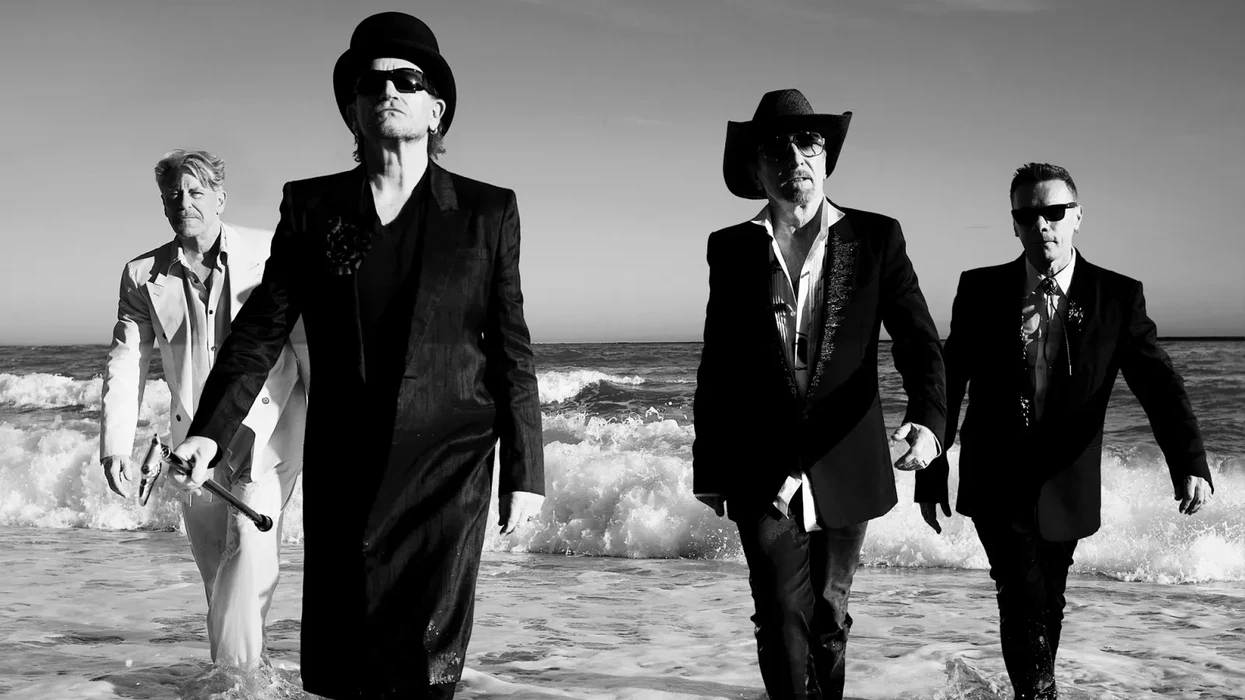

 The Edge, Larry Mullen Jr, Bono and Adam Clayton (from left) in 1978 Patrick Brocklebank
 Class photo from Mount Temple Comprehensive School in Dublin, 1978. Bono is in the front row, third from left; his future wife, then Ali Stewart, is to his left. The Edge is in the back row, center, in jacket and tie. Courtesy of U2
 U2 in Berlin circa Achtung Baby Anton Corbijn
 Anton Corbijn
 Bono, the Edge, and Clayton perform at the Sphere in Las Vegas in 2023, with Bram van den Berg filling in for Mullen on drums Kevin Mazur/Getty Images
 U2 shooting the “Street of Dreams” video in Mexico City in May Eloisa Sanchez
 Michael Schwartz
Did ‘The Life of a Showgirl’ Need an Encore? And Where Is Taylor Swift Going Next?
Taylor Swift has always loved a story. It’s what has set her songwriting apart for 20 years now — and what she has used to maintain her almighty superstar status. Both in her work and in the presentation of it, Swift has woven strong narratives of heartbreak, success, redemption, torture, and glory where all of the pieces fall into place and it’s easy to root for her.
With her latest album, The Life of the Showgirl, Swift presented a sequined tale of triumph. Finally, finally, the girl who spent her whole life trying to put the feeling of love into words had changed the prophecy by getting engaged (and now married) to Travis Kelce. Professionally, Swift was at her peak, too. She’d just bought back her masters with the earnings from her historic Eras Tour, an all-encompassing career feat that inspired the project.
But there’s no debating that the musician’s 12th album was her most polarizing yet (yes, even more than the 2017 LP, Reputation). Some critics and fans alike didn’t appreciate the execution of the “showgirl” idea sonically or thematically. But hate it or love it, Showgirl was the perfect way for Swift to revel in her success — and set the stage for her next show-stopping move.
That’s why it’s so confusing that the expert storyteller decided the show wasn’t over when she released The Life of a Showgirl: The Encore with four bonus tracks. One of the strongest elements of the original album was that Swift delivered a tight 12, and only 12, songs. “There’s not a 13th, there’s not other ones coming,” she said last year. “Every single song is on this album for hundreds of reasons, you know, and you couldn’t take one out and it’d be the same album. You couldn’t add one. It’s just right.”
Now, there is suddenly more to the story with the addition of “Patient Zero,” “Cleveland!” “Pink Clouding,” and “Babylon.” Unfortunately, as many fans have pointed out, none of the songs add to the narrative set forth in Showgirl.
Swift said she wrote the bonus tracks last year following the success of the album. “We just wanted to reflect and take in how grateful we were for the moment we were in,” she said, referring to the project’s collaborators, Max Martin and Shellback. That moment found Swift newly engaged, yet her lead single back, “Patient Zero,” looks back at a past relationship. “Pink Clouding” also reflects on a former flame, but without the regretful yearning that made “Ruin the Friendship” a standout. Meanwhile, “Cleveland!” takes the gushing over-the-heels joy from “Honey” and “Wood” and adds an almost spiteful twist. And then there is the new curtain-closer, “Babylon” where Swift hands out more pearls of wisdom over an acoustic cut that would fit better on Folklore or Evermore. In fact, all four songs sound like they were plucked from previous albums like Midnights or The Tortured Poets Department. With these four tracks, she has not only confused the story of Showgirl, she’s also muddled that of Taylor Swift™.
Swift is a known mastermind, who has planned her next career move years in advance, and she’s been celebrated for her expert marketing power moves. But where does the showgirl go from here? The Encore has unleashed more questions about Swift’s next chapter rather than offer a clear path forward.
On Sunday, Swift premiered the cinematic music video for “Patient Zero” at the 2026 MTV VMAs. It’s a chilling thriller, and one of her most impressive visuals to date. Was that the point of it all, to highlight her full-throttle pivot to film? We know that the musician has a directorial debut on the way with Searchlight Pictures. Maybe she finally found the time to finish it, and that’s why she worked on the Toy Story 5 soundtrack.
The Encore could also just be a way for Swift to get her 12th album back into the conversation, just in time for the first round of voting for the 2027 Grammys. One would expect the singer-songwriter to submit the project for all of the major categories, including the coveted Album of the Year and Song of the Year. It’s unclear whether Swift will submit both “The Fate of Ophelia,” which became Swift’s longest-running Number One song atop the Billboard Hot and her new shining single “I Knew It, I Knew You” for Song of the Year — the songwriting-focused Grammy she has yet to win.
Swift has spent the last six months riding on the high of “I Knew It, I Knew You.” The song dominated on country radio — and led the musician to drop a ton of Easter eggs hinting at her big return to the genre. She could honor her songwriting legacy with a country music return timed to the 20th anniversary of her debut in October. Now that would be a great story.