
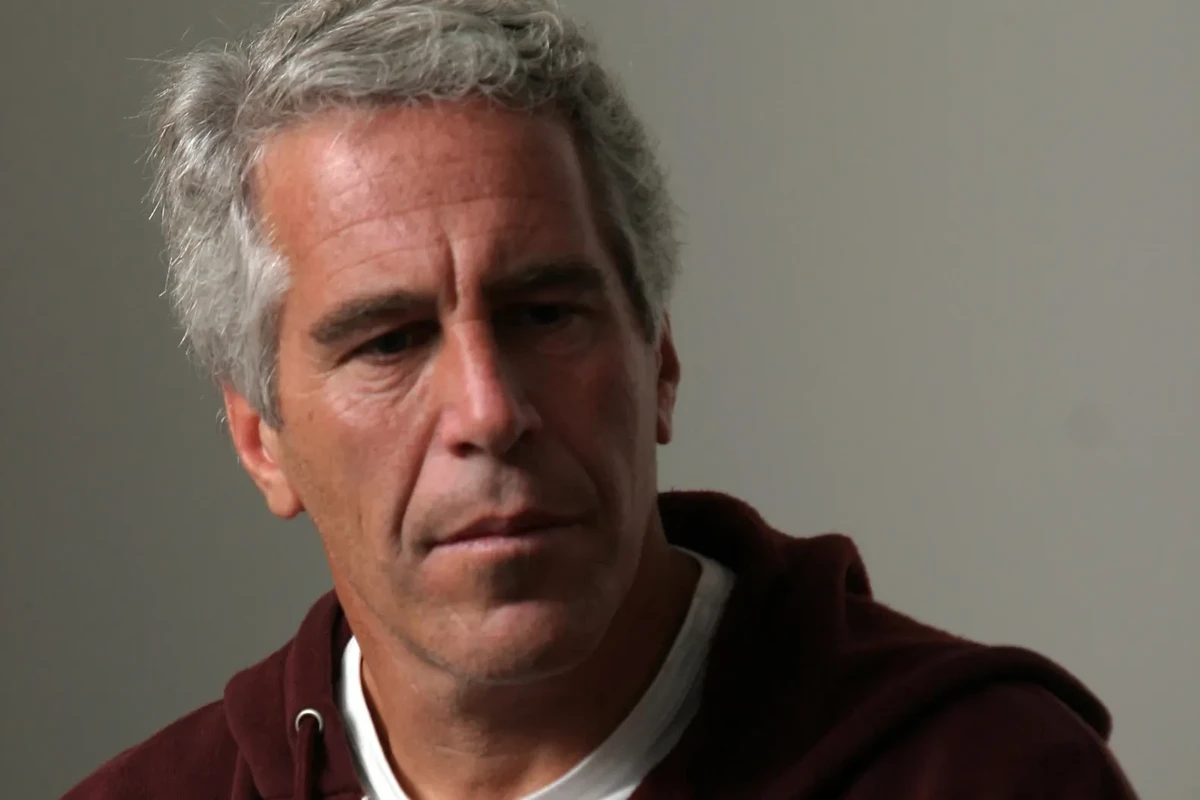

On Friday, the Justice Department finally unveiled some 3 million documents from the criminal investigations of the late sex offender Jeffrey Epstein, in accordance with a law that established a deadline of Dec. 19, 2025, for making the material public. The DOJ’s statement on the release, which includes more than 2,000 videos and 180,000 images, noted that this brings their total disclosures about the notorious and well-connected sex trafficker to about 3.5 million pages.
According to the DOJ, the documents came from a variety of law enforcement proceedings related to Epstein’s activities and eventual death by suicide in a jail cell in 2019 while he was awaiting trial on sex trafficking charges. “These files were collected from five primary sources including the Florida and New York cases against Epstein, the New York case against Maxwell, the New York cases investigating Epstein’s death, the Florida case investigating a former butler of Epstein, multiple FBI investigations, and the Office of Inspector General investigation into Epstein’s death,” the department explained.
For the past year, Donald Trump — a close friend of Epstein’s for more than a decade before a falling out in the mid-2000s — has faced hard questions about why his administration was not publishing the so-called “Epstein files” as he had promised to during his 2024 presidential campaign. In the first year of his second term, he tried to dismiss the sordid Epstein saga (and his heavily documented relationship with the financier) as “bullshit” and a “hoax,” to no avail. His MAGA base was further incensed when the DOJ announced in July 2025 that it had found no evidence that Epstein kept a “client list” of people he trafficked girls to or that he was murdered in a scheme protect his associates from prosecution. (His accomplice, Ghislaine Maxwell, was convicted of sex trafficking and conspiracy charges in 2021 and is serving a 20-year prison sentence.)
In November, Congress passed the Epstein Files Transparency Act, signed by Trump, which required the U.S. Attorney General to make the content of the multiple Epstein investigations “publicly available in a searchable and downloadable format.”
Deputy Attorney General Todd Blanche said in a press briefing on Friday that the DOJ has 6 million documents in total but would not unseal all of them in order to protect victims and avoid disseminating the child sexual abuse material included. He also declared that the department had not sought to shield Trump in any way when preparing the latest batch of files to drop. “We comply with the act, and there is no ‘protect President Trump.’ We didn’t protect or not protect anybody,” Blanche said. “I mean, I think that there’s a hunger or a thirst for information that I do not think will be satisfied by the review of these documents. And there’s nothing I can do about that.”
A group representing Epstein’s survivors, which has roundly criticized the Trump administration’s handling of files on him, blasted Friday’s disclosures as incomplete and damaging to those abused. “This latest release of Jeffrey Epstein files is being sold as transparency, but what it actually does is expose survivors,” the group said in a statement shared with Rolling Stone. “Once again, survivors are having their names and identifying information exposed, while the men who abused us remain hidden and protected. That is outrageous. As survivors, we should never be the ones named, scrutinized, and retraumatized while Epstein’s enablers continue to benefit from secrecy. This is a betrayal of the very people this process is supposed to serve.”
“The Justice Department cannot claim it is finished releasing files until every legally required document is released and every abuser and enabler is fully exposed,” the survivor group’s statement continued. “We need to hear directly from Attorney General Pam Bondi when she appears before the House Judiciary Committee on February 11.” Last February, Bondi weathered significant backlash for a much-hyped stunt in which she distributed binders of Epstein documents to MAGA influencers only for it to quickly emerge that these documents were already publicly available. She is expected to be grilled on the Epstein case as well as Trump’s weaponization of the Justice Department to seek retribution against political enemies.
Included in Friday’s dump are documents from the FBI, which include allegations that individuals made to the agency about Trump while he was running for president. The Justice Department insisted that these allegations are baseless. “This production may include fake or falsely submitted images, documents or videos, as everything that was sent to the FBI by the public was included in the production that is responsive to the Act,” the DOJ said. “Some of the documents contain untrue and sensationalist claims against President Trump that were submitted to the FBI right before the 2020 election. To be clear, the claims are unfounded and false, and if they have a shred of credibility, they certainly would have been weaponized against President Trump already.”
Among these uncorroborated complaints that mention Trump are graphic accounts of sexual abuse that name other powerful men who knew Epstein, including Bill Clinton and Alan Dershowitz, who for years represented him as an attorney. Multiple tips led to follow-up contact from the FBI, according to the documents, though it’s not clear if any resulted in an official and extensive investigation. A number of the accounts temporarily vanished from the DOJ website on Friday, then reappeared, prompting some on social media to speculate that the White House may have sought to cover them up, though there is no evidence that it did so.
Another person to come up in the new tranche of documents was Elon Musk. Emails showed that Epstein and Musk corresponded in December 2013 — five years after Epstein was convicted of soliciting a minor for prostitution in Florida and required to register as a sex offender — about plans to meet on Epstein’s private Caribbean island, Little Saint James, over the New Year holiday. “We will be in St. Bart’s,” Musk wrote at one point. “When should we head to your island on the 2nd?” It’s not clear whether the visit they discussed ever took place, although Epstein did offer to fly Musk in on a helicopter.
Amid a public feud last year following his exit from the government as the administrator of the so-called Department of Government Efficiency, Musk accused Trump of withholding Epstein documents because he was named in them. “Time to drop the really big bomb: @realDonaldTrump is in the Epstein files,” he wrote in an X post in June. “That is the real reason they have not been made public. Have a nice day, DJT!” He later deleted his posts about Trump’s connections to Epstein.
Howard Lutnick, Trump’s commerce secretary, also planned a trip to Epstein’s private island, according to 2012 emails included in Friday’s document drop. In an interview last year, Lutnick claimed that he had cut off all contact with Epstein in 2005, but the exchange from seven years later, which had not previously been disclosed, shows that he inquired about bringing his wife and children to Little Saint James for a meal. A subsequent message from Epstein to Lutnick read “Nice seeing you,” suggesting that the visit did take place, but Lutnick claimed to The New York Times on Friday that he “spent zero time” with Epstein.
Blanche downplayed the possibility of exposing anyone else’s involvement in Epstein’s crimes. “I don’t think the public or you all are going to uncover men within the Epstein files who abused these women, unfortunately,” he told reporters, although he vowed to go after individuals if evidence agains them came to light. “I don’t know whether there are men out there that abused these women,” he said. “If we learn about information and evidence that allows us to prosecute them, you better believe we will.”
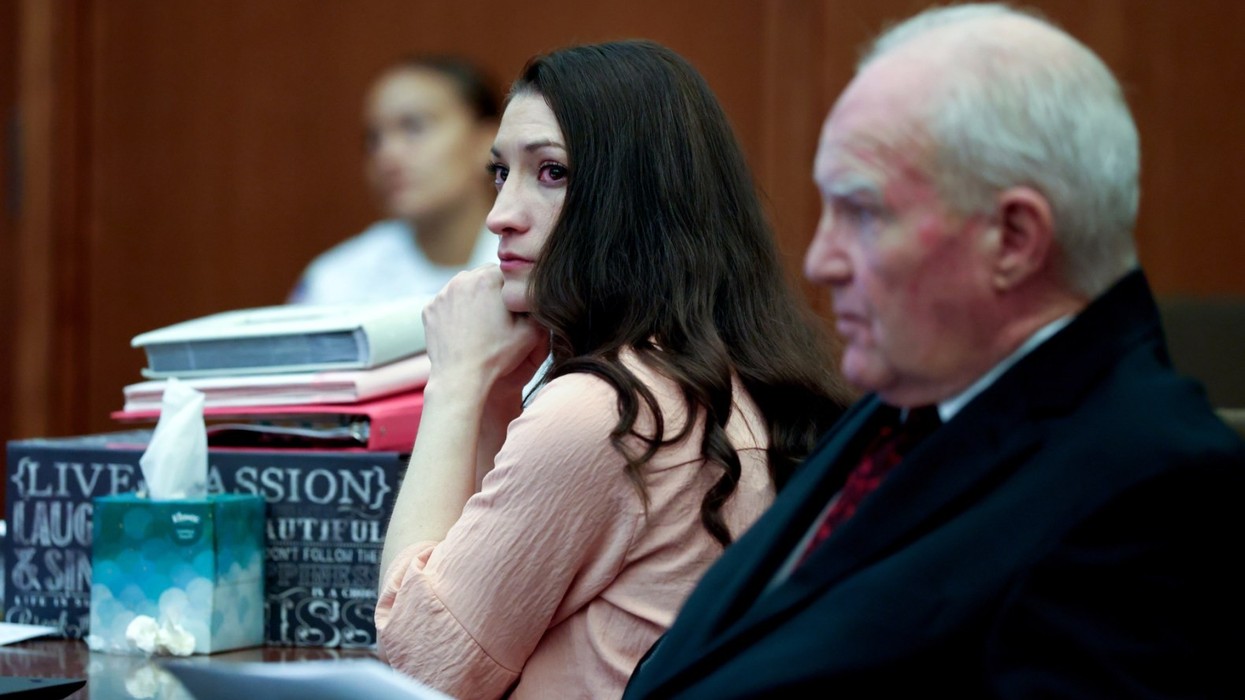



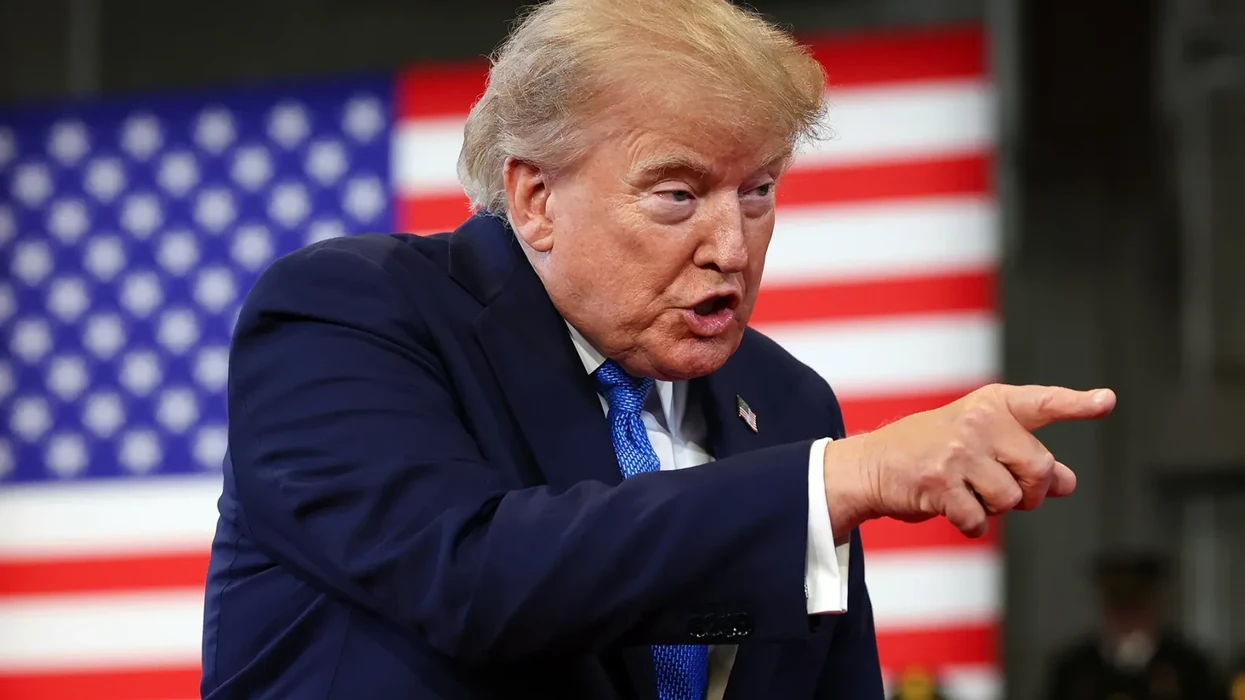


Natalie Harp with Donald Trump on July 22, 2026.
Nothing About Trump and Natalie Harp Is Normal
In early 2024, while reporting a story on New York’s boisterous, controversial Young Republican Club, one of my sources told me they had a pretty direct line to Donald Trump himself.
At the time, Trump wasn’t president again — yet. But he was campaigning, and in order to get something in front of his eyes you had to first get the attention of someone else: his assistant and right-hand woman, Natalie Harp.
Harp, 35, is now at the center of a major media frenzy, as Democrats like Georgia Senator Jon Ossoff have seized upon her unusual relationship with her boss: part assistant, part hype-man, part gatekeeper. On Sunday night, Ossoff made a comment that many interpreted as an insinuation that Harp had a more personal relationship to the president.
“The president sleeps through his meetings. He golfs and trades stocks,” Ossoff said at a campaign event in Georgia. “See he doesn’t want to do the job. He wants to build his ballroom and travel with Natalie on their apparently defenseless flying palace gifted by the Emir of Qatar.”
Ossoff’s comments set off a firestorm both in Democratic circles and the GOP’s reactionary messaging apparatus.
“Jon Jackoff has to be the biggest cuck loser in politics,” Steven Cheung, the White House communications director, posted on Monday morning. By Tuesday, the entire media ecosystem had weighed in — with some coming right out and saying what they thought Ossoff was implying in his joke, and detailing why it was out of bounds.
“Ossoff was clearly implying that Trump was having an affair with his staffer,” Megyn Kelly wrote on X. Florida Congresswoman Anna Paulina Luna called him a “sexist arrogant jerk.” Pundit Robby Starbuck wrote that “Ossoff is a vile coward for insinuating they’re having an affair.” The flood of backlash poured out of just about every conservative commentator you could think of.
The White House joined the fray after CNN posed a question about Harp to Trump, asking him to respond to Ossoff’s comments directly. “You mean Pee-Wee Herman?” Trump quipped in the moment, referring to Ossoff. His comms team went for a full broadside later online. “Someday, your children will come across your disgusting and inhumane question,” Trump’s rapid response account posted at CNN reporter Kristen Holmes. “They will be sickened and embarrassed to have a parent be so callous and vindictive. It’s quite troubling.”
Ossoff, meanwhile, tried to soften the blow of his joke, redirecting it — sort of — away from Harp herself to make it more of a comment on the president’s relationship to his staff in general. “I’ve heard this particular aide referred to as his security blanket,” he told Jen Psaki on MS NOW. “And I think we could say that about any number of the senior aides in the White House.”
But the damage was done, and it’s hard to believe Ossoff didn’t know exactly what he was doing. In recent years, some Democrats have occasionally flirted with the type of mud-slinging that Trump and his imitators became known for, but they’ve rarely landed a hit that provoked this much of a reaction.
“What a coward. Own your sexist joke, bro,” right-wing commentator Scott Jennings posted.
Harp’s history — and her relationship to the president — give some clues as to why the Republican beehive is so agitated.
Harp began her career in the public eye as an anchor for One America News, a right-wing propaganda outlet that was founded in 2013 and became something of a mouthpiece for the Trump administration and then the MAGA movement during the Biden administration. Democrats and liberal commentators have pointed out that Harp was often fawning over Trump during her segments.
While these clips have been used as more evidence that Trump and Harp have a strange dynamic, it’s hard to say that this kind of content is outside of the norm for OAN’s programming at the time. But that doesn’t mean Harp’s history with Trump isn’t strange — even by MAGA supplicant standards.
At the 2020 Republican National Convention, she said she was a bone cancer survivor and credited her survival to a “Right to Try” policy pushed by Trump in 2018 that allowed patients to use experimental drugs.
“When I failed the chemotherapies that were on the market, no one wanted me in their clinical trials,” Harp said at the RNC. “They didn’t give me the right to try experimental treatments, Mr. President. You did, and without you, I’d have died waiting for them to be approved.”
The Washington Post, however, notes that the drug Harp used was already approved by the FDA — which would have meant that the “Right to Try” law wouldn’t have applied.
Still, it’s clear that Harp feels a close personal connection to Trump. After her short stint at OAN, the Post cited her as a Trump employee as early as 2022. In 2024, The New York Times reported that Harp’s primary role on Trump’s staff was what other aides called “the human printer” — following Trump around with a battery powered printer so she could give him physical copies of social media posts, missives, text messages, and positive, often conspiratorial news stories. The Post story in 2022 also detailed her in this role, noting that other aides were “particularly distressed” by her access to and influence with the president.
“She is indicative of the people around him who just love him,” one anonymous adviser told the Post in 2022. “Love him too much.”
The Times’ reporting also noted that Harp’s esteem for Trump was particularly fervent, describing how she wrote him a series of what the newspaper called “devotional letters,” one of which said: “You are all that matters to me.” The Times described her running behind Trump’s golf cart, reading him social media posts and news articles. Following one of those instances, the Times reports that she wrote him another letter, apologizing for being “an embarrassment” while on the golf course in Scotland. “I want things to always be right between us,” she wrote. “I also know I’ve been distracted all week (forgetting to eat throughout the days, and even forgetting to sleep, and only catching a couple hours at a time).” Harp signed the letter, “With all my heart, Natalie.”
Harp’s family have acknowledged that her relationship to Trump is not that of a traditional staffer. In an interview with CNN on Tuesday night, Harp’s estranged brother Preston Harp said that “Since she was 16 she’s had an obsession with – she’s written letters to other presidents, let me put it that way,” Preston Harp said, mentioning “George Bush during the Iraq War” and that “her dream came true finally.”
These details are certainly odd, but so is basically everything about the particularities of Trump’s inner circle. Ossoff’s comment, however, likely came at least partially in response to another outlandish story that broke earlier this month.
On August 10, the Post reported that Trump had covertly switched planes during a trip to Turkey, hiding in an airline catering truck with a tiny group of aides in order to dodge a potential attack on Air Force One by Iranian proxies. The White House press corps and several key government figures — including Secretary of State Marco Rubio — stayed on board the “decoy plane.” Harp did not. She was reportedly in the food truck with Trump.
It’s impossible to know the exact nature of Harp’s relationship with Trump. Ossoff did not specifically mention an affair, though it’s hard to interpret his familiar comment as anything else — and the right-wing media is reacting to it as such, trying to take a moral high ground on behalf of a president who has, at least in civil court, been found liable for sexual abuse on at least one count, and routinely makes sexist comments toward female reporters and others.
Jesse Watters of Fox News was one of the only right-wing commentators to recognize the hypocrisy of bashing Ossoff’s comment while supporting Trump: “Am I fazed by this comment? No. Has Trump said so much worse, so much more sleazy things against other people? Yes. Have I defended those things? Absolutely. So, I’m not going to pretend to be all hot and bothered by it.”
Watters is an outlier, though. No matter what the charges, Trump will always have his protectors in the GOP, some more loyal than others. In recent years, Natalie Harp has been more loyal than anyone else.