
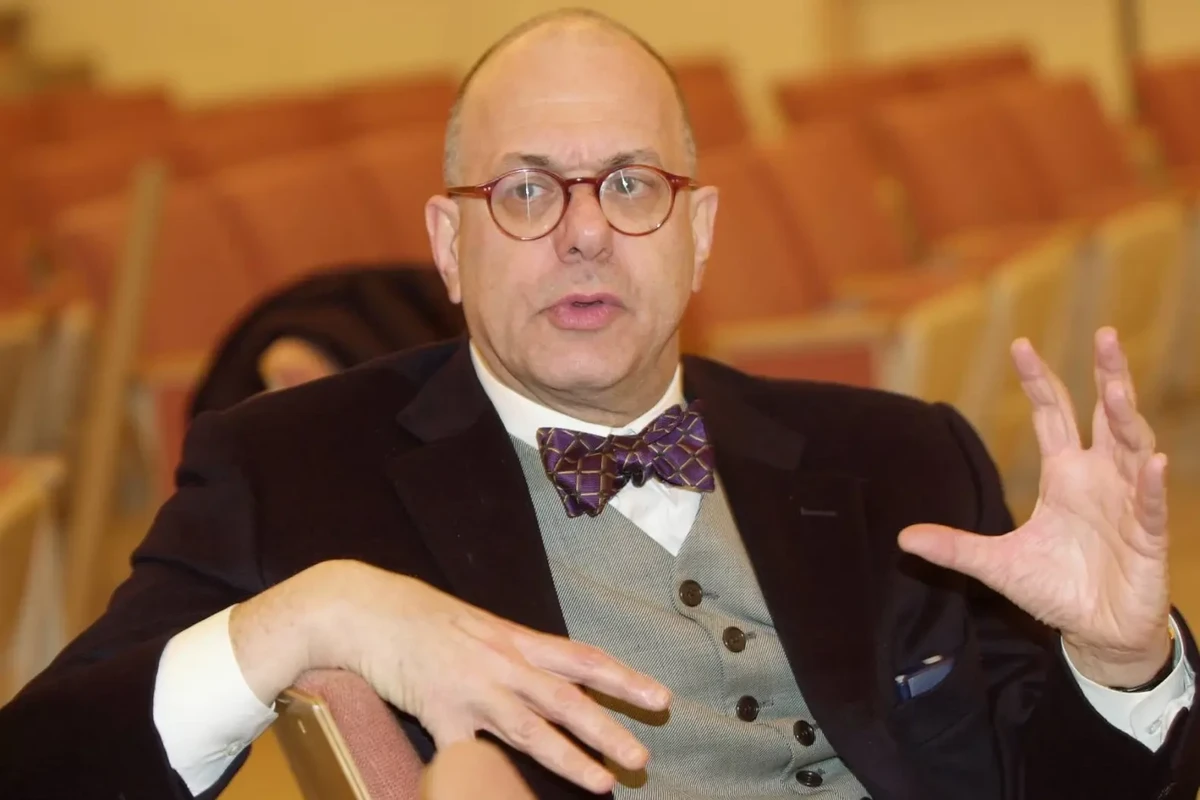

In spring, Leon Botstein announced that he was stepping down after half a century as president of Bard College following scrutiny over his relationship with convicted sex offender Jeffrey Epstein. Despite the revelations, the former president remained on campus and continued to teach at the liberal arts college — holding prominent positions at the institution and living at the official college home for the president, while the college reportedly completed renovations for an off-campus residency for Botstein.
On Wednesday, Botstein abruptly resigned from all roles he held at Bard following the announcement that the House Judiciary Committee sent a letter to the school’s Board Chair Brandon Weber and Acting President Jonathan Becker and alleged that “Botstein likely enabled and possibly even participated in Epstein’s abuse while serving as Bard’s President.”
In the letter, Representative Jamie Raskin, top Democrat on the House judiciary committee who is leading the investigation alongside Representative Madeleine Dean, pointed to a “startling” May 2014 email from Bard president’s email address that asks if a Jane Doe Epstein was purportedly grooming was “for me, or are you keeping her for yourself.”
Raskin writes, “It is hard to construct any kind of innocent explanation for Botstein’s question and the surrounding events,” adding that the question was sent to “the most famous sexual predator of our time about a woman Epstein was trafficking.”
Weber said in a statement to Rolling Stone that Bard was doing “a full review” of the allegations outlined in the House Judiciary Committee’s letter, and was cooperating with the committee’s probe.
In another statement to The Guardian, Botstein said “any assertion that I knew of or was involved in Epstein’s criminal behavior is wrong.” He said that he submitted his resignation to protect Bard from any distraction and did “not want to see even false allegations about me put the institution I have served for more than half a century put at any risk.”
The House Judiciary Committee letter also claims that Botstein’s alleged misconduct festered for several decades across campus and that the committee received multiple reports that Botstein “personally engaged in sexual misconduct and abused his power, from groping women to asking sexualized questions in tenure interviews.” It alleges that Botstein also protected other offenders and in a “highly irregular fashion,” he personally oversaw Title IX cases, which prohibits sex-based discrimination in education programs.
In his statement, Weber said that Bard “maintains a fair, impartial, and accessible Title IX process” and that the “college president has not had unilateral decision-making authority over Title IX investigations or adjudications since the 2015-2016 school year.” Botstein was president of Bard College from 1975 to 2026.
Raskin and Dean also sent a letter to Attorney General Todd Blanche and FBI Director Kash Patel, detailing their allegations against Botstein and urging them to “undertake a serious investigation, rather than a cover-up, of the countless potential crimes suggested in evidence in the Epstein files.”







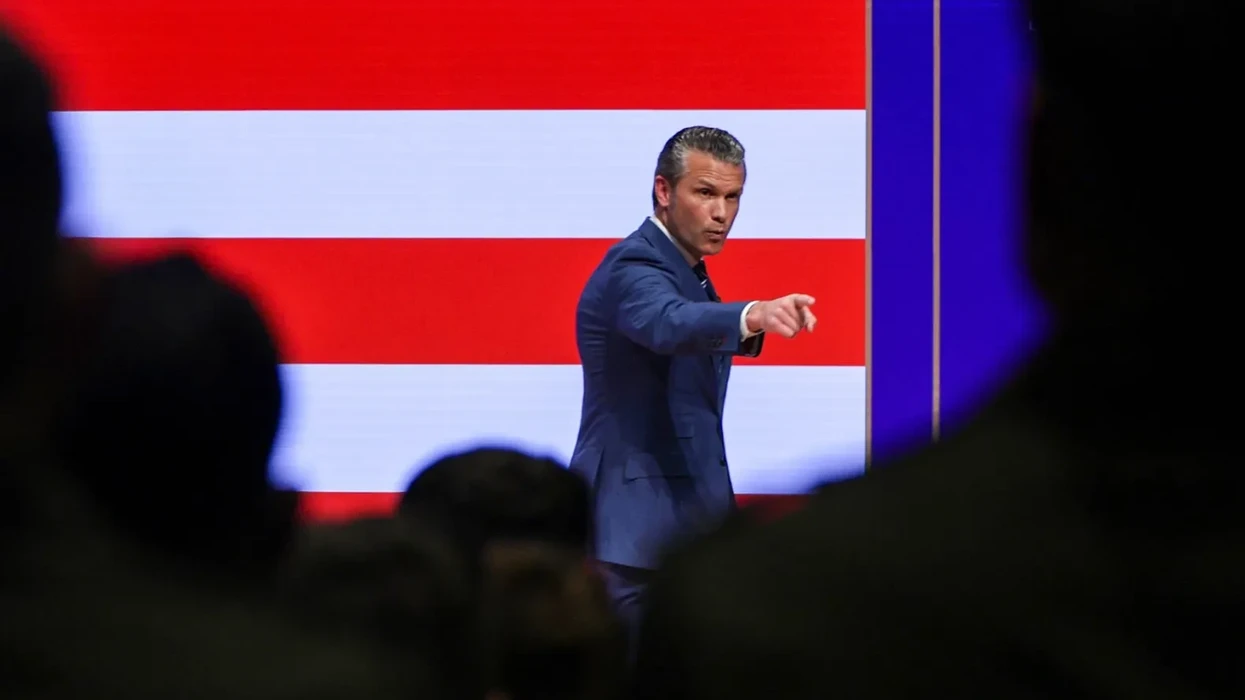


 The first day of the 2026 Republican National Convention at the American Airlines Center, on Sept. 9, 2026 in Dallas, Texas.
 People of all colors listen as Donald Trump speaks on the first day of the Republican midterm convention.
 Trump supporters at the Republican midterm convention.
Vladimir Putin addressing the audience during the Valdai Discussion Club meeting on Oct. 1
As Trump Dithers, Ukraine War Is Approaching a ‘Fatal Point of No Return’
The war in Ukraine is becoming increasingly dangerous, with the risk of escalation spilling further into Europe. As Russia and European governments trade explicit warnings that the conflict is spreading, the United States is pursuing diplomacy aimed less at stopping the carnage than restoring ties with Moscow.
With the Russian military making little progress on the ground in eastern Ukraine despite nearly five years of war and more than a million casualties, the Kremlin is intensifying aerial attacks. Ukraine, which has been the target of Russian missiles and drones since the war began in February 2022, is now experiencing a sharp uptick in attacks on infrastructure and populated areas that threaten to plunge parts of the country into cold and darkness over the winter.
The aerial blitzkrieg is intended to destroy Ukraine’s morale, infrastructure, and economy, President Volodymyr Zelenskyy recently told the Financial Times, citing intelligence intercepted by his country’s security services.
Zelenskyy told the paper that Russian President Vladimir Putin, in discussions with top Kremlin officials, had removed constraints on the bombardment campaign: “He said there are no rules now.”
U.S. disengagement from the conflict during Trump’s second term, coupled with the American president’s animosity toward Zelenskyy and Ukraine more generally, has only emboldened Putin. After promising he would stop the war “within 24 hours” after reelection, Trump’s tepid support for Ukraine and its European allies has increasingly convinced the Kremlin it has a chance to permanently rupture the NATO alliance.
At the Valdai Discussion Club on Thursday — an annual high-profile international summit in St. Petersburg — Putin said that continued European support for Ukraine was pushing the conflict toward a “fatal point of no return.”
The Kremlin has long described the war as an extension of a confrontation with the collective West. With more than 1.5 million active service members in the Russian military, about 44 percent of Moscow’s budget for 2027 is dedicated to defense and security spending. Around 700,000 Russian soldiers are serving on the front lines in Ukraine, where casualties remain staggeringly high.
Editor’s picks
The 250 Greatest Albums of the 21st Century So Far
The 100 Best TV Episodes of All Time
The 500 Greatest Albums of All Time
100 Best Movies of the 21st Century
Meanwhile, Moscow is conducting a campaign of so-called “hybrid warfare” — with officials in multiple countries alleging that a series of drone attacks, arsons, and sabotage originated with Russian intelligence services. The Kremlin also continues to carry out targeted killings on European soil — and has even attempted to assassinate political dissidents in the United States, according to the FBI.
Russia’s belligerent activity has set alarm bells ringing across Europe.
Speaking at a NATO event on Thursday, German Chancellor Friedrich Merz said that the continent must brace for “severe hybrid attacks,” as Russia targets production facilities and logistics hubs by which Ukraine’s allies supply the beleaguered country with arms. Europe must be prepared to “respond quickly and very clearly” to Russian provocations, Merz said.
For its part, Moscow asserts that NATO is provoking conflict, citing recent unannounced military exercises near Kaliningrad — a Russian exclave on the Baltic coast. In a communiqué to NATO this week, Russian officials warned that action against Kaliningrad would initiate a serious response, “including nuclear weapons” in order to defend its territory, and “Russian strikes against decision-making centers in the alliance’s member states.”
“This is a war that Europe is waging against us,” Russian Foreign Minister Sergey Lavrov told reporters at the Valdai forum. When asked about hybrid attacks outside Ukraine that European leaders have attributed to Russia, he said his country was only targeting support for what it dubs the “Nazi regime” in Kyiv.
Related Content
California Leaders Erupt After Trump Suggests Letting Iran ‘Take Out’ Cities
Jon Stewart Breaks Down the Threat of AI: ‘Why Can’t We Just Slow This Down?’
Dolly Parton Estate Claims Nephew Used Caution Tape and Barbed Wire to Dodge Lawsuit Service
Hayley Williams Responds to DHS’ Suggestion to Thank Officers After ICE Comments: ‘Nazi Bitches’
As the sabers rattle louder, American engagement with Moscow and Kyiv comes in fits and starts, with no apparent overarching strategy.
Critics of the White House’s approach point to a recent trip by Trump’s friend and special envoy to the Middle East, real estate attorney Steve Witkoff, and son-in-law Jared Kushner, to Moscow and Kyiv. Their tour yielded headlines, but little progress toward negotiations between the warring parties — let alone toward ending the conflict.
“I hope they had a great discussion about opening a hotel or something,” one European official told Rolling Stone. “Because it was useless otherwise.”
Diplomacy via haphazard tête-à-têtes with the president’s personal envoys is almost certainly viewed as a sign of weakness by Putin, who is well aware that Trump hopes to claim normalized ties between the United States and Russia as a crowning foreign policy achievement.
The White House is considering a range of unprecedented diplomatic deals that would help keep Russia’s economy functioning while doing little to benefit Ukraine.
These proposals reportedly include an easing of economic sanctions if Putin agrees to release some political prisoners, and a potential multibillion-dollar oil deal ostensibly aimed at stabilizing energy markets and reducing gas prices.
With gas prices rising amid the U.S.-Israeli war on Iran and midterm elections around the corner, Trump has made energy central to his Russia policy. Washington has called for an “energy ceasefire” — while Trump has blamed Kyiv for rising diesel prices in the United States.
While high oil prices are the result of a concatenation of crises, Ukraine has been targeting Russian oil refineries, producing fuel shortages and long queues for gasoline — in one of the world’s largest oil producers — over the summer.
Ukraine is also developing its own domestically produced tactical ballistic missiles. Ukrainian officials said Friday that one type of missile, the FP-7, had been successfully used in combat for the first time. But whether Kyiv can produce enough of them to create a meaningful deterrent is unclear.
As winter nears, the outlook for Ukraine is bleak. A recent attack on Kyiv consisted of nearly a dozen ballistic missiles and hundreds of drones in a single night. That many munitions slip through highlights the dire situation faced by Ukrainian defenders, who are running out of advanced missile interceptors. They also struggle to shoot down drones that are becoming increasingly numerous, sophisticated, and effective as the war drags on.
In recent months, Russia has adopted widespread use of an advanced drone, the Geran-5 — a jet-powered drone that bears an uncanny resemblance to the V-1 “buzz bombs” used by the Nazis to bombard London toward the end of World War II.
As with the German V-1 campaign against London 80 years ago, the targets are often indiscriminate. Even before the ramping-up of attacks this fall, 2026 was on track to be the deadliest year for Ukrainian civilians since the early months of the full-scale war in 2022.
The proliferation of Russian attack drones and ballistic missiles means that cities like Kyiv now spend much of each day under air alert. Even aside from the human toll and physical damage that the weapons inflict, officials estimate that the disruptions to daily life are costing the country as much as $45 million per hour in lost economic activity.
Since Friday, a series of drone attacks has targeted two of Kyiv’s major bridges spanning the Dnieper River. The damage has disrupted traffic between the capital’s “Right Bank” — with its historic core and city center — and its “Left Bank,” with its sprawling Soviet-era industrial and residential developments.
Ukraine is already experiencing a severe financial squeeze. Prime Minister Sergii Koretskyi says the country is facing a $27 billion “funding gap” before the end of the year.
Ukrainian lawmakers warn the government could even run out of funds to pay soldiers. One serving member of the Ukrainian military, who spoke to Rolling Stone on background, said by the end of the summer, members of his unit had already begun experiencing “delays” in receiving their pay.
The Ministry of Defense disputes that soldier’s salaries could go unpaid, but acknowledges that “technical issues” had caused some delays.
Meanwhile, Zelenskyy is under pressure from corruption scandals and resignations involving members of his inner circle. Polls show him potentially losing hypothetical match-ups against rivals, including former Ukrainian Armed Forces commander Valerii Zaluzhny. The country’s “long-admired cohesion” has begun to crack — an outcome that aligns with Russia’s strategic objectives.
But after nearly five years of war, both combatants are showing signs of political and economic strain.
Russia’s regular military conscription process — 120,000 new recruits are expected over the next three months — barely offsets the grievous casualties its military is experiencing at the Ukrainian front, with high estimates exceeding 1,000 casualties per day.
Some analysts believe the Kremlin is considering a massive mobilization in the wake of parliamentary elections. But Putin so far has merely called for an increase in the total number of active-duty military members by a little more than 15,000. Russia’s president remains wary of generating a meaningful anti-war movement inside Russia, while also facing pressure from hard-line nationalists expecting him to deliver victory.
Across Europe, governments are no longer treating a direct confrontation with Russia as a remote possibility. They are preparing for worst-case scenarios, particularly in the Baltic states and other countries that experienced Russian rule under the Soviets. Meanwhile, NATO insists that all members — including the United States — have an “ironclad commitment” to collective defense.
In 1914, at the outset of the First World War, few leaders understood how faulty strategic assumptions, entangling alliances, and lethal technologies were pushing the continent toward cataclysm.
But some did. On the eve of war, U.K. Foreign Secretary Sir Edward Grey famously wrote that “The lamps are going out all over Europe.”
Trending Stories
Brian May Says Queen Won’t Tour Again: ‘50 Years Is Enough’
Dolly Parton Estate Claims Nephew Used Caution Tape and Barbed Wire to Dodge Lawsuit Service
See Jack Black’s Black Sabbath Cover Band Perform With Geezer Butler at Power to the People Festival
See Bruce Springsteen Cover Neil Young With Dave Grohl at Power to the People Fest
Across Ukraine, darkness will again become a feature of daily wartime life amid rolling blackouts as a hard winter looms. And the shadows are lengthening, far beyond its borders.
But in America, the White House dithers as the president has his attention elsewhere. Perhaps Trump’s new ballroom, at least, should be well lit.