
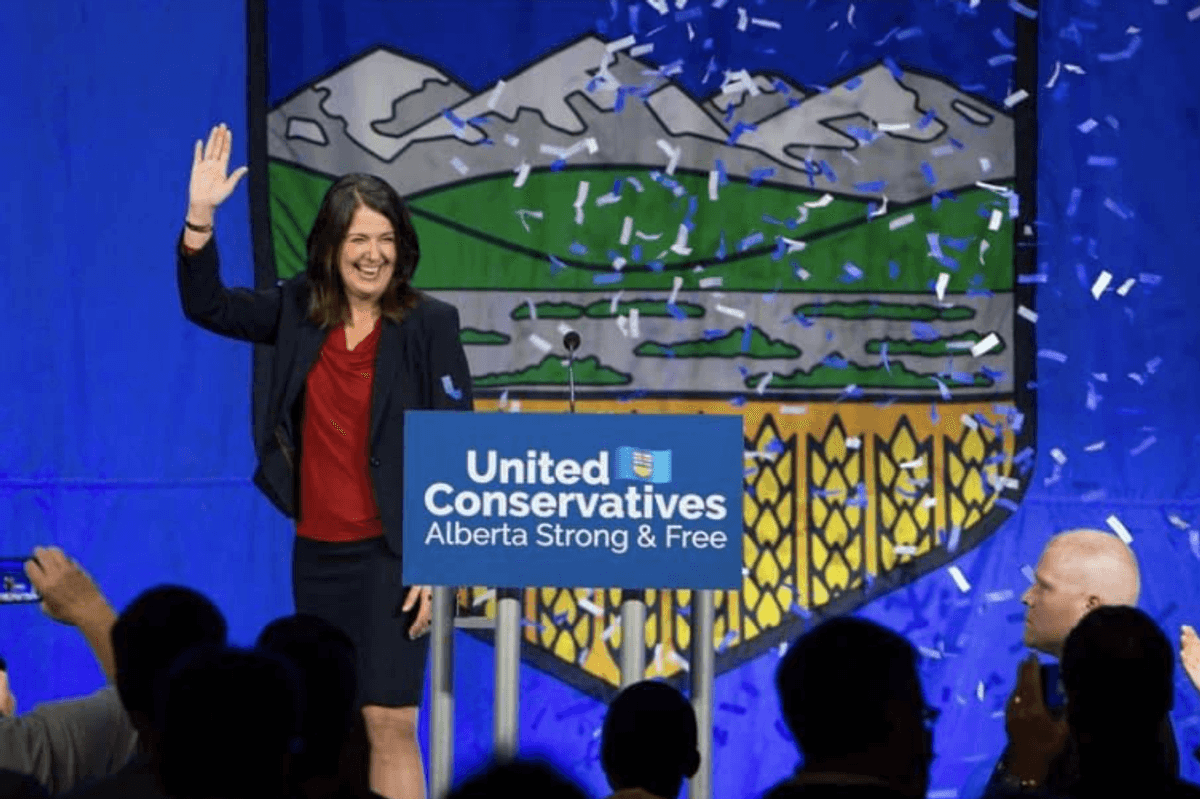

Alberta voters rejected a move toward independence from Canada on October 19, but the province’s referendum also tested support for a broader political agenda built around immigration restrictions, provincial autonomy and frustration with Ottawa.
With roughly 76% of counted votes favouring remaining in Canada, the result is a huge blow to separatists seeking to advance the independence process. It was Alberta’s first referendum on separation, making them the only province to have done so aside from Québec, which held sovereignty referendums in 1980 and 1995. Both those votes resulted in the province remaining in Canada, although the 1995 result was decided by an incredibly narrow margin.
Supporters for Alberta's separation argue that the province’s oil and gas wealth contributes disproportionately to the Canadian economy, while federal energy and environmental policies constrain its development. Some also contend that federal bureaucracy limits Alberta’s ability to manage its own affairs.
Premier Danielle Smith, who called the referendum in May, has argued that Alberta should remain in Canada while gaining greater control over provincial affairs. The vote also included nine other non-binding questions on immigration, public services and constitutional reform.
Early results showed support for eight of those nine proposals, although several constitutional questions were closely contested.
The strongest support was for requiring proof of Canadian citizenship to vote in provincial elections. According to unofficial results reported by The Canadian Wire, the proposal received 63.2% support. Measures to increase provincial control over immigration and restrict eligibility for publicly funded services according to immigration status also led, with 55.7% and 56.5% support, respectively.
Two other immigration-related proposals, requiring temporary residents to live in Alberta for 12 months before qualifying for certain social supports and allowing fees for their families’ use of health care and education, received 58.4% and 57.1% support.
The constitutional proposals, meanwhile, produced narrower results. A measure to give provincial governments control over appointments to superior and appeal courts led with 51.2% support, while abolishing the Senate received 53.2%. A proposal to give provincial laws priority over conflicting federal laws in areas of provincial or shared jurisdiction had 50.6% support.
The only additional question trailing on the Yes side concerned allowing provinces to opt out of certain federal programs, including those involving health care and education, without losing associated federal funding. It received 48.6% support against 51.4% opposition in the early count.
Premier Smith is expected to make a speech tonight, October 20, around 6:30 PM, local time. This morning, Canadian Prime minister Mark Carney took to social media to celebrate Albertans voting to remain Canadian. ''Over the past 18 months, our governments have worked together to deliver on what matters most to Albertans,'' he declared. ''Now, we have an opportunity to build on that progress.Albertans have chosen Canada, and we’re moving forward together with renewed purpose and high ambition — to build a stronger future for all.''










 Firefighters work to extinguish a fire at an office building in Kyiv following a Russian strike on Sept. 23, 2026.Kostiantyn Liberov/Libkos/Getty Images



Harry Styles Finds the Right Words on Liam Payne Tribute Song