
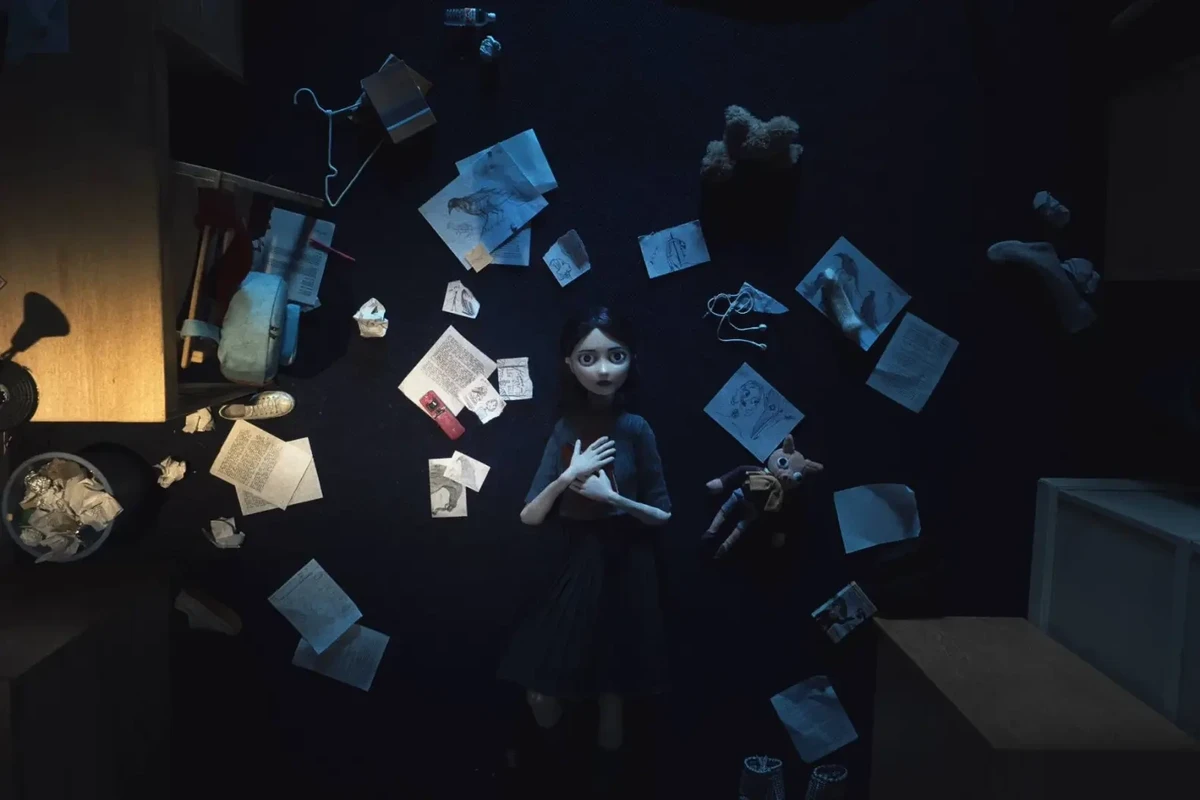

After introducing the uncanny dreamscape of The Dying World with a short film at Annecy Film Festival last year, self-taught artist Lauren Tsai unveiled the project as part of her larger solo exhibition at the Hollywood Forever Cemetery. While the installation concluded its run last November, Tsai has returned with a new collaboration alongside My Chemical Romance — a full-circle moment for the artist who as a kid created animated fan videos for the band’s songs.
The short film, Prelude to The End, continues the story of the character Astrid while also deepening the narrative of The Dying Word with new voices, additional characters, and settings. “It was an absolute dream to work on this project for The Black Parade and The Dying World,” said Tsai in a statement. “I deeply respect MCR and Gerard’s creative legacy. It has been an honor for him to find inspiration in a world that I’ve created, in the same way I have always admired the worlds that he has built throughout his career.”
Prelude to The End arrives on the heels of last Friday’s release of The Black Parade (20th Anniversary), the landmark rock opera by the Jersey pop-punkers that’s considered one of the most influential in the ever-evolving emo genre. The film will screen ahead of the final dates of the band’s five-night run at the Hollywood Bowl on Oct. 30 and 31.
The collaboration between MCR and Tsai is soundtracked by the album’s first song, “The End.” The film follows Astrid as she navigates a peculiar New England boarding school overrun by trash. As the school’s authoratative bodies toss her cherished sketchbook down a chute, Astrid follows it into a world inhabited by forgotten ideas and runs into an old friend who appeared in her previous film, The Dying World Part One: Forgetting. According to a press release, the film “explores the relationships we all hold with our creations, youth and the unwavering determination to become and express our truth, the latter of which in particular is a key, recurring theme throughout My Chemical Romance’s catalog.”
In addition to Tsai providing the vocals for Astrid, Prelude to The End also features vocal contributions from Billie Eilish (Astrid’s friend), Phoebe Bridgers (Astrid’s sister), Hideo Kojima (“The Teacher”) and John C, McGinley (“The Dean”). The short also includes a live recording of Flying River, Violin Concerto by Pascal Dusapin, which was performed by Utopia Orchestra at the Fondation Louis Vuitton, and conducted by Giuseppe Mengoli, with solo violin by Daniel Lozakovich.
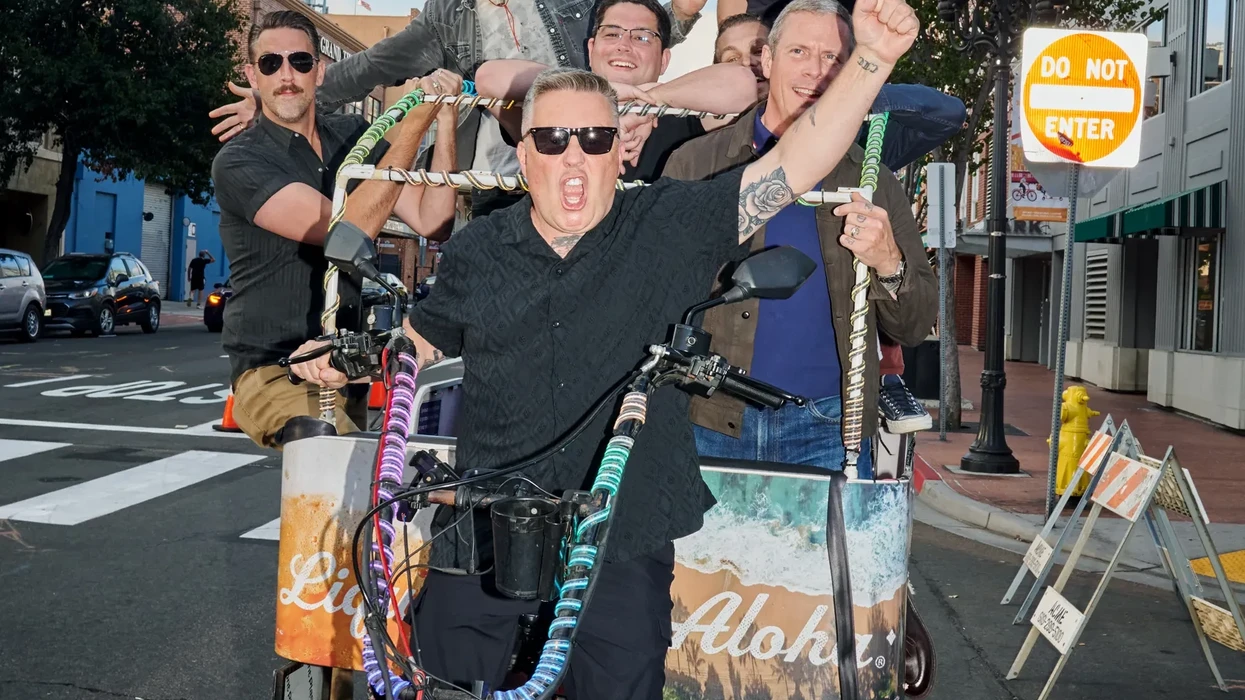
 Ken Casey stuck around after the show in San Diego, California, talking to members of the International Brotherhood of Electrical Workers.John Francis Peters for Rolling Stone
 Some of the challenge-coin haul.
 The band started as a bet. “My band has a show in three weeks,” Casey’s coworker told him in 1996. “I dare you to open for us.”John Francis Peters for Rolling Stone
 Dropkick Murphys (from left): Casey, DaRosa, Webster, Kelly, Rheault, Brennan, and Lynch John Francis Peters for Rolling Stone
 Casey is largely the voice of the band, but the other members back him up. “We’re so lucky he’s the mouthpiece,” says Brennan, left. John Francis Peters for Rolling Stone
 “Only the Irish can take a song about death and destruction, famine, alcoholism, and raise a glass like it’s an anthem,” says Casey. John Francis Peters for Rolling Stone
 “Anytime it feels like things are about to plateau for us, something gives us a little bump,” says guitarist Lynch. “It feels exciting. It feels dangerous. It feels like doing something.” John Francis Peters for Rolling Stone

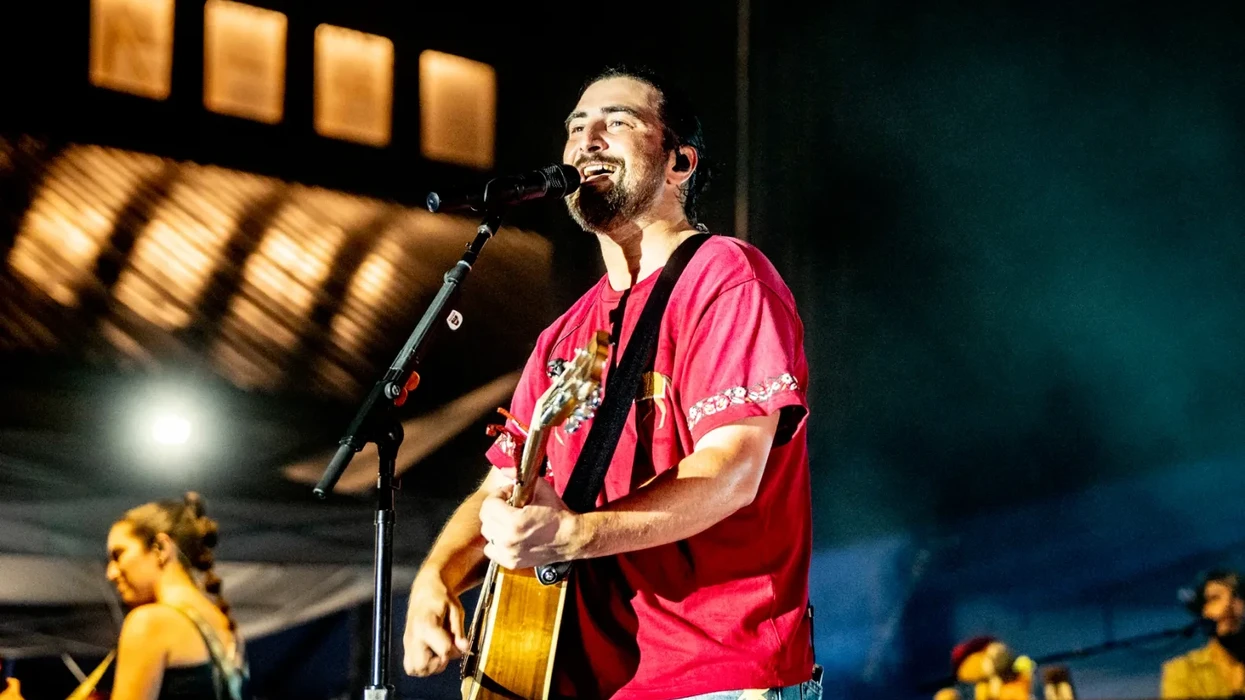
Jay-Z performing at the Stade de France in Saint-Denis in Paris.
Jay-Z Deserves the Super Bowl Halftime Gig
Where’s the love? Jay-Z asked that question 25 years ago, in the chorus of one of many songs in his catalog that still move audiences today. If he performs “Heart of the City” as part of his Super Bowl halftime show next February, those indignant bars are sure to be a highlight: “First the Fat Boys break up, now every day I wake up, somebody got a problem with Hov…” It would be an appropriate choice, too — because then as now, any time Jay-Z notches a new achievement, people find a way to complain.
The jokes and nonsense started almost as soon as the first rumors trickled out that Jay, whose company Roc Nation has executive-produced the Super Bowl halftime show since 2019, might be choosing himself to headline next year’s show. “Jay-Z just Dick Cheney’d himself for the Super Bowl,” Puck‘s Matthew Belloni quipped on X last week, alluding to the time that the late prince of darkness, who’d been asked to run the vice-presidential search committee for George W. Bush’s 2000 campaign, put himself on the ticket. (Super hip and current reference, and not at all apples-and-oranges.) Others pointed to TMZ reports that pop stars like Harry Styles and Justin Bieber had been asked first. “How are they the frontrunners, and he end up in the front?” Cam’Ron, who’s delighted in trolling Jay for many years, wondered aloud on his podcast. “Out of all the people on the roster, they couldn’t pick nobody else?” asked Cam’Ron‘s co-host, Ma$e.
These critiques miss the point, which is that Jay-Z is one of the best choices for a high-profile gig like this. He’s a superstar with a comparable level of name recognition to any other A-lister in music. He has a deep stack of classic songs going back decades. And he’s a highly skillful live performer who knows his way around a stadium stage, as he’s spent this year reminding people on his Jay-Z 30 tour. He tore down Yankee Stadium three nights in a row this summer; just last week, he rocked SoFi Stadium, which happens to be the same place where the 2027 Super Bowl is being held. He held the crowd’s attention with ease at all of those shows, and though there were plenty of glittery guests — that’s a given at a Jay show, and it will surely be true at the Super Bowl, too — he did it mostly through the force of his own magnetic energy. Let’s state the obvious here: Jay-Z is really, really good at rapping. We’re talking about one of the slickest, sharpest talkers in the history of words, someone who made it to the top through a sustained act of myth-making, then kept going. Are we seriously asking whether he can handle a 15-minute televised performance?
And yeah, there’s a touch of self-congratulation in the way he appointed himself. So what? Praising his own gifts is arguably Jay-Z’s greatest talent of all. He made a fine art out of self-applause. He told his story again and again, retracing the steps from Marcy Projects to the corner suite, and he made us believe. It would almost be insulting to the audience if he didn’t give himself the gig at some point.
Pop culture observers in recent years surely remember the backlash to Super Bowl headliners like Kendrick Lamar and Bad Bunny — all of it at least culturally conservative, and much of it frankly just racist. The blowback to Jay’s announcement is mostly coming from other quarters, at least for now (let’s just wait to see what the right-wing swamps make of this one). But it’s disappointing in a different way. Jay-Z has spent his career expounding hip-hop as a mainstream commercial force. He’s not a businessman, he’s a business, man. But he’s also an artist. He’s made huge amounts of money, and gotten himself into the rarefied rooms where he even has the ability to give himself a gig like this, by spinning his experiences into compelling narrative art, one verse at a time. Let’s not lose sight of how impressive his life’s work really is. Jay-Z is not some random C-suite bro, and he’s definitely not Dick Cheney. He’s one of the greatest rappers of all time, by any measure. He’s earned that Super Bowl spot.