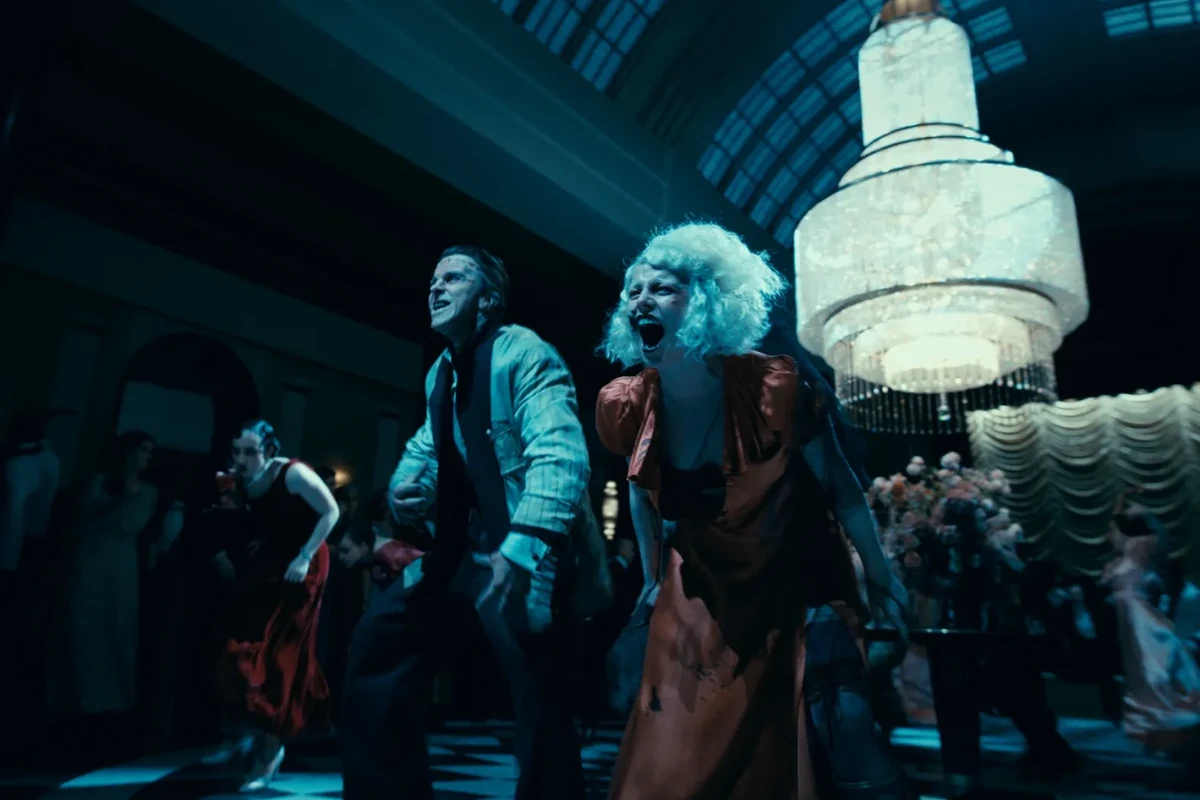

He’s a reanimated corpse, cursed to wander the land in a state of existential misery for centuries! She’s a former moll for a two-bit gangster, brought back from the dead to become his soulmate! You could say they’re made for each other — literally, in her case. Not that this young woman with a serious bone to pick with the patriarchy had much of a choice in the matter. Her would-be groom and his doctor friend dug her up, enlisted a scientist to pump thousand of volts of electricity through her, and now they simply expect her to play house for all of eternity? Fuck that! Doesn’t she have a say in any of this? Why, it’s enough to make a once-dead, now alive again and extremely angry lady start a revolution and burn the whole rotten, sexist infrastructure to the ground.
The Bride! — Maggie Gyllenhaal’s radical, fit-to-burst take on The Bride of Frankenstein — is, at its molten core, all about agency. Who gets it, who doesn’t, and how so much of it seems to run across chromosome-based lines. It’s also about the joys of true partnership, and the need to be taken on your own terms or not be taken at all. And the concept of the outlaw couple, and how that everlasting cliché of lovers on the lam has become part of our nation’s collective pop mythology. And about reclaiming Mary Wollstonecraft Shelley’s legacy from the male-dominated canon. And about the infinite pleasure of watching actors in 1930s swells-and-dames cosplay. And the joys of old-timey musical numbers — who doesn’t like old-timey musical numbers? And… and…
There are a lot of ideas jockeying for space and oxygen in The Bride!‘s two-hour-plus running time, and a lot of different movies happening in this movie. It’s as if Gyllenhaal was worried that she might never be able to make another film after her impressive debut The Lost Daughter (2021), so when granted a chance for a follow-up, she decided to make what would have been her next four films all at once. Given that this gloriously batshit mix of genre flicks, gender politics, TCM programming run amok, camp, punk, and rage comes courtesy of Warner Bros. — the same studio that gave us savvy and aspirational works like Sinners, One Battle After Another, and Barbie, and is likely to get a serious political makeover — it’s tough to blame her. We need more Borgias like Warner’s to support ambitious filmmakers. But what we really need are more ambitious filmmakers like Gyllenhaal, who’s willing to swing for every fence in her sightline. She’s an artist who has lots to say. And this riff on Shelley’s modern Prometheus story gives her the chance to say it all loudly, if not always clearly.
We open on Shelley herself, speaking from beyond the grave and bemoaning the fact that she had more stories to tell before her untimely demise at 53. What the author needs is another chance to speak her truth, which requires another body. Shelley is portrayed by Jessie Buckley, who also does double duty as the new living vessel in question. Our narrator names the woman Ida, as in, “I’d-a rather not” — a version of the tagline of Herman Melville’s Bartleby, the Scrivener, published two years after Shelley’s death in 1853, and a recurring motif in the movie’s marathon of running jokes. Ida is a gangster’s moll in Chicago circa 1936. After being possessed by Shelley, the lady makes a scene at a fancy restaurant, to the displeasure of her dining companions. She soon has an unfortunate encounter with a staircase.
Meanwhile, at a lab across town, a strange figure calls on a doctor. Frankenstein (Christian Bale, in the role he was reanimated to play) has had enough of traipsing the globe, cursing his fate as God’s lonely man. Now he’s ready to settle down. Having perused the treatises of one Dr. Euphronius (Annette Bening), Frank has sought her out and would like her to fashion him a bride. The good doctor is reluctant to test some of her more outré theories of “reinvigoration” after suffering a tragedy during an experiment. It would be too traumatic. “I thought you were a mad scientist,” Frank counters. Oh, snap! Euphronius is in.
Cut to: Zap! Crackle! Pow! Ida returns from the dead, coughing up black goo; the ink-blot stain across her right cheek will become her signature look, her permanent mark of Cain, her Nike swoosh. She’s unsure about this new arrangement, though Shelley is ecstatic, and keeps butting in whenever Ida and Frank try to have a conversation. Eventually, they end up at a speakeasy that Gyllenhaal films like a nightclub of the queer and the dead. Some men get a little too handsy with Ida on the dance floor. They follow her and Frank out. The offenders’ heads get stomped. And now the duo hit the road, with Ida now going by Penelope — maybe because that was the name of Odysseus’ wife, maybe because “Pretty Penny” sounds like a good nom de sensation. They soon become folk heroes and media sensations, a Bonnie and Clyde for the mall-goth set. To quote the film’s version of Shelley: Here comes the motherfucking bride!
 Jessie Buckley becoming the Bride.Warner Bros.
“Maximalist” doesn’t begin to describe The Bride!, and its idea of restraint is to give the title one exclamation point instead three. There are song-and-dance numbers, some of which take place in the endless MGM-style musicals that Frank obsessively watches, and others that the couple stage themselves; one extravaganza even starts a manic new dance craze that makes the Charleston seem quaint. Jake Gyllenhaal shows up as an old-fashioned hoofer in top hat and tails. Peter Sarsgaard and Penélope Cruz play detectives pursuing the duo, occasionally doubling as mouthpieces for some of the more Power Point-like messaging about social double standards. The movie itself is drunk on movies, though there seems to be little affection for the Universal horror films that provided its foundation. Still, there’s room for torch-carrying mobs and Tommy guns. Anachronisms abound. No opportunity for kitsch is passed up. Did you think “Puttin’ on the Ritz” wouldn’t get a a shout-out and a soft-shoe number? Or that “Monster Mash” wouldn’t be on the soundtrack? Wrong on both counts.
Some things work, others don’t, and still others feel like fertile ground that gets seeded but never really tilled — a populist movement inspired by the bride’s antics, complete with acolytes copying her frizzy hair and black splash across the lips, is briefly introduced, then forgotten until its trotted out for a credits-roll punchline. (You do get the headlines “Girl Rrriot!” and “Twisted Sisters Rage Against the Machine!” out of it however, which: 10/10.) And yet, even among the batshit sound and fury, the movie still makes space to give its stars a showcase. Bale once turned a “modern” man into a monster with American Psycho; he now does the inverse with Frankenstein’s creation — don’t call him a monster, it’s triggering — and shows you melancholy and longing beneath this sensitive brute. Buckley was already one of the most exciting actors around before Hamnet raised her profile, and here, she’s encouraged to play fast and loose. The scenes in which both the Chicago moll and the late British writer keep fighting over who gets to control the Bride find her toggling between accents, sometimes in the same sentence, sometimes in the same syllable. But even when she’s merely called on to trade barbs, gleeful smiles, and sorrowful glances with Bale, she’s electrifying.
You can’t say that Gyllenhaal hasn’t gone for broke with The Bride!, and the more you watch the actors give life to the central idea of a meeting of scarred bodies and equal minds, the more you feel like you’re watching something not just perversely over-the-top but personal. But we don’t think her main screen counterpart is the Bride herself, even if she’s a perfect vessel for female rage. When Bening’s doctor first shows up, her bearing and her wavy hairdo bring to mind Ernest Thesiger, the actor who played the same mad-scientist role in the original Bride of Frankenstein movie. Look closer, however, and the person she resembles most, hairdo and all, is Gyllenhaal herself. Both the director and Euphronius are women working in a male-dominated field, who’ve undoubtedly been underestimated and dinged for their ambition. Both find ways to eventually make their brilliance seen. Both are creators. Neither of them wants to wait to be given permission to do what do. Thankfully, one of them is real.


 McCollough in Los Angeles, 2023 Pete Lee


 Reggie Watts during The Late Late Show With James Corden in 2016 Terence Patrick/CBS/Getty Images
 McCollough with sister Colleen Courtesy of Colleen McCollough
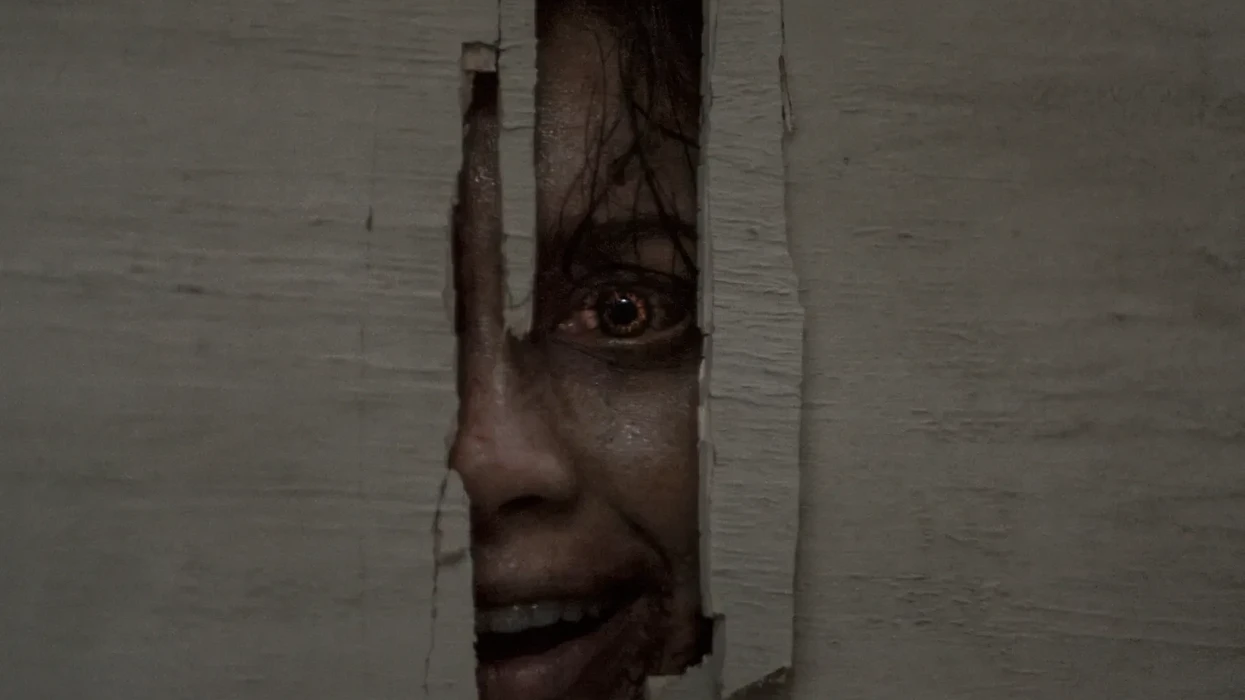
 Erroll Shand in Evil Dead Burn.Warner Bros. Picture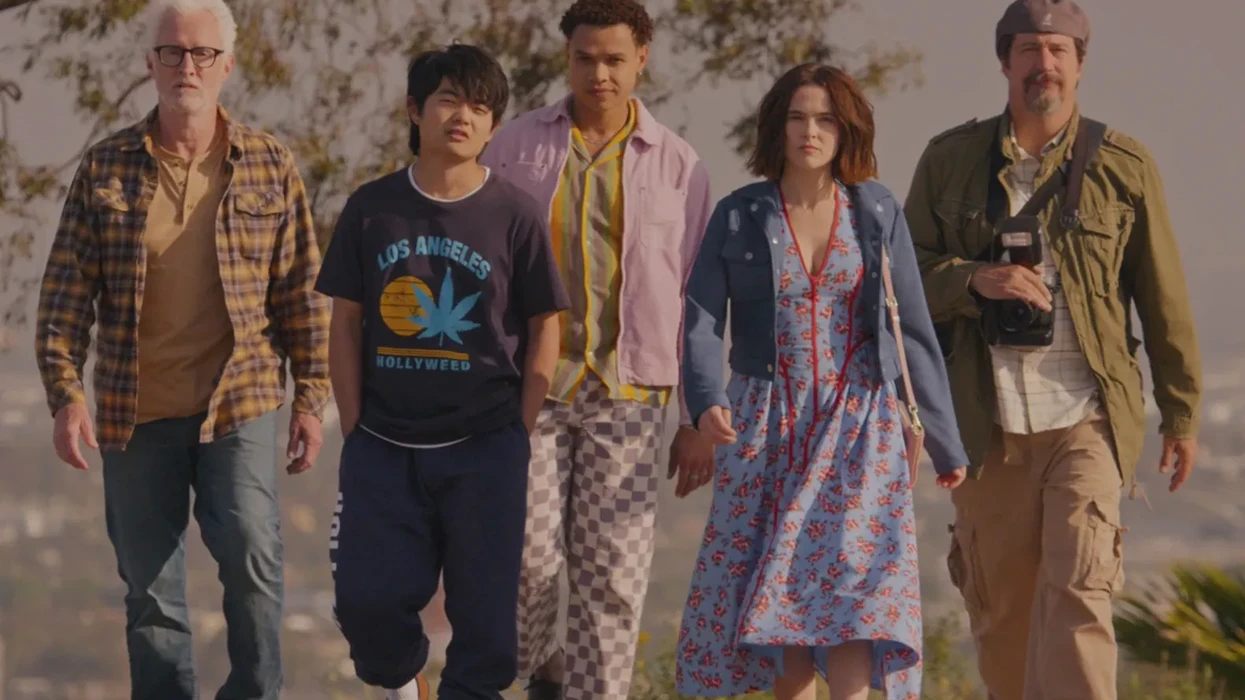
 That one dude from that TV show in ‘Gail Daughtry and the Celebrity Sex Pass.’ Sony Pictures Classics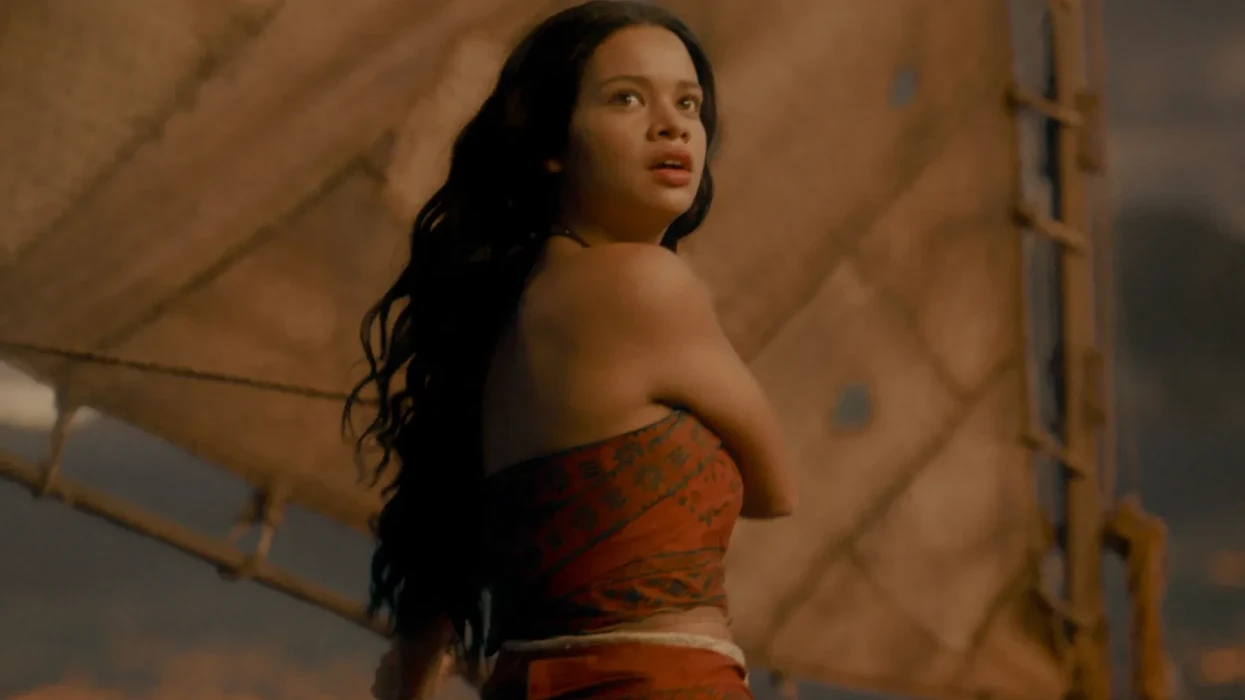
 Dwayne Johnson in ‘Moana.’