
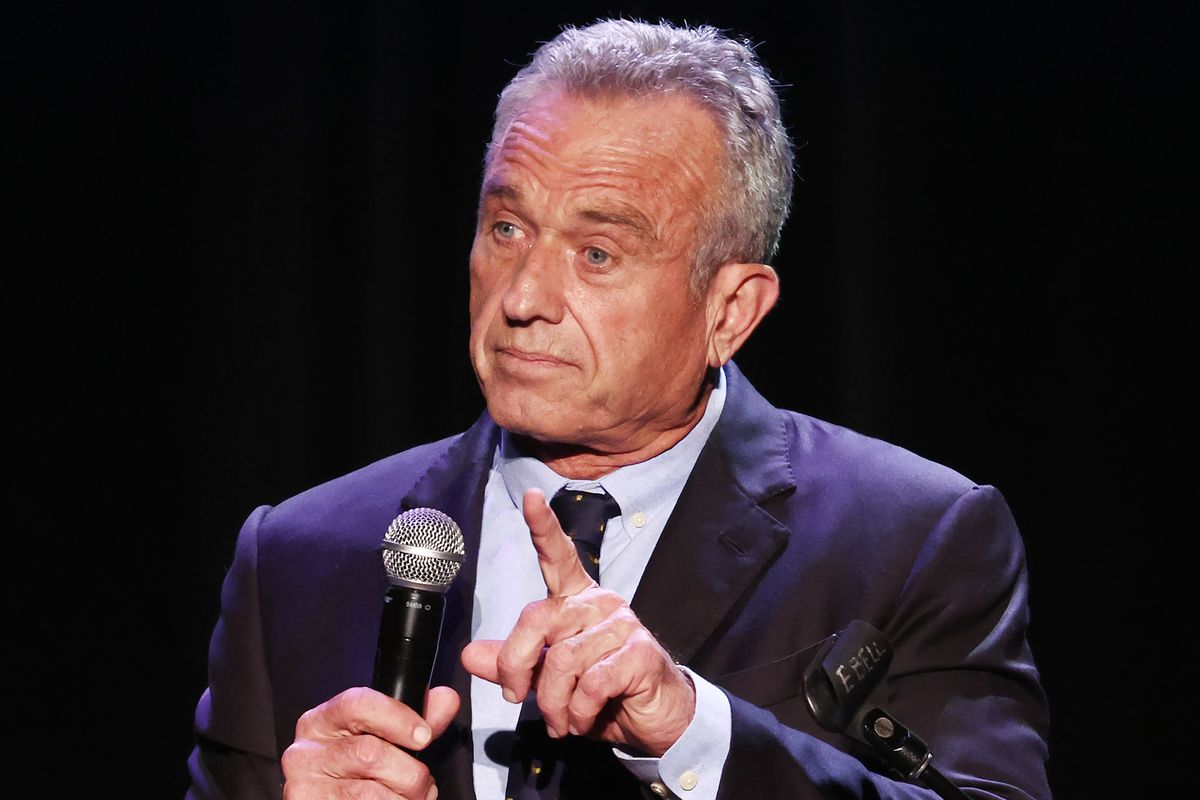

Robert F. Kennedy Jr.’s extremely colorful run for office is expected to come to an end soon, but it will not be forgotten. Since his campaign began last April, the anti-vaxxer told us about his brain worm, his uncertainty around 9/11, and the time that he left a dead bear cub in Central Park. Democrats have made hay calling Donald Trump, J.D. Vance, and Republicans “weird,” but Kennedy exists on a plane of strangeness inaccessible to anyone operating within the two-party system. As the cash-strapped Independent reportedly prepares to drop out of the race and endorse Trump, here are some of the most bizarre moments from his failed — but memorable — campaign.
He said doctors found a dead worm in his brain
In May, The New York Times reported that in a 2012 deposition Kennedy said doctors found a dead worm in his brain, which contributed to memory loss and mental fog. He explained that what doctors found in scans “was caused by a worm that got into my brain and ate a portion of it and then died.”
RFK responded by posting on X: “I offer to eat 5 more brain worms and still beat President Trump and President Biden in a debate.”
He admitted he left a dead bear in Central Park
Kennedy posted a video in early August in an attempt to get ahead of a New Yorker profile that included a story about how in 2014 he left a dead bear in Central Park. In the video, Kennedy explains that he was in the Hudson Valley when he says he saw a woman hit a bear cub with her car. He says planned to skin the bear and “put the meat in my refrigerator.” He took the bear carcass and spent the day doing falconry, drove back to New York for dinner, then had to get on a plane. He needed to do something with the bear, though, so he decided it would be funny to dump it in Central Park and create the impression that a cyclist hit it. He did so, and the next day the dead bear was a major local news story. No one knew how the bear got into the park — until now.
Kennedy later told the New York Post that he has been picking up roadkill all of his life. At one point, he said, he had a “freezer full of it.” He continued that he had a “thousand cubic foot freezer full of roadkill.”
He said “I’m not a church boy” in response to sexual assault allegations
In July, Vanity Fair published a story on Kennedy’s dark past that included an accusation that he sexually assaulted a family babysitter. Eliza Cooney alleged that in 1998, when she was 23, Kennedy came up behind her in the kitchen pantry and groped her breasts. On another occasion, a shirtless Kennedy allegedly asked her to rub lotion on his back.
The crazy part is that Kennedy did not deny the allegations. “Listen,” he responsed on a podcast, “I’ve said this from the beginning. I’m not a church boy. I am not running like that. I had a very, very rambunctious youth.”
“I said in my announcement speech that I have so many skeletons in my closet that if they could all vote, I could run for king of the world,” he added.
He was accused of eating a dog
The bear story is not the only time Kennedy has appeared to be an adventurous eater. The Vanity Fair story on Kennedy’s past included an image of Kennedy making like he was eating what was speculated to be a dog. He said that he was actually eating a goat in Patagonia.
He expanded on his culinary morals in an interview with NewsNation: “I’ll eat virtually anything. There’s two things I wouldn’t eat. Well, three. I wouldn’t eat a human, I wouldn’t eat a monkey, and I wouldn’t eat a dog. I think I’d eat anything else, but I just couldn’t bring myself to do those things, so it is a goat and you are what you eat.”
Thank you for sharing!
He held a sweepstakes to fly falcons with him for a day
Kennedy held a sweepstakes to win a day of falconry with him on his campaign’s website. “Robert F. Kennedy, Jr. discovered hawking when he was 9 years old and has been involved in the sport ever since. It’s one of the great joys of his life. And now, he’d like to share his love of hawking with you.”
Kennedy also has two pet ravens, and he claims they can talk “like a parrot.” At one point, he had a pet emu that would attack his wife.
His son leaked a phone call of him talking with Trump about vaccine conspiracy theories
RFK Jr. apologized last month after his son leaked a video of him talking on the phone with Donald Trump about vaccine conspiracy theories. “When you feed a baby, Bobby,” Trump apparently said, “a vaccination that is like 38 different vaccines, and it looks like it’s meant for a horse, not a, you know, 10 pound or 20 pound baby.”
Trump seemingly offered Kennedy an administration spot in the phone call. The Washington Post later reported that the two have discussed an administration position, contingent on Kennedy dropping out and endorsing Trump.
He pushed bigoted Covid conspiracies
Last year, video surfaced that showed Kennedy saying: “Covid-19 is targeted to attack Caucasians and Black people. The people who are most immune are Ashkenazi Jews and Chinese. We don’t know whether it was deliberately targeted that or not.”
He said the story was “mistaken,” but also mentioned a study that “shows that COVID-19 appears to disproportionately affect certain races.”
This year, a TV station in Maine gave Kennedy another opportunity to respond. “All I was doing,” he said, “was quoting an NIH [National Institutes of Health] funded paper that anybody can look up … that was funded by the United States government … that showed that certain races were more susceptible.”
He continued: “The races that it was least compatible with were people from Finland. The second most was Ashkenazi Jews. The third most was Chinese nationals. It was most compatible with Blacks, with people from Africa, and with Caucasians.” Kennedy attempted to clarify: “There are ethnically targeted bio-weapons. I never said that Covid was one of those.”
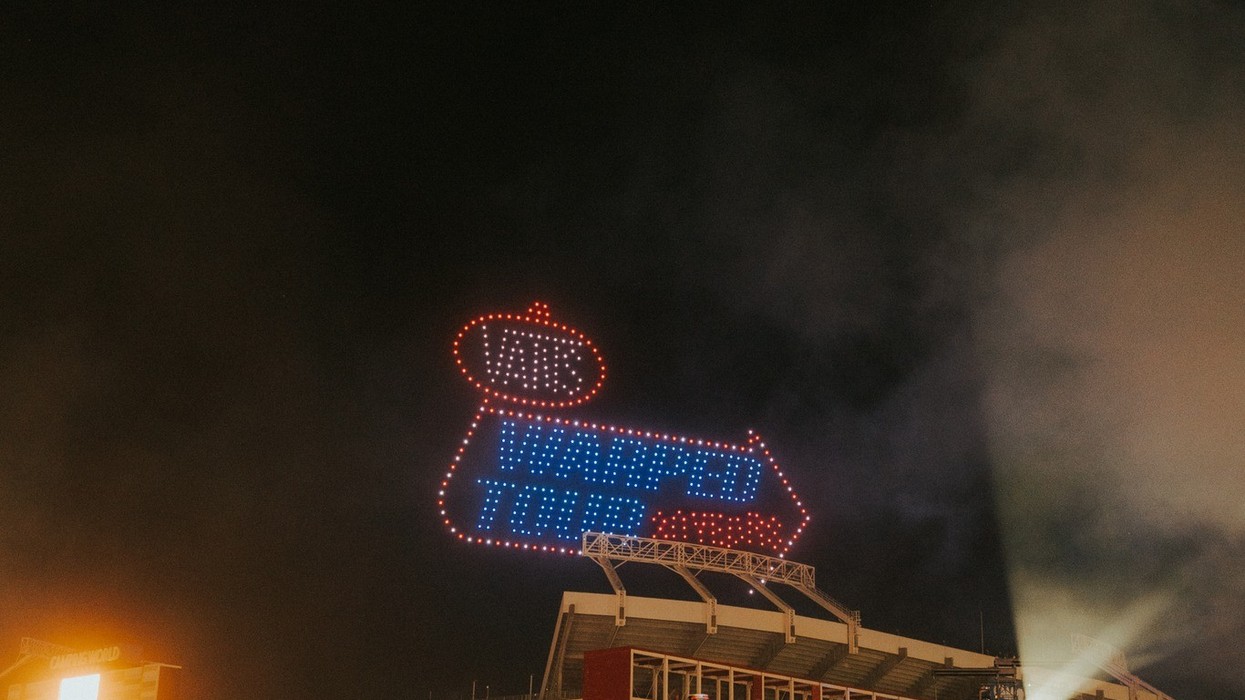
He apologized for a Super Bowl ad imagining him as his uncle, John F. Kennedy
RFK Jr. apologized in February after his super PAC ran a Super Bowl ad that recreated a famous ad for former President John F. Kennedy, his uncle, but with pictures of himself. This was after JFK’s grandson called the campaign “an embarrassment.”
Bobby Shriver, RFK’s cousin, posted on X that the ad “used our uncle’s faces — and my Mother’s. She would be appalled by his deadly health care views.”
“I’m so sorry if the Super Bowl advertisement caused anyone in my family pain,” Kennedy responded on X. “The ad was created and aired by the American Values Super PAC without any involvement or approval from my campaign. FEC rules prohibit Super PACs from consulting with me or my staff. I love you all. God bless you.”
He told Elon Musk anti-depressants are responsible for school shootings
Last year, Kennedy told Elon Musk in a long-winded X interview that he blames school shootings on anti-depressants. “I also am going to look very closely at the role of psychiatric drugs in these events,” Kennedy promised. “And there are no good studies right now. That should have been done years ago on this issue, because there’s a tremendous circumstantial evidence [that] SSRIs and benzos and other drugs are doing this.”
He added: “Prior to the introduction of Prozac, we had almost none of these events in our country.”
He debated by himself
In June, CNN excluded Kennedy from the presidential debate between former President Donald Trump and President Joe Biden because he didn’t meet certain criteria. Kennedy’s solution was to hold his own debate — by himself. Kennedy stood behind a podium and watched the CNN debate, which he would pause and offer his own responses to the questions.
He said he “won’t take sides” on 9/11
In July, Kennedy said he was unsure of his take on 9/11. He posted on X: “My take on 9/11: It’s hard to tell what is a conspiracy theory and what isn’t. But conspiracy theories flourish when the government routinely lies to the public.”
He continued: “As President I won’t take sides on 9/11 or any of the other debates. But I can promise is that I will open the files and usher in a new era of transparency.” He said that he was referring to a CBS 60 Minutes segment on possible involvement by Saudi Arabia. He promised transparency on the matter should he become president.



War Is Peace: Trump’s Regime-Change Reversal
As American and Israeli rockets fly into Tehran, with the stated goal of regime change, anyone who bought into the self-evidently absurd idea of “Donald the Dove” ending America’s forever wars ought to be suffering from a bloody form of buyer’s remorse.
It was always bullshit. But that’s what the Trump team was selling hard. Take human ghoul Stephen Miller’s tweet days before the election: “Kamala = WWIII. Trump = Peace.”
The Trump team reads George Orwell’s 1984 like an owner’s manual and so of course “war is peace.” Their undermining of NATO and the dismantling of American alliances in favor of a “might makes right” foreign policy executed by a sycophantic kakistocracy is a guarantee of more war amid autocratic power grabs worldwide, with a side order of corrupt crony capitalism to profit from the chaos.
If you voted for Trump and believed him, this is on you. And that includes self-styled Palestinian peace activists who thought that Biden and Harris were the worst of all possible worlds and stayed home. We will no doubt see protests for the innocent lives lost in these strikes — but I’d have a lot more time for those folks if they were also seen protesting the estimated 20,000 to 30,000 Iranian lives snuffed out by murderous mullahs in the last few months alone.
The Islamic Republic of Iran has been despotic and dangerous from its inception. The Iranian people have been oppressed and denied basic freedoms for decades. But this is an extreme example of a war of choice. The American military strikes against Iran’s nuclear weapons facility last year were justified because Iran cannot be trusted with a nuclear weapon. That is true. But the much trumpeted total obliteration of those facilities is apparently not true — or so goes the justification for this war. And don’t forget that it was Trump who pulled the U.S. out of an Obama-era deal to stop Iran from developing weapons — arguing absurdly that the imperfect anti-nuke deal needed to be blown up to stop Iran from developing a bomb. Iran’s subsequent progress toward a bomb then created the rationale toward these strikes. This is a self-inflicted state of emergency. Peace is war and war is peace.
Pity the willful dupes in Congress who deluded themselves into thinking that Trump deserved the Nobel Peace Prize. They’ll probably rationalize that he would’ve been peaceful if he got the honor. Now it will be read as a cautionary tale for not sucking up. The chairman of the Board of Peace is now bored of peace. While Rand Paul remains admirably consistent, it’s Lindsey Graham who is pirouetting around the Senate floor while the Gimp Speaker Mike Johnson is unable to speak for the basic constitutional principles of separation of powers let alone authorization to go to war.
If you’re feeling shell-shocked trying to keep up with Operation Epstein Distraction, get ready for the inevitable next crisis — regime change without a plan for replacement. This is what the Trump administration did in Venezuela — kidnapping the socialist dictator Maduro but keeping his regime in place in exchange for crude oil access. The opposition is still in exile and its leader María Corina Machado gave her Nobel Peace Prize to Trump in exchange for exactly nothing.
One of the clear lessons of history is that if you don’t win the peace, you don’t win the war. The Saudis and their Sunni allies will back the U.S. and Iran because they hate the Shia Iranians (who, incidentally, are not Arabs), but beyond removing the Iranian regime, the plans for replacement and stabilization seem TBD — and with Trump’s inability to stay focused on anything beyond his immediate self-interest, solid plans are unlikely to emerge. Maybe a leader will come from the underground opposition; maybe it will be the Shah’s son, who has been living in the U.S. waiting for a restoration like many members of the diaspora. The upside is that Iran has a distinguished history and an accomplished Persian culture: The Islamists don’t represent the entirety of the people of Iran and never have.
But the path ahead will be messy at best. It will require concerted effort and civil commitment, not just an open call for private investment from Mar-a-Lago members. If the United States is now kidnapping and killing dictators without direct provocation, it establishes a dangerous precedent which will come back to bite us after demolishing our moral authority in the world.
It is the unexpected effects, the cascades of consequence where we cannot always plan ahead, that cause most responsible statesmen to try to keep the peace. But Trump has the carelessness of a rich-boy bully who can always buy or bluster his way out of trouble. He’s a con man who has found his ultimate mark in his followers, who fool themselves into thinking that a reflexive liar is the one man with the courage to tell the truth.
Perhaps the most prominent example is the vice president himself — a bright guy who not that long ago compared Trump to Hitler and a deadly narcotic but then convinced himself that careerism demanded an abrupt conversion. After all, he endorsed Trump less than two years ago with this very serious column headlined “Trump’s Best Foreign Policy? Not Starting Any Wars,” explaining, “He has my support in 2024 because I know he won’t recklessly send Americans to fight overseas.”