

The latest tranche of Epstein files released by the Justice Department has sent shockwaves through the international community. Foreign governments, royal families, businesses, universities, and cultural institutions are investigating those with ties to the notorious sex criminal, and powerful figures around the world have been forced to step down from influential positions amid revelations that they were a part of his network. The United States, however, doesn’t seem to care so much.
It should be one of the most consequential sex and crime scandals in the history of the United States, but many of those tied to Epstein are skating by with little in the way of consequence. President Donald Trump — a longtime friend of Epstein’s whose name allegedly appears in the files over a million times — and other figures working within or tied to his administration seem to not only hang above the fray, but enjoy the protection of the American justice system.
This week, Attorney General Pam Bondi appeared before the House Judiciary Committee, where she thrice refused to acknowledge a group of survivors sitting in the hearing room, who all affirmed that they had not been granted an opportunity to meet with the attorney general despite their requests. Bondi refused to answer questions about the Justice Department’s failure to open investigations in potential coconspirators, and dismissed questions from lawmakers about the department’s sloppy handling of sensitive victim information, and about the over-redaction of potentially incriminating information.
The White House also shrugged off questions about Commerce Secretary Howard Lutnick, who — although not implicated in any criminality — was caught in a bold-faced lie about the extent of his dealings with Epstein. On Tuesday, White House Press Secretary Karoline Leavitt abruptly cut off a press briefing after being asked by a reporter if the administration would continue to stand by Lutnick. “Secretary Lutnick remains a very important member of President Trump’s team, and the president fully supports the secretary,” Leavitt said. Trump has also brushed off questions about Lutnick and other figures tied to the administration appearing in the files.
But outside of America’s borders, Epstein’s ghost is threatening to topple governments and prompting a wave of public and private sector resignations.
In the United Kingdom, the former Prince Andrew — now citizen Andrew Mountbatten-Windsor after being stripped of his titles in 2025 — was evicted from the royal “lodge” he shared with his ex-wife Sarah Furgeson, the former Duchess of York, who was also revealed to have a financial relationship with Epstein earlier this month. Mountbatten-Windsor settled a civil lawsuit in 2022 brought against him by Virginia Giuffre, who accused Epstein and his associate Ghislaine Maxwell of trafficking her to the former prince and other men when she was a teenager.
Now, the UK’s Crown Prosecution Service is weighing an investigation into Mountbatten-Windsor over new evidence that he may have transferred confidential government reports to Epstein while representing the kingdom as a trade envoy.
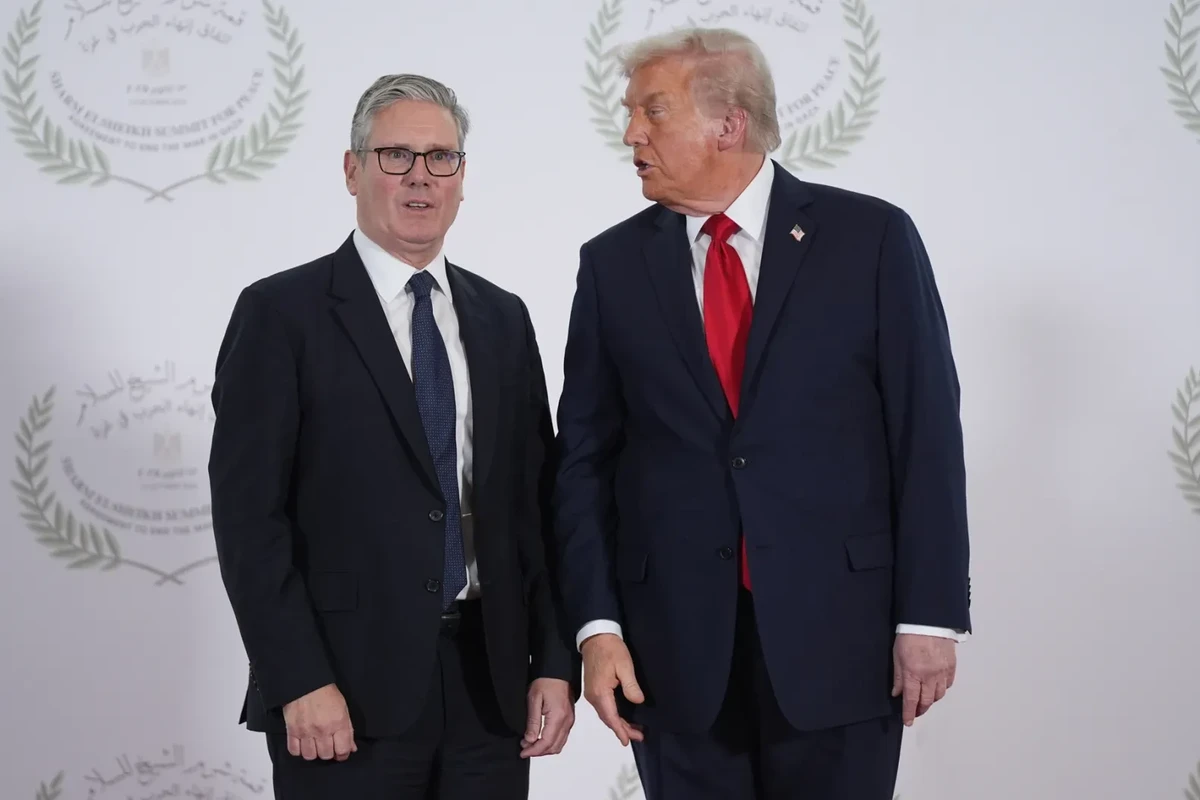
British Prime Minister Keir Starmer, meanwhile, is facing calls for his own resignation and a potential vote of no confidence over his relationship with Peter Mandelson, a prominent figure in the Labour Party who was tapped to serve as United States Ambassador under Starmer. Questions about the extent Starmer was aware of Mandelson’s relationship with Epstein were heightened after newly released emails revealed that the two men had joked about Epstein’s relationships with young women, and that Mendelson may have provided Epstein with sensitive government emails containing privileged financial information.
Two high-level officials in Starmer’s administration have resigned in the face of the scandal, Mandelson resigned from the Labour Party this month after being dismissed from his ambassadorship last year, and authorities are exploring a criminal investigation into his conduct. While Starmer insists he was misled by Mandelson about his ties to Epstein, in the view of the UK public and lawmakers, the buck stops with him.
Consequences are being felt in other nations, as well. Norwegian Crown Princess Mette-Marit is in hot water after emails revealed she had borrowed one of Epstein’s Palm Beach properties in 2013. Norway’s former Prime Minister Thorbjørn Jagland has also been embroiled in the scandal. On Thursday, Thorbjørn was charged with corruption by Norwegian authorities in connection to Epstein, after being stripped of his diplomatic immunity earlier this week.
Jack Lang, France’s former Culture Minister, resigned last week from his position as president of the prestigious Arab World Institute in Paris. In Slovakia, a national security adviser to Prime Minister Robert Fico stepped down earlier this month. A Swedish U.N. official resigned after the documents revealed a visit to Epstein’s island. Several other countries — including Poland and Lithuania — have opened investigations into the potential trafficking of girls from their nations.
On Friday, DP World Chairman and Chief Executive Sultan Ahmed Bin Sulayem — who was discovered to be one of the names of potential Epstein co-conspirators whose name was redacted in files after a review by lawmakers — resigned from his position atop the Emirati international exporter.
Rep. Ro Khanna (D-Calif.), who pushed to unredact the names of Bin Sulayem and five other individuals, wrote on X after Bin Sulayem’s resignation that he and other lawmakers would “not rest until there is elite accountability for the Epstein class.”
But in the United States, the Justice Department has staunchly refused to pursue further criminal investigations into Epstein’s potential co-conspirators or participants in his trafficking ring. Resignations have been few, and powerful figures with ties to Epstein, from former President Bill Clinton and Microsoft founder Bill Gates to Tesla billionaire Elon Musk and former Trump adviser Steve Bannon seem to have been afforded cover under Trump and his administration’s repeated insistence that the scandal is a “hoax” and that Americans should turn their focus elsewhere.
As the international community rallies to excise the cancer of Epstein’s crimes from its public institutions, Americans can only watch from afar, and lament the decay of what was once a model justice system.


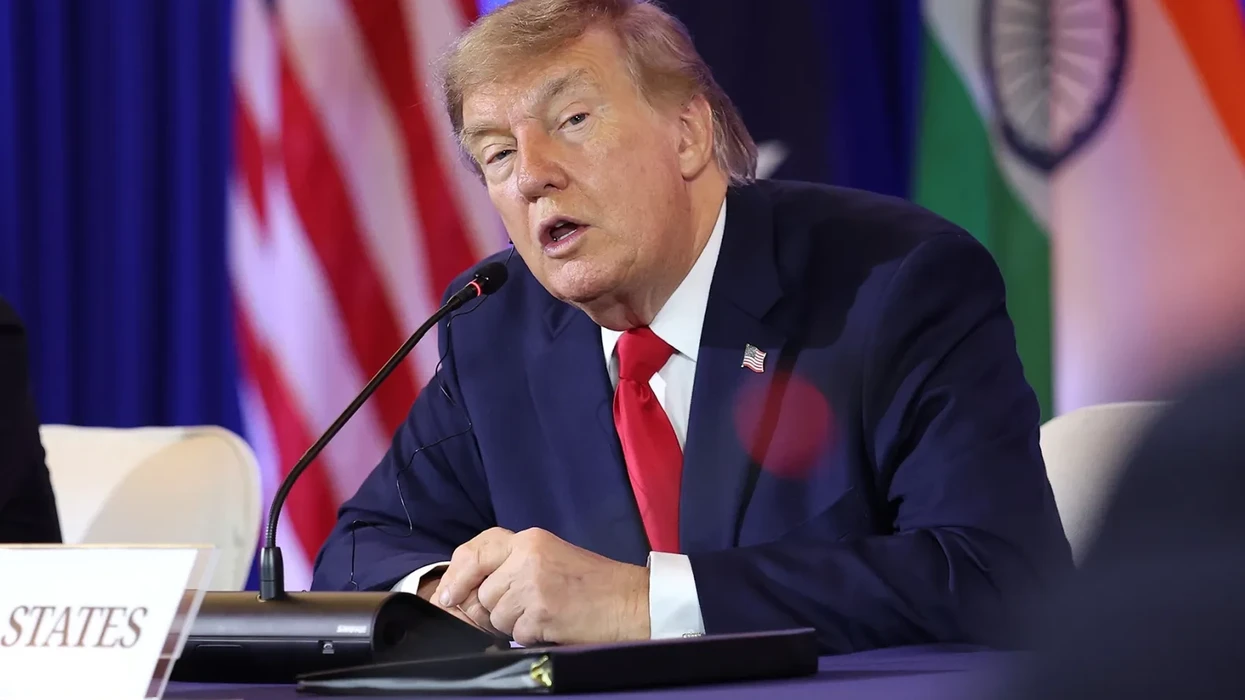

Stephen Miller in Washington, D.C., on Oct.21
Stephen Miller Wants to Win Back Young Men. It Might Not Be So Easy
Stephen Miller is not much of a man, at least by the right wing’s increasingly Herculean standards. Gawky, bald, and pasty, Miller has nevertheless ascended during Donald Trump’s second administration, most recently climbing from an advisory role to the lame-duck leader’s chief of staff.
In that role, Axios reports, Miller has one priority: win back America’s young men to the MAGA cause.
The right sees young men as one of its most important demographics, as they have been less susceptible to the overall leftward shift of young people over the past 20 years. But after making massive gains with the group in the 2024 cycle, Trump’s MAGA Man project stumbled, its support drying up faster than the lawn in front of a Texas frat house. In the 2026 midterms, young men swung 38 points in favor of the Democrats compared with how they voted in 2024. Why this happened is a complex puzzle, but the biggest piece in it is clear: American men are sick of war. In Iran, they faced the existential threat that America would revert to the warlike nation that sucked their older brothers’ and parents’ generation into 20 years of futile bloodshed in the Middle East.
Miller appears to have identified this early. The New York Times reported last week that Miller’s pitch to Trump when he was angling for the chief of staff job involved direct advice to wind down the Iran war, which Miller thought — correctly — had alienated supporters he couldn’t afford to lose.
But Iran is only part of the picture. I’ve reported on masculinity in America for years, and the anxieties that young voters face are more holistic than just a fear of being sent to die in a foreign land. That’s part of it, of course — while Generation Z was mostly too young to fight in the peak of the Global War on Terror, plenty of them remember older siblings or parents who spent years away in Iraq or Afghanistan. But what they remember even more were the economic effects of 20 years of American war. For many young men I’ve spoken to over the past few years, their childhood political memories aren’t Clinton getting a blowjob or the all-encompassing trauma of 9/11. Those on the older side remember their parents losing jobs in the 2008 crash; those on the younger side left high school or college and walked right into the Covid pandemic.
Now, with missiles flying over the Persian Gulf, young men see it happening all over again: gas prices going up, food costs rising, and the promise of owning a home and one day retiring slipping even further down the drain, even if they aren’t drafted to fight for a cause they don’t support.
In 2016, and to a much greater extent in 2024, Donald Trump effectively harnessed young men’s anxiety about their place in the world. In both those campaigns, he met men where they were: in 2016 on social media and in 2024 in a new-media world of podcasters and influencers. Both of these places gave a generation of adrift young men a culture they felt at home in — and in Trump, they had a leader there with them.
This had a profound effect. Some young conservatives, at least, still see their futures as directly linked with Trump, likely because the MAGA movement was the first time they’d ever felt a sense of political agency or control. But for those less ideologically linked with Trump, the relationship is more transactional. Sure, young men may get a kick out of Trump shimmying around on TV and talking trash. But what his successful campaigns have done is promise those men something concrete: their prices coming down, their fortunes going up, a leader who will fight for their place in the world. A few years back, at a UFC fight just after Trump was elected for the second time, a pair of twentysomethings told me that they loved that Trump “comes out like a fighter,” which they said “resonates with a lot of people that are hurting.” “When they see a strong figure like that, it gives a sense of hope,” one said.
The difference, now, is that Trump doesn’t represent that hope anymore. And that means Miller has a very, very tall hill to climb. He can’t, as he did in 2024, just tell men to “show that you are not a beta” and vote for Trump. Axios reports that Miller is expected to focus on more of this culture-war chum, cracking down on “woke” policies at schools and offices.
But all of that is window dressing. In the midterms, young men swung toward Democrats in record numbers because that party offered them something: an end to foreign wars, a better shot at the future. Even if Miller is successful and gets Trump to roll back the Iran war, young men aren’t stupid: you barely get credit for “ending” a war that you started in the first place.
Axios reports that Miller also plans to push other economic reforms the Trump administration has mentioned but not delivered on in the past, like prescription-drug prices, but also that they will continue to focus on fraud and eliminating the federal bureaucracy. The latter points sound like a rehash of DOGE, an idea that may have initially sounded good on paper but yielded unclear, if not disastrous, actual results. Still, it’s a sign that Miller has identified some of the core issues he believes lost Trump votes with every demographic, not just young men. Democrats have their own ideas of what Americans voted on this month, though, and heavy majorities in both houses of Congress they can use to push them.
The next two years, then, will determine which party is able to persuade young men that it’s fighting for them. Miller has taken this task upon himself, which Democrats should see as an opportunity. After all, he doesn’t look like that hard of a guy to beat.