

This article is being published in partnership with the watchdog group Documented.
Washington’s top pharmaceutical lobby oversaw the adoption of model legislation that would restrict voting access at the most recent meeting of the American Legislative Exchange Council (ALEC).
ALEC is an influential organization that brings together state legislators, private-sector corporations, and right-wing advocacy organizations to develop priorities and adopt model legislation for introduction in statehouses around the country. Its policy recommendations often become law in the states.
In this case, the model legislation capitalizes on MAGA-driven conspiracies around noncitizen voting and would make it easier for election officials to purge voters. The “Only Citizens Vote” model legislation directs state election officials to remove suspected noncitizens from voter rolls, offering vague direction that risks seriously restricting voting access for eligible voters.
The Election Integrity Network, led by Cleta Mitchell, helped draft and promote the model legislation. Mitchell — the former Donald Trump attorney who joined the infamous call in which the then-president demanded that Georgia’s top election official “find 11,780 votes” — also moderated a panel at the ALEC meeting.
A frequent critic of campus voting, Mitchell argued at the meeting that the manufactured threat of noncitizen voting justifies making it harder for college students to vote, too.
“You do not have to be a citizen of the United States to get a student ID, and you do not have to be a resident of the state to get a student ID,” Mitchell said to the room of state lawmakers. “I would urge you to introduce a bill to get rid of the student ID as one of the IDs that are accepted for voter registration [and] voting.”
The Election Integrity Network-backed “Only Citizens Vote” model policy was adopted unanimously by ALEC’s Federalism and International Relations task force. The task force is co-chaired by Douglas Petersen, a vice-president at Pharmaceutical Research and Manufacturers of America, or PhRMA — one of Washington’s most powerful lobbying groups, with $568 million in revenue in 2022.
ALEC task forces consist of state lawmakers and private sector members, who vote separately on whether to adopt model policy. On July 26, the task force’s public and private sector members unanimously voted to adopt the “Only Citizens Vote” model bill, including Cleta Mitchell herself, who is a new member of the task force as of December 2023.
The full list of members of ALEC’s Federalism and International Relations task force is not publicly available. An executive at the U.S. Chamber of Commerce, the nation’s top business lobby, previously served as the task force’s private chair — a position now held by Petersen.
Last month, the ALEC task force also voted unanimously to adopt a resolution supporting state constitutional amendments to ban local governments from allowing noncitizens to vote in school board or other municipal elections. The model bills will next go to ALEC’s board of directors for final adoption.
Notably, the pharmaceutical industry relies heavily on immigrant labor for its U.S. workforce.
Conspiracy theories about noncitizens casting ballots in U.S. elections have become a centerpiece of MAGA messaging in advance of the 2024 election. It is a manufactured threat: There is no evidence of noncitizens voting in significant numbers. House Speaker Mike Johnson (R-La.) has offered little more than “intuition” to support the claim that immigrants are casting ballots.
Still, noncitizen voting conspiracies have been mainstreamed by influential Republican politicians, amplified by billionaires like Elon Musk, and promoted by a network of election conspiracy theorists.
Those baseless conspiracy theories were on full display at the ALEC meeting. At the panel moderated by Mitchell, former Virginia Attorney General Ken Cucinnelli claimed without evidence that legal loopholes “are trying to be exploited on the left to move large numbers of noncitizens onto the voter rolls.”
Cuccinelli is now with the Election Transparency Initiative, a joint project of the anti-abortion group SBA Pro-Life America and American Principles Project. Both are funded by dark-money groups with ties to far-right billionaire Dick Uihlein and Leonard Leo, the highly influential architect of modern conservatism who helped orchestrate the overturning of Roe v. Wade. The Election Transparency Initiative is also a partner of the Honest Elections Project, a group helmed by Leo.
Another panelist, Chris Chmielenski of the Immigration Accountability Project, made the incredible assertion that “illegal aliens […] have already violated U.S. immigration law. So why not violate our voting laws as well?”
Chmielenski co-founded the Immigration Accountability Project last year after several years at Numbers USA, which the Southern Poverty Law Center has described as part of the “Nativist Lobby.”
The Immigration Accountability Project has been working closely with Mitchell, Cuccinelli, and other right-wing organizations as part of the “Only Citizens Vote Coalition,” which has been amplifying noncitizen voting conspiracy theories, organizing grassroots activists, and supporting federal and state legislation. The Only Citizens Vote Coalition sponsored the ALEC meeting at the “chairman” level, which cost at least $50,000.
Chmielenski also sought to use conspiracy theories about noncitizen voting to advance longstanding — and often cruel — policy goals. He argued that state lawmakers should prohibit young people who came to the U.S. as children from being eligible for in-state tuition, and tax remittances that immigrants send to family members in their home countries; additionally, Chmielenski also argued for barring undocumented immigrants from obtaining driver’s licenses.
“These are dealing with the magnets that would cause some of these illegal aliens to settle into your state,” he said.“If you can prevent illegal aliens from settling in your state, you’re going to drastically reduce the risk of these folks voting in your elections.”
Like Chmielenski, Cleta Mitchell sought to use noncitizen voting conspiracy theories to advance unrelated policy goals.
In addition to using the pretext of noncitizen voting to bar U.S. citizen students from using their college IDs to cast ballots, Mitchell argued that state legislators should make it harder for all citizens to register to vote. “I think same day registration is a huge problem for election integrity and particularly in this arena of protecting against noncitizen voting,” she told lawmakers at the ALEC meeting.
The ALEC “Only Citizens Vote” model policy also has repercussions for American citizens. The bill directs state election officials to cross-reference voter rolls against other state and federal data sources, and to remove voters who don’t respond to a demand that they provide proof of citizenship. Mitchell also asserted that the bill “establishes documentary proof of citizenship for new registrations,” although this is not reflected in the language on the ALEC website.
Documentary proof of citizenship is a key element of the SAVE Act, a federal bill introduced by Speaker Johnson that Mitchell, along with other members of the Only Citizens Vote Coalition, helped draft. The bill, which has been backed by Trump, is an ode to the racist Great Replacement Theory, or the idea that Democrats are encouraging immigrants to come to the U.S. to add new voters of color who will erode the influence of white Americans.
In a recent defense of the SAVE Act, Johnson claimed that Democrats’ opposition to the bill “exposes their intention to allow illegal aliens to vote,” demonstrating how this baseless conspiracy is used to pressure lawmakers and score shameless partisan points in an election year.
However, much like the SAVE Act, the Only Citizens Vote model policy presents several serious issues: Firstly, roughly 1 in 10 American citizens don’t have ready access to documents that can prove citizenship, like a birth certificate or passport, and would face substantial hurdles in gaining access to the ballot box under these proposals.
Another issue is that voters are busy. Even if a person has the necessary citizenship documents, making an additional trip to retrieve a passport from a bank deposit box, or asking for a family member to mail a birth certificate, creates unnecessary steps that will prevent some voters from registering to vote. Not to mention that voters could easily miss the mailed demand for their citizenship confirmation and show up on election day only to find that their registration has been removed from the voter rolls.
Ultimately, manufactured conspiracy theories about noncitizen voting are being used to justify restrictive voting laws and mass voter purges that will undermine the freedom to vote for American citizens.






War Is Peace: Trump’s Regime-Change Reversal
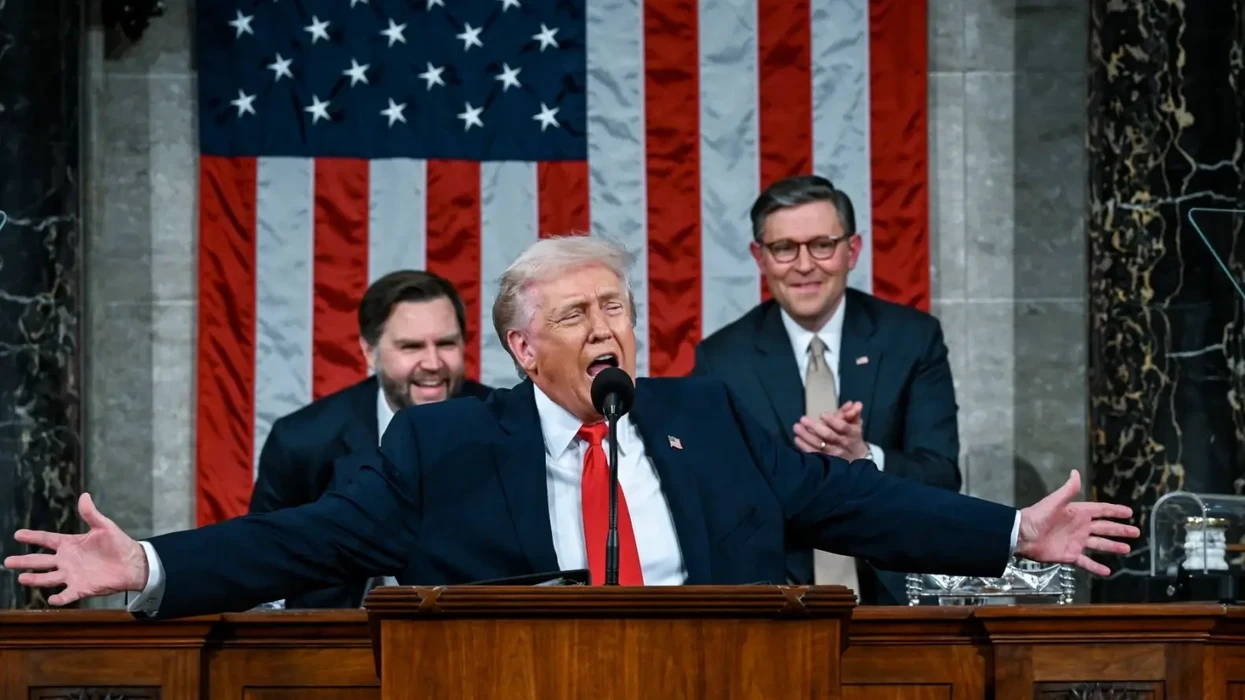
As American and Israeli rockets fly into Tehran, with the stated goal of regime change, anyone who bought into the self-evidently absurd idea of “Donald the Dove” ending America’s forever wars ought to be suffering from a bloody form of buyer’s remorse.
It was always bullshit. But that’s what the Trump team was selling hard. Take human ghoul Stephen Miller’s tweet days before the election: “Kamala = WWIII. Trump = Peace.”
The Trump team reads George Orwell’s 1984 like an owner’s manual and so of course “war is peace.” Their undermining of NATO and the dismantling of American alliances in favor of a “might makes right” foreign policy executed by a sycophantic kakistocracy is a guarantee of more war amid autocratic power grabs worldwide, with a side order of corrupt crony capitalism to profit from the chaos.
If you voted for Trump and believed him, this is on you. And that includes self-styled Palestinian peace activists who thought that Biden and Harris were the worst of all possible worlds and stayed home. We will no doubt see protests for the innocent lives lost in these strikes — but I’d have a lot more time for those folks if they were also seen protesting the estimated 20,000 to 30,000 Iranian lives snuffed out by murderous mullahs in the last few months alone.
The Islamic Republic of Iran has been despotic and dangerous from its inception. The Iranian people have been oppressed and denied basic freedoms for decades. But this is an extreme example of a war of choice. The American military strikes against Iran’s nuclear weapons facility last year were justified because Iran cannot be trusted with a nuclear weapon. That is true. But the much trumpeted total obliteration of those facilities is apparently not true — or so goes the justification for this war. And don’t forget that it was Trump who pulled the U.S. out of an Obama-era deal to stop Iran from developing weapons — arguing absurdly that the imperfect anti-nuke deal needed to be blown up to stop Iran from developing a bomb. Iran’s subsequent progress toward a bomb then created the rationale toward these strikes. This is a self-inflicted state of emergency. Peace is war and war is peace.
Pity the willful dupes in Congress who deluded themselves into thinking that Trump deserved the Nobel Peace Prize. They’ll probably rationalize that he would’ve been peaceful if he got the honor. Now it will be read as a cautionary tale for not sucking up. The chairman of the Board of Peace is now bored of peace. While Rand Paul remains admirably consistent, it’s Lindsey Graham who is pirouetting around the Senate floor while the Gimp Speaker Mike Johnson is unable to speak for the basic constitutional principles of separation of powers let alone authorization to go to war.
If you’re feeling shell-shocked trying to keep up with Operation Epstein Distraction, get ready for the inevitable next crisis — regime change without a plan for replacement. This is what the Trump administration did in Venezuela — kidnapping the socialist dictator Maduro but keeping his regime in place in exchange for crude oil access. The opposition is still in exile and its leader María Corina Machado gave her Nobel Peace Prize to Trump in exchange for exactly nothing.
One of the clear lessons of history is that if you don’t win the peace, you don’t win the war. The Saudis and their Sunni allies will back the U.S. and Iran because they hate the Shia Iranians (who, incidentally, are not Arabs), but beyond removing the Iranian regime, the plans for replacement and stabilization seem TBD — and with Trump’s inability to stay focused on anything beyond his immediate self-interest, solid plans are unlikely to emerge. Maybe a leader will come from the underground opposition; maybe it will be the Shah’s son, who has been living in the U.S. waiting for a restoration like many members of the diaspora. The upside is that Iran has a distinguished history and an accomplished Persian culture: The Islamists don’t represent the entirety of the people of Iran and never have.
But the path ahead will be messy at best. It will require concerted effort and civil commitment, not just an open call for private investment from Mar-a-Lago members. If the United States is now kidnapping and killing dictators without direct provocation, it establishes a dangerous precedent which will come back to bite us after demolishing our moral authority in the world.
It is the unexpected effects, the cascades of consequence where we cannot always plan ahead, that cause most responsible statesmen to try to keep the peace. But Trump has the carelessness of a rich-boy bully who can always buy or bluster his way out of trouble. He’s a con man who has found his ultimate mark in his followers, who fool themselves into thinking that a reflexive liar is the one man with the courage to tell the truth.
Perhaps the most prominent example is the vice president himself — a bright guy who not that long ago compared Trump to Hitler and a deadly narcotic but then convinced himself that careerism demanded an abrupt conversion. After all, he endorsed Trump less than two years ago with this very serious column headlined “Trump’s Best Foreign Policy? Not Starting Any Wars,” explaining, “He has my support in 2024 because I know he won’t recklessly send Americans to fight overseas.”