
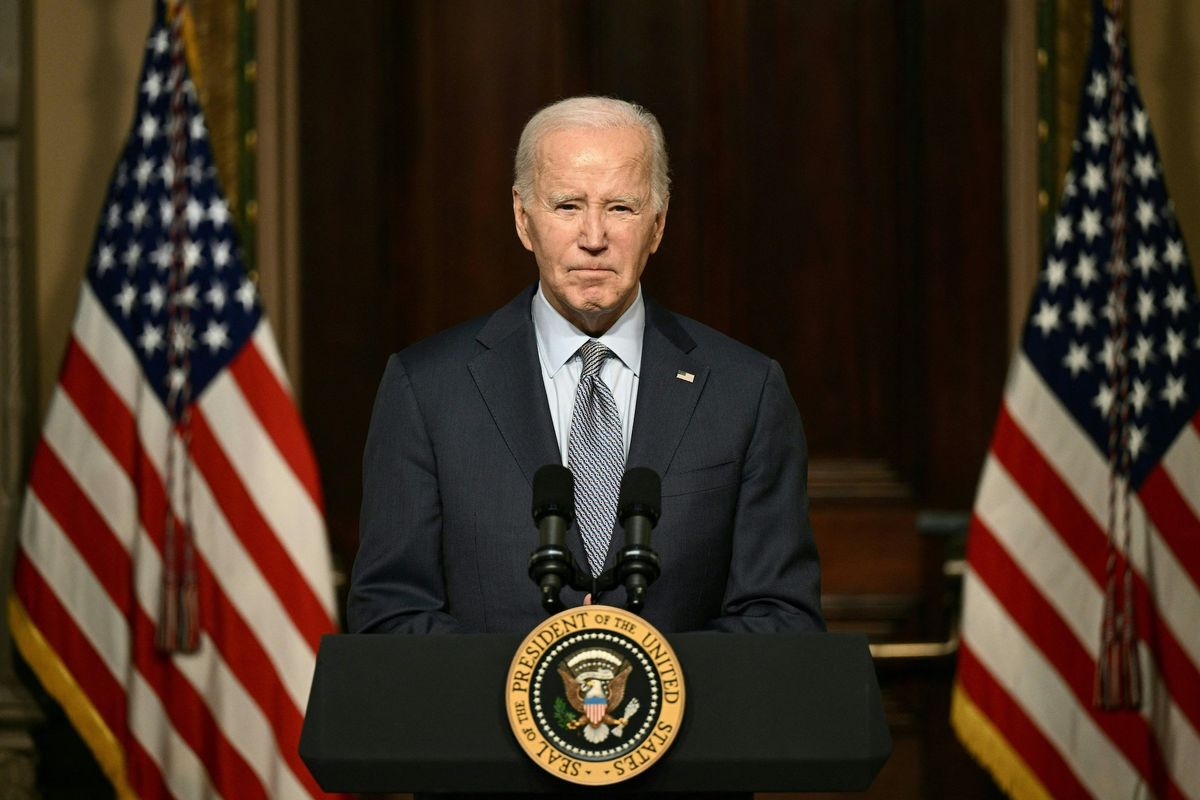
President Joe Biden is no longer running for reelection in 2024.
In a historic decision to step aside, Biden joins Lyndon B. Johnson as the only modern president to willingly forgo a chance to serve another four years.
Biden announced on social media that “in the best interest of my party and the country” he will relinquish his hold on the Democratic Party’s nomination. In a later post, he gave his “full support and endorsement” to Vice President Kamala Harris to become the Democratic nominee.
“It has been the greatest honor of my life to serve as your President. And while it has been my intention to seek reelection, I believe it is in the best interest of my party and the country for me to stand down and to focus solely on fulfilling my duties as president for the remainder of my term,” Biden wrote in a letter to the nation on Sunday.
Biden said he plans to address the nation about his decision “later this week.” The president tested positive for Covid-19 last Wednesday.
Even as Bidenworld trumpeted calls for party unity and turning the page on Sunday afternoon, behind the scenes, the president also stands down under a thick air of intraparty feuding and aggressively hurt feelings.
Just days prior to Biden bowing out, a person close to president said they, along with others in the Biden inner orbit, were “so fucking livid” at the sustained drive among other elite Democrats to pressure Biden out of the race as quickly as possible, including while the president has been ill with Covid. “He is still their leader, and he’s earned more respect than this,” the source added.
Numerous other Democratic sources on Capitol Hill and well-connected liberal political operatives had been telling Rolling Stone since Thursday that it was widely expected to be a matter of just a handful of days before Biden would bow out of the general election against Trump, citing Biden and his White House senior staff’s growing receptiveness to the panic among his prominent allies.
Before the weekend was done, those allies and doom-predicting Dems got their wish.
The move to withdraw comes weeks after Biden, 81, delivered a catastrophic performance during a June 27 debate with Donald Trump in Atlanta, in which the president was unable to effectively make the case against Trump on key issues like abortion, or for his own candidacy. At one point, Biden seemed to completely lose his train of thought, ending an answer about a question about the national debt by claiming nonsensically that he’d “finally beat Medicare.” He came across, indelibly, as the right wing has long caricatured him: a politician who’d not only lost a step, but command of his most critical capacities.
Biden followed that debate debacle with a passable teleprompted rally the next day in North Carolina, but it wasn’t enough to assuage concerns from Democratic lawmakers, donors, and voters, an increasing number of whom called for the president to step aside in the ensuing weeks. Biden repeatedly insisted he was staying in the race. He told George Stephanopoulos that he wouldn’t step down unless the “Lord Almighty” came down and told him to. He told reporters during a solo press conference at the NATO summit the following week that he’d only leave if his closest aides told him there was no way he could win. He told Lester Holt the week after that that nothing had changed and he was in it to win it.
Biden dismissed concerns about his physical and mental fitness for office, but these appearances weren’t without their pauses, stumbles, and outright gaffes. Biden’s polling numbers sank, and in mid-July an Associated Press survey found that two-thirds of Democratic voters felt he should step aside. Meanwhile, the Democratic Party’s power players — including Senate Majority Leader Chuck Schumer and House Minority Leader Hakeem Jeffries, along with former House Speaker Nancy Pelosi — reportedly worked behind the scenes to convince him to drop out of the race.
The move to withdraw places a bookend on an extraordinary career in American politics, and a presidency that stands as one of the most consequential since Johnson’s. The list of Biden’s signature accomplishments (or, as he might dub them, “BFDs”) is long. It includes:
- The largest climate investment in history, the Inflation Reduction Act, which is marshaling as much as a half-trillion dollars to support the deployment of clean energy, electric cars, home efficiency upgrades, carbon-smart agriculture, among many other features, and has the country on a path to cut peak emissions in half by 2030.
- A generational investment in infrastructure, providing $1.2 trillion in long-delayed federal funding for roads, bridges, airports, levees and more.
- Placing the first Black woman justice on the Supreme Court, Ketanji Brown Jackson.
- The CHIPS Act, which is helping revive America’s high-tech microchip manufacturing — an insurance policy against the kind of global supply chain havoc produced by the pandemic.
- Passage of a 15 percent minimum tax on large corporations.
- Providing Medicare, finally, with the ability to negotiate the cost of a suite of expensive drugs, and imposing a cost cap on insulin for seniors.
- Debt relief and loan forgiveness totalling more than $160 billion for millions of student borrowers.
- Ensuring the solvency of the U.S. Postal Service.
- Rescuing the pensions of nearly a million retirees.
- Marshaling the world to support Ukraine’s defense against Russian invasion.
Apart from these key victories, Biden also led America through a paradoxically painful, booming recovery from the Covid-19 pandemic. The recovery has featured historically low unemployment and steady economic growth, as well as the price shocks of sustained high inflation. The pinch has been felt daily at the grocery store, the gas pump, and the fast food drive-through. It has also been experienced in the cost of borrowing, with elevated mortgage and car-loan rates, as the Federal Reserve raised interest rates aggressively in an attempt to lower inflation. Despite rising wages, these soaring costs contributed to a widespread sense of consumer malaise — including more than half of Americans believing the country was in a recession — that was not matched by macroeconomic data that have consistently marked a strong economy.
Biden’s handling of the Israel-Gaza war has also proved divisive, particularly within his own party. Following the Oct. 7 attacks, Biden has stood staunchly with Israel, even as the war waged by the Netanyahu government, ostensibly against Hamas militants, has brought international condemnation for killing tens of thousands of civilians.
Biden currently has some of the lowest approval ratings of his presidency.
Biden said during his 2020 run that he sees himself as a “bridge” to the next generation of leaders, who are the “future of the country.” He would go on to save American democracy by defeating Trump later that year. His decision to withdraw from the 2024 race signals an inverse of that proposition: His physical frailty and faltering mental capacity have become a threshold issue for too many voters — and his candidacy risks tipping the election to the openly authoritarian Trump. Now emboldened by a Supreme Court that would put few bounds on his despotic ambitions, having now placed the presidency beyond the reach of criminal law, Trump’s fascist fantasies could easily become America’s horrific reality.
This is a breaking story and will be updated as more information is released.









War Is Peace: Trump’s Regime-Change Reversal
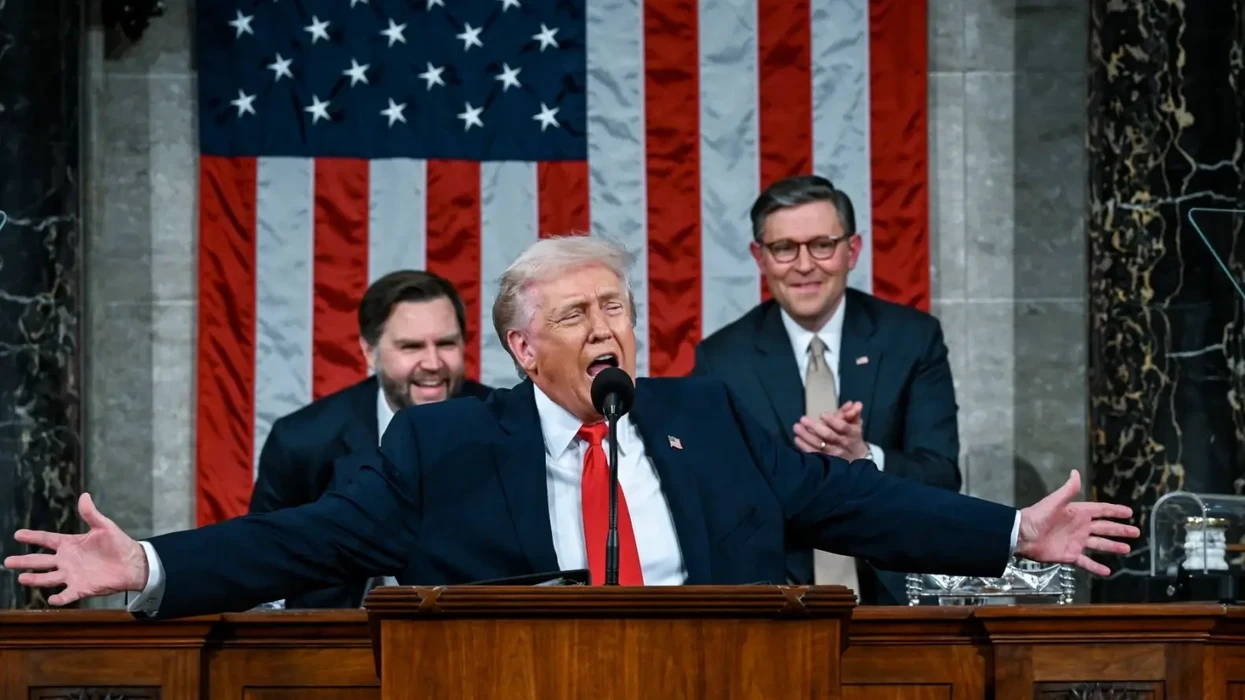
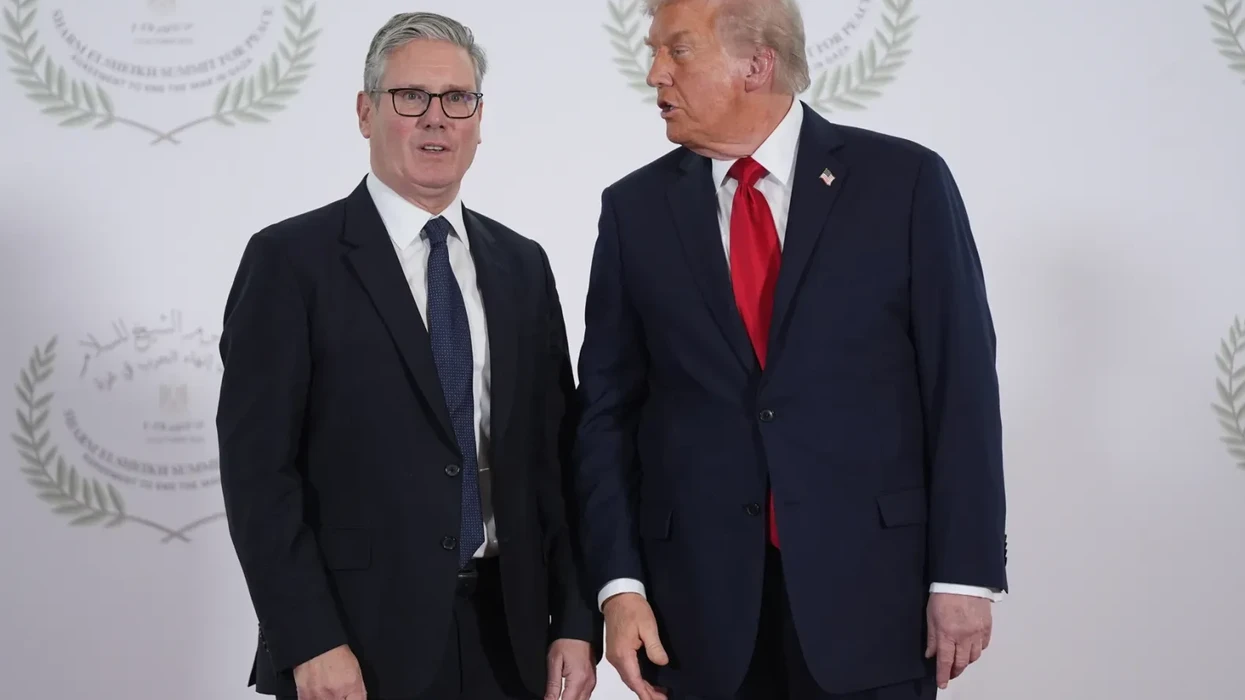
As American and Israeli rockets fly into Tehran, with the stated goal of regime change, anyone who bought into the self-evidently absurd idea of “Donald the Dove” ending America’s forever wars ought to be suffering from a bloody form of buyer’s remorse.
It was always bullshit. But that’s what the Trump team was selling hard. Take human ghoul Stephen Miller’s tweet days before the election: “Kamala = WWIII. Trump = Peace.”
The Trump team reads George Orwell’s 1984 like an owner’s manual and so of course “war is peace.” Their undermining of NATO and the dismantling of American alliances in favor of a “might makes right” foreign policy executed by a sycophantic kakistocracy is a guarantee of more war amid autocratic power grabs worldwide, with a side order of corrupt crony capitalism to profit from the chaos.
If you voted for Trump and believed him, this is on you. And that includes self-styled Palestinian peace activists who thought that Biden and Harris were the worst of all possible worlds and stayed home. We will no doubt see protests for the innocent lives lost in these strikes — but I’d have a lot more time for those folks if they were also seen protesting the estimated 20,000 to 30,000 Iranian lives snuffed out by murderous mullahs in the last few months alone.
The Islamic Republic of Iran has been despotic and dangerous from its inception. The Iranian people have been oppressed and denied basic freedoms for decades. But this is an extreme example of a war of choice. The American military strikes against Iran’s nuclear weapons facility last year were justified because Iran cannot be trusted with a nuclear weapon. That is true. But the much trumpeted total obliteration of those facilities is apparently not true — or so goes the justification for this war. And don’t forget that it was Trump who pulled the U.S. out of an Obama-era deal to stop Iran from developing weapons — arguing absurdly that the imperfect anti-nuke deal needed to be blown up to stop Iran from developing a bomb. Iran’s subsequent progress toward a bomb then created the rationale toward these strikes. This is a self-inflicted state of emergency. Peace is war and war is peace.
Pity the willful dupes in Congress who deluded themselves into thinking that Trump deserved the Nobel Peace Prize. They’ll probably rationalize that he would’ve been peaceful if he got the honor. Now it will be read as a cautionary tale for not sucking up. The chairman of the Board of Peace is now bored of peace. While Rand Paul remains admirably consistent, it’s Lindsey Graham who is pirouetting around the Senate floor while the Gimp Speaker Mike Johnson is unable to speak for the basic constitutional principles of separation of powers let alone authorization to go to war.
If you’re feeling shell-shocked trying to keep up with Operation Epstein Distraction, get ready for the inevitable next crisis — regime change without a plan for replacement. This is what the Trump administration did in Venezuela — kidnapping the socialist dictator Maduro but keeping his regime in place in exchange for crude oil access. The opposition is still in exile and its leader María Corina Machado gave her Nobel Peace Prize to Trump in exchange for exactly nothing.
One of the clear lessons of history is that if you don’t win the peace, you don’t win the war. The Saudis and their Sunni allies will back the U.S. and Iran because they hate the Shia Iranians (who, incidentally, are not Arabs), but beyond removing the Iranian regime, the plans for replacement and stabilization seem TBD — and with Trump’s inability to stay focused on anything beyond his immediate self-interest, solid plans are unlikely to emerge. Maybe a leader will come from the underground opposition; maybe it will be the Shah’s son, who has been living in the U.S. waiting for a restoration like many members of the diaspora. The upside is that Iran has a distinguished history and an accomplished Persian culture: The Islamists don’t represent the entirety of the people of Iran and never have.
But the path ahead will be messy at best. It will require concerted effort and civil commitment, not just an open call for private investment from Mar-a-Lago members. If the United States is now kidnapping and killing dictators without direct provocation, it establishes a dangerous precedent which will come back to bite us after demolishing our moral authority in the world.
It is the unexpected effects, the cascades of consequence where we cannot always plan ahead, that cause most responsible statesmen to try to keep the peace. But Trump has the carelessness of a rich-boy bully who can always buy or bluster his way out of trouble. He’s a con man who has found his ultimate mark in his followers, who fool themselves into thinking that a reflexive liar is the one man with the courage to tell the truth.
Perhaps the most prominent example is the vice president himself — a bright guy who not that long ago compared Trump to Hitler and a deadly narcotic but then convinced himself that careerism demanded an abrupt conversion. After all, he endorsed Trump less than two years ago with this very serious column headlined “Trump’s Best Foreign Policy? Not Starting Any Wars,” explaining, “He has my support in 2024 because I know he won’t recklessly send Americans to fight overseas.”