
Skip to content
Search

North West Was Born To Be a Star

With her new single “Piercing on My Hand,” as well as a possible fashion line on the horizon, Hollywood’s new nepo-baby era has arrived. Thankfully, the music is pretty good.

North West Was Born To Be a Star

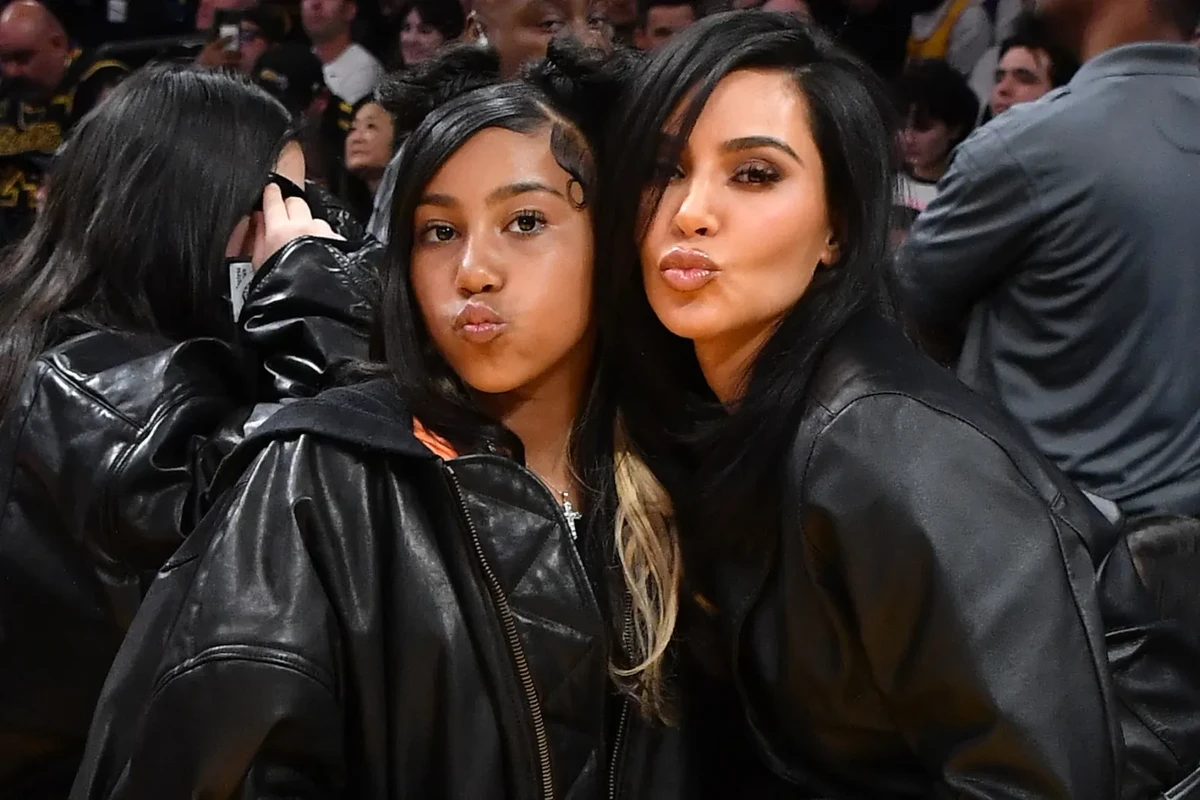
North West with her mom at a Lakers game in 2024

Allen Berezovsky/Getty Images

As the celebrity children of the 2010s come of age and follow in their parents’ footsteps, we’ve arrived at the next generation of nepo babies. There’s no better example right now than North West, scion of Kim Kardashian and Kanye West’s celebrity empire, who, at 12 years old, seems poised to become a fixture in the future of not only music but also fashion. Take her recent single, “Piercing on My Hand,” which arrived on DSPs on Feb. 6, and was reported as a soul-sampled track produced by Ye and Will Frenchman. The single was reportedly released via Gamma., the independent music company co-founded by former Apple exec Larry Jackson in 2023 — the same company Ye recently partnered with for the release of his upcoming album, Bully. She also joined her dad onstage in Mexico City to debut “Piercing on My Hand” live. It’s a position that’s by now familiar for North, who previously appeared on Ye and Ty Dolla $ign’s Vultures single “Talking/Once Again,” which reached Number 30 on the Billboard Hot 100 and also charted in the U.K.


Perhaps this all represents a maximalist approach to the challenge of raising kids in the public eye. While it’s common to see celebrities attempt, with varying levels of success, to shield their children from the limelight, North has been slowly learning how to navigate being born into fame. This week, People reported that her mom, Kim Kardashian, filed applications in January to trademark the company name “NOR11” for use in the sale of clothing and accessories, including dresses, footwear, loungewear, hats, watches, jewelry, handbags, and cosmetics cases. North has already gained attention for her sense of style, raising eyebrows after revealing piercings on her middle finger last September, prompting online criticism because of her age. Her debut single is partly inspired by the controversy.

In addition to “Piercing on My Hand,” North has since racked up a handful of production credits for the underground rap staple Babyxsosa, including “Tokyo” and “Viral,” released as loosies on social platforms last month. The latter samples Chief Keef’s “Love Sosa” with a kind of dense, atmospheric texture that also recalls “Hold My Liquor,” the Chief Keef-assisted cut from Kanye’s 2013 opus Yeezus. North West’s producer tag, an anime voice squeaking “North-Chan” in Japanese with the sweetness of a kids’ video game, is already on its way to becoming iconic. In January, she landed a notable early placement as a producer on “Justswagup,” a single by Mag!c and Lil Novi — Lil Wayne’s son, who is 16 years old, putting him, like North, squarely in the “next-gen rap royalty” conversation.

Last month, North went on Instagram Live and answered questions from her followers about her journey learning how to make music, sharing snippets of in-progress beats, and describing more about her inspirations. That she’s so far leaned into the sound of her generational cohort, a frenetic, almost hyperpop-infused take on hip-hop, is more evidence of the genre’s changing sound. For their part, both of North’s parents are offering their support. On Monday, Kim Kardashian shared a clip on her Instagram of her listening to North’s song in the car, despite what would appear to be ongoing acrimony between Ye and Kim.

North is less a carbon copy of her parents than a Gen Alpha translation. At 12 years old, she was raised in the feed, is fluent in online culture, and is learning early that identity is something you can iterate in public. The nepo-baby conversation, which typically ascribes unearned privilege and access to the children of celebs, falls short of describing what’s actually interesting about North West. She represents how childhood, branding, and art are collapsing into a single timeline, and she is already moving through it like it’s her native language.
More Stories

Jack Antonoff Just Wants to Talk
Photographs by CHRISTAAN FELBER

Jack Antonoff Just Wants to Talk

We used to dream more, Jack Antonoff muses one sunny spring morning on the top floor of Electric Lady Studios. He means it literally. “You used to dream at night, and you’d be filled with these weird feelings,” the hitmaker and Bleachers bandleader says, “and you’d wake up humming on those dreams. Maybe you’d have some coffee and they’d heighten. You’d go for a walk, feel that subconscious and collective unconscious too, bouncing off those things. Now, the second you look at your phone, all that disappears.”

With a Bernie Sanders-esque flourish, he adds, “The relationship to the phone has, only for the benefit of billionaires, robbed us of that time.”

Keep ReadingShow less
The All-American Rejects Are Rebels Without a Cause on ‘Sandbox’
Andy Knight*

The All-American Rejects Are Rebels Without a Cause on ‘Sandbox’

It’s been more than a decade since the All-American Rejects shared a full-length album with the world.

In that time, the band took a break from making radio-ready anthems and split from their major label. They stopped releasing music altogether, save for a few singles here and there. But last year, the band came surging back into public view with the success of their viral DIY house party tour, where they performed everywhere from a cornfield to a bowling alley. Now, after the fervor of those live shows, the All-American Rejects are back to recapture that energy with their fifth studio album, Sandbox.

Keep ReadingShow less
‘Dangerous Woman’ Put the Future of Pop in Ariana Grande’s Hands

Ariana Grande performs onstage at the 2016 American Music Awards at Microsoft Theater on November 20, 2016 in Los Angeles, California.

Jeff Kravitz/AMA2016/FilmMagic

‘Dangerous Woman’ Put the Future of Pop in Ariana Grande’s Hands

Ariana Grande could never have become the kind of era-defining pop star we know her to be if she’d been timid or precious about her feelings. This is the artist who earnestly sang “This situationship has to end” on Eternal Sunshine while addressing the dissolution of her marriage. She’s the same one who casually delivered the lyric “Look at you, boy, I invented you” on Thank U, Next, which she recorded after breaking off an engagement with someone whose name is a song title on Sweetener. The same one who released Positions.

Grande couldn’t have made these albums without creating Dangerous Woman first. Ten years after its release, the singer’s third studio album is fundamental to her evolution as one of the biggest voices in pop, both figuratively and literally — “Greedy” might be the loudest song she’s ever made. But more than anything, Dangerous Woman was pivotal in establishing the kind of stories Grande could tell with that ironclad voice, and the emotions she could convey through it. It put the future of pop right in her hands.

Keep ReadingShow less
Honoring the Music That Made Us
VICTOR JUHASZ

Honoring the Music That Made Us

During my first presidential campaign, I became a bit particular — maybe even a little superstitious — about my debate-day rituals. I had to get in a quick workout, and always ordered the same dinner. And then, in the half hour or so before the main event, I’d set aside whatever notes and talking points my staff had given me, put on some earbuds, and just listen to some music.

Initially, I listened to a handful of jazz classics — Miles Davis’ “Freddie Freeloader,” John Coltrane’s “My Favorite Things.” But over time, I discovered that rap was the thing that got my head in the right place. A couple of songs about defying the odds and putting it all on the line — Jay-Z’s “My 1st Song” and Eminem’s “Lose Yourself” — were always in the rotation, maybe because they felt suited to my early underdog status. Sitting alone in the back of the Secret Service SUV on my way to the venue, nodding to the beat, I would feel the pomp and circumstance and artifice of my immediate surroundings melt away. I’d find my mind returning to those things that were most essential to me — the friends and family that had shaped me; the values and ideals that drove me; and all the forgotten voices of people across the country that I hoped to someday represent.

Keep ReadingShow less
Drake’s ‘Iceman’ Trilogy Turns ‘Not Like Us’ Inside Out
WIREIMAGE

Drake’s ‘Iceman’ Trilogy Turns ‘Not Like Us’ Inside Out

By now, the events of May 2024 have hardened into rap mythology. As the story goes, someone close to Drake leaked “Family Matters” to Kendrick Lamar ahead of its release, allowing Kendrick to engineer the devastating one-two punch of “Meet the Grahams” and “Not Like Us” with near-cinematic precision. On the latter song, Kendrick is no longer battling Drake so much as narrating his death. “I see dead people,” he taunts on the song’s opening line, transforming Drake from rap rival into corpse before the public had even processed what was happening.

Kendrick’s war with Drake — the rap battle that refuses to end — was preoccupied with annihilation, the total elimination of Drake as a cultural figure. And for a time, it appeared to work. Allegations of pedophilia and grooming became permanently attached to his public image, chanted in arenas and clubs with ecclesiastical fervor. Worse still, Drake’s lawsuit against UMG over the allegedly defamatory claims in “Not Like Us” appeared to violate the unspoken rules of rap warfare itself, lending further legitimacy to the idea that, despite a nearly two-decade run atop rap’s commercial hierarchy, Drake would always remain an outsider to “the culture.”

Keep ReadingShow less