


At first glance, Fat Mike’s version of retirement feels like a punchline. When we speak, the former NOFX frontman is in Sacramento, in the middle of a World Poker Tour stop, coming off a final table appearance. He talks casually about home games with professionals in Las Vegas, about occasionally crossing paths with celebrity players, about the strange intimacy of a scene that, like punk before it, operates as a tight-knit subculture. Then there’s golf, another unexpected hobby, which he’s been playing for years. None of it resembles slowing down.
If anything, stepping away from NOFX has only multiplied his output. Film festivals, music production, business ventures, a stage musical in development. The idea of retirement, as he frames it, was never about stopping, but about shifting mediums. At the center of that transition is 40 Years of Fuckin' Up, a new documentary that he positions as the definitive closing statement on NOFX.
40 Years of Fuckin Up: the trailer youtu.be
The project, led by Canadian director James Buddy Day, initially took a direction that didn’t sit right with him. “The first cut was really dramatic,” he explains. “Not funny at all.” Coming from a filmmaker known for true crime, the tone skewed dark, focusing heavily on recent tensions within the band. “He really concentrated on the drama between the band from our last tour, because that’s all the footage he had.”
What followed was months of reconstruction. Mike took a flight to Calgary and began rebuilding the film from the ground up, combing through decades of archival material: old tapes, interviews, fragments scattered across the internet. The goal wasn’t just to correct the tone, but to reshape the narrative entirely. Where a conventional music documentary might center on craft, influence, or legacy, this one deliberately avoids those paths.
In typical NOFX fashion, it leans into dysfunction.
“There’s not a lot of music in it,” he explains. “Because that’s not what it’s about.” Live footage appears, but rarely in its expected form. Songs collapse mid-performance and band members argue onstage. At one point, the group botches the opening track of a show and has to restart. These are not outtakes. They are the story.
The decision crystallized after an unlikely test screening at a fetish event in the Caribbean, where the audience had no prior connection to NOFX. “The first timeI showed it in front of people was at a fetish event in the caribbean. So it's all rubberists; no one knows who my band is. They didn't know who I was, they just knew me as, like, a rubber slut. So I showed it for them and they laughed and cried. But they got bored at the very end when we're just playing music.”
That response forced a rethink. The music was cut back, but the mess was left in.
The film’s central tension, however, extends beyond stage antics. It documents, in real time, the fracture of a decades-long relationship between Mike and guitarist Eric Melvin. What begins as distance escalates into legal conflict, culminating in formal accusations over financial misconduct. The timing is as stark as it gets: legal papers arrive the day after NOFX’s final show.
For Mike, the emotional turning point predates that moment. It comes with the publication of a feature in Spin Magazine, built around interviews conducted with the band during their final run. Expecting a retrospective on recording their catalog, he instead finds a piece centered almost entirely on him, constructed through critical, often harsh commentary from his bandmates.
“It was one of the worst days of my life,” he says.
The sense of betrayal is amplified by the fact that these grievances had rarely been expressed directly. In the documentary, those same tensions resurface through interview footage. The difference is that this time, Mike chooses not to respond. No rebuttals, no corrections, no attempt to reshape perception.
That restraint is intentional. Initially, he considered cutting sections or inserting counterpoints. It was his wife who pushed him in another direction: leave everything in, and say nothing.
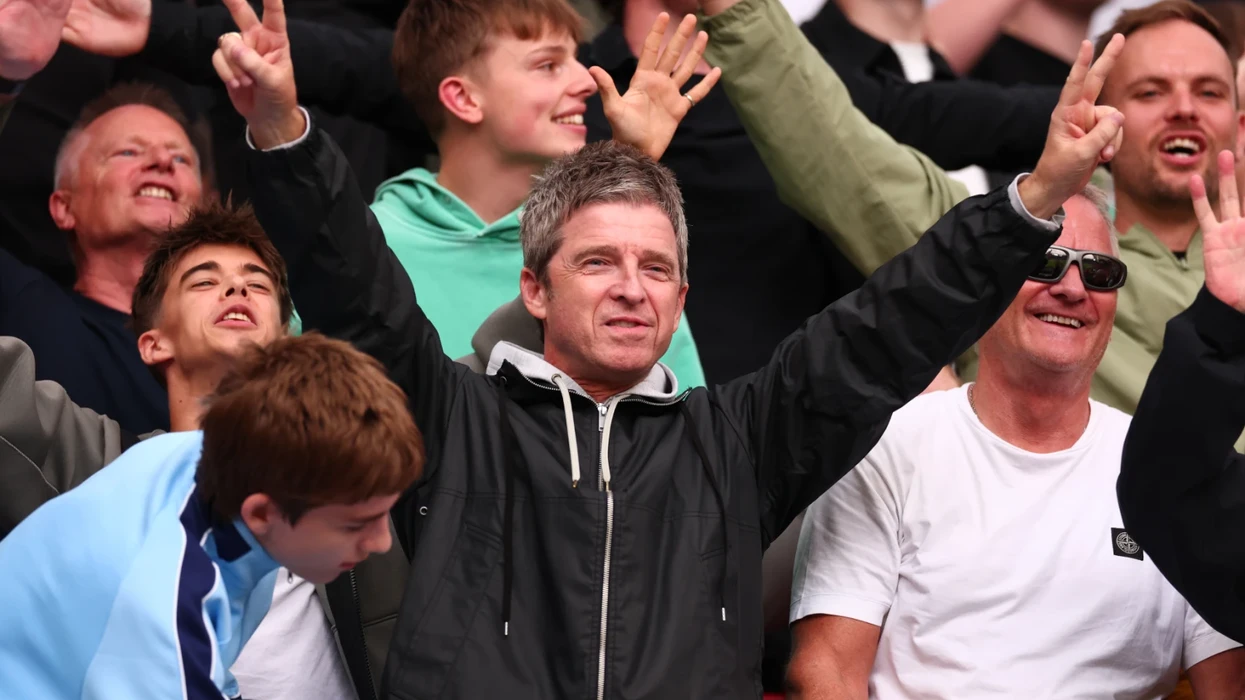
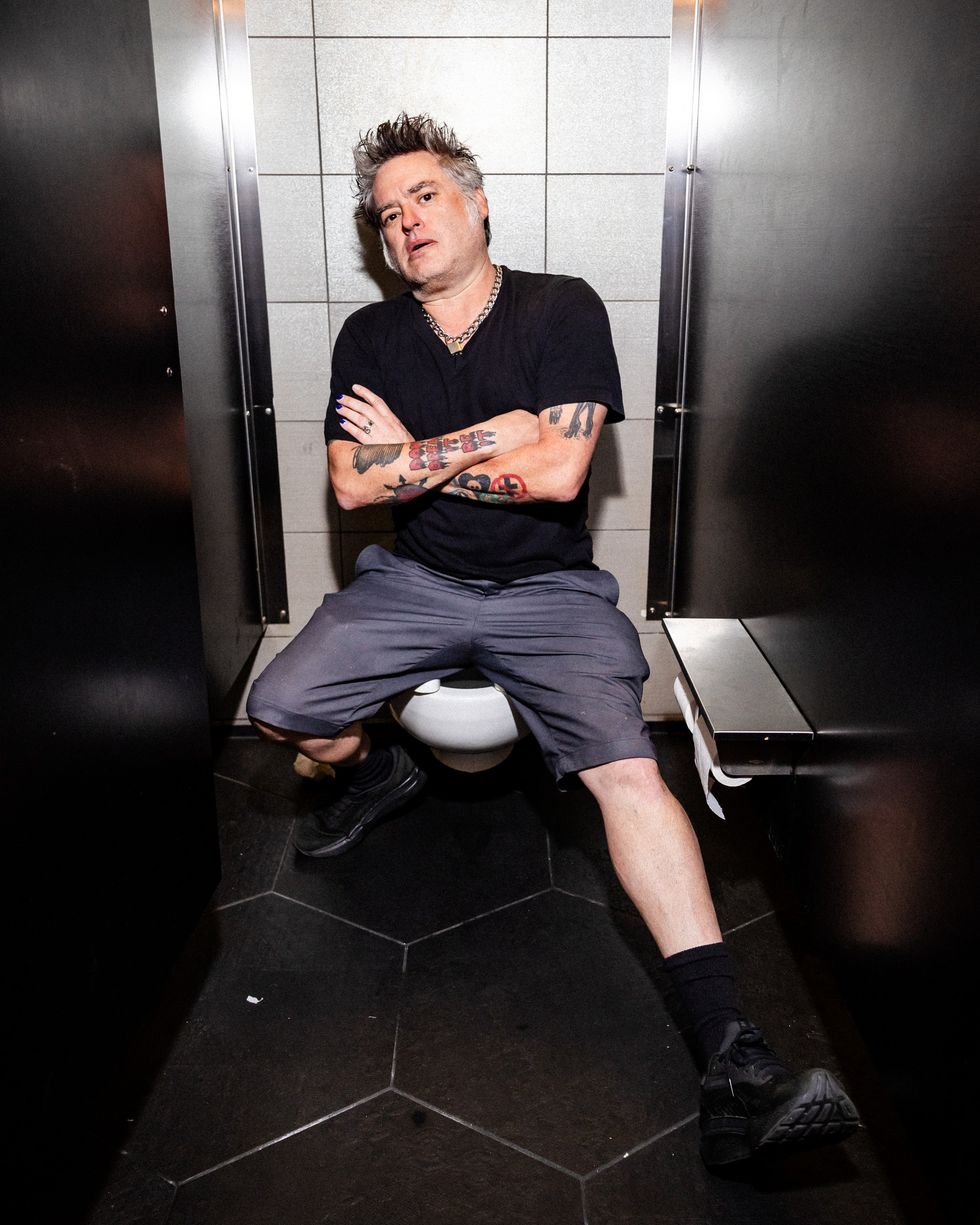 Fat Mike of NOFX at 2026 SXSW Conference & Festival on March 14, 2026 in Austin, Texas. Griffin Lotz/Rolling Stone
The result is one of the film’s more unsettling dynamics. Band members speak candidly, sometimes harshly, about him. He remains largely silent, present but not defensive. It creates ambiguity around blame, forcing viewers to sit with conflicting perspectives rather than guiding them toward a resolution.
“I didn’t want to judge anyone,” he says. “That’s what I’ve always done in my songs.”
If the film dismantles the mythology of NOFX as a band, it also complicates the persona of Fat Mike as a performer. One of its more revealing threads centers on his relationship to the stage itself. For years, substance use functioned less as indulgence than as a coping mechanism, a way to maintain a version of himself he no longer fully inhabited.
“I couldn’t fake it,” he explains. “So I had to find a way to get up there.”
That realization reframes much of the band’s final years. What appeared externally as chaos or excess becomes, in retrospect, a form of adaptation. The decision to end NOFX, then, wasn’t solely about interpersonal conflict, even if that accelerated the timeline. It was also about a growing disconnect between identity and performance.
The film extends that introspection into more personal territory, particularly around gender expression. Mike has long been open about his affinity for fetishism, but the documentary presents it in a more vulnerable, less performative context. One scene, in particular, resonated with his daughter in a way he hadn’t anticipated.
“She came to the premiere with a few of her friends. After, she came up and she said, ‘I knew you wore dresses… but I never saw you get feminine,’” he recalls. “And when she saw that, she was like, ‘Oh, that’s my dad.’” The moment hit him unexpectedly. “I just started crying. I didn’t expect that.”
The effect was the opposite of what he feared. “I thought it might estrange us,” he says. “But it brought us closer.”
It’s one of several moments that inform his broader goal for the film. Beyond documenting a band’s dissolution, he wants it to function as something more universal. “I want people to laugh and cry,” he says. “But also to feel like things aren’t impossible.”
In keeping with NOFX’s long-standing DIY ethos, traditional distribution channels are off the table. “We’re not selling it to a streaming site. We’re not selling DVDs,” he says. Instead, screenings will happen monthly, in independent theaters, ideally with bars. “I want our fans to have a place to go where they can watch the movie together and fucking party.”
The model is intentional. “You can watch NOFX on YouTube on your couch, or you can go see a concert,” he says. “You’re supposed to watch a movie around other people. So you get the laughs, you cry at the same time.”
Outside the film, he’s anything but idle. A new Codefendants record is imminent. “That’s the best record I’ve ever produced,” he says without hesitation. A vodka brand, Fatty’s Bottom Shelf Vodka, launches shortly after. “It tastes expensive,” he jokes, “but calling it bottom shelf is fucking funny.” A stage musical is set to open in Las Vegas.
A relationship-focused website, years in development, is finally live.
“I can’t stop,” he says simply. The documentary may function as a final chapter, but it’s one that refuses to tidy things up. “It could have been ended on a higher note, if there wasn’t that drama,” he admits. “But it’s honest.”
For Fat Mike, that’s the only thing that matters.


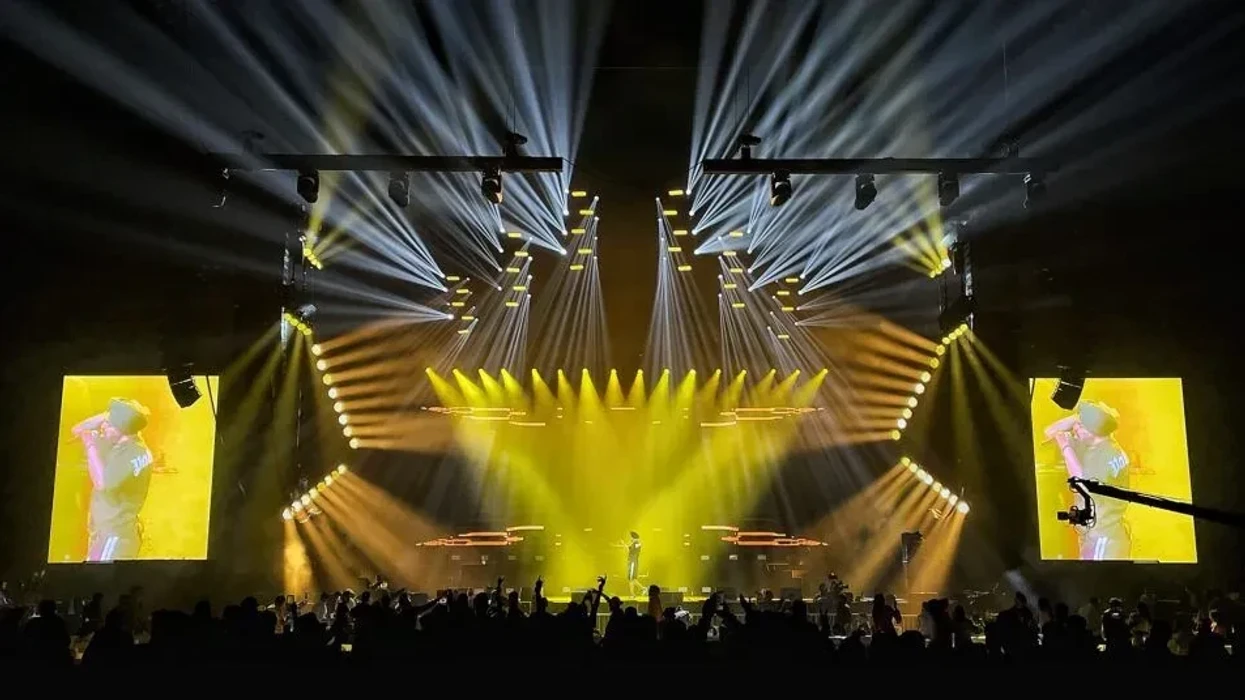
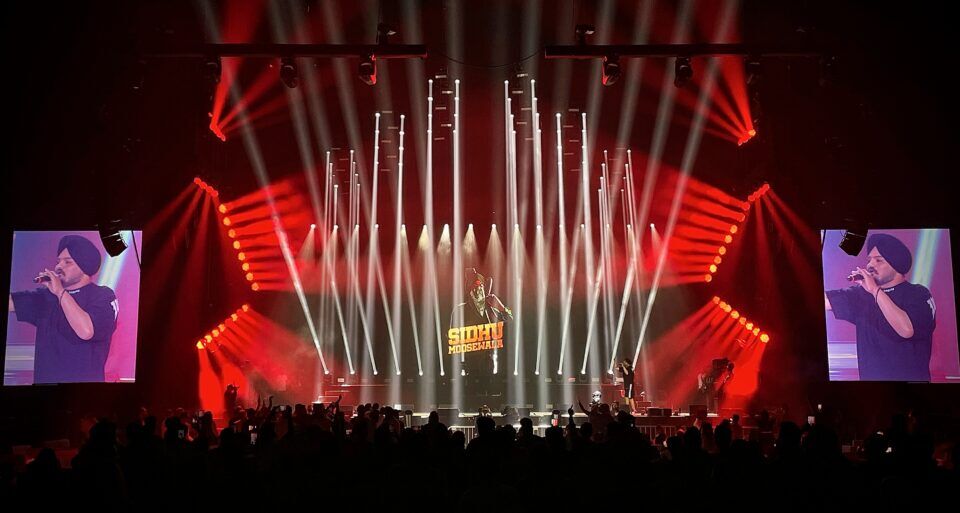 A past show produced by The Concert Production for Sidhu Moose Wala.
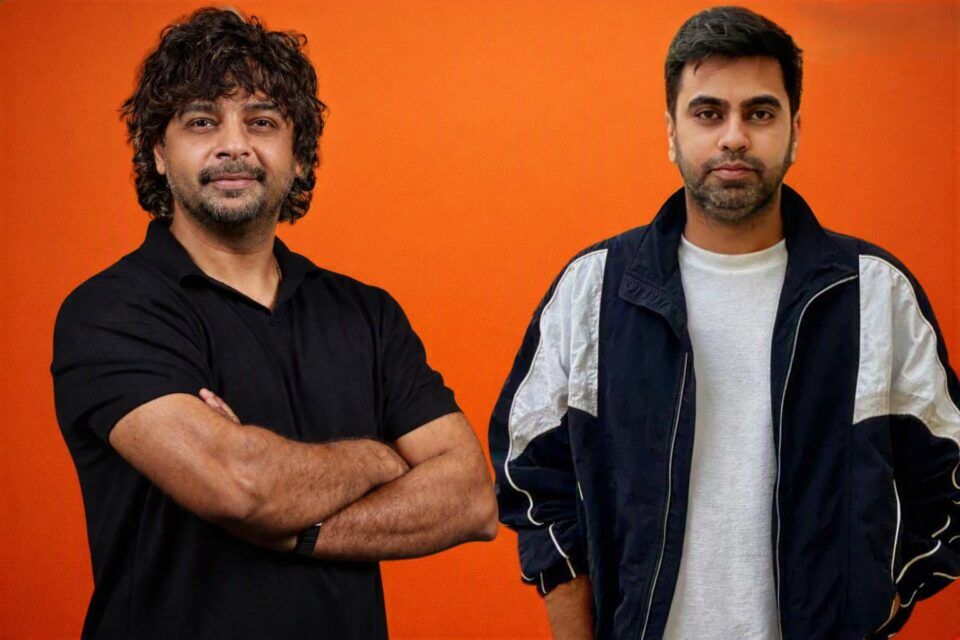 The Concert Production founders Sohail Mansuri and Zeeshan Siddiqui. Photos: Courtesy of The Concert Production
 Linda Ramone and John Travolta Sean Sabhasaigh/Getty Images
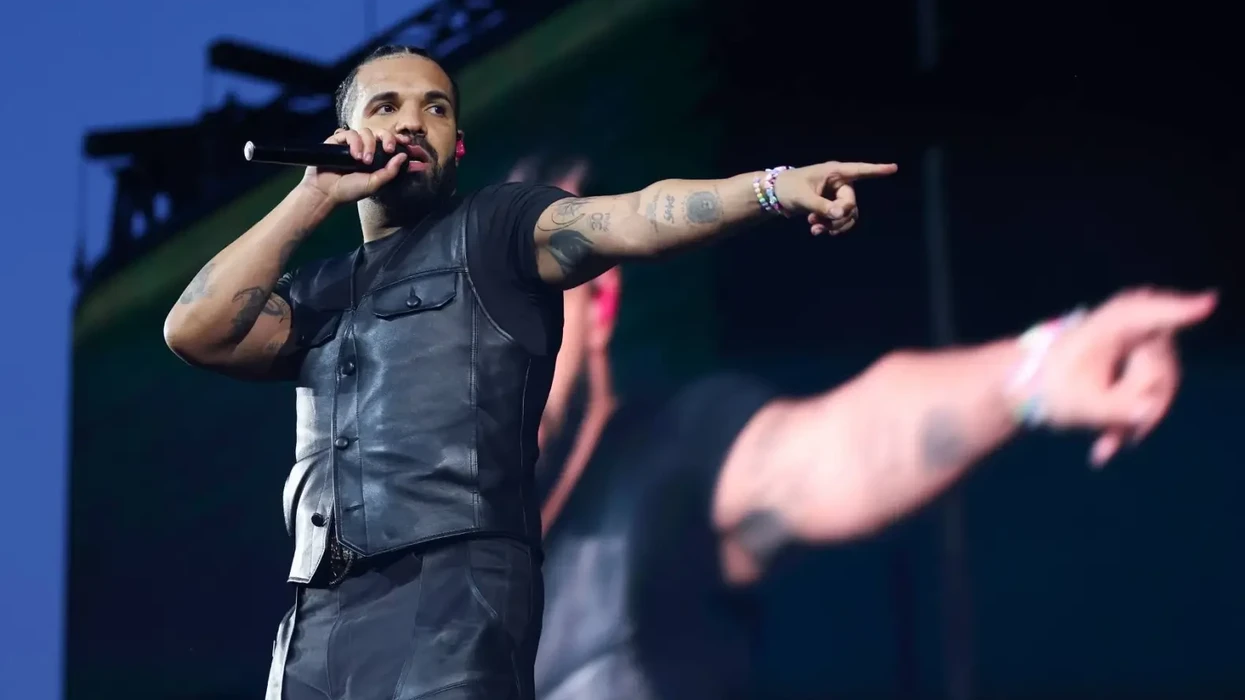
Drake onstage in Toronto last year
Everybody Likes Drake Again. That Means We’re Healing
Not to be dramatic or anything, but not too long ago, listening to people talk about Drake, you’d think he would never top the charts again. But here we are: With Iceman, he’s broken his own record, earning a 13th week atop Billboard’s Top R&B/Hip-Hop Albums chart on Sept. 5, surpassing Take Care’s 12-week run more than a decade ago. The achievement comes after the great rap civil war of 2024, which was framed as everything from a referendum on Drake’s character as a human being to a cleansing of what popular radio host Ebro would describe, in February 2025, as “a sickness in the game.”
Again, not trying to be dramatic, but even if you were skeptical of the discourse circa 2024, it is a bit shocking to hear the public’s recent re-embrace of Drake. Consider how far the frenzy around the most salacious allegations on Kendrick Lamar‘s “Not Like Us” extended. There was Christopher Alvarez, a disabled journalist, being dragged into conspiracy theories. There was the woman from the resurfaced concert footage, now 31, having to publicly dispute the creepy significance strangers had assigned to an onstage kiss from when she was 17. Drake said in his lawsuit against UMG that the threats had forced him to pull his seven-year-old son out of school.
What now feels like the absurdity of the moment registered as something deathly serious at the time. By September 2024, Lamar was releasing the ominous “Watch the Party Die,” just days after his Super Bowl halftime performance was announced. Oh, also, a major talking point in American culture a year and a half ago was whether one of the biggest superstars in the world would be publicly branded a pedophile during the Super Bowl.
In what world would any celebrity recover from that?
Except, with time, the online frenzy surrounding the Drake and Lamar feud reads more like a mass-psychosis event than a cultural reckoning. The music, oddly enough, often seemed secondary to the certainty of everyone discussing it. “Not Like Us” was a veritable hit, absolutely. But its cultural dominance became bound up in a widespread vilification of Drake that curdled online, where the most damning interpretation of anything could quickly become the accepted one. For a while, even putting on a Drake song could feel like something you had to explain, as if listening amounted to taking a position on the allegations.
That this all happened in 2024 is meaningful. This was right in the peak of Elon Musk’s reconstruction of Twitter, privileging rage bait and engagement tactics that helped misinformation disseminate like fact. It was also the beginning of AI tools becoming sophisticated enough to produce convincing-sounding tracks. Even before Drake released his first response, “Push Ups,” AI-generated response tracks were circulating across social media. And so, in many ways, the well of public opinion was already poisoned.
Listeners’ recent embrace of Drake feels settled in a broader cultural shift brewing since 2024. The beef, in hindsight, feels like a dying vestige of whatever people want to call “Woke 1.0”: a particular faith that exposing the right person could amount to a cultural transformation. For a moment, defeating Drake seemed to promise something about the future of hip-hop, about who would belong in it and what it would tolerate.
There were obvious holes in the argument, namely who exactly these arbiters of culture were and why they were uniquely qualified to speak for the entirety of Black people, questions that Drake pokes at on “Ran to Atlanta” from Iceman. Still, these were never even supposed to be binding philosophical truths in the first place. To hear levelheaded commentators discuss it, this was all simply entertainment — two of the genre’s greats duking it out. Even one of the beef’s catalysts, Metro Boomin, echoed the sentiment, lamenting how online fans had turned the battle into something sinister. Hell, even Jay-Z said something similar before himself tossing a few jabs at Drizzy in a freestyle at the Roots Picnic this year. But the artists themselves supplied the allegations. The ability to raise those stakes and then retreat into “simply entertainment” was part of the dynamic, too.
Even so, how it all devolved into a pseudocultural reckoning says more about the environment fans exist in today than it does about either Drake or Lamar. In the years around the beef, shocking revelations about Diddy as well as the global elite’s ties to Jeffrey Epstein have become folded into the background, alongside a sense that accountability remains selective. This atmosphere of collective powerlessness offers one explanation for the conspiratorial thinking at the heart of Lamar versus Drake. A frustration with an increasingly degraded world and dwindling resources to change it means outrage can mobilize an enormous number of people very quickly, with little holding them together once the moment passes.
The language of exploitation and cultural extraction gave the battle a purpose that seemed to extend well beyond either rapper. But even if you took the least charitable opinion imaginable of our Canadian hitmaker, what was supposed to happen after Drake was defeated? The industry whose supposed wickedness Drake allegedly embodied carried on selling the spectacle itself.
What everyone was caught up in was an appetite with a longer history than the social media platforms now feeding it. Lance Oppenheim’s new film, Primetime, returns to Chris Hansen and To Catch a Predator, a television format that made public humiliation feel like a public service. The connection is in the experience offered to the audience. The viewer could enjoy the confrontation with the reassuring sense that watching served some larger good. Never mind if anything that was unfolding on screen amounted to justice.
In the historian Anton Jäger’s book-length essay Hyperpolitics, published earlier this year in English, he describes how the past decade’s surge of political feeling has coincided with a continuing withdrawal from communal life. More isolated digital environments can fuel extraordinary mobilization without the actual community organizations that might turn it into something tangible. Negating Drake, then, became a gesture in itself. A means of signaling a broader dissatisfaction with the direction of hip-hop culture. Where the problems extend to technology and the demoralizing margins of streaming music, for a while it felt good for people to just wrap it all up in one word: Drake.
But on Iceman, it’s hard to take the idea of Drake as an evil force within hip-hop very seriously, even as he himself makes an effort to lean into the role of the villain. Drake’s music is most potent when it’s aimed at the masses, even if he swears his nice-guy days are over. This is the Degrassi kid turned global superstar rivaling Taylor Swift, after all.
Now, with Fear of Missing Out, Drake’s cryptically announced project slated for release this week, we’ve entered a second kind of Drake Renaissance. However delusional it seems, there was a moment when it felt somehow wrong to play Drake. His return to the top of the charts suggests a good deal of people were eager to get back to listening.