
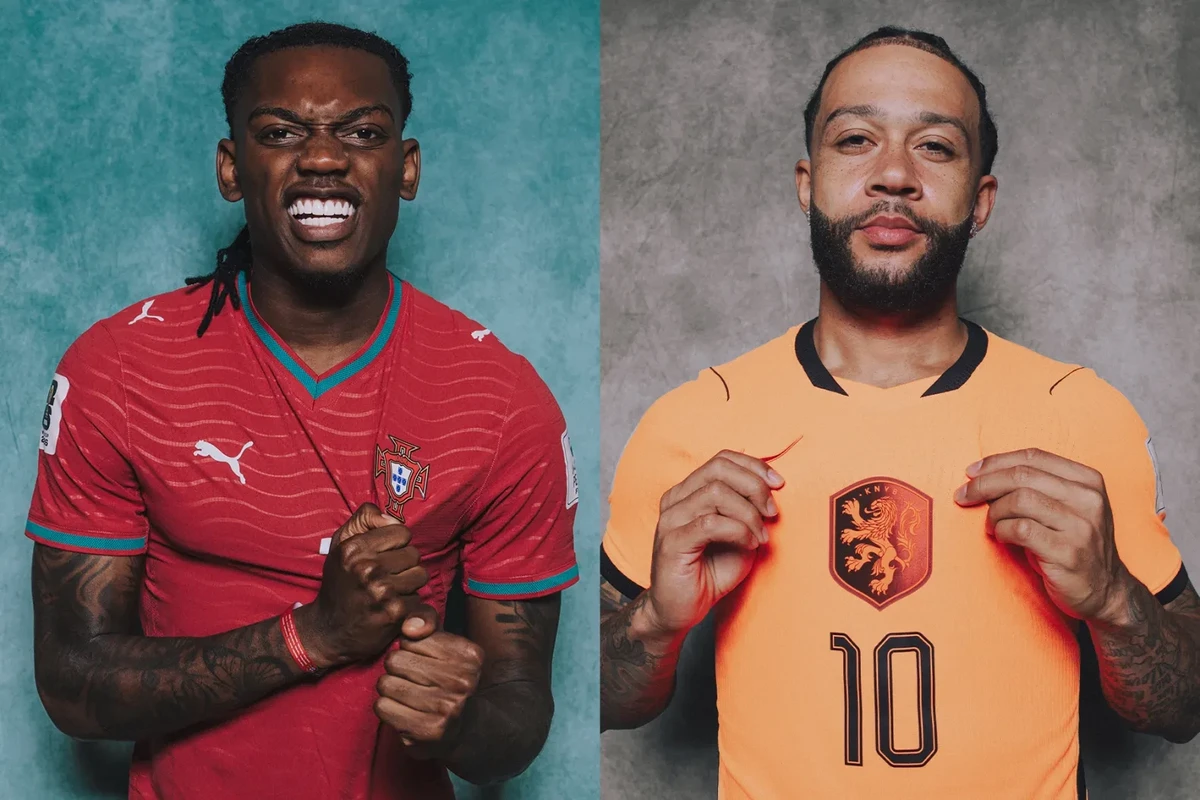

The World Cup is in full swing, with just a few more matches left before the quarterfinals. There have been plenty of feel-good stories and twists and upsets — Cape Verde’s Cinderella story, Norway’s stunning victory over Brazil, all of the controversy over Trump’s involvement in Folarin Balogun’s contentious red card. But in addition to these crazy moments and plots, what the World Cup does every four years is put a bright spotlight on the best soccer players in the world.
A lot of these athletes have had unexpected trajectories and remarkable biographies — even a surprising side hobby or two. This includes players who have hidden musical talents, or who have made careers moonlighting as singers, rappers, and musicians.
Of course, the connection between soccer and music isn’t new. We all know some of the biggest soccer anthems are also some of the most memorable global chart-topping hits (from Ricky Martin’s “Cup of Life” to Shakira’s “Waka Waka”). Brazilian legend Pelé was famously a singer-songwriter who composed in his spare time and released songs until he turned 80. Former Croatian defender Slaven Bilić, who played in the 1998 World Cup, also performed in the heavy-metal band Rawbau. And John Barnes, known for making history as the first Black player to represent England in a World Cup match, in 1986, was a rapper and even made a few guest appearances on official team anthems, including New Order’s “World in Motion” from the 1990 FIFA campaign.
Here are some of the players from the 2026 roster who are keeping the connection between soccer and music alive with their own careers and side hobbies as artists.
Rafael Leão, Portugal
The Portuguese attacker has been playing soccer since he was a kid, and joined the French club Lille before signing a five-year deal with AC Milan. On the Portuguese national team, he’s been a reliable forward, but in between high-profile matches, he’s followed his music dreams as Way 45, rapping and singing through a blend of R&B, hip-hop, and stripped-back trap beats. “There was always music in my house growing up,” he told Rolling Stone U.K. back in 2023. “My uncle was a DJ, and my father used to sing too. Like everything around me was about music, so it really just came from there. It was always hip-hop I’d listen to, and I could relate to the message they’d put across about growing up in the hood.”
- YouTube youtu.be
As Way 45, he’s released three albums, including his debut, Beginning, 2023’s My Life in Each Verse, and last year’s 12:12. A lot of his songs chronicle his childhood and upbringing in a small town outside of Lisbon, and also offer an outlet for the soccer player, who calls himself a shy person. “Music means to me love, escaping my troubles, and finding myself,” he said in a video for AC Milan where he performs one of his songs.
Alisson Becker, Brazil
The Brazilian goalie, who grew up in the southern state of Rio Grande do Sul, started off in youth soccer tournaments before becoming one of the most recognized goalkeepers in the sport. (When he was signed to Liverpool for €62.5 million in 2018, he was then the most expensive goalkeeper of all time.)
- YouTube youtu.be
But when he’s not on the field, Becker has also shown himself to be an easygoing, family-oriented guy who likes to sing and play guitar. Though he’s not going after a Grammy, he’s shown off his skills in good-natured videos alongside other musicians and players. He won over fans when he teamed up with English singer-songwriter Jamie Webster for an acoustic version of the soccer classic “Allez, Allez, Allez.” Since then, Becker has also shared videos of himself singing the anthem in the car with his kid and with other players. He’s also posted covers of “Shallow” from A Star Is Born and his take on the viral hit “Dragostea Din Tei” from Moldovan pop group O-Zone.
Memphis Depay, Netherlands
Dutch player Memphis Depay started turning heads among soccer scouts when he was just eight, but he’s always been a massive music head and a huge fan of American hip-hop. In 2017, he decided to go for it and try out his musical ambitions, launching a freestyle video he titled “LA Vibes.” The music video quickly garnered about 150,000 in the first few hours and also included his Dutch teammate Quincy Promes.
- YouTube youtu.be
From there, Depay kept ramping up his music releases. He’s dropped back-to-back freestyles and tons of singles, often switching between English and Dutch. He’s collaborated with Dutch rapper Winne, Ghanaian singer Bisa Kdei, and Dutch hip-hop group Broederliefde. His song “No Love,” which he dropped back in 2020, now has more than 20 million views on YouTube. His team was knocked out of this year’s tournament by Morocco, but Depay can stay busy with his music in the meantime.
Luis “Lucho” Díaz, Colombia
Luis “Lucho” Díaz, who plays for Liverpool and the Colombian national team, got people excited when he appeared on “El Ritmo Que Nos Une” with singer-rapper Ryan Castro. “They asked us if we wanted to participate or collaborate. Of course I said yes because I’ve always been attracted to music, I’ve always liked it,” Díaz said in an interview with Tribuna. The song became the adopted anthem for the team’s 2024 Copa América run, and the video included a few of Díaz’s teammates.
- YouTube youtu.be
“He came to the hotel with his team, set up a studio there, and in, like, 20 or 30 minutes we recorded our bit, and just like that, very fast, we did our recording and it came out really nicely,” Díaz recalled.
The duo got along so well they also teamed up for a second song: “Dembow Violento” came out about three weeks ago, just in time for the World Cup.
Alphonso Davies, Canada
When he’s not playing for Bayern Munich or the Canadian national team, Alphonso Davies likes to dip in and out of music. A long time music fan, he started dropping a couple of freestyles and songs on the side during the pandemic and showing his flow as a rapper. Canada got eliminated by Morocco in Round 16, but Davies has proved he has more to explore as an artist when he’s not attacking as a left-winger and midfielder.
- YouTube youtu.be
In 2025, he got more official by dropping the track “München My Throne” in 2025, which served as a fun way to announce that he was re-signing with Bayern Munich until 2023 (he’s been with the team since he was 18). “I was just doing the ad-libs and talking in between,” he told Billboard Canada. “But it was a cool idea because I love music. I love listening to music, and I dip and dabble in making music as well.” The track currently has about a million views.


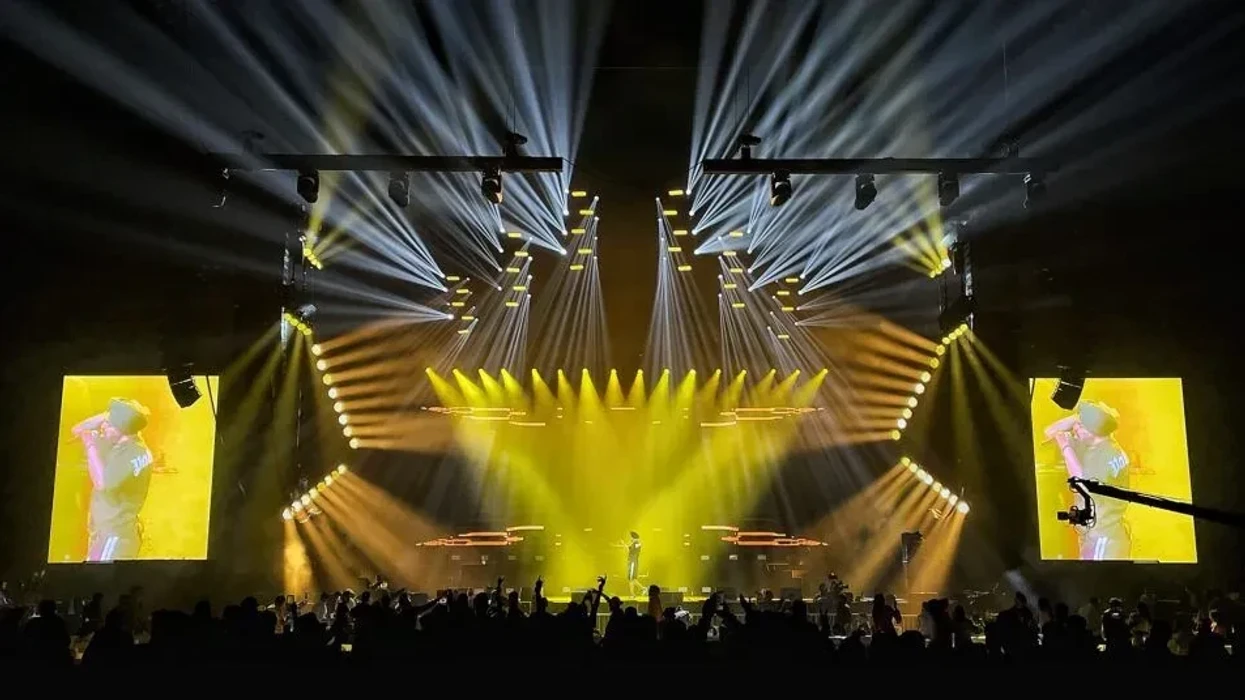
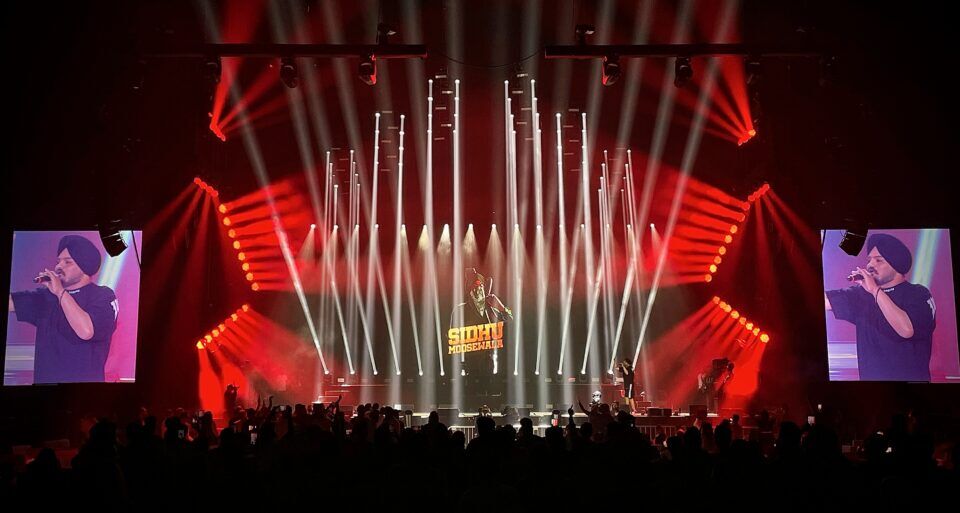 A past show produced by The Concert Production for Sidhu Moose Wala.
 The Concert Production founders Sohail Mansuri and Zeeshan Siddiqui. Photos: Courtesy of The Concert Production
 Linda Ramone and John Travolta Sean Sabhasaigh/Getty Images
Everybody Likes Drake Again. That Means We’re Healing