
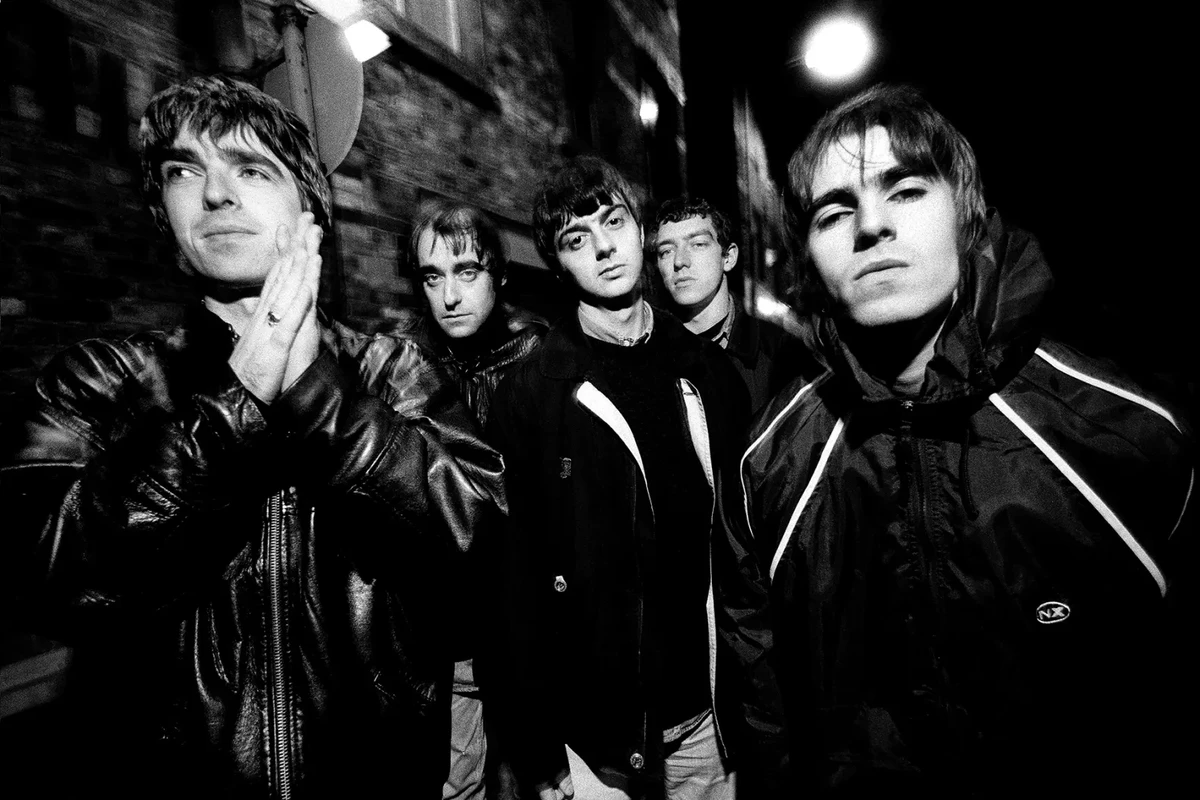

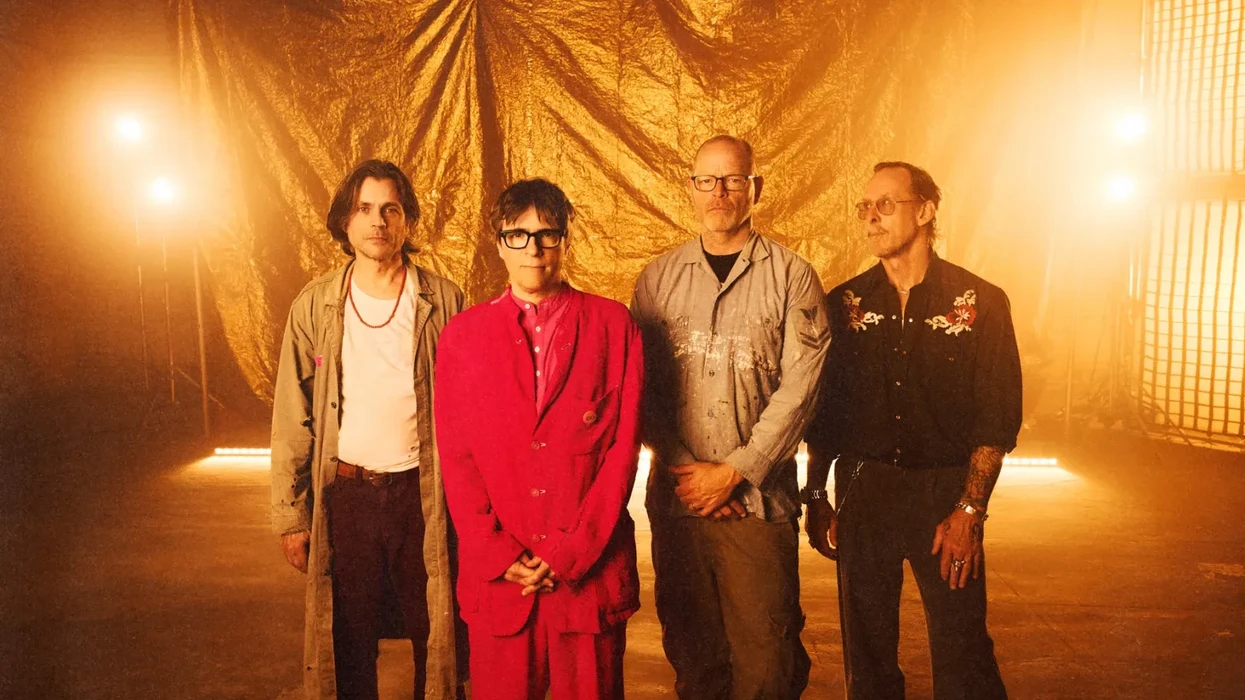
The Rock & Roll Hall of Fame revealed its class of 2026 on Monday evening, and it’s an unusually strong one. After years of dithering in which they proclaimed that Foreigner and Bon Jovi were somehow more worthy than Joy Division/New Order, the Hall is finally bringing in the groundbreaking post-punk band. (It was starting to look as if Bernard Sumner, Stephen Morris, and Peter Hook would have to start yet another world-changing band to be recognized by the Hall.)
Elsewhere, Phil Collins is joining the double inductee club (which also should have happened at least a decade ago), icons Sade and Luther Vandross got well-deserved nods, and Wu-Tang Clan and Oasis are representing the Nineties.
But like every year, there’s a lot of confusion and questions lingering in the air. An unusually large number of British acts are in the class, and historically they don’t have the same reverence for the Hall of Fame as their American counterparts. It’s unclear how many will show up. There’s also the potential for a very messy reunion between bandmates who absolutely loathe one another and have had almost no contact in two decades. And in one case, the Hall of Fame seems to have made a rather baffling blunder regarding which exact members of a band are getting in.
Here are eight questions we have about this year’s Rock & Roll Hall of Fame induction.
Will Oasis Show Up?
The Oasis induction is capping off an extraordinary year for the Britpop icons. Their 2025 reunion tour packed stadiums all across the planet: They weren’t this popular in America even at the height of their (What’s the Story) Morning Glory? fame in the mid-Nineties. There’s no hint of any future shows, and they’ve said very little about the Hall of Fame beyond a series of snarky X posts by Liam Gallagher. “Reverse psychology vibes in the area Oasis RnR hall of farmers I mean famers,” he wrote in a post dripping with sarcasm. “I wanna thank all the people who voted for us, it’s a real honour ever since I was a little kid and singing in the shower I’d dream about 1 day being in the RnR hall of fame it’s true what they say anything is possible if you have a dream.”
It’s difficult to imagine a teary-eyed Noel Gallagher accepting the award at the ceremony in November before joining his brother and the rest of the guys for singalong renditions of “Wonderwall” and “Live Forever” as cameras roll for the ABC broadcast. Instead, it’s much easier to imagine them not going, and possibly sending a snide, Sex Pistols-like letter in their place. There’s also a scenario where founding drummer Tony McCarroll is the only one to show.
Why Was the Founding Bassist of Oasis Excluded?
Joining Noel and Liam Gallagher in the Hall of Fame will be guitarists Gem Arthur and Paul “Bonehead” Arthurs, bassist Andy Bell, and drummer Tony McCarroll. Alan “Whitey” White, who played drums in the band from 1995 to 2004 was excluded, along with the many touring members they’ve employed over the years. Whitey has a strong case that he’s getting screwed since he’s the drummer on (What’s the Story) Morning Glory?, and was there for the peak years. But drummer Dave Abbruzzese had a very similar resume with Pearl Jam, and he didn’t get in either.
With that said, it’s very hard to think of any argument that justifies keeping original Oasis bassist Paul “Guigsy” McGuigan out of the Hall of Fame. He’s a founding member of the band, and he stuck around until 1999. If McCarroll is getting in for playing drums with the band from 1991 to 1995, Guigsy should be inducted for playing bass with them from 1991 to 1999. It isn’t complicated. The Rock Hall just messed this one up. They need to fix it. #JusticeForGuigsy.
Update: A day after we published this article, both Guigsy and White were added to the list of Oasis inductees.
How Will Iron Maiden Handle This?
In a fair world, Iron Maiden would have entered the Hall of Fame shortly after becoming eligible in 2005. In this world, it took two decades and three nominations before it finally happened. Along the way, they made it very clear they didn’t care whatsoever. “It’s run by a bunch of sanctimonious bloody Americans,” Maiden frontman Bruce Dickinson said in 2018, “who wouldn’t know rock & roll if it hit them in the face.”
The band has said nothing since they actually got in, but manager Rod Smallwood did release a statement: “We’d like to thank the Rock & Roll Hall of Fame for including us (and former members who were all part of our story) in the 2026 roll call of inductees. Iron Maiden have always been about our relationship with our fans above anything else, including awards and industry accolades.”
He didn’t say anything about the band showing up. They might pull a Cher and instantly change their mind about the Hall of Fame once they actually get in. There’s a long history of this. “I’ve been saying for a long time that this wasn’t a big deal,” Neal Peart said when Rush were inducted in 2013. “It turns out, it kind of is.” It’s pretty likely that Iron Maiden won’t be quite so magnanimous. They’ve never needed mainstream support or even hit songs. And they don’t really need the Rock & Roll Hall of Fame.
Will Joy Division/New Order Declare a One-Night-Only Truce?
Over the past four decades, feuding groups like the Police, Yes, Talking Heads, and Led Zeppelin put aside their vast differences for the evening and played together at the Hall of Fame. In 2017, Steve Perry appeared at the podium alongside Journey even though he didn’t sing with them. Joy Division/New Order fans have fantasized about Peter Hook returning to the fold at the Hall of Fame following 20 years of tension and legal battles with the band.
“I’d just like to say how wonderfully pleased I am to be finally accepted into the Cleveland Rock & Roll Hall of Fame,” Hook said on Instagram once the news broke. “I’ve been looking forward to it for years, so I definitely am gonna make the most of it. I’d like to say that this is for Ian Curtis, and for all our fans of both bands. Without you, we would be nothing.” In the caption he added, “See you at the ceremony.” That means Hook will indeed be at Los Angeles’ Peacock Theater on Nov. 14. But his former bandmates have yet to say a word.
It’s genuinely hard to predict how this one will play out. There’s so much bad blood here that even the Hall of Fame might be unable to bring these guys together. If it does happen, however, it’ll be one of the great reunions in Hall of Fame history. New Order have been fractured for way too long. Hook was a crucial architect of their sound. Everyone needs to suck it up and make this happen. (But don’t hold your breath.)
Will Phil Collins Perform?
So far, Phil Collins has only reacted to the Hall of Fame with a very brief statement on Instagram. “Obviously I’m pleased and honored to be inducted,” he wrote. “It wraps up what has been a wonderful life in music.” His life outside of music has been defined by significant health setbacks in recent years, and he hasn’t played live since the end of the Genesis farewell tour in early 2022. It’s likely he’ll attend the event, especially since he’s on the mend. We can even see him opening the show with “In the Air Tonight.” In the biopic version of his life, it’d be the final scene. Let’s hope it happens for real.
What About Sade?
There hasn’t been a new Sade album since 2010’s Soldier of Love, they haven’t played a show since 2011, and lead singer Sade is very press shy. They were supposedly working on a new album back in 2018, but it’s becoming the Chinese Democracy of sophisti-pop. Will they come to the ceremony and wow the place with “Smooth Operator” and “The Sweetest Taboo?” We can see this one going either way.
Can the Rock Hall Ceremony Finally End the Oasis/Phil Collins Blood Feud?
The rise of Oasis happened to perfectly coincide with the decline of Phil Collins as a pop-culture force after well over a decade of ubiquity. It made him a very easy target of their derision. “I’ll be voting Labour because I think it’s morally right,” Noel Gallagher said in 2005. “Another reason to vote Labour is if the Conservatives get in, Phil Collins is threatening to come back and live here. And let’s face it, none of us want that.” In the unlikely chance that the Gallaghers actually show up, it’s a chance for them to mend fences. Maybe they can even team up for a mashup of “Supersonic” and “Take Me Home.”
Can We Dig Deeper Into the Nineties Next Time?
Artists are eligible for the Rock & Roll Hall of Fame 25 years after the release of their first album or single. That means we’re supposed to be in the early 2000s by now. But the Hall is still very focused on acts it’s overlooked from the Eighties. In most cases, we support that. Better late than never.
But before we start inducting the Strokes and Coldplay, there’s a lot of Nineties bands still waiting. The list includes Weezer, Smashing Pumpkins, Alice in Chains, Tool, and Hole. They also need to go back further and take in Pixies, Devo, Pavement, Sonic Youth, and the Replacements. Going back even further, it’s absurd that King Crimson and the New York Dolls aren’t in. By the time that Taylor Swift makes it in on her first ballot in 2031, let’s hope these rights have all been wronged. (And we’re going to fight for the Monkees and “Weird Al” Yankovic until our dying breaths. In the meantime, we can at least stop screaming about Joy Division/New Order.

 Courtesy of Jennifer Precious Finch’s archive
 Josh Martin for Rolling Stone
Taylor Swift and Bad Bunny in a split image
Taylor Swift and Bad Bunny Dealt With Trump Quietly. It’s a Smart Move
Taylor Swift and Bad Bunny are both major superstars — and they’ve shared some parallels in their careers and discographies for several years. Now, they’re even using the same playbook to deal with taunts and baiting from Donald Trump and the White House’s social media teams.
Since Trump took office during his second term, he and his administration have been using social media as part of their communication strategy. The propaganda-like, rage-bait-style clips often lean into internet culture and use popular music to make light of Trump’s most egregious actions, like his immigration policy and war-hungry foreign policy.
Olivia Rodrigo, Katy Perry, Ariana Grande, and Noah Kahan are just some of the artists who have had their music used in these videos without their permission — and vehemently spoken out against these actions and against the president. In the past couple of weeks, the Trump administration seems to have wanted to provoke a response from two of the world’s biggest superstars: Bad Bunny and Swift.
On July 30, the official White House TikTok used “La Mudanza” for a particularly tone-deaf video about immigration that celebrated the number of deportations under Trump. A week later, a video with text that said, “mood because it’s August and Donald Trump is your president” set to Swift’s “August” was uploaded by Team Trump, the president’s official campaign account. The caption was an overt provocation: “I’m sure Taylor Swift is going to be super excited we used her song,” it read. Days later, another clip from the same account featured an edited version of Swift’s Red album cover with text that said, “Did you know that Taylor Swift wrote a whole album about the color of the Republican Party?”
Neither musician has released a public statement denouncing the use of their music in Trump’s videos. Instead, two of the world’s biggest superstars quietly removed their songs from videos posted by official accounts linked to the Trump administration. (It’s unclear if there is a TikTok feature that allows selective sound muting on videos or if the respective teams reached out to the social media accounts directly.) The tracks are still available for other TikTok accounts to use in their videos, making their silence a pointed — and smart — approach. Both Bad Bunny and Swift seem to recognize the president and his administration’s tactics for what they are: antagonizing moves that keep the Trump conversation centered on his social media presence, rather than his actual policies and the harm they commit. Why would they add their star power to the conversation and stoke the flames when that’s exactly what the White House appears to want?
Some people argue that celebrities should wield their platform to denounce Trump at any chance if they are truly not politically aligned with his MAGA politics. But because they hold so much influence, these superstars need to be strategic about how they use it.
Benito, in particular, has been incredibly outspoken about his politics. He stood on two of the world’s biggest stages and used them to voice pro-immigration messages, denounce Trump’s policies, and highlight Puerto Rico as it struggles with the effects of U.S. imperialism. “Before I say, ‘Thank God,’ I’m going to say, ‘ICE out,’” the Puerto Rican superstar said at the 2026 Grammys. “We’re not savage. We’re not animals. We’re not aliens. We are humans and we are Americans.” Last summer, Bad Bunny’s music video for “Nuevayol” used a voice that sounds a lot like the president’s to deliver a pro-immigrant message. “I made a mistake. I want to apologize to the immigrants in America. I mean the United States. I know America is the whole continent,” the voice bellows out of a Seventies radio toward the end of the video. “I want to say that this country is nothing without the immigrants.”
Fans were convinced that Benito would speak out against the official White House TikTok account when it used one of his most political songs. But commenting on the video would only blow up the discussion for a wider audience. When Rodrigo, Perry, Grande, and Kahan made public comments, spokespeople for the White House used the opportunity to spread hateful rhetoric. “We’ll say this one last time: what’s actually barbaric, inhumane, and heinous are the criminal illegal aliens who have injured and murdered innocent American citizens,” Abigail Jackson said in a statement to Rolling Stone after Grande spoke out. It’s the antithesis of what Benito said during his Grammys speech this year: “The only thing more powerful than hate is love.”
Swift, on the other hand, has dealt with Trump and the right-wing’s instigations for years, each one crazier than the last. The TikTok videos from the last week aren’t even the first time that the administration has used the singer’s music for social media videos. Last fall, both the official White House TikTok account and Team Trump used songs from Swift’s then-newly released The Life of a Showgirl in separate videos. One plucked the lyrics “pledge allegiance to your hands, your team, your vibes” from “The Fate of Ophelia” to celebrate Trump, Vice President JD Vance, and the first and second ladies. The others boasted about Trump by using “Father Figure” and honored Melania Trump’s Patriot of the Year award with “Opalite.” As of Aug. 10, the audio is not available under all of these specific videos.
The pop superstar has not spoken publicly about these instances. But she has made her disdain for Trump clear. Over the years, Swift has criticized Trump’s autocratic leadership. On X, she wrote “we will vote you out” and endorsed Joe Biden and Kamala Harris in the 2020 and 2024 elections, respectively. In 2019, Swift told Rolling Stone, “There’s literally nothing worse than white supremacy. It’s repulsive. There should be no place for it.”
Even though she’s shared her liberal viewpoints on issues like abortion, LGBTQ+ rights, and racial inequality, Swift has still faced ridiculous claims of being MAGA-aligned and folding in right-wing dog whistles to her music — and that’s without ever naming Trump. If Swift were to make a statement about her music being used by the Trump administration, the attention-seeking president would absolutely revel in it. Getting Swift and Bad Bunny to weigh in is exactly the type of headline grabber he would love to draw attention from his remarkably unpopular presidency.