
Skip to content
Search

David Byrne Teaches FKA Twigs His Signature Moves in Coachella’s New ‘Artist on Artist’ Series

The new series debuts today with a conversation between Armin van Buuren and Adam Beyer, while Twigs and Byrne's episode will air next week

David Byrne Teaches FKA Twigs His Signature Moves in Coachella’s New ‘Artist on Artist’ Series

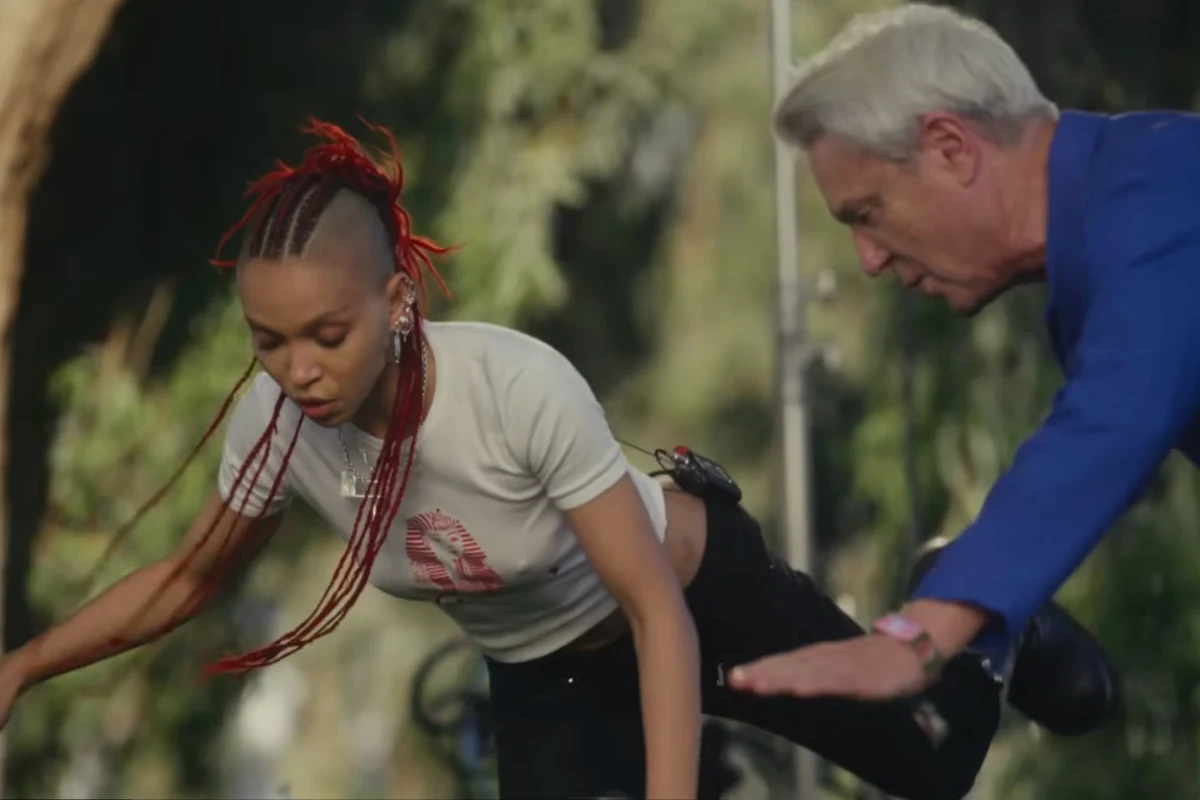
FKA Twigs and David Byrne dancing together in preview clip from Coachella's new 'Artist on Artist' interview series.

YouTube/Coachella

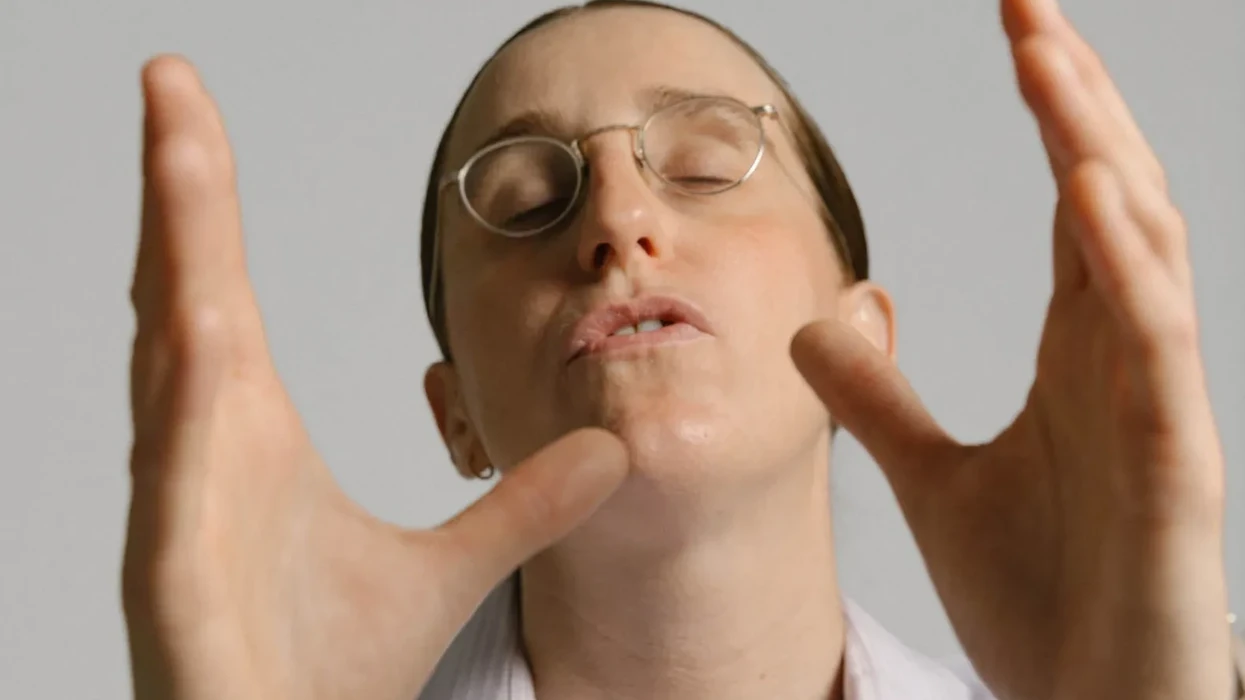
FKA Twigs is already an accomplished dancer, but when you have the chance to learn some moves from one of the best — in this case, David Byrne — why pass it up?

In this exclusive clip from an upcoming episode of Coachella’s new Artist on Artist interview series — which debuts today on Coachella’s YouTube channel — Twigs raves about Byrne’s unique style of movement, saying, “It’s almost beyond dance what you do. It’s like this kind of kinesis, this kinetic representation of the music that is so free.”


Byrne offers a humble “Thank you,” at which point Twigs asks Byrne if he’ll show her a few steps. “This is the best day ever,” she tells him after he obliges. From there, Byrne takes Twigs through some of his classic quirked up moves, whether that’s stumbling like you’re about to fall down, leaning over as far as possible while still singing, or balancing on one leg while singing.

When Twigs asks Byrne to show her a more “groovy one,” he busts out a classic where he goes slack and shimmies like a puppet on strings.

The impromptu dance lesson comes from FKA Twigs and Byrne’s episode of Artist on Artist, which will arrive in full on Coachella’s YouTube series next week. The inaugural episode, out today, features legendary DJs/producers Armin van Buuren and Adam Beyer discussing the evolution of tech and trance, mishaps while spinning vinyl, and how the EDM landscape has changed, especially since Covid.

Van Buuren said it was much “easier for me to DJ now,” especially with people being “more open minded” to electronic underground music and trance. Beyer added, “I feel that Covid…kind of reset [the scene] in a way, and a lot of things changed in those two-three years. Some for the better, some for the worse. It felt like some of the culture got a bit lost in the transition, but at the same time it was like a blank canvas. A lot less judgement on the music.”

Along with van Buuren and Beyer, FKA Twigs and Byrne, the Artist on Artist series will feature conversations with PinkPantheress and Slayyyter; and Sara Landry and LP Giobbi, TOKiMONSTA, and Mary Droppinz. All four episodes were filmed over the past two weekends of Coachella.

More Stories

Duran Duran and Nile Rodgers Throw a Disco Party on New Single ‘Free to Love’

Duran Duran and Nile Rodgers Throw a Disco Party on New Single ‘Free to Love’

Duran Duran revealed their first new music of 2026 on Thursday, “Free to Love,” their disco-fueled single featuring longtime collaborator Nile Rodgers.

“Every time we plug in and play with Nile, the electricity he generates could light up a whole city. We share a common belief that music is a force for good and something that brings positive energy into the world,” keyboardist Nick Rhodes said in a statement. The musician called the new track the band’s “call to all the people out there who want peace, hope and understanding to prevail” and an “anthem for freedom.”

Keep ReadingShow less
Celeste Rivas Died of Two ‘Penetrating Injuries’ With ‘Smooth Edges’ on Teen’s Torso
Photographs, notes, and flowers are among the items left at a memorial for Celeste Rivas Hernandez in Lake Elsinore.
Gina Ferazzi / Los Angeles Times via Getty Images

Celeste Rivas Died of Two ‘Penetrating Injuries’ With ‘Smooth Edges’ on Teen’s Torso

Celeste Rivas Hernandez died from “multiple penetrating injuries” on her upper abdomen, according to an autopsy report from the Los Angeles County Medical Examiner’s Office released on Wednesday.

The report, which has long been under seal, was finally released to the public after the singer D4vd — real name David Anthony Burke — was charged with Rivas’ murder Monday, April 20.

Keep ReadingShow less
‘Michael’: Why It Took Years to Bring Michael Jackson’s Story to Life

Michael Jackson in London in 2009

Dave Hogan/Getty Images

‘Michael’: Why It Took Years to Bring Michael Jackson’s Story to Life

The upcoming Michael Jackson biopic, Michael, concludes in 1988, with Jackson gliding across a London stadium stage, performing in that white T-shirt and black jacket full of zippers, as fans weep before him. But where’s the rest of the story? As Rolling Stone’s David Fear noted in his review, there are zero mentions of the multiple sexual-abuse allegations Jackson faced for the rest of his life in subsequent years. The inclusion — or lack thereof — is one of many reasons it took so many years to bring the (partial) story of the King of Pop’s life to the screen.

Keep ReadingShow less
Drake’s Ice Installation Dismantled by Toronto Fire Services
Cole Burston/The Canadian Press/AP

Drake’s Ice Installation Dismantled by Toronto Fire Services

A large-scale promotional installation created for Drake was dismantled by Toronto fire crews after safety concerns escalated around the site. The towering structure, made of thousands of ice blocks, had been designed to generate excitement for his upcoming album Iceman by hiding its release date within.

However, what began as a creative marketing campaign quickly became hazardous. Fans gathered in large numbers and attempted to break into the structure using extreme measures, including lighting fires and using tools such as sledgehammers. According to CBC, these actions prompted emergency intervention late Tuesday night.

Keep ReadingShow less
432 Hz: The Mystical Frequency Artists Are Embracing

Ziggy Marley, James Blake, and Ed O'Brien (from left) are among the musicians interested in the properties of music tuned to 432 Hz.

432 Hz: The Mystical Frequency Artists Are Embracing

From classical to rock, musicians tune their instruments to a common pitch so they can play together harmoniously. For at least 80 years, that standard pitch frequency has been A440 Hz — which defines the A note above middle C, and by extension, all the other notes around it. But this longstanding tuning standard is now being challenged across genres, as more and more artists, including a pair of Grammy-winning acts, release albums tuned to A432 Hz instead. It’s a slightly lower tuning, and for these musicians, it makes all the difference.

Radiohead guitarist Ed O’Brien’s interest in this subject started about 12 years ago, at the Glastonbury Festival. “I had an inspiring conversation about the Solfeggio scale, an ancient scale, and this led me to discovering 432 Hz,” says O’Brien, whose second solo album, Blue Morpho, will be released May 22. “I loved the idea that music could be more than just pleasant on the ear or move you — that the actual frequency it was played at could actually have a healing component or vibrate in harmony with the cells in your body and the world around you.”

Keep ReadingShow less