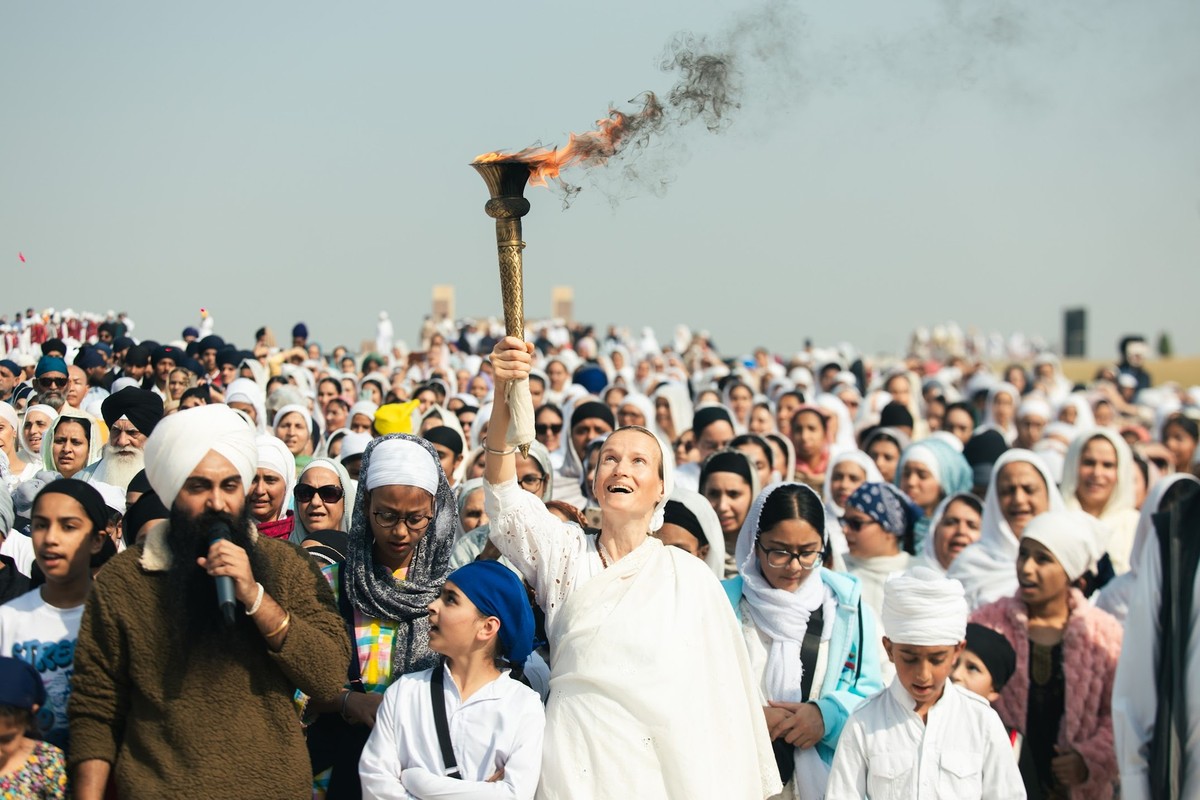

What began as a gathering of religious leaders, spiritual figures and thinkers in northern India less than two years ago has grown into an international movement reaching 93 countries and territories. Built around three seemingly simple principles, humility, kindness and love, the HKL Movement is bringing thousands of people together through meditation, music and community initiatives, with Canada emerging as one of its most active centres.
For Anna Stewart-Ibarra, a scientist and board member of the movement, the idea is rooted in a belief that meaningful change begins with how people approach their own lives and the people around them. "People coming together and saying this is about being one human family. This is not about any of the things that separate us," she explains.
That philosophy was on display in Mississauga, Ontario, where nearly 3,000 people gathered inside a hockey arena for HKL's seventh international conference earlier this year. A candlelit stage adorned with flowers, live musical performances and guided meditation transformed the venue into something far removed from its usual setting. "It's like another-worldly experience," Stewart-Ibarra recalls.
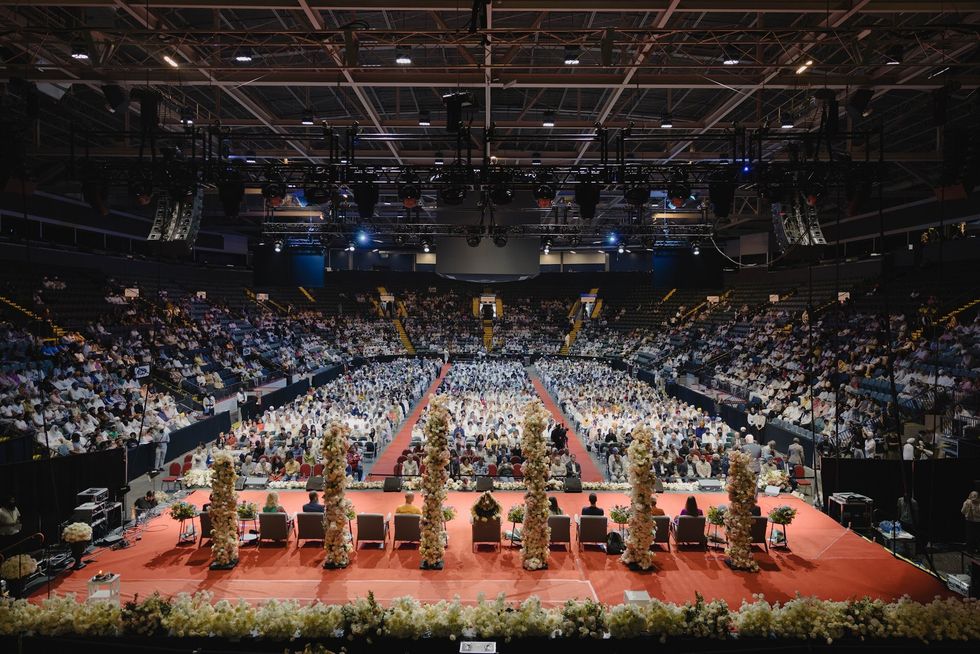 Courtesy Photo
Founded in northern India in 2024, HKL, short for Humility, Kindness and Love, began as a "wave" launched by leaders of major religions, spiritual movements, philosophers and thinkers. The idea was to bring people together around values that transcend religious, cultural and social differences.
"People coming together and saying this is about being one human family. This is not about any of the things that separate us," Stewart-Ibarra explains.
Less than two years later, the movement has expanded to 93 countries and territories, with approximately 42,000 registered members and several thousand more joining each week, according to Stewart-Ibarra. Seven international conferences have been held across India, Australia, Italy, the United Kingdom and Canada, bringing together speakers from fields including science, media and sport, alongside musical performances and guided meditation.
The conferences are designed to introduce people to the movement's philosophy through shared experiences. They typically involve hundreds of volunteers, many of whom travel from different countries to help organise the gatherings. Stewart-Ibarra recalls speakers describing the volunteers as working "like a super organism," reflecting their coordination and commitment.
Participation is free, with events supported through local donations. "Everything we do is at no cost, which is pretty hard to believe in this day and age," she says.
But the movement's ambitions extend beyond its conferences. At its core is the belief that meaningful change begins with individuals developing greater awareness of their thoughts, emotions and everyday interactions. Rather than encouraging lengthy spiritual routines, HKL promotes brief moments of reflection throughout the day, described as micro check-ins or micro meditations.
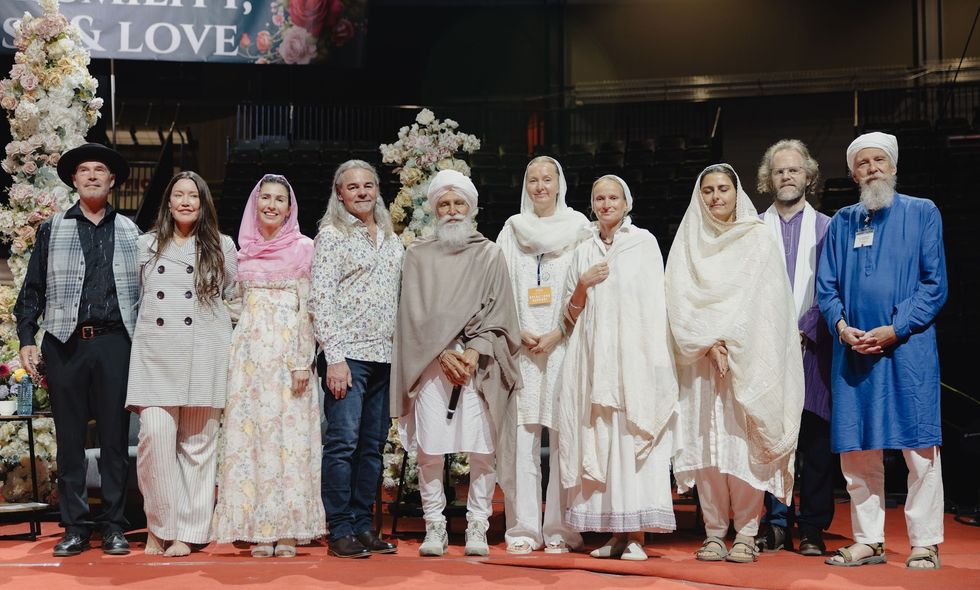 Courtesy Photo
"Meditation is simpler than we think," Stewart-Ibarra says. "It's about creating simple habits to slow down, come within, and not just at one point in the day, but really throughout the day."
The idea is to help people reconnect with themselves amid the demands of work, family and modern life, and gradually bring that awareness into their relationships and communities.
"The transformation is a journey, and it begins maybe with the conference," she explains.
That journey continues through initiatives such as HKL Tea Talks, informal gatherings where participants come together for reflection, meditation, conversation and shared food. "Sitting and eating together is so beautiful and so powerful to build community and to build trust," Stewart-Ibarra says.
The movement also organises HKL Walks, during which volunteers take to public spaces carrying signs, distributing flowers and speaking with people about humility, kindness and love. Two walks had been organised at the time of the interview, with plans to hold them every two months.
Members can join through the HKL website and connect with local volunteers or participate through its online community on Circle. WhatsApp channels and email communications also provide daily reminders to practise moments of reflection. Volunteers interested in organising their own gatherings can receive guidance and support from the movement.
Canada has become particularly important to HKL's international growth. Stewart-Ibarra says its largest volunteer networks are based in the country, with active communities in Toronto, Vancouver, Surrey, Edmonton, Winnipeg and Calgary. Canada has already hosted two international conferences, including a gathering in Abbotsford, British Columbia, in August 2025 that attracted several thousand attendees.
The Punjabi community has been especially instrumental in supporting the movement's growth. "So currently I would say the Punjabi community is really the powerhouse, the motor for the HKL movement, but that is rapidly changing, and the goal is again that this is for all of humanity, that this is for everybody," she says.
Looking ahead, HKL plans to establish physical community spaces known as HKL Gardens, which Stewart-Ibarra describes as a "garden of humanity." These free, accessible spaces will offer opportunities for meditation, learning and community gatherings, with the first Canadian locations expected within the next year.
The movement is also expanding into education. Its HKL Pauses programme introduces short periods of reflection into school days, allowing students and teachers to spend approximately 10 minutes meditating, journaling or drawing. Stewart-Ibarra says participating teachers have reported calmer classrooms and reduced burnout. HKL is developing a broader kindergarten-to-Grade-12 curriculum and supporting student-led clubs at Canadian universities. A separate programme focused on employee well-being is also being developed for businesses.
While the movement receives spiritual guidance from Babaji Baldev of Bullampuri, India, its organisational direction is overseen by an international board of professionals from different backgrounds. Stewart-Ibarra, who is relocating to Chandigarh to support its new global headquarters, emphasises that HKL is not built around any one spiritual figure.
"HKL is not led by a person," she says. "HKL is a global movement for all people."
The next major international gathering is planned for Bullampuri in Punjab in mid-November 2026, as part of a longer programme of music, meditation and community activities running from November 9 to 19. Stewart-Ibarra expects more than 8,000 people to attend the approximately three-day conference.
For her, however, the movement's purpose is rooted in something far more personal than its growing international presence. After spending five weeks travelling across Canada, she recalls encountering people dealing with difficulties that aren't always immediately visible. "So many people you talk to, there's like tears right behind the surface, like behind their eyes, because of many reasons," she says. "It's the human experience."
It is this shared human experience that HKL hopes to address, encouraging people to find greater peace in their own lives while extending compassion to those around them. And as the movement continues to expand, Stewart-Ibarra's invitation remains straightforward.
"This is for everybody. It doesn't matter where you are; just please come and join us."
The 8th International Conference of the Humility, Kindness & Love Global Movement will take place from Nov. 15-17 at the University, Bulandpuri Sahib, Jalandhar, Punjab, India.