Skip to content
Search

Travis Scott Tells Supreme Court Use of Rap Lyrics in Death Sentence Was Unconstitutional

Killer Mike, T.I., Young Thug, Fat Joe, and more also filed a brief arguing that the lyrics were used to “stoke racial and anti-rap bias”

Travis Scott Tells Supreme Court Use of Rap Lyrics in Death Sentence Was Unconstitutional
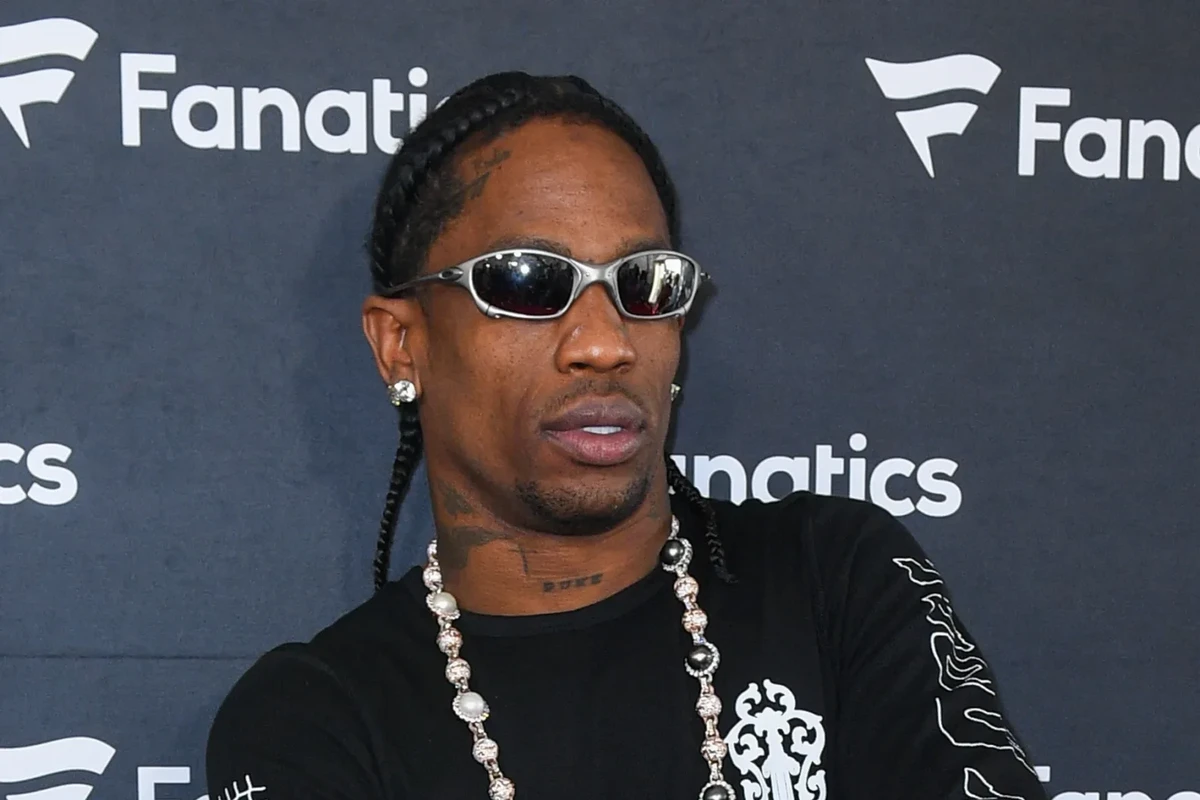
Aaron J. Thornton/WireImage

Some of rap music’s biggest names have come out in support of a Black man, whose rap lyrics were cited during his sentencing in Texas. He is on death row.

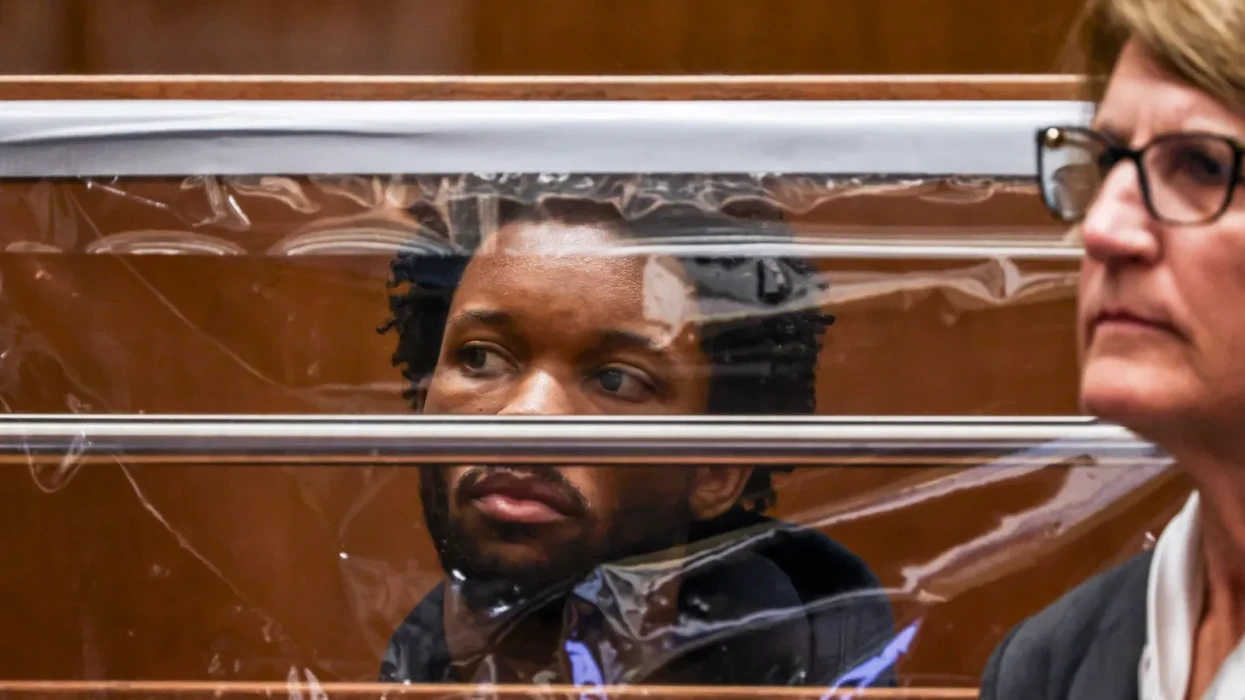
In 2009, a nearly all-white jury convicted James Garfield Broadnax of killing two men during a robbery the previous year near Garland, Texas. Prosecutors had eliminated all prospective jurors who were Black. After Broadnax was convicted, prosecutors introduced his lyrics when a determination was being made on whether he should be put to death. During deliberations, the jury asked to review 40 pages of Broadnax’s handwritten lyrics two times, according to The New York Times. Broadnax’s lawyers last month asked the Supreme Court (SCOTUS) to halt his execution, which is set for next month, and to review his case.


One “amici curae” brief was filed on behalf of Killer Mike, T.I., Young Thug, Fat Joe, N.O.R.E., and other artists, music scholars, and arts organizations in support of Broadnax. Travis Scott‘s legal team filed its own amicus brief with the Supreme Court the same day. Both argued that the use of rap lyrics in the trial was unconstitutional.

“The prosecutors argued Mr. Broadnax was likely to be dangerous in the future simply because he engaged in ‘gangster rap,'” read Scott’s brief. “Such an argument functionally operates as a categorical and straightforwardly unconstitutional content-based penalty on rap music as a form of expression.”

Moreover, the filing argues, “At a certain level of abstraction, the reality is even more problematic: taking rap music out of context subjects the entire genre to prosecution.”

Scott’s brief also argues that rap music, which is “primarily created by and historically associated with minority artists,” is protected by the First Amendment, that criminalizing rap music is an infringement on those rights, and that SCOTUS should “clarify the constitutional limits” of using “protected artistic expression as evidence of criminal propensity.”

In a statement to Rolling Stone, Ellyde R. Thompson, an attorney representing Scott, said that the case “implicates fundamental constitutional rights.” Thompson added, “A death sentence should never be based in any part on constitutionally protected artistic expression”

The brief filed by Killer Mike and others argued that rap lyrics are fiction, not autobiography. “Exaggerated tales of violence, sex, and criminal behavior sell to a broad swath of Americans — and any would-be gangsta rapper must learn and practice these conventions of the form,” it said.

The filing argued that Broadnax’s lyrics were irrelevant to his case since they weren’t used during the guilt or innocence phase of arguments. The use of the lyrics, it claimed, were used to “stoke racial and anti-rap bias,” and the way they were wielded was meant to make him seem dangerous. “This case exemplifies the racial prejudice that infects a criminal proceeding when the State uses a defendant’s rap lyrics to capitalize on anti-rap bias, the misinterpretation of rap lyrics, and anti-Black bias triggered by rap music,” the filing stated.

Chad Baruch, an attorney representing counsel for Killer Mike and Professor Erik Nielson, who is also named in the brief and teaches at the University of Richmond, said, “This case presents an ideal opportunity for the Supreme Court – once and for all – to plunge a much-needed dagger through the heart of the criminalization of rap as an art form.”

In another statement, Lucius T. Outlaw III, who also serves as counsel on the brief, said that the state of Texas “misused Mr. Broadnax’s rap artistic expression to secure a death sentence by appealing to racial stereotypes and fears of the young black ‘super predator.'”

Both briefs would like SCOTUS to “grant the Petition for a Writ of Certiorari,” which means review a lower court’s decision.

Lawyers for Texas argued that Broadnax’s attorneys had waited too long to raise objections over his lyrics. They claimed to have used his lyrics in only a small portion of their arguments.

“No matter how beautiful it sounds, or how horrific it may sound, it’s still just art,” Killer Mike told the Times. “It’s an interpretation of the human spirit. It is not an admission of guilt.”
More Stories

Hulk Hogan Consumed Enough Fentanyl to ‘Kill a Horse’ Following Divorce

Hulk Hogan at the Republican National Convention on July 18, 2024

Joe Raedle/Getty Images

Hulk Hogan Consumed Enough Fentanyl to ‘Kill a Horse’ Following Divorce

In his final interview, recorded prior to his death, Hulk Hogan detailed his excessive consumption of fentanyl after launching his stint on Total Nonstop Action Wrestling in 2009. In the Netflix docuseries Hulk Hogan: Real American, the wrestling figure — who died at the age of 71 in July 2025 — recalled experiencing excessive pain during the program, which he attempted to remedy with opioids.

“I was taking 80-milligram fentanyls, two in the morning, stuffing them under my gums here,” Hogan said. “I had two 300 mg patches of fentanyl on my legs, and they gave me six 1,500 mg fentanyl lollipops to eat. I went to the pharmacy, he goes, ‘You should be dead. We have never seen a human being take this much fentanyl.'”

Keep ReadingShow less
How Ibogaine Became the Darling of the Psychedelic Right
Illustration by DEBORA CAMPORESI

How Ibogaine Became the Darling of the Psychedelic Right

On a crisp November day in Aspen, Colorado, Rick Perry is stumping for iboga, a psychedelic shrub native to the Congo Basin rainforest in Central Africa known for producing powerful waking dreams. It is the heart of Bwiti, a centuries-old spiritual discipline primarily practiced in Gabon, and recently, the darling of the American psychedelic right. “ Take on the mantle of being the Johnny Appleseed of iboga, every one of you,” the former governor of Texas tells the audience while a delegation from Gabon watches impassively. “The medicine clearly showed me things that I’d never seen before,” Perry later tells me. “In the presence of God, I knew it — he loves me with great intensity. Pure white light.”

Keep ReadingShow less
The Music Industry’s Unfinished #MeToo Fight

Protesters gather at Harvey Weinstein's trial in 2020 in New York City.

Spencer Platt/Getty Images

The Music Industry’s Unfinished #MeToo Fight

April is Sexual Assault Awareness Month, and I’m writing this open letter not to call anyone out, but to invite you in.

The music industry has had several opportunities for a reckoning in recent years. But so far, it’s a reckoning the industry has managed to avoid. What we’ve seen instead are individual moments, isolated legal outcomes, and public spectacles that generate headlines but haven’t produced the systemic change this industry needs. The scrutiny that swept through Hollywood at the height of the #MeToo movement largely passed over the music industry. And while the last few years have heightened that scrutiny, the industry’s response has been mostly silence.

Keep ReadingShow less
Family of Celeste Rivas Hernandez Breaks Silence After D4vd Charged With Murder: ‘All We Want Is Justice’

Photographs, notes, and flowers are among the items left at a memorial for Celeste Rivas Hernandez in Lake Elsinore.

Gina Ferazzi / Los Angeles Times via Getty Images

Family of Celeste Rivas Hernandez Breaks Silence After D4vd Charged With Murder: ‘All We Want Is Justice’

The family of 14-year-old Celeste Rivas Hernandez released their first public statement after singer D4vd was charged with first-degree murder in connection with her death.

“We would like to thank the Los Angeles Police Department and the District Attorney’s Office for their hard work. We would also like to thank the people of Lake Elsinore for all their support,” the family said in a statement to ABC. “Celeste was a beautiful, strong girl who loved to sing and dance. Every Friday night was movie night and we spent wonderful times together,” the family wrote. “We love her very much and she always told us that she loved us. We miss her deeply. All we want is justice for Celeste.”

Keep ReadingShow less
Azealia Banks Skips Hearing in Ex-Manager ‘Stalking’ Case

Azealia Banks attends the Blumarine fashion show on February 27, 2025 in Milan, Italy.

ARNOLD JEROCKI/GETTY IMAGES

Azealia Banks Skips Hearing in Ex-Manager ‘Stalking’ Case

Azealia Banks was a no-show at a final status hearing on Tuesday ahead of a May 5 bench trial to determine how much she owes her former manager, Jeff Kwatinetz, after a court found her liable for stalking, defamation, and civil extortion, among other claims.

Los Angeles County Judge Brock T. Hammond signaled that the trial, which may last only one day, will proceed with or without Banks’ participation, though he asked Kwatinetz’s lawyer to send the “212” artist notice. During the Tuesday hearing, the lawyers said Kwatinetz and his model-actress wife, Natalie Loren Kwatinetz, plan to testify in person.

Keep ReadingShow less