
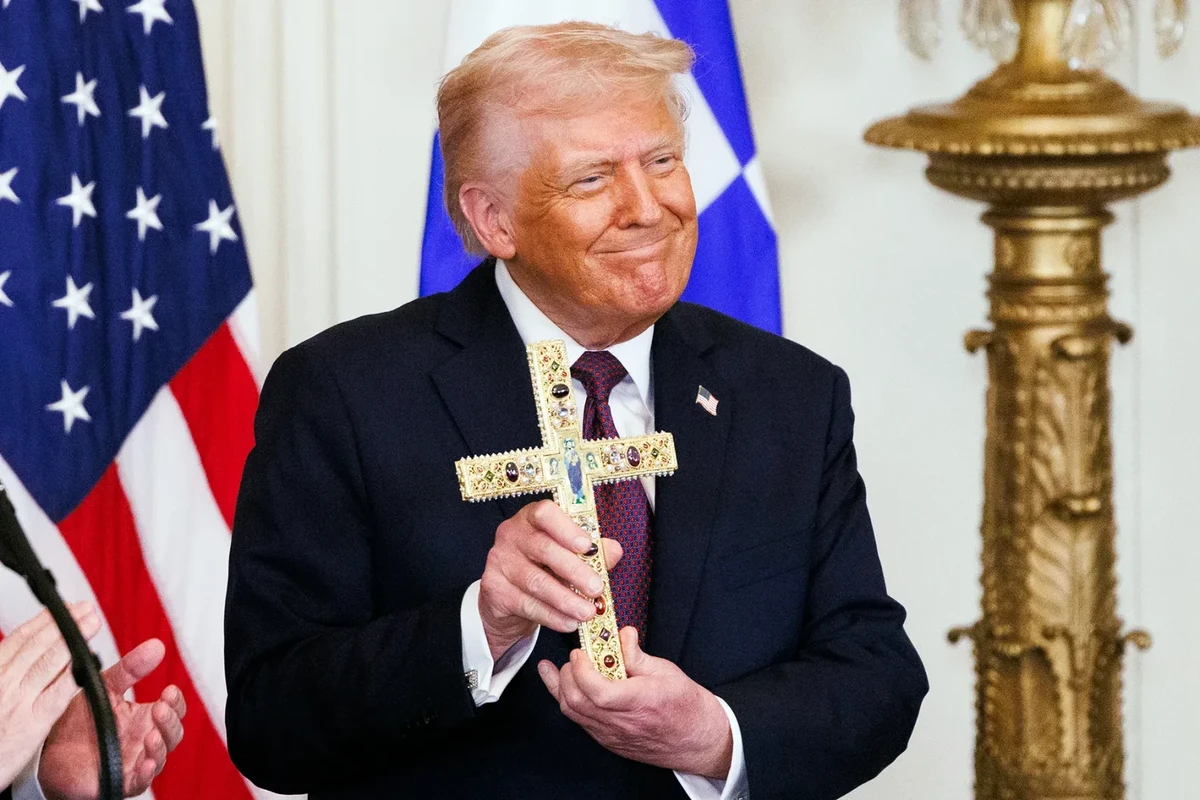

For most of the past century, the relationship between the White House and the Vatican has been one of the more carefully managed diplomatic arrangements in American foreign policy. Popes and presidents have disagreed — over Vietnam, nuclear weapons, abortion, immigration, the death penalty — but the disagreements have been conducted through established channels of statecraft, quiet diplomacy, back-channel messaging, and carefully worded statements. The Holy See, which maintains diplomatic relations with 184 sovereign states, has navigated the rise of fascism, two world wars, the Cold War, and the collapse of the Soviet Union, and outlasted emperors, dictators, and democracies.
But there is, in the annals of Vatican diplomacy, no established protocol for Donald J. Trump.
Trump’s relationship with the Vatican has been deteriorating for 18 months — through the Iran war, through battles over ICE and deportation; through a reportedly testy Pentagon meeting between apostolic nuncio Cardinal Christophe Pierre and a senior U.S. official; and through the president’s direct assault on Pope Leo XIV earlier this month.
But to understand how, under Trump’s watch, the most powerful nation on earth arrived at an open war of words with the oldest diplomatic institution in the Western world, it is necessary to understand something Trump himself made plain long before he ever set foot in the White House.
LET’S SET THE scene: It’s July 2015. A month after descending the golden escalator at Trump Tower to announce his candidacy, Donald Trump appears at the Family Leadership Summit in Ames, Iowa. It’s one of the premier social-conservative forums of the presidential primary season, and a place where Republican candidates court evangelical and Catholic voters, and demonstrate their fluency in the language of faith.
Onstage, Republican pollster Frank Luntz asks Trump, “Have you ever asked God for forgiveness?”
“That is a tough question,” Trump replies. “I am a religious person, shockingly, because people are so shocked when they find this out. I’m Protestant, I’m Presbyterian, and I go to church, and I love God, and I love my church.”
When Luntz presses him, Trump lands on a more candid answer. “I am not sure I have … I don’t think so … I don’t bring God into that picture.”
In attempting to explain himself, Trump — perhaps unwittingly — illuminates for the crowd a cobwebbed, rarely explored corner of his personal life. The centerpiece is not God or Scripture, but a prosperity-gospel minister whose Fifth Avenue Marble Collegiate Church the Trump family attended throughout Trump’s childhood and adolescence, and who later officiated Trump’s first wedding.
“Dr. Norman Vincent Peale,” Trump says. “He would give the sermon, and you would never want to leave.”
Over a decade ago, Trump biographer Gwenda Blair described Peale for Politico as “God’s salesman,” and the pastor who “taught Donald Trump to worship himself.”
Peale’s central teaching — distilled in The Power of Positive Thinking, which spent 186 weeks on the New York Times bestseller list and sold 5 million copies — was that faith was not a moral obligation but a performance technique. God appears throughout, but always in service of the reader’s own success; not a creed to be recited but, in his own words, “a power to be tapped.” Critics called Peale a con man. Theologian Reinhold Niebuhr called his theology “dangerous” and corrupting of the Gospel. Yale theologian William Lee Miller wrote that Peale’s books had replaced “the rhetoric of the sermon” with “the short, punchy sentences of the advertisement.” Trump credits the book with helping him survive his bankruptcies in the early 1990s.
The president, it would seem, was formed by an entirely self-referential theology, one in which God is window dressing for a system of radical self-belief. It makes sense, then, that an institution whose entire claim rests on the idea that there is a moral authority higher than any individual, including the most powerful man on earth, would be incomprehensible to him.
His long, strange record of engagement with the church and the papacy bears this out, and spans three eras of church leadership.
THE RECORD BEGINS in February 2013, when Pope Benedict XVI announced his resignation — the first pope to abdicate in nearly six centuries. Trump, then a real estate mogul and reality-television host, took to Twitter within hours. “The Pope should not have resigned,” he wrote. “He should have lived it out. It hurts him, it hurts the church …” That is a phrase worth remembering. Thirteen years later, he deployed it again in a Truth Social tirade against Pope Leo XIV this month: “It’s hurting him very badly and, more importantly, it’s hurting the Catholic Church!”
A month after Benedict’s resignation, when the College of Cardinals elected a Jesuit archbishop of Buenos Aires, Jorge Mario Bergoglio, as his successor, Trump was initially effusive. But two weeks later, he criticized a photo of the newly-elected Pope Francis standing at a checkout counter of a hotel to pay his bill as “not Pope-like!”
By December of that year, however, he had come around. “The new Pope is a humble man,” Trump wrote, “very much like me, which probably explains why I like him so much.”
It didn’t last.
When Pope Francis traveled to the U.S.-Mexico border in February 2016 and celebrated Mass at the fence in Ciudad Juárez, Trump’s border wall had already been his central campaign promise for eight months. A few days earlier, according to the National Catholic Register, Trump was critical of Pope Francis’ sympathy toward immigrants, telling Fox Business Network, “I think the pope is a very political person. I think he doesn’t understand the problems our country has.”
On the papal plane home, when asked by a reporter directly about Trump’s border-wall proposal, Francis said, “A person who thinks only about building walls, wherever they may be, and not building bridges, is not Christian. This is not in the Gospel.”
Trump, by then the undisputed Republican frontrunner, whom Rolling Stone referred to as “the GOP’s tough guy,” fired back within hours in a lengthy Facebook post in which he described the Vatican as “ISIS’s ultimate trophy,” accused the pope of being influenced by the Mexican government, and claimed the Obama administration was “using the Pope as a pawn” on immigration.
“For a religious leader to question a person’s faith is disgraceful …,” Trump wrote. “No leader, especially a religious leader, should have the right to question another man’s religion or faith.”
More than a year passed before Trump had direct contact with Pope Francis again. The setting, on May 24, 2017, was the Vatican, during Trump’s first foreign trip as president. He posted a video of the two of them together, writing, “Honor of a lifetime to meet His Holiness Pope Francis. I leave the Vatican more determined than ever to pursue PEACE in our world.”
Francis, for his part, presented Trump with a copy of Laudato Si — his 2015 encyclical on climate change, the moral obligations of wealthy nations, and humanity’s stewardship of the earth. Trump accepted it with apparent warmth. A month later, he announced his intention to withdraw the United States from the Paris Climate Agreement.
ALONGSIDE TRUMP’S messy history of papal confrontation is a parallel thread of messianic self-comparison. Peppered throughout Trump’s political career are moments neither confirming nor denying that he accepts about himself what many of his supporters actually believe.
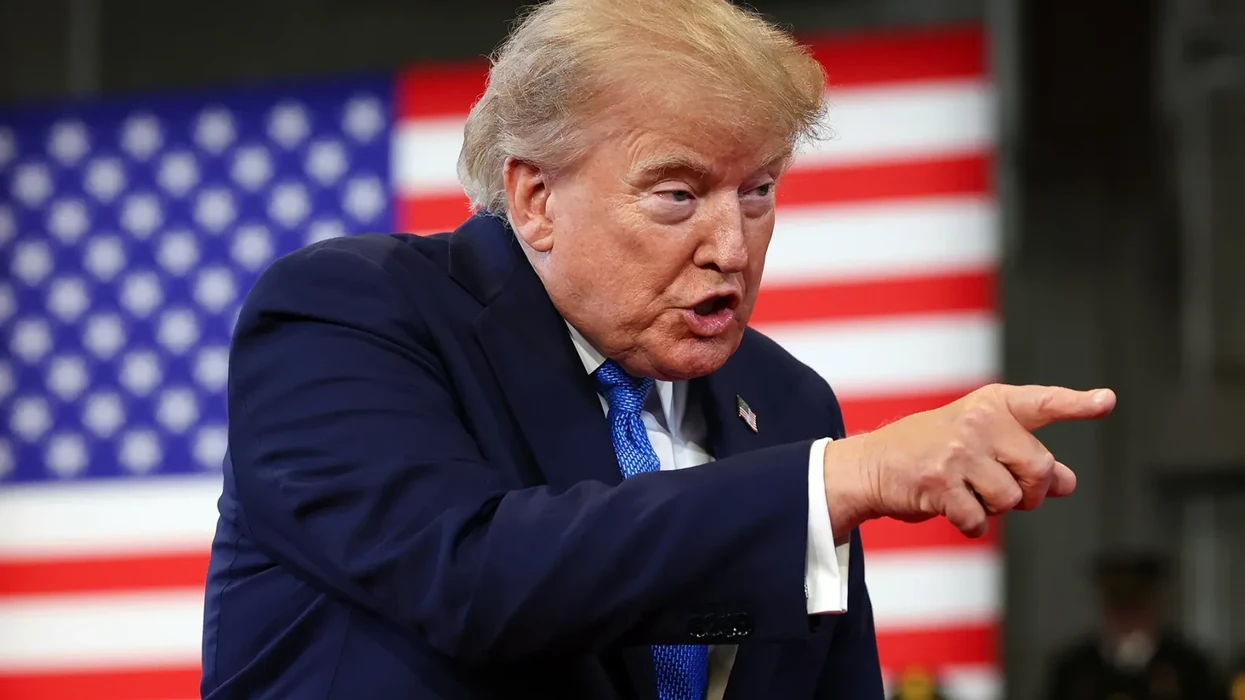
At the 2016 Republican National Convention, Trump told the assembled delegates that no one understood the broken political system better than he did. “I alone can fix it,” he said.
In 2019, Trump tweeted a quote from right-wing conspiracy theorist and self-described “Jew turned evangelical Christian” Wayne Allyn Root, claiming, “the Jewish people in Israel love [Trump] like he’s the King of Israel. They love him like he is the second coming of God …” Hours later, speaking to reporters about the trade war with China, Trump looked toward the heavens with outstretched hands and said: “I am the chosen one.”
In a televised interview with Dr. Phil, he stated, “If Jesus Christ came down and was the vote counter, I would win California, OK?”
The assassination attempt in Butler, Pennsylvania, in July 2024 appeared to harden what was previously performed with a wink. In the immediate aftermath, he posted on Truth Social: “It was God alone who prevented the unthinkable from happening.” At his victory speech that November, he told the crowd: “Many have told me that God saved my life for a reason, and that reason was to save our country.”
His team began selling “God Bless the USA” Bibles, including a commemorative edition marking the Butler assassination attempt — “The Day God Intervened,” and a signed edition retailing for $1,000.
Last April, days after the death of Pope Francis, Trump posted an AI image of himself as the pope, which was reposted by the White House’s official X account. The image drew a response from the Catholic bishops of New York. “We just buried our beloved Pope Francis and the cardinals are about to enter a solemn conclave to elect a new successor of St. Peter. Do not mock us.”
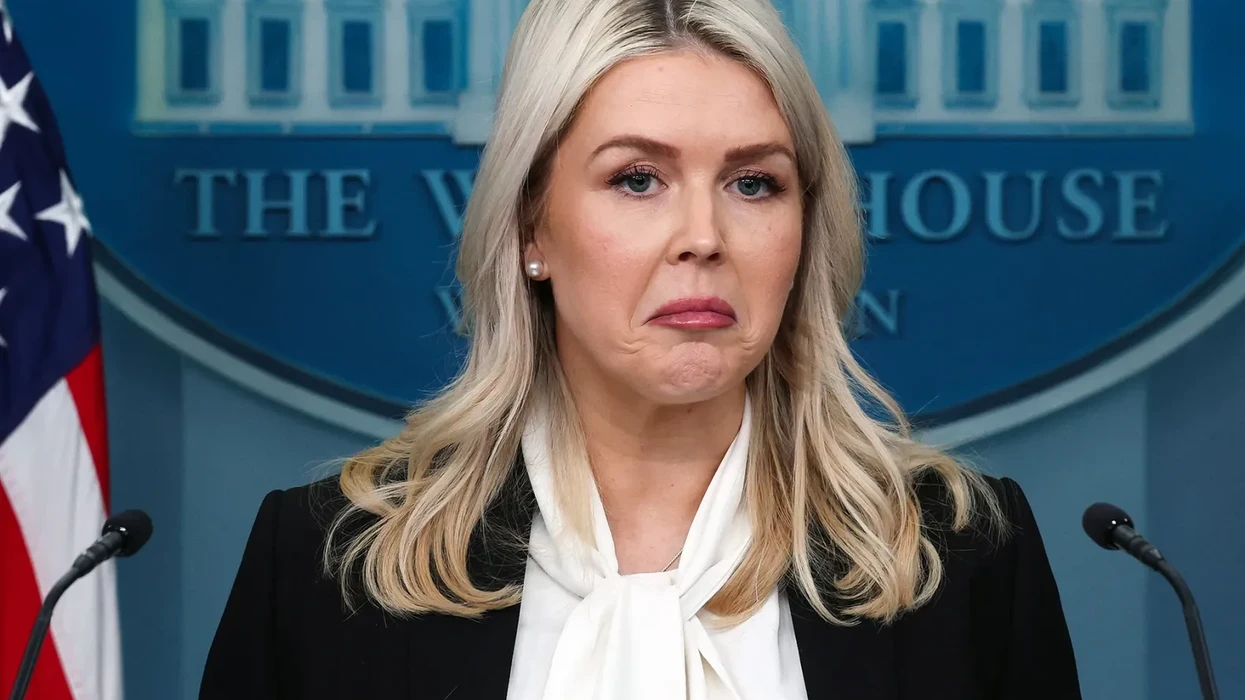
This Easter, Trump reflected on Palm Sunday, when Jesus entered Jerusalem to crowds who called him king. “They call me king now. Can you believe it?” he said, flashing a smile. Paula White-Cain, Trump’s longtime spiritual adviser, backed him up. “Mr. President, no one has paid the price like you have paid the price. It almost cost you your life. You were betrayed and arrested and falsely accused. It’s a familiar pattern that our Lord and Savior showed us. Because He was victorious, you are victorious.”
Earlier that morning, before the luncheon, Trump had a different kind of Easter message for Iran on Truth Social: “Open the Fuckin’ Strait, you crazy bastards, or you’ll be living in Hell – JUST WATCH! Praise be to Allah …”
Most recently, Trump last weekend posted an AI-generated image of himself rendered in the iconographic posture of Christ. The image drew harsh criticism, testing the tolerance of even his most loyal religious base. For anyone who had followed the long, strange arc of Donald Trump’s relationship with faith, and his claim of divine providence, it came as no surprise.
On Tuesday night, Trump participated in a national Bible-reading event — an olive branch, perhaps, to reassure the religious supporters he has offended.
He will be reading from 2 Chronicles 7 11-22, a passage in which God promises forgiveness to those who humble themselves and repent — something Trump told Frank Luntz he’d never done back when he was first trying to win the presidency.
WHAT THE FULL record reveals is that Trump has never encountered religion as a source of authority over him. He encountered it first as a tool for success, then as a constituency to be managed, and finally as a competing claim to the kind of absolute authority he believes he holds.
The Vatican, by contrast, is immune to the thing Trump does best: the offer, the threat, the deal. It cannot be leveraged, silenced, or conscripted into the service of any single nation’s interests. And Pope Leo XIV, the church’s first American pope, may just be the antidote to Trump’s decades-long theology of radical self-belief.
“I will not enter into debate,” Pope Leo told reporters last week aboard the papal plane en route to Algeria. “I’m not afraid of the Trump administration, or of speaking out loudly about the message of the Gospel, which is what the church works for.”
The pope, it would seem, prefers not to bring Trump into that picture.


Trump’s Long, Strange Relationship With Faith
What the president learned from a prosperity-gospel minister decades ago may help explain his attacks against the Pope