
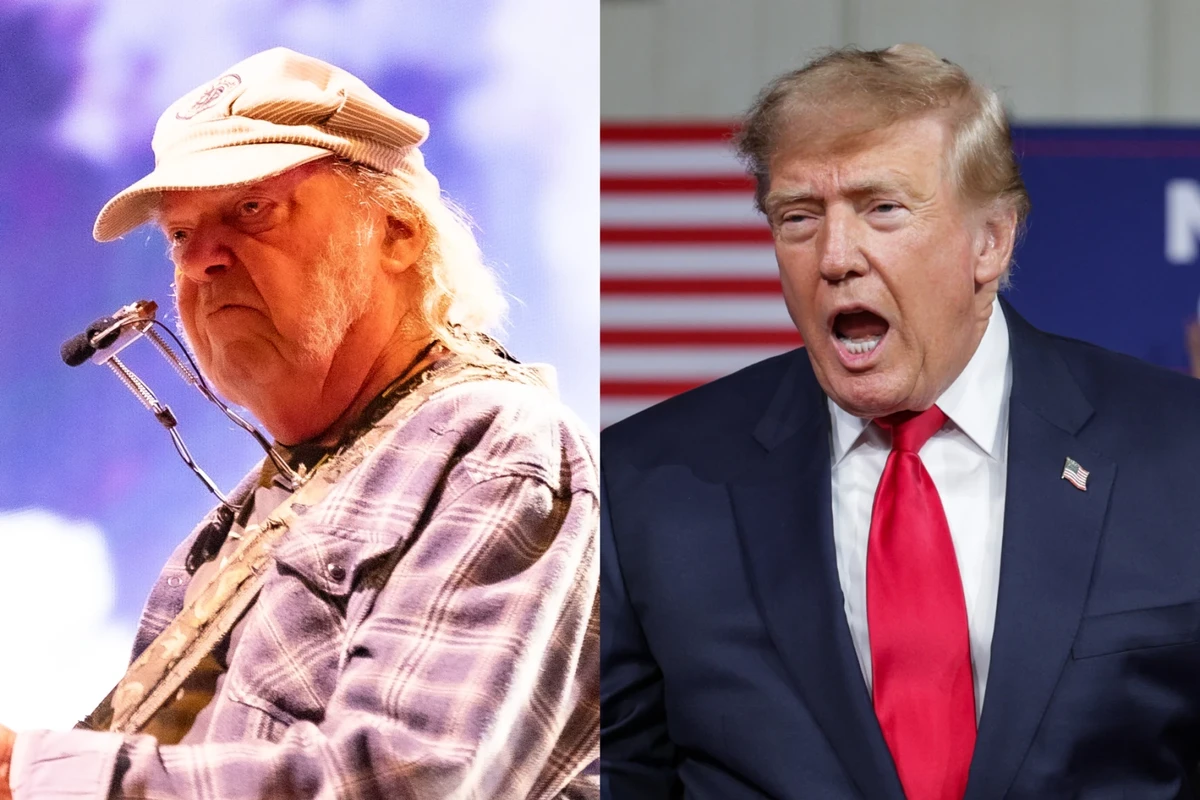

Rock legend Neil Young has slapped a Trump fundraising committee with a $10 million lawsuit over the use of his song, “Rockin’ in the Free World,” at an Ohio rally this month.
According to the five-page filing obtained by Rolling Stone, Trump was “personally aware that a license would be required” to play the song at an event, and he also knew Young “has not and would not grant the required license.” The unauthorized use happened despite a prior lawsuit and 2020 settlement in which Trump allegedly agreed never to use Young’s music without permission, the new complaint states. (Trump is not named as an individual defendant in the Monday complaint.)
“‘Rockin’ in the Free World’ is a blistering anthem that contrasts the hollow promises of American political rhetoric with the harsh realities faced by the poor, homeless, and forgotten,” Young and his lawyers, Robert Besser and Scott Simmons, wrote in the new complaint. “The lyrics paint vivid street-level portraits of a mother discarding her baby, addicts lost in despair, garbage piling in the shadows of prosperity, while the repeated chorus delivers a savage irony, celebrating freedom that clearly isn’t shared by all.”
They added that the 1989 song, which was named Rolling Stone’s best vintage rock song of 2026, “is the opposite of everything that Donald J. Trump stands for.”
There was no immediate answer to a request for comment sent to the White House, the Trump 47 Committee, and the Republican National Committee, which partnered with Trump to create the joint fundraising committee.
Young’s legal sparring with Trump dates back to 2015, when Trump used the track during his now infamous Trump Tower announcement that he was running for president. Young immediately condemned the move.
“Donald Trump was not authorized to use ‘Rockin’ in the Free World’ in his presidential candidacy announcement,” a Young spokesperson said in a statement then. “Neil Young, a Canadian citizen, is a supporter of Bernie Sanders for President of the United States of America.”
When Trump played the song again in 2018, Young objected again. “I asked him then, in a widely shared, public letter to cease and desist,” Young wrote on his website at the time. “However, he chose not to listen to my request, just as he chooses not to listen to the many American voices who ask him to stop his constant lies, to stop his petty, nasty name-calling, and bullying, to stop pushing his dangerous, vilifying and hateful rhetoric.”
Young, 80, filed the latest lawsuit in federal court in Virginia, where the fundraising committee is based. He said the song was played on Oct. 12 at a rally in Youngstown, Ohio, where Trump made a speech.
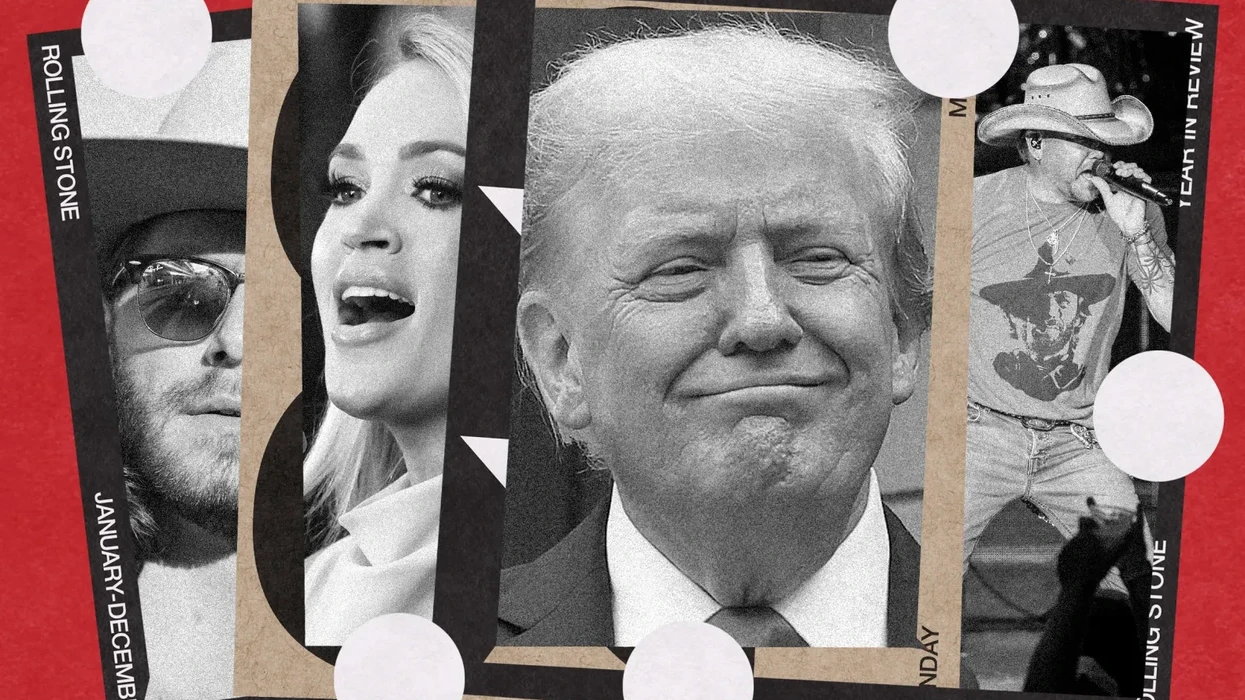
Young is far from the only artist to challenge Trump over the use of music at his political events. The White Stripes, Rihanna, Axl Rose, Pharrell Williams, Linkin Park, and the estates of Tom Petty and Sinéad O’Connor have all publicly objected to his use of their songs.
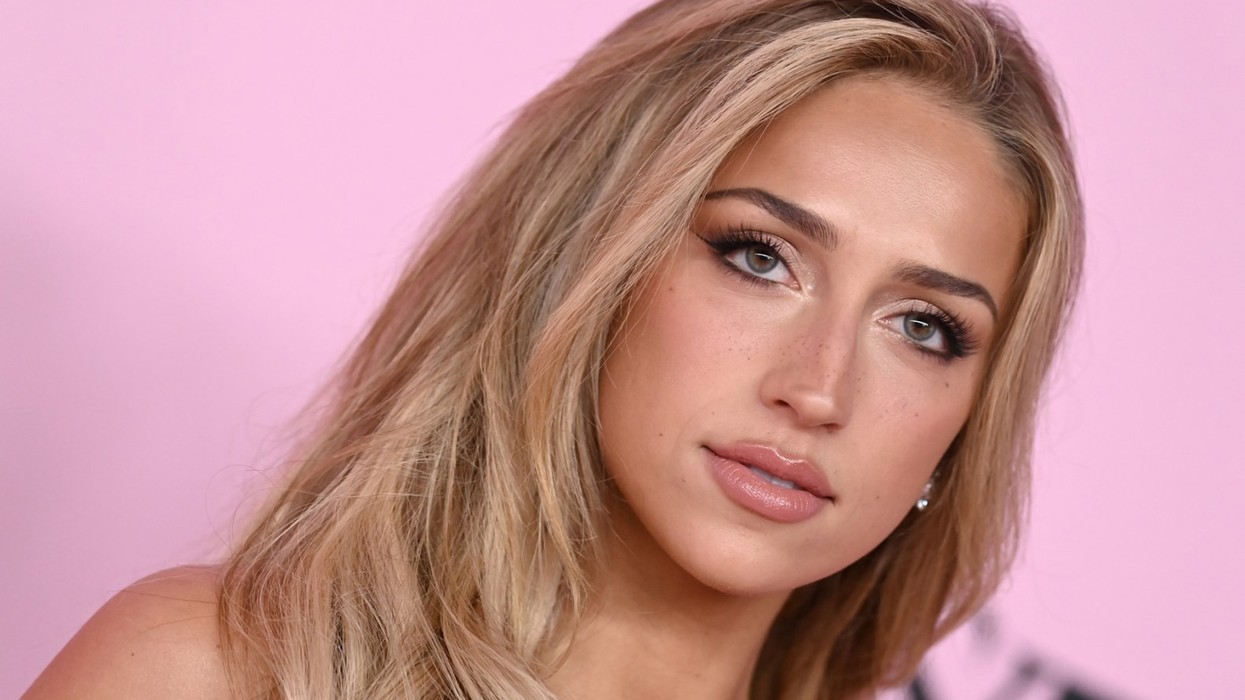

Taylor Swift at the Curb Event Center at Belmont University in Nashville, Tennessee.
Here’s to 20 Years of ‘Taylor Swift’
It’s strange to think the songs we used to sing from one of the most famous self-titled debut album’s turn 20 years old today. You know the ones I’m talking about. The song in the car, my favorite song, the whispered songs, “Mary’s Song,” “Our Song.” Twenty years ago, Taylor Swift invited the world into the one she built with these melodies.
Taylor Swift wasn’t just the singer-songwriter’s first album that turned her into a rising Nashville star. It was also the first chapter that sealed Swift’s future success as a superstar musician. Within a year of its release on Oct. 24, 2006, the LP debuted at Number 19 on the Billboard Hot 100, earned platinum status, and made hits out of singles “Tim McGraw” and “Our Song.” It’s the reason we’re here today, reflecting on two decades into a career so massive, even the curly-haired mess of a dreamer couldn’t fathom it at 15 years old. That teenager grew into a pop goliath, but it’s easier to fathom when you remember that it’s always been about the songs.
With Taylor Swift, a precocious teen met listeners in their own teenage heartache, their deep-seeded loneliness, and that overarching, painful desire to fit in with a collection of country-pop gems. Who hadn’t cried over an unrequited love the way Swift did on “Teardrops on My Guitar” or felt the chilling rejection apparent on “Cold As You,” or the thrill of finding a best friend who lets you show your true colors like on “I’m Only Me When I’m With You” or even known a friend who suffered from eating disorders as discussed on “Tied Together With a Smile”? Here was a voice singing these stories she’d written, each sigh and imperfect note, making the keen observation of the worlds that much more sincere. That’s what connected with audiences and began the success story that we know so well today.
Throughout her self-titled debut, Swift tapped into the country music songwriting tradition of reminding listeners she’s the one with the pen. On the banjo-driven jaunt, “Our Song,” she laments the fact that there is no song to sum up her rosy romance — until she “grabs a pen and an old napkin” and cements the slamming screen doors and surreptitious late-night calls into her own song. With the help of producer Nathan Chapman and co-writer Liz Rose, Swift learned to master this trick.
Her debut single, “Tim McGraw” is the real shining example of this. On its face, the track chronicles a fleeting summer romance, but the wistful tune turns into a knockout that cemented Swift into country music history when she offers a prescient promise, “I hope you think of me.” With that simple line, the musician showed the transportative power of music.
Taylor Swift is also the first time we heard of the tropes that still run through the singer-songwriter’s catalog. The little black dress in “Tim McGraw,” the front seat in “Our Song,” the rain scattered across multiple songs, the photographs in “Picture to Burn,” the numbers 89 and 87 on “Mary’s Song (Oh My, My My).” With every nano-specific detail, Swift built out her own cinematic universe.
You can hear Swift map out the world-building that would turn into her next 12 albums on the self-titled centerpiece, “A Place in this World.” Over an acoustic guitar, she quips, “I don’t know what I want, so don’t ask me” before declaring, “I’m just a girl, trying to find a place in this world.” That’s the kind of sassy, yet uncertain attitude she brought to her very first album. But really, she always knew what she was doing in some capacity, especially if the hidden or “A Place in This World” is any indication. The uppercase letters in a lyric booklet of lowercase ones spell out: “I Found it.”
In a fitting twist of fate, 2026 not only marks a major anniversary for Swift’s self-titled debut album, it’s also the first year she’s eligible to be recognized in two very prestigious institutions: the Songwriters Hall of Fame and the Nashville Songwriters Hall of Fame. By Monday, the girl who cried all those tears on her guitar will be both the youngest woman to be inducted into the Songwriters Hall, and youngest-member of the Nashville edition.
During her Songwriters Hall of Fame acceptance speech, Swift reflected on the power of her craft. “As writers, we can only hope to meet people where they are in their lives,” she said. Since 2006, when she was just a high school freshman with a habit of writing songs on her bedroom floor or in math class, she has done exactly that.