

This article is being published in partnership with the watchdog group Documented.
An organized and well-funded network of right-wing groups is spending countless millions attacking a bipartisan election reform that could threaten the MAGA political project.
Ranked-choice voting — which allows voters to rank candidates in order of preference, rather than just selecting one — has been used in state and federal elections in Alaska and Maine, and it has been gaining momentum in dozens of other states and municipalities, often with bipartisan support. Voters in Nevada and Oregon will hold referendums on adopting the system in 2024, and several other state and local governments have also been considering ranked-choice voting measures.
But beginning in early 2022, and intensifying in 2023, a range of so-called “election integrity” groups, from Leonard Leo’s Honest Elections Project to Cleta Mitchell’s Election Integrity Network, have made stopping ranked-choice voting a top legislative priority.
Five states have since banned any city or county government from adopting the system, and at least six other states are considering similar measures this year. The American Legislative Exchange Council (ALEC) approved a model bill banning ranked-choice voting last year, a Turning Point Action official successfully pressed the Republican National Committee to adopt a resolution opposing the practice, and the Heritage Foundation has organized grassroots activists to oppose ranked-choice voting in several states.
The far-right fixation on ranked-choice voting “is a bit bizarre,” said Rick Hasen, a professor and director of the Safeguarding Democracy Project at UCLA’s Law School. “It’s not really an issue of ‘honest elections’ or ‘election integrity,’” he said. “It’s a debate about the best way to translate voters’ preferences into election winners.
“I would guess,” Hasen said, “that the reason for the fear of ranked-choice voting is that it could help elect more Republican moderates rather than more extreme Republicans.”
Ranked-choice voting is one of the few — if not the only — democracy reforms that still has bipartisan support. For example, 21 cities in deep-red Utah use ranked-choice voting, where it is broadly popular, and bills to implement it have attracted Republican co-sponsors in states like Wisconsin, Virginia, and Georgia. The organized attacks on ranked-choice voting appear aimed at eroding support for the reform among Republican lawmakers and conservative activists.
Groups backed by right-wing activist Leonard Leo are playing an outsized role in the campaign against ranked-choice voting. Leo, who served as former President Donald Trump’s judicial adviser, helped construct the Supreme Court’s conservative supermajority. In 2021, he was put in control of a $1.6 billion dark money fund to help push U.S. politics to the right.
While Leo’s relationship with Trump has frayed — he reportedly considered boosting another MAGA-aligned candidate, Ron DeSantis, in the GOP presidential primary — the success of his political project relies on electing far-right candidates under the same system that produced Trump.
RCV, the MAGA Killer
Ranked-choice voting, also known as RCV or instant runoff voting, does not provide a clear benefit to Republican or Democratic candidates generally. But it could make it harder for MAGA candidates to get elected.
Trump and other MAGA candidates generally have not won elections with majority support, but have achieved a degree of electoral success by winning a plurality in divided and often low-turnout primaries with backing from a militant far-right base, before relying on gerrymandered districts, the spoiler effect of third parties, and/or suppressed Democratic turnout to squeak through in the general. By allowing voters to rank their preferred candidates, RCV can give non-MAGA candidates a better shot.
Trump’s 2024 campaign offers an illustration of this. Trump’s path to victory in the general election could rely on third party candidates — like Robert Kennedy Jr. or Cornel West — shaving points off Biden’s support in key states. That inference is supported by the fact that Trump megadonors are backing RFK Jr. while also financing Trump. (Trump’s allies ran a version of this play in 2020 with their behind-the-scenes support for Kanye West’s doomed third-party campaign.)
Ranked-choice voting would upend this spoiler strategy. A progressive voter could rank, say, West first, and Biden second; if West didn’t clear 50 percent in the first round, then the vote would go to Biden. Third party candidates wouldn’t play the spoiler — or, put another way, a voter could support the candidate they prefer, and also designate a backup choice, rather than being forced to only choose between the lesser of two evils.
(A key advocate for banning ranked-choice voting is acutely familiar with this spoiler effect. Arizona state Sen. Jake Hoffman (R), who led an anti-RCV session at the recent Turning Point Action summit and has long been affiliated with the right-wing group, was also secretly involved in an illegal 2018 effort to run Facebook ads boosting left-wing Green Party candidates in swing states.)
Down-ballot races also illustrate how ranked-choice voting might threaten the MAGA political project. Far-right lawmakers generally make it to Congress by winning low-turnout primaries with just a plurality of the vote, then coasting to election in safely Republican districts. Rep. Matt Gaetz (R-Fla.), for example, won just 36 percent of the vote in his first primary, and hasn’t faced a serious primary challenger since. As a recent FairVote analysis described, this has left Gaetz and other far-right lawmakers accountable to a small minority of activist primary voters; their only fear is a primary challenge from the right, which incentivizes bomb throwing rather than governing.
MAGA Opposition to RCV Grows in 2022
The effort to ban RCV started in Tennessee. In early 2022, Tennessee’s governor signed a bill banning the use of RCV in the state, ending a long-running dispute with the city of Memphis, whose residents had repeatedly voted to adopt RCV. (A few months later, the bill’s lead sponsor, Republican state Sen. Brian Kelsey, would plead guilty to two criminal federal campaign finance charges.) That was followed by Florida banning RCV as part of an omnibus election package, and then a wave of reports, op-eds, and media appearances from an array of right-wing groups trashing “rigged choice voting.” Even Project Veritas published a “Ranked Voting EXPOSED” video before imploding.
Publicly, right-wing groups critique RCV because it is favored by progressive donors, and they claim it is so confusing that it “disenfranchises” voters — an especially rich claim coming from groups that otherwise seek to make access to the ballot box more onerous.
“The Left has railed against simple election laws like voter ID for years. Now many liberal donors are pushing ranked-choice voting (RCV), even though it has repeatedly been shown that RCV makes it harder to vote, risks longer lines at the polls, and discourages participation,” said Jason Snead, the executive director of the Leo-backed Honest Elections Project, in a statement to Rolling Stone and Documented. (RCV supporters dispute those claims, pointing to post-election polls from RCV jurisdictions suggesting voters overwhelmingly understand and like the system, and noting that voter participation increased in many RCV elections, especially among young people.)
The MAGA opposition to ranked-choice voting intensified after the 2022 elections in Alaska. In that race, Alaska voters returned moderate Republican Sen. Lisa Murkowski to office, despite Trump’s attempt to exact revenge for Murkowski supporting his impeachment after Jan. 6. Murkowski prevailed over a far-right Trump-backed challenger by attracting the second-place rankings of the 10 percent of voters who listed the Democratic candidate as their first choice. Alaska voters also thwarted Sarah Palin’s attempted comeback by reelecting Rep. Mary Peltola, a Democrat, thanks in part to Republican voters ranking Peltola as their second choice. (Notably, Alaska’s ranked-choice voting system actually helped Republicans win in down-ballot races.)
Palin blamed her loss on ranked-choice voting, and is now supporting an effort to repeal Alaska’s system, teaming up with a right-wing megachurch minister who has openly practiced LGBTQ “conversion therapy,” claimed that COVID vaccines cause “spontaneous abortions” in 80 percent of pregnant people, and who set up a fake church to secretly bankroll the anti-ranked-choice voting repeal effort (which is likely to appear on the November ballot).
The national efforts to oppose ranked-choice voting are slightly less insane than the Alaska campaign, or at least better organized.
The wide-ranging, coordinated right-wing campaign against RCV was illustrated earlier this year in Wisconsin, where a bipartisan bill to implement RCV moved to a hearing in February, triggering opposing testimony from a range of right-wing groups, including Leo’s Honest Elections Project; the advocacy arm of the Foundation for Government Accountability, which has been backed by Leo as well as the billionaire cardboard box magnate Dick Uihlein; and the Uihlein-backed Election Transparency Initiative.
The Election Integrity Network — the network of state-based election conspiracy theorists led by former Trump attorney Cleta Mitchell — also distributed anti-RCV talking points and messaging guidance to MAGA activists in Wisconsin. Mitchell supported Trump’s efforts to overturn the 2020 election, including joining the infamous call when the then-president urged Georgia’s secretary of state to “find” 11,780 votes; she narrowly escaped indictment, and has become a leader in the movement to undermine democracy.
Nationally, Mitchell’s Election Integrity Network has also been hosting a regular coalition call focused specifically on ranked-choice voting that includes state activists and national players. In 2022, Election Integrity Network activists played key roles in driving grassroots opposition to bipartisan pro-RCV measures in states like Virginia, Georgia, and Illinois, as well as Wisconsin.
The Heritage Foundation’s advocacy arm has also urged its grassroots activists to pressure lawmakers on RCV measures in states like Texas, Utah, and Georgia, and its representatives have testified in support of RCV bans in states like Arizona. It has also been holding grassroots anti-RCV events in states like Oklahoma, Georgia, and Arizona, and sponsored a multi–part ranked–choice voting “Special Report” that aired on the fringe Real America’s Voice network.
“Polarization is Sometimes Good”
Despite public claims about RCV supposedly “disenfranchising” voters, privately, right-wing leaders acknowledge that ranked-choice voting threatens the MAGA political project.
For example, at an August 2023 event in Arizona, Gina Swoboda — who is the executive director of the Dick Uihlein-backed Voter Reference Foundation and the Trump-endorsed chair of the Arizona Republican Party — declared that “polarization is sometimes good,” and described how RCV would make it harder for MAGA to keep pushing the GOP to the right.
“The entire purpose of ranked-choice voting,” Swoboda claimed, is “to eliminate the political parties altogether. It will force the candidates to run for the middle like they are in a general election, and then they will not take the positions that we need them to commit to.”
Snead, of the Honest Elections Project, has also echoed the idea that ranked-choice voting would disadvantage extreme right candidates — and additionally claimed that it would somehow advantage “dark-money groups,” which is a jaw-dropping declaration from an organization founded by Leonard Leo, whose dark money network has funded groups fighting to protect dark money, and who has personally defended the virtue of secret political spending.
Speaking on Real America’s Voice network in June of 2023, Snead said, “I think that their calculus is you change the dynamic of elections, push our politics to the center left, make it harder for conservatives to get elected without that party primary and then of course you displace the parties themselves, allowing these dark-money groups to step in and have even more influence over our politics.”
Snead specified that he was referring to “outside and independent expenditure groups funded by folks like George Soros,” the liberal billionaire.
This was not a one-off line of attack. Soros conspiracy theories are common among RCV critics. In fact, the title of Snead’s new book is The Case Against Ranked-Choice Voting: How George Soros and Other Billionaires Use a ‘Dark Money’ Empire to Transform America. His co-author is Trent England, the head of a group called Save Our States that was founded to defend the undemocratic electoral college, but is increasingly targeting ranked-choice voting.
Along with Snead, England is embedded within Leo’s network. Both are full-time employees of Leo’s 85 Fund, according to the group’s most recent tax filings. Snead’s Honest Elections Project is itself a project of 85 Fund, and England’s Save Our States now appears to have a similar status, with funding to the group flowing through 85 Fund. For example, the Bradley Foundation’s 2022 tax filing shows that a $200,000 grant to support Save Our States was routed through 85 Fund (under the fund’s earlier name, the Judicial Education Project). As Rolling Stone first reported, Leo’s network also recently set up a new pair of legal entities, with iterations of “Save Our States” and “Honest Elections Project” listed as trade names.
Snead and England are more than just co-authors and co-workers at Leonard Leo’s network. They’re also co-chairs of the “Stop RCV” coalition alongside a front group created by notorious corporate PR flak Richard Berman — described as “Dr. Evil” in a 60 Minutes profile — and several members of the State Policy Network.
One coalition member is the Maine Policy Institute. Last year, the institute’s “Maine Wire” podcast conducted a wide-ranging interview with Leo last year in which the financier noted that he was supporting the group. The coalition has developed model legislation banning RCV, and Snead has testified in support of RCV bans in states like Montana, Wisconsin, and Ohio.
This constellation of Leo-backed groups also have their fingerprints on an ALEC model bill banning ranked-choice voting, which the “bill mill” adopted at its 2023 annual meeting and subsequently promoted as a top model policy. (ALEC’s CEO had previously said the group would be outsourcing its election reform work to Honest Elections Project.) ALEC has been described as a “pay to play” operation, and this is no exception; Honest Elections Project sponsored ALEC’s annual meeting at the “Vice Chairman” level, which cost at least $25,000 the prior year, and Save Our States was a “Trustee” level sponsor, which cost $5,000 in 2022. The Stop RCV coalition also kicked in, paying to slap its logo on the hotel keycards used by conference attendees and to host an exhibition booth.
Much of the technical support for the RCV attacks is coming from the Foundation for Government Accountability (FGA), which played a key role in helping to craft and support RCV bans in multiple states. FGA has received millions from Leo’s network and from Uihlein, who is a key backer of election denial.
Representatives of FGA and its advocacy arm testified in support of RCV bans in states like South Dakota, Idaho, Texas, Ohio, Wisconsin and Montana, according to Documented’s review of state records. FGA additionally published a report, launched a “Ranked Choice Voting is a Disaster” microsite, and has published multiple op-eds opposing RCV.
Ranked-Choice Voting “Makes our Democracy Better for All Voters”
England, of Save Our States, has emphasized that it isn’t just MAGA-world hating on RCV — some Democrats dislike it, as well. “The D.C. and Nevada Democratic parties oppose RCV, [California Gov.] Gavin Newsom has opposed its expansion, and many jurisdictions across the country have tried and then rejected it,” England said in a statement to Rolling Stone and Documented.
The fact that some officials in both major parties oppose RCV isn’t surprising, said Chris Saxman, a Republican and former Virginia lawmaker.
“Party leaders want to be in control of the nominating processes,” Saxman said, and both Democratic and Republican party bosses would prefer that voters be “stuck with a binary choice in the general election.”
Despite efforts to make RCV toxic for conservatives, Saxman and other Republicans are eager to see ranked-choice voting expand, arguing that it can actually strengthen parties.
The Virginia Republican Party, for example, used ranked-choice voting to choose Glenn Youngkin as their gubernatorial nominee in 2021, rather than a more MAGA-fied candidate. He prevailed in the general election, depriving Democrats of trifecta control of state government.
Ranked-choice voting “turned around a near-death experience for the Republican Party in Virginia,” Saxman said. For Republicans, “the successes of RCV in Virginia should be obvious.”
“Ranked-choice voting is a completely neutral, process-based reform that favors neither party,” said Kevin Hancock, Strategic Litigation Director at the nonpartisan Campaign Legal Center. “RCV also just gives voters more choice — basic common sense that makes our democracy better for all voters.”







War Is Peace: Trump’s Regime-Change Reversal
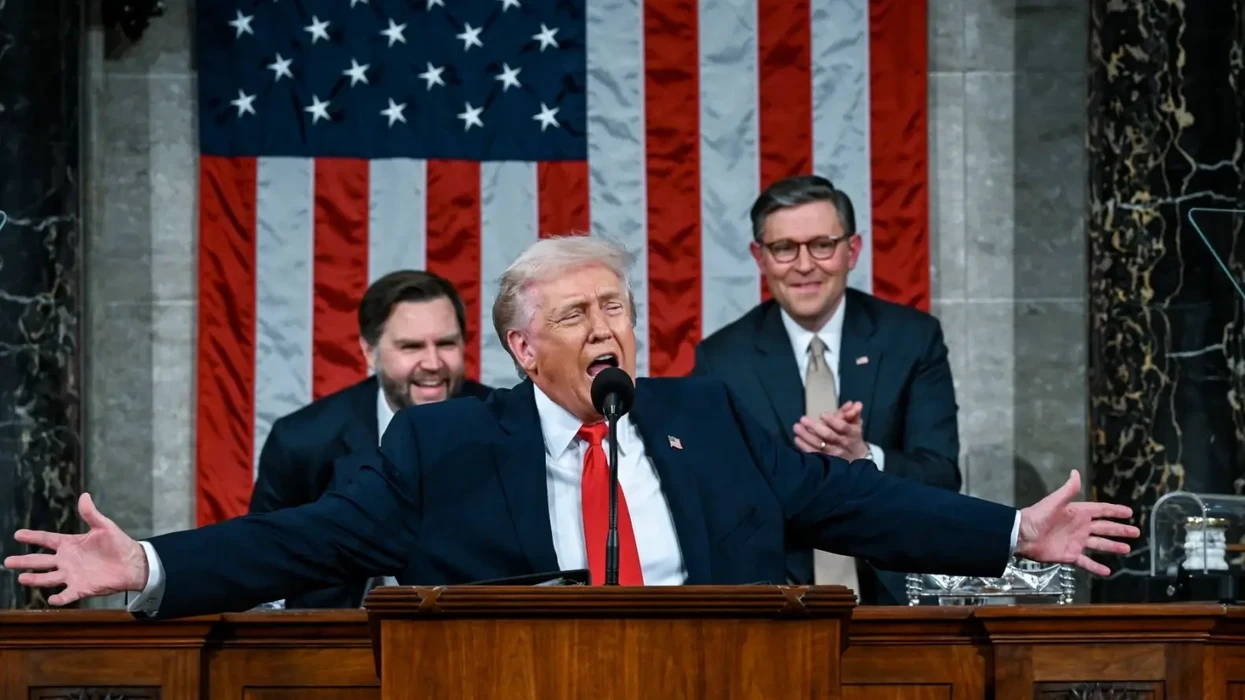
As American and Israeli rockets fly into Tehran, with the stated goal of regime change, anyone who bought into the self-evidently absurd idea of “Donald the Dove” ending America’s forever wars ought to be suffering from a bloody form of buyer’s remorse.
It was always bullshit. But that’s what the Trump team was selling hard. Take human ghoul Stephen Miller’s tweet days before the election: “Kamala = WWIII. Trump = Peace.”
The Trump team reads George Orwell’s 1984 like an owner’s manual and so of course “war is peace.” Their undermining of NATO and the dismantling of American alliances in favor of a “might makes right” foreign policy executed by a sycophantic kakistocracy is a guarantee of more war amid autocratic power grabs worldwide, with a side order of corrupt crony capitalism to profit from the chaos.
If you voted for Trump and believed him, this is on you. And that includes self-styled Palestinian peace activists who thought that Biden and Harris were the worst of all possible worlds and stayed home. We will no doubt see protests for the innocent lives lost in these strikes — but I’d have a lot more time for those folks if they were also seen protesting the estimated 20,000 to 30,000 Iranian lives snuffed out by murderous mullahs in the last few months alone.
The Islamic Republic of Iran has been despotic and dangerous from its inception. The Iranian people have been oppressed and denied basic freedoms for decades. But this is an extreme example of a war of choice. The American military strikes against Iran’s nuclear weapons facility last year were justified because Iran cannot be trusted with a nuclear weapon. That is true. But the much trumpeted total obliteration of those facilities is apparently not true — or so goes the justification for this war. And don’t forget that it was Trump who pulled the U.S. out of an Obama-era deal to stop Iran from developing weapons — arguing absurdly that the imperfect anti-nuke deal needed to be blown up to stop Iran from developing a bomb. Iran’s subsequent progress toward a bomb then created the rationale toward these strikes. This is a self-inflicted state of emergency. Peace is war and war is peace.
Pity the willful dupes in Congress who deluded themselves into thinking that Trump deserved the Nobel Peace Prize. They’ll probably rationalize that he would’ve been peaceful if he got the honor. Now it will be read as a cautionary tale for not sucking up. The chairman of the Board of Peace is now bored of peace. While Rand Paul remains admirably consistent, it’s Lindsey Graham who is pirouetting around the Senate floor while the Gimp Speaker Mike Johnson is unable to speak for the basic constitutional principles of separation of powers let alone authorization to go to war.
If you’re feeling shell-shocked trying to keep up with Operation Epstein Distraction, get ready for the inevitable next crisis — regime change without a plan for replacement. This is what the Trump administration did in Venezuela — kidnapping the socialist dictator Maduro but keeping his regime in place in exchange for crude oil access. The opposition is still in exile and its leader María Corina Machado gave her Nobel Peace Prize to Trump in exchange for exactly nothing.
One of the clear lessons of history is that if you don’t win the peace, you don’t win the war. The Saudis and their Sunni allies will back the U.S. and Iran because they hate the Shia Iranians (who, incidentally, are not Arabs), but beyond removing the Iranian regime, the plans for replacement and stabilization seem TBD — and with Trump’s inability to stay focused on anything beyond his immediate self-interest, solid plans are unlikely to emerge. Maybe a leader will come from the underground opposition; maybe it will be the Shah’s son, who has been living in the U.S. waiting for a restoration like many members of the diaspora. The upside is that Iran has a distinguished history and an accomplished Persian culture: The Islamists don’t represent the entirety of the people of Iran and never have.
But the path ahead will be messy at best. It will require concerted effort and civil commitment, not just an open call for private investment from Mar-a-Lago members. If the United States is now kidnapping and killing dictators without direct provocation, it establishes a dangerous precedent which will come back to bite us after demolishing our moral authority in the world.
It is the unexpected effects, the cascades of consequence where we cannot always plan ahead, that cause most responsible statesmen to try to keep the peace. But Trump has the carelessness of a rich-boy bully who can always buy or bluster his way out of trouble. He’s a con man who has found his ultimate mark in his followers, who fool themselves into thinking that a reflexive liar is the one man with the courage to tell the truth.
Perhaps the most prominent example is the vice president himself — a bright guy who not that long ago compared Trump to Hitler and a deadly narcotic but then convinced himself that careerism demanded an abrupt conversion. After all, he endorsed Trump less than two years ago with this very serious column headlined “Trump’s Best Foreign Policy? Not Starting Any Wars,” explaining, “He has my support in 2024 because I know he won’t recklessly send Americans to fight overseas.”