
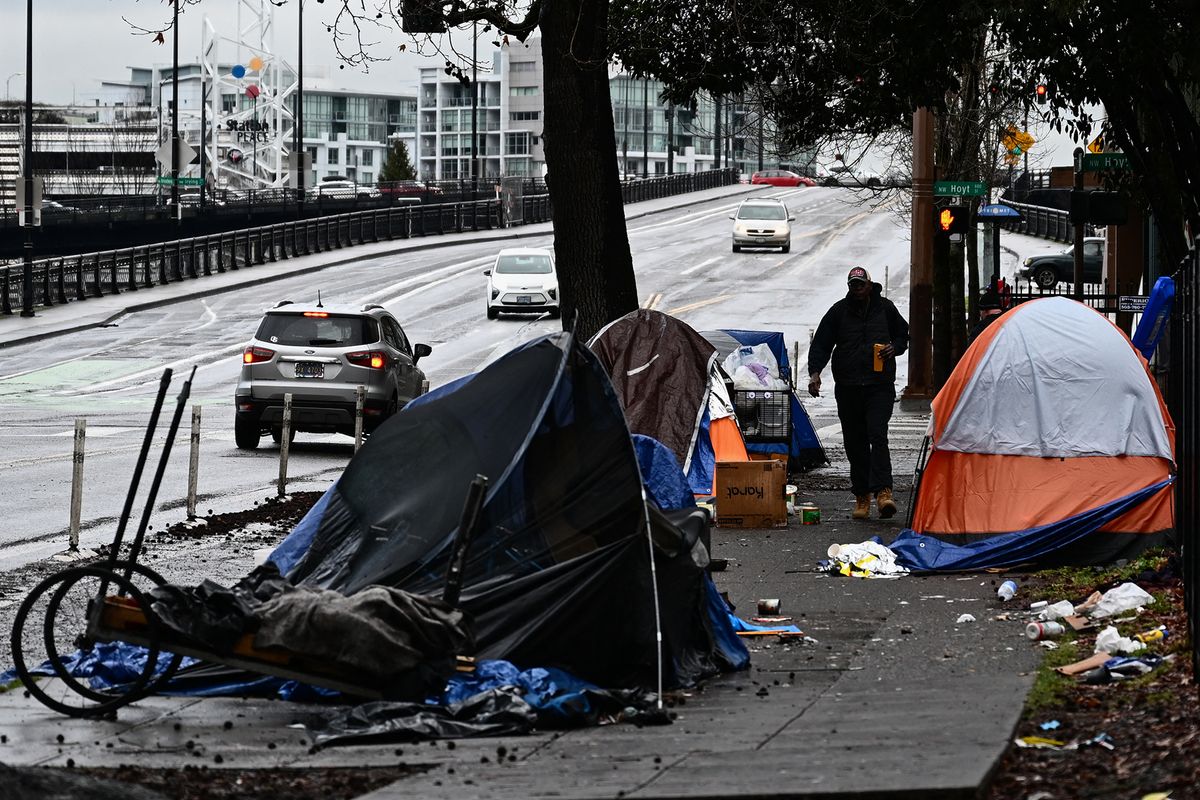

The Supreme Court just ruled that politicians can essentially criminalize homelessness.
The court ruled in City of Grants Pass v. Johnson that an Oregon town can ban sleeping outdoors. The 6-3 ruling fell along ideological lines.
“Sleep is a biological necessity, not a crime,” liberal Justice Sonia Sotomayor wrote in her dissent, calling the criminalization of sleeping in public “unconscionable and unconstitutional.”
The case stems from the city of Grants Pass, a town of roughly 40,000 in southwest Oregon, which began enforcing ordinances in 2013 that made it illegal to sleep on public property using bedding — which could mean anyone using a tent, sleeping bag, or blanket to make it through the night.
The city was sued by a group of homeless residents and a federal court ruled in their favor, arguing that the laws against camping were unconstitutional based on the Eighth Amendment’s protection against “cruel and unusual punishment.” The U.S. Court of Appeals for the Ninth Circuit sided with the lower court in a 2-1 decision. Grants Pass then appealed to the Supreme Court.
Supporters of Grants Pass’ case included many conservatives, who have been seeking to remove homeless populations to boost public safety, as well as liberal leaders in West Coast cities overwhelmed by a spike in homelessness as rent prices soar. California Gov. Gavin Newsom (D) was among the high-profile figures to file an amicus brief in the case. “The United States Supreme Court can establish a balance that allows enforcement of reasonable limits on camping in public spaces, while still respecting the dignity of those living on our streets,” Newsom said in a statement in March.
Opponents of the case, however, fear that the Supreme Court’s ruling could open the floodgates for jurisdictions cracking down on homeless populations. “If the Supreme Court were to allow for such a punitive regime, then we’re going to have a race to the bottom to make it as uncomfortable as possible for people to survive,” John Do, a senior staff attorney with the American Civil Liberties Union in Northern California, told Rolling Stone in March.
Do says cities other than Grants Pass have taken it upon themselves to enact stringent regulations that unfairly target homeless populations. In 2021, the ACLU worked with unhoused residents suing the city of Chico, a city of roughly 100,000 in inland Northern California, after a law forced homeless residents to relocate to a tarmac outside the city, where they faced high temperatures and exposure to the elements. The lawsuit was later settled.
“Jurisdictions would try to outdo each other in terms of having more costly, more punitive, and more effective measures,” Do said.
Boise, Idaho, was another city that effectively outlawed homelessness via anti-camping laws until the city was sued in 2018. The case, Martin v. Boise, reached the Ninth Circuit Court in 2019. The court ultimately ruled that residents without permanent shelter could not be arrested only because they were homeless, limiting how cities can respond to homeless encampments with enforcement sweeps. The decision caused leaders in cities overwhelmed with homeless residents like Los Angeles and San Francisco to side with conservatives in their support of Grants Pass’ case.
Do also explained the legal argument underpinning the Grants Pass case is not just about homelessness, but whether people can be criminalized for their status instead of their actions. Legal precedent for the limits of the Eighth Amendment’s protection against “cruel and unusual punishments” date back to Robinson v. California, a 1962 decision that overturned a law criminalizing drug addicts. The case established precedent for the protection of status or identity and limited laws to regulate criminal acts or conduct, a precedent that has been reaffirmed several times since.
One of the big questions heading into oral arguments in April is whether the Supreme Court justices would view being homelessness as voluntary or involuntary, which was one of the points raised by the Justice Department in a brief filed in support of neither party in the case.
“I think there may be a lot of questions on whether or not homelessness is voluntary or involuntary,” Do says, which he describes as “a really troubling framing.”
Do emphasized that the tactics used by Grants Pass and other cities in criminalizing homelessness fail to address the root causes of the issue, such as the lack of affordable housing. “Police cannot arrest their way out of homelessness,” he said.

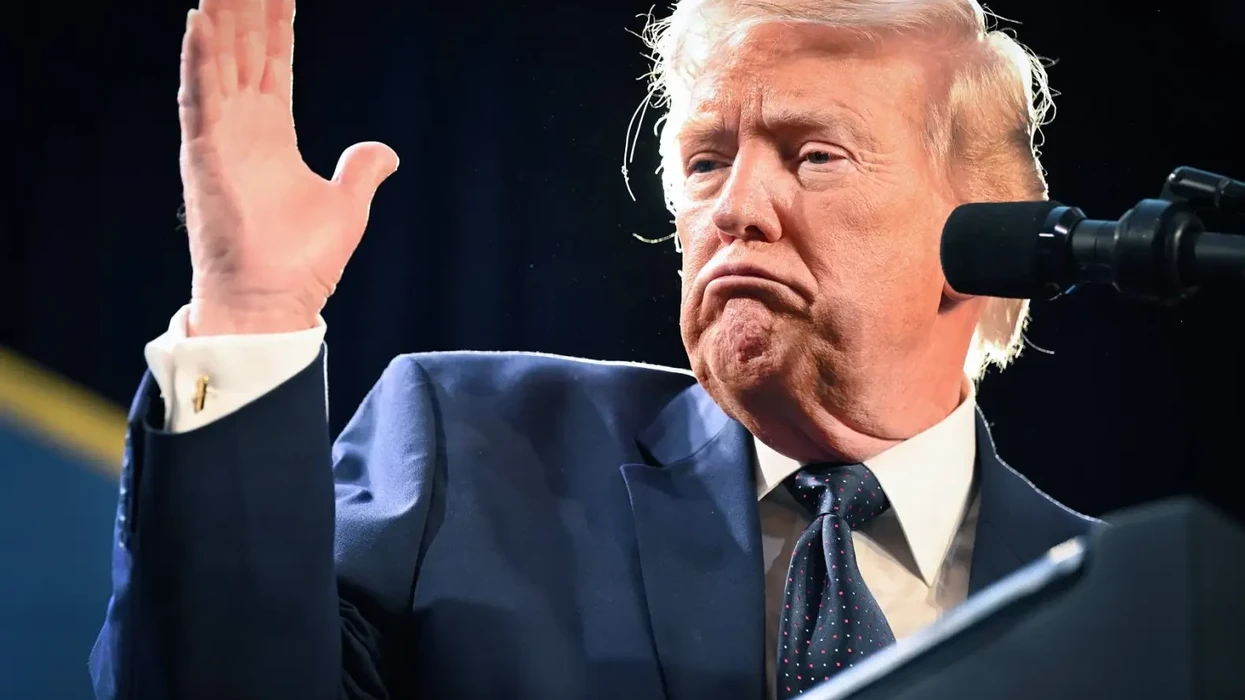


War Is Peace: Trump’s Regime-Change Reversal
As American and Israeli rockets fly into Tehran, with the stated goal of regime change, anyone who bought into the self-evidently absurd idea of “Donald the Dove” ending America’s forever wars ought to be suffering from a bloody form of buyer’s remorse.
It was always bullshit. But that’s what the Trump team was selling hard. Take human ghoul Stephen Miller’s tweet days before the election: “Kamala = WWIII. Trump = Peace.”
The Trump team reads George Orwell’s 1984 like an owner’s manual and so of course “war is peace.” Their undermining of NATO and the dismantling of American alliances in favor of a “might makes right” foreign policy executed by a sycophantic kakistocracy is a guarantee of more war amid autocratic power grabs worldwide, with a side order of corrupt crony capitalism to profit from the chaos.
If you voted for Trump and believed him, this is on you. And that includes self-styled Palestinian peace activists who thought that Biden and Harris were the worst of all possible worlds and stayed home. We will no doubt see protests for the innocent lives lost in these strikes — but I’d have a lot more time for those folks if they were also seen protesting the estimated 20,000 to 30,000 Iranian lives snuffed out by murderous mullahs in the last few months alone.
The Islamic Republic of Iran has been despotic and dangerous from its inception. The Iranian people have been oppressed and denied basic freedoms for decades. But this is an extreme example of a war of choice. The American military strikes against Iran’s nuclear weapons facility last year were justified because Iran cannot be trusted with a nuclear weapon. That is true. But the much trumpeted total obliteration of those facilities is apparently not true — or so goes the justification for this war. And don’t forget that it was Trump who pulled the U.S. out of an Obama-era deal to stop Iran from developing weapons — arguing absurdly that the imperfect anti-nuke deal needed to be blown up to stop Iran from developing a bomb. Iran’s subsequent progress toward a bomb then created the rationale toward these strikes. This is a self-inflicted state of emergency. Peace is war and war is peace.
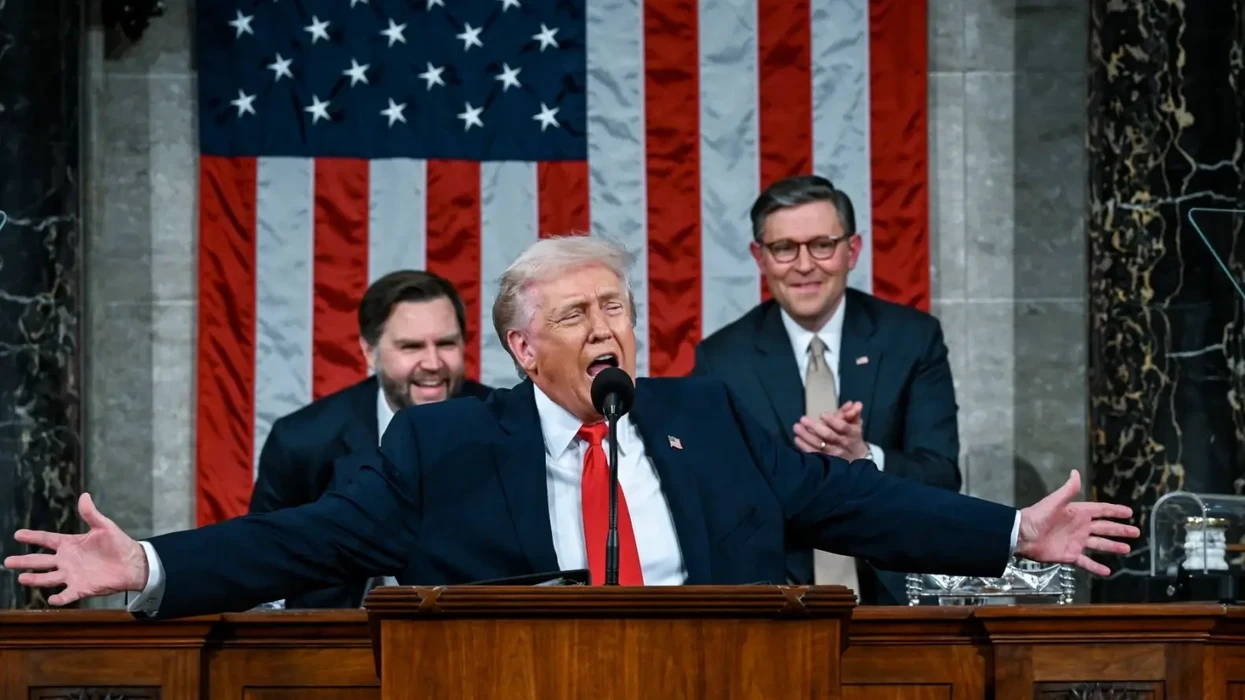
Pity the willful dupes in Congress who deluded themselves into thinking that Trump deserved the Nobel Peace Prize. They’ll probably rationalize that he would’ve been peaceful if he got the honor. Now it will be read as a cautionary tale for not sucking up. The chairman of the Board of Peace is now bored of peace. While Rand Paul remains admirably consistent, it’s Lindsey Graham who is pirouetting around the Senate floor while the Gimp Speaker Mike Johnson is unable to speak for the basic constitutional principles of separation of powers let alone authorization to go to war.
If you’re feeling shell-shocked trying to keep up with Operation Epstein Distraction, get ready for the inevitable next crisis — regime change without a plan for replacement. This is what the Trump administration did in Venezuela — kidnapping the socialist dictator Maduro but keeping his regime in place in exchange for crude oil access. The opposition is still in exile and its leader María Corina Machado gave her Nobel Peace Prize to Trump in exchange for exactly nothing.
One of the clear lessons of history is that if you don’t win the peace, you don’t win the war. The Saudis and their Sunni allies will back the U.S. and Iran because they hate the Shia Iranians (who, incidentally, are not Arabs), but beyond removing the Iranian regime, the plans for replacement and stabilization seem TBD — and with Trump’s inability to stay focused on anything beyond his immediate self-interest, solid plans are unlikely to emerge. Maybe a leader will come from the underground opposition; maybe it will be the Shah’s son, who has been living in the U.S. waiting for a restoration like many members of the diaspora. The upside is that Iran has a distinguished history and an accomplished Persian culture: The Islamists don’t represent the entirety of the people of Iran and never have.
But the path ahead will be messy at best. It will require concerted effort and civil commitment, not just an open call for private investment from Mar-a-Lago members. If the United States is now kidnapping and killing dictators without direct provocation, it establishes a dangerous precedent which will come back to bite us after demolishing our moral authority in the world.
It is the unexpected effects, the cascades of consequence where we cannot always plan ahead, that cause most responsible statesmen to try to keep the peace. But Trump has the carelessness of a rich-boy bully who can always buy or bluster his way out of trouble. He’s a con man who has found his ultimate mark in his followers, who fool themselves into thinking that a reflexive liar is the one man with the courage to tell the truth.
Perhaps the most prominent example is the vice president himself — a bright guy who not that long ago compared Trump to Hitler and a deadly narcotic but then convinced himself that careerism demanded an abrupt conversion. After all, he endorsed Trump less than two years ago with this very serious column headlined “Trump’s Best Foreign Policy? Not Starting Any Wars,” explaining, “He has my support in 2024 because I know he won’t recklessly send Americans to fight overseas.”