
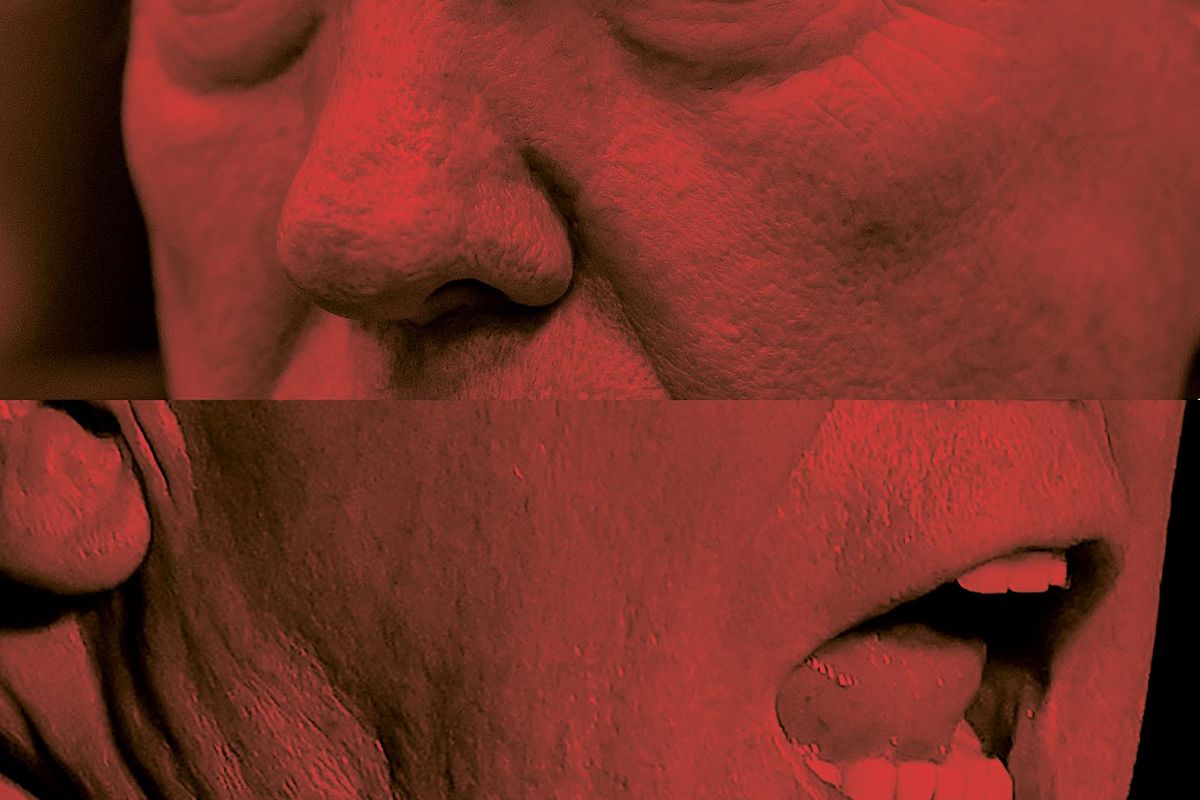
The presidential election this year will come down to seven states — but there’s one that Donald Trump and his most committed lieutenants see as a blueprint for corrupting future local and national elections: Georgia.
The Peach State is unique — it’s the sole battleground state in which the Republican Party has total control over the levers of power: a trifecta in the state House, Senate, and governorship. Over the past four years, Trump-loving elements of the Georgia GOP have wielded that advantage in a crusade to convert discredited election-conspiracy theories into policies well ahead of Election Day 2024. It is an alarmingly anti-democratic experiment that Trumpland and much of the GOP hope to take national.
“Georgia is our laboratory,” a source close to the former president tells Rolling Stone. “If you can get this up and running in Georgia, you get a road map for other states, maybe the country as a whole.”
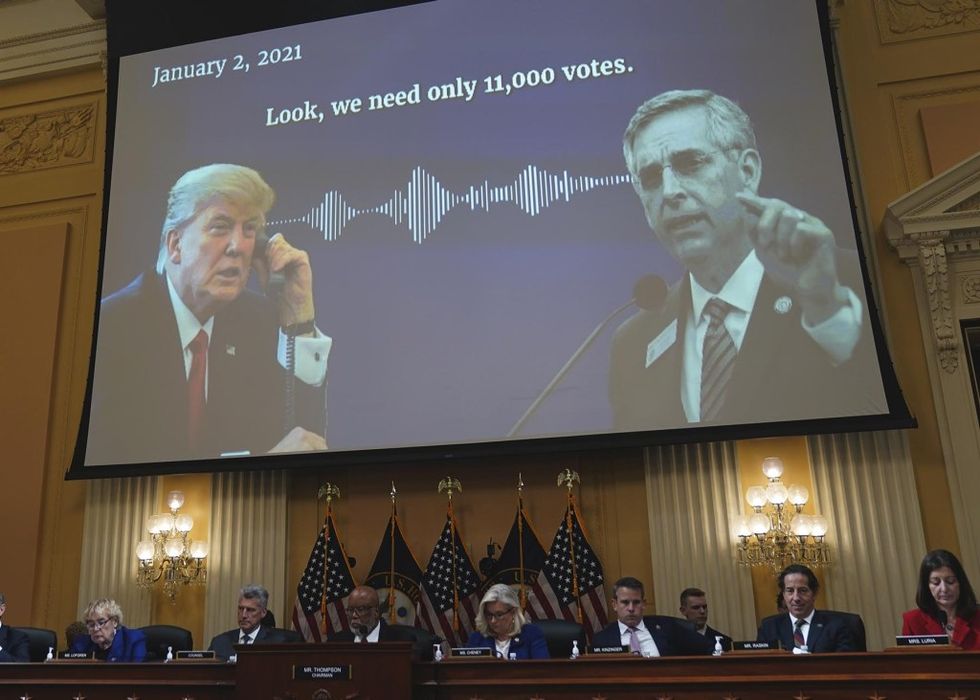
In 2020, top Georgia Republicans such as Gov. Brian Kemp and Secretary of State Brad Raffensperger managed to block Trump’s attempts to illegally overturn the election results. Kemp earned Trump’s fury by refusing to use what the then-president called “emergency powers” to stop the certification of Joe Biden’s victory. In an infamous January 2021 phone call that helped lead to Trump’s indictment in Fulton County, Raffensperger rebuffed the president’s demands to “find” him votes. Kemp and Raffensperger both won handily in their 2022 reelection runs.
But ever since President Biden’s inauguration, conservative activists and policymakers in Georgia have tried to bypass Raffensperger and worked diligently to turn Trump’s heads-I-win-tails-you-lose philosophy of elections into public policy.
As Trump has continued to lie that the 2020 election was “stolen” and “rigged” , the former president and his supporters have been making concrete, step-by-step progress in shaping electoral processes to his benefit. Across the state, MAGA die-hards are devoting considerable resources to purging voter rolls, intimidating election officials, employing legal dirty tricks, and ousting Republican officials and election appointees who haven’t been initiated into the cult of Trump.
Republican operatives have remade Georgia’s state election board, executive branch, Legislature, and legal ecosystems, all in Donald Trump’s image. Conservatives in the state Assembly have unleashed thousands of voter eligibility challenges on county election boards — an effort that will be turbocharged with a new election law. Lawmakers also worked to limit Raffensperger’s role in overseeing elections, while sapping resources for election administration.
Conservative activists heckle election officials on a regular basis with the conspiracy theories Trump birthed, and an indicted election denier — now the state’s lieutenant governor — pushes Trump’s agenda in the Assembly as he eyes higher office. Trump sits atop this sprawling network, receiving updates on progress from political advisers and other MAGA acolytes.
Lawyers close to Trump are already preparing for the former president to claim fraud in Georgia and challenge the results of the election — even in the event that he wins — just to prove a point about imaginary “fraud” in Democratic areas. “There’s massive fraud, so that should be … solved, no matter who wins in Georgia or any state,” says one lawyer and conservative-movementarian who has discussed the matter with Trump, although they present no evidence to back such claims. “You can’t let the left get away with it just because their cheating did not work.”
None of this may be necessary. If the election were held today, polls suggest Trump would win Georgia outright. But to the Trump faithful, that is almost beside the point. In the past four years, Trump and his allies have been doing everything they can to make sure that a Republican defeat in Georgia simply cannot happen again — and to entrench a permanent GOP majority in a deeply divided state.
It’s happening throughout the country: Nearly every leader who matters in various state GOPs, the national Republican Party, and within the conservative movement is playing part in a well-funded, coordinated attempt to corrupt American elections in a way so transparently cynical, so authoritarian, that it makes the right’s “voter fraud” crackdowns of the pre-Trump era look like a flicker of intellectual calm by comparison.
In Georgia, with Election Day just months away, the effects of these Trump-backed initiatives can be felt in every corner of the state’s political environment, from the governor’s mansion to the local election officials increasingly facing threats and intimidation, all the way down to the everyday residents who are forced by conservative activists to defend their right to vote.
“The effort to suppress the vote in Georgia happens year-round, and the countereffort needs to be equally, if not more, robust,” says Saira Draper, a Democratic state representative who worked on voter-protection issues for the Biden campaign in 2020. “Instead of investing in voter protection only in big election years, Democrats need to be at the forefront of defending democracy every day, and for every election.”
With both the Biden and Trump presidential campaigns privately bracing for an extraordinarily close election in November — and a possible protracted legal battle in the aftermath — any minor change at the margins on either side could help make the difference between a Trump victory or loss in the state. And Trump and Georgia Republicans have made it abundantly clear they aren’t willing to leave the electoral outcome up to chance.
“Everybody is gearing up for full-blown warfare,” says a Republican source close to Trump who has worked on “election integrity” efforts. “The campaign, the RNC, everyone is going to be fighting Biden’s team over every single inch, and each bit of process.”
IN THE WAKE of Trump’s loss and record-breaking voter turnout in 2020, Republicans enacted a series of sweeping laws to suppress the vote.
SB 202, the “Election Integrity Act,” passed in 2021, restricted early voting and ballot drop boxes and limited mail-in-ballots. It also made it illegal to provide water or food to people waiting in line to vote. And it limited the secretary of state’s role on the state election board — a move to punish Raffensperger. Despite the bad blood between Trump and Kemp, the Georgia governor signed the bill, dubbed “Jim Crow in the 21st century ” by Biden, into law.
Perhaps most important, the law massively expanded the number of challenges that activists can file contesting the validity of voter registrations in their county — opening up more voters to pernicious nuisance challenges to their right to vote. MAGA activists have flooded the state with tens of thousands of baseless voter-eligibility claims.
Everybody is gearing up for full-blown warfare.
—Republican source close to Trump
One Fulton County resident had her voter registration challenged by a third party on the suspicion that she had listed an invalid address, despite living at the same home since 2011. Atlanta’s mayor and city council moved unanimously in 2018 to change the name of her street, as part of an effort to rid the city of its Confederate iconography. Thanks to Georgia Republicans, that street-name change was used as a rationale to try to disenfranchise her.
“I just feel like this is a waste of my time and also my kids’ time,” she told county officials at a 2023 hearing. “I’m here when I have other things to do,” she said. “I have a job.”
Many challengers rely on data from a website known as VoteRef. The site is a subsidiary of Restoration Action Inc., an election-denial group backed by the billionaire Trump donor and cardboard-box magnate Richard Uihlein.
VoteRef purports to offer a user-friendly interface for aggregated government voter-registration data. But Kristin Nabers, the state director for the nonprofit voting-rights group All Voting Is Local, says the site “is using a voter roll for Georgia from November 2022. It’s a year-and-a-half-old voter roll that is massively out of date. The secretary of state did a list cleanup in 2023, none of which is reflected on VoteRef. These sites are just not reliable.”
The wave of voter challenges has been exacerbated by new rules in how the state funds its elections. For years, election officials in Georgia and around the country have benefited from grants and donations from private foundations. Now, just as county election boards grapple with the overwhelming weight of mass challenges, officials will have fewer resources available to manage them. Last year, Republicans made Georgia one of the first states to ban private charitable contributions for election administration in 2024.
The move was part of a nationwide campaign by MAGA activists to block those donations, which they call “Zuckerbucks,” based on the prominent role of Facebook founder Mark Zuckerberg in funding nonpartisan election-support charities. “I consider Facebook to be an enemy of the people” for Zuckerberg’s role in funding election-administration charities, Trump told CNBC in March.
County election boards have dismissed most of the challenges resulting from SB 202. However, a Republican law that Kemp signed in early May offers new guidance to county election boards, and could lead to more voter-registration challenges being upheld on thin evidence before the 2024 election.
Under the National Voter Registration Act, states are required to finish cleaning their voter rolls 90 days before federal elections. The new Georgia law, however, sets its moratorium on registration challenges at 45 days before an election — which some experts argue is a violation of the NVRA.
“The 45-day quiet period is trying to bypass the 90-day quiet period the NVRA has. You don’t have a quiet period unless what you’re trying to do is list maintenance under another name. That gives away the game right there,” one Georgia election official says. The official adds that with the new law, “if a voter gets caught up in a challenge, they are never going to get the opportunity to reregister if they were inappropriately removed.”
To the former president, however, these voter-suppression laws do not go far enough. During his time out of office, Trump has noted to close advisers that while the state’s voting overhaul does “some nice things,” the changes won’t matter unless, in Trump’s words, “you get the fucking RINOs out of the way,” according to a source with direct knowledge of the ex-president’s opinions on the matter.
AS REPUBLICANS HAVE overloaded local election boards with frivolous voter challenges, they have also worked to reshape the state board overseeing elections — and make it more MAGA.
Trump has played a key role here, behind the scenes. Ed Lindsey, a Republican member of the state election board, landed in the former president’s crosshairs after he opposed an end to no-excuse mail-in voting, which allows registered voters to submit their ballot by mail without providing a reason.
In recent months, Trump spent time calling Georgia lawmakers and fellow MAGA hard-liners in the state to ask them about Lindsey and to demand that he be shown the door, somehow. “He’s got to go,” Trump said privately, noting Lindsey’s position on the “very important” election board, according to two sources familiar with the matter.
Lindsey’s vote against recommending that the Legislature curb voting by mail was just one in a series of moves that infuriated the MAGA activists who have become influential in the state party. He also took a hard line on the bogus claims of election fraud made by the conspiracy nonprofit True the Vote, which recently had to admit in federal court that it had no evidence for voter-fraud claims it had put before the board of elections.
Lindsey’s principles did not sit well with the MAGA movement, which sprang into action. The DeKalb County Republican Party demanded Lindsey’s resignation, claiming newfound conflicts of interest on his part. That position was echoed by a host of conservative media outlets and at least one think tank with ties to Trump.
The final straw came in May. At a meeting of the state election board, Lindsey refused to join calls for the Georgia attorney general to investigate Fulton County’s audit of the 2020 election — long a rallying cry for election deniers.
On May 15, the far-right activists got their wish when Lindsey abruptly resigned his post on the state election board. Republican state House Speaker Jon Burns announced that he would replace Lindsey with Janelle King, a Republican media pundit in Georgia who supported Trump in 2020 and said on her podcast that she is “against no-excuse” voting by mail.
Lindsey, a holdover appointment from the previous speaker, had already served a term on the board and expressed a willingness to continue serving throughout the 2024 election, or until Burns found a replacement for him, according to a copy of his resignation letter obtained by Rolling Stone.
In the letter to Burns, which came shortly after the contentious May election-board meeting, Lindsey indicated that the speaker prompted his exit: “In our talk yesterday, you informed me that you have found someone to appoint and wish to do so this week.”
In an email to friends and colleagues announcing his departure, also obtained by Rolling Stone, Lindsey revealed the pressure the state’s election officials will face, including from conspiracy theorists, in the upcoming election. “Together they must not only be strong and diligent enough to root out those who wish to cheat the system through fraud or suppression, but also wise and judicious enough to identify, expose, and call out others who cynically spread false claims of the same for cheap personal or partisan gain,” he wrote.
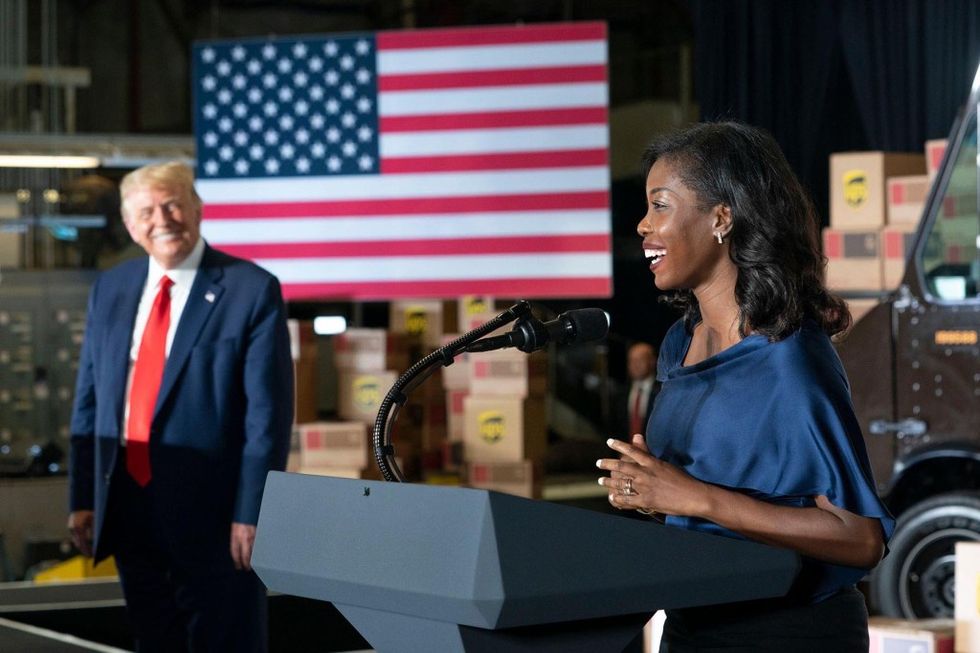
The move to implement a more MAGA elections agenda in Georgia has been a bottom-up process as well as a top-down one. Across the state, conspiracy theorists have begun to populate the ranks of election boards in places like Spalding County, giving Trump’s election lies a more powerful constituency than they enjoyed in 2020.
“The MAGA movement will be set for life if Donald Trump and the party can purge the RINOs from Georgia,” says the Republican source close to Trump. “In the last [presidential] election, there were too many establishment Republicans standing in the way. They are why Georgia fell to Joe Biden.… If we beat them back there, which we couldn’t in 2022, you’re clearing out the losers who want to go back to the party of Bush or McCain.”
Deep within Trumpworld, preliminary planning is underway, spearheaded by attorneys and others close to the former president, to challenge the results and supposed fraud in Georgia’s Democratic strongholds. Already, at least a handful of influential Republicans in Georgia have moved in a similar direction. In the state’s November 2023 elections, four Republican board members on three Georgia county-election boards refused to certify the results of the elections, citing concerns about voting machines, reminiscent of Trump’s lies in 2020.
During Georgia’s presidential primary in March, Fulton County Republican Board of Elections member Julie Adams refused to certify the results of a primary contest that Trump won without question. In May, Adams sued the board with help from lawyers at the Trump-connected nonprofit America First Policy Institute — seeking judicial backing for her claims that Board of Elections members have the authority to deny the certification of election results.
Democrats see Adams’ move as part of a pattern. “The MAGA Republicans have made it clear they are planning to try to block certification of November’s election, and this is a transparent attempt to set the stage for that fight,” the Georgia Democratic Party said in a statement responding to Adams’ suit.
TRUMP’S YEARS-LONG election-denial campaign has unleashed a darker tide of threats toward election officials.
The intimidation of election workers has grown to such a peak that the Justice Department had to create a special Election Threats Task Force to prosecute what Attorney General Merrick Garland earlier this year called “a deeply disturbing spike in threats against those who serve the public.”
In January, Gabriel Sterling, a Republican and the chief operating officer in Raffensperger’s office, was the victim of a “swatting” call — an attempt to trick armed police into rushing a victim’s home on false pretenses. Around the same time, Georgia’s state assembly received a bomb threat.
The secretary of state’s office has had to prepare for a range of different security contingencies as the 2024 election gets closer. “Interest gets elevated, as do emotions, so that is something that we are assessing,” Raffensperger tells Rolling Stone.
His office has set up regular meetings with county election officials and law enforcement to carry out tabletop exercises examining a host of different potential threats, some of them fairly exotic.
“Someone sent a fentanyl-laced letter several months ago to Fulton County,” Raffensperger says. The attack targeted election officials in Georgia and Washington state.
“Within days of that happening, we worked with state public health and we were able to get Narcan to all 109 counties and do a training session for everybody who was at our big state conference,” explains Sterling. “We had public health come and do training on that for about 45 minutes, and we distributed it all.”
For Sara Tindall Ghazal, the Georgia state election board’s lone Democrat, the prospects of violence and intimidation loom heavy. “I am worried about more-aggressive voter-intimidation efforts,” she says. “I am worried about people getting in the back of a truck with AR-15s and giant flags, and driving past polling places.”
Tindall Ghazal, who is battling cancer, recounts how she had to reach out to police “after a pointed email talking about treason and the death penalty” landed in her inbox.
“I had police patrol in front of my house before a particularly controversial meeting,” Tindall Ghazal says. At the time, the state election board was convening to consider a push by Republicans in the state Assembly to give the body the authority to investigate Raffensperger over his handling of the 2020 election.
At another meeting, Tindall Ghazal tried to explain that voters had already reelected Raffensperger by a commanding majority in 2022. The crowd erupted in shouts of denunciation.
“I am the one person who they literally yell at in meetings. I can’t tell you the number of times I’ve had to stop speaking because I’m getting yelled over,” she says. “Any time I talk about the fact that the 2020 election was legitimate, they just start yelling,” she says.
FOR TRUMP AND HIS FOLLOWERS, the right’s multipronged offensive to influence Georgia’s election process isn’t just about 2024.
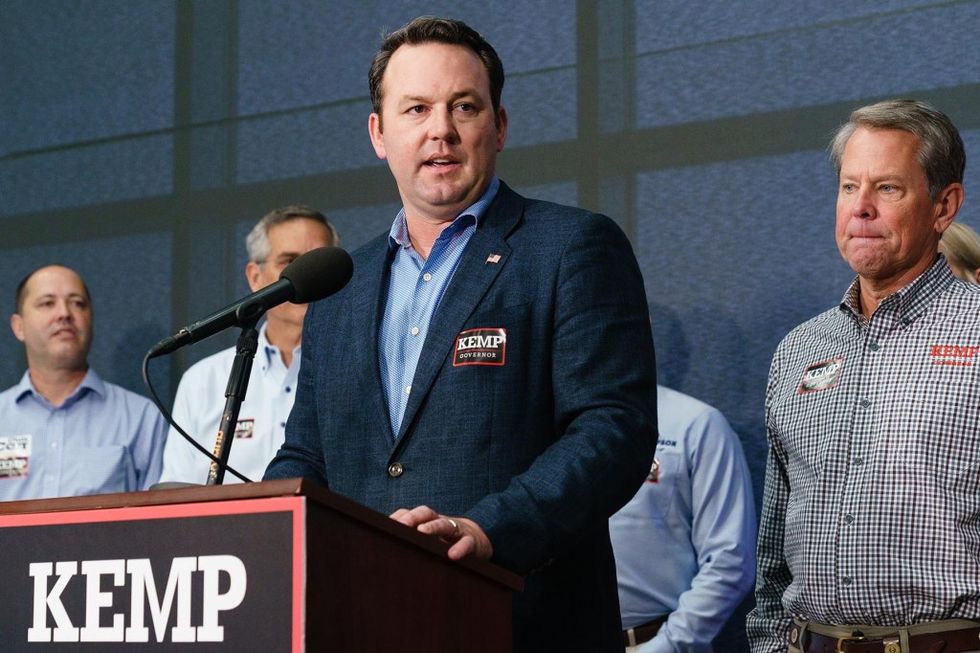
Since last year, Trump has regularly asked confidants whether Georgia’s Republican Lt. Gov. Burt Jones would make a good governor. A hard-line MAGA conservative, Jones served as one of Trump’s fake electors in Georgia during the then-president’s endeavor to overturn the 2020 election results. The day before the Jan. 6 riot, Jones was in Washington, D.C., trying to convince Vice President Mike Pence to go along with Trump’s coup plot.
Jones’ efforts earned him scrutiny from state law enforcement. In April, a special prosecutor was appointed to probe his role in the 2020 Georgia election-subversion scheme.
In Trump’s private discussions of Jones, he likes to note that Jones is “very loyal,” and has frequently suggested that Jones would be a “strong” leader for Georgia, two people familiar with the situation say.
As lieutenant governor, Jones replaced a Republican critical of Trump. Now, Jones is aiming for higher office. There’s no guarantee that Jones secures a Trump endorsement, much less the Republican nomination. But the election of an indicted election denier to the state’s highest office would represent a stunning and four-year-belated victory for the MAGA movement. And for a thoroughly Trumpified GOP, that’s the goal.
“It is Donald Trump’s party,” says a GOP source close to Trump. “Every conservative state is gonna act like it, and there’s nowhere more important for winning that battle than Georgia.”


Donald Trump speaks in front of the American flag at the White House, on May 12, 2026.
It’s the Corruption, Stupid
Let’s say it plainly: There has never been a president as corrupt as Donald Trump. There is no close second in our history.
Take two days in May as Exhibit A. Americans just found out that in the first quarter of this year, Trump’s stock portfolio made 3,600 trades — an average of nearly 60 a day. This is a rapacious pace that would make a day trader on meth blush. Many of these appear suspiciously timed to benefit from actions approved by the president himself. For example, his Nvidia stock surged after Trump announced the company would be permitted to sell its cutting-edge AI chips to China. Similar suspiciously well-timed calls were made ahead of big government moves involving other companies, from Intel to Palantir to Boeing. The Trump Organization says all trades are made by a third-party investment advisor. If so, they appear to be psychic.
But the apparent insider trading scam being run from within the Oval Office is small change — merely millions of dollars — compared to the self-dealing plunder of $1.8 billion tax-payer dollars being pushed through the DOJ and IRS.
There’s never been a sitting president who sued his own government for $10 billion. That’s because it’s absurdly corrupt. But that’s what Donald Trump did, arguing he had suffered damages from prosecutions pursued before he was reelected. Trump, like many of his supporters, persistently confuses persecution with prosecution.
The judge who heard the case convened an independent panel to review the suit, suspecting it might be a scam. Before the case could be dismissed, Acting Attorney General Todd Blanche — who had previously served as Trump’s personal lawyer — declared that the bogus suit would be preemptively settled, not for $10 billion, but for the symbolic sum of $1.776 billion, which Trump said will be distributed to persecuted political allies.
This is a shakedown. The president is compelling a Justice Department he controls to redirect money from taxpayers — that’s you — to his most fervent supporters. This slush fund will set off a cash grab among MAGA lawyers and be used to reward partisan fanatics who attacked the U.S. Capitol — and police officers — on his behalf.
If that wasn’t enough of a blatantly illegal use of presidential power, it was revealed that the “settlement” deal included a pledge signed by the acting attorney general that would ensure — in the hysterical all caps of a Trump tweet — that the government would be “FOREVER BARRED and PRECLUDED from prosecuting or pursuing” any tax claims, audits or related prosecutions against Trump, his family or their businesses. This is an attempt to get a permanent get-out-of-jail-free card for the Trump family — a license to steal.
All of this is insane. All of it is unethical, and much of it is illegal and impeachable — but our system was not designed to deal with a shamelessly self-dealing president, a spineless Republican Congress, and a complaint conservative Supreme Court that has refused to enforce the emoluments clause of the Constitution and ruled that Trump has immunity for actions he takes as president. That ruling may prove to be the most consequential — and most corrosive — act of judicial abdication in American history. Against this partisan-group think, individual acts of courage matter. So kudos to the top lawyer at the Treasury Department, Brian Morrissey, who at least had the integrity to resign rather than oversee this tax-payer funded plunder.
Just to close out the corruption-palooza, Trump announced that he would endorse the Lone Star State poster-boy of corruption, Texas Attorney General Ken Paxton, in his primary against incumbent GOP Senator John Cornyn. Paxton’s scandals include a truly buffoonish array of fraud and bribery charges that resulted in him nearly being impeached by the state legislature. But corruption is a feature, not a bug, of Trumpland.All this smacks of late Rome and you’d be forgiven for half expecting Trump will next appoint a horse to an open Cabinet position, with Republicans rationalizing the need for more equine representation. It is no more absurd that the cavalcade of Trump appointees refusing to say that Biden won the 2020 election during their confirmation hearings in the Senate. The decision to parrot unreality for partisan gain defines deviancy down.
But in the search for something hopeful to hold onto in dark times, you can find some comfort in the fact that corruption is often the thing that turns the tide against authoritarian-adjacent administrations. And there is evidence this is happening.
Trump’s billions in self-enrichment, his reflexive twisting of U.S. policy to sell out long-term national interests and enduring values, comes at a moment when nearly half of Americans say they are feeling extremely anxious about their own financial situation.
That anxiety is driven by the widening gap between Main Street and Wall Street, a gap set on fire by a trade war and a real war Trump started, which has no end in sight but promises to further raise energy prices, fertilizer prices, and strangle the global economy. While CEOs embrace the transactional nature of this president, kissing his ring and offering vigs, the situation is grim if you’re not lining up at the Trump trough. At a time when the super-rich are getting richer, everyone else is told to go to hell by the man in the White House.
These are precisely the kinds of conditions that turn people against an aging, autocratic president who shows contempt for the very people who put him in office. It is not just that Trump’s approval numbers have plummeted to the point where two-thirds of Americans disapprove of the job he is doing. It is that Trump, for the first time, is opposed by a majority of non-college-educated white voters — a.k.a. his base — and they feel betrayed because Trump is raking in billions of dollars while they struggle to pay rent and buy groceries. Trump has dismissed and discounted their concerns, turning a blind eye to the anger about rising costs that carried him back into the presidency.
Trump’s aim is to make his thievery so blatant that we collectively become numb to it and disfigure our democracy in the process. Once upon a time conservatives warned about the dangers of “crony capitalism” and corruption. Now they are silent and complicit. It is the temporary triumph of partisanship over principle. Patriotism demands that we reassert the basic American idea that no man is above the law and that our presidents are not kings.