
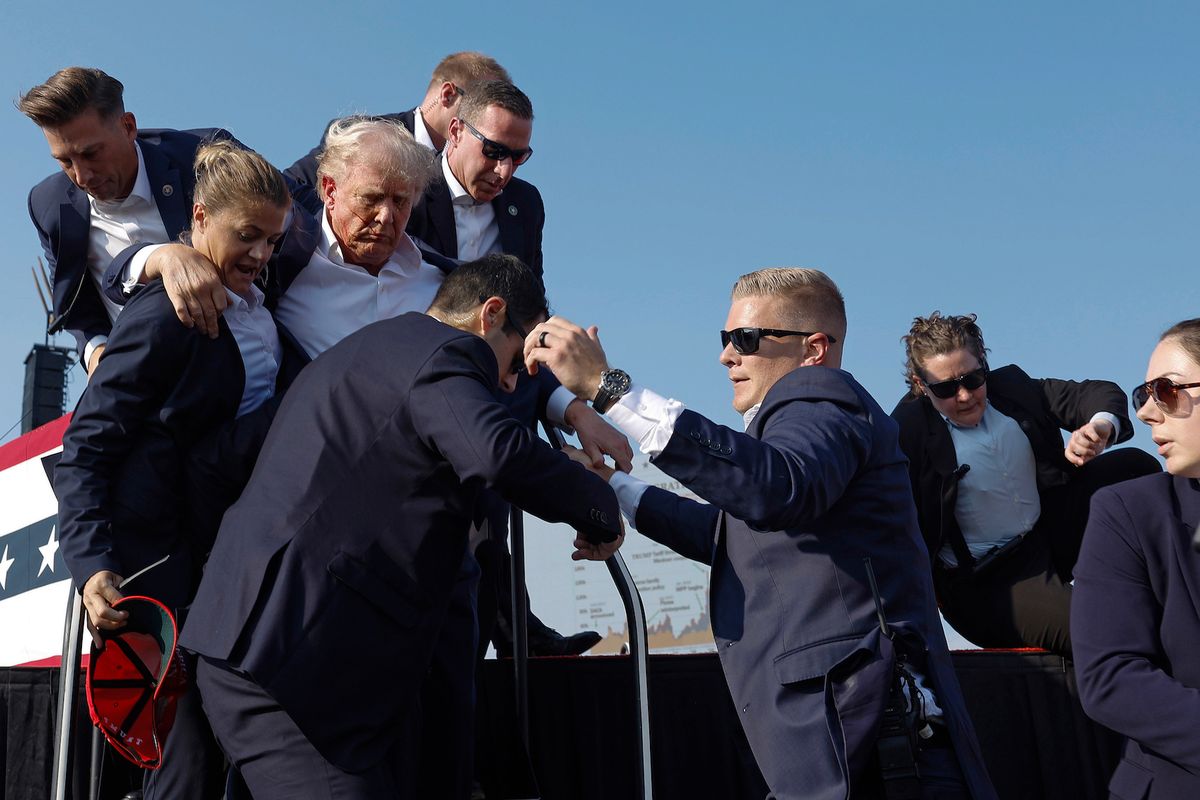

It’s been 11 days since the assassination attempt against Donald Trump at a rally in Butler, Pennsylvania. Investigations by law enforcement and journalists so far have produced few details about the apparent shooter’s motivations — while revealing major security failures.
The Trump rally shooting, from a nearby rooftop, was the first near-assassination attempt on a current or former president in 40 years — and “the most significant operational failure at the Secret Service in decades,” the agency’s director, Kimberly Cheatle, told lawmakers at a House hearing on Monday. One attendee was killed in the attack, and two attendees were seriously injured. Cheatle resigned on Tuesday.
Here’s what we know about the shooter and the assassination attempt at Trump’s rally:
What We Know About The Shooter
The shooter has been identified as Thomas Matthew Crooks, 20, of Bethel Park, Pennsylvania. What information has been gleaned from Crooks’ minimal online footprint and the ensuing drips of information from law enforcement and public records shows either a complex political mindset or a young man who was still forming his political views.
A registered Republican who had given $15 to a liberal anti-Trump group, Crooks’ household appears to have been politically divided: His father was registered as a Libertarian, his mother as a Democrat, and his sister as a Republican. Classmates have given conflicting remembrances of Crooks’ political leanings, ranging from outright conservatism to general apathy. Nothing in the deluge of coverage stemming from a sprawling law enforcement investigation has revealed any evidence of left-wing extremism.
While publicly available records and law enforcement haven’t provided an easy political answer for Crooks’ motive, what is known paints a picture of Crooks and his family as a microcosm of Pennsylvania, a swing state where Trump eked out a victory against Hillary Clinton in 2016 but lost by a slim margin to Joe Biden in 2020.
In an era when politics pervades nearly every aspect of life — and in which many Americans wear their political affiliations on their sleeves — the Crooks family home showed no outside signals of their political beliefs. Neighbors told CNN that no political signs or flags were seen at the home.
Crooks’ classmates have given conflicting accounts of his political beliefs. While one described him as conservative, another former classmate, Vincent Taormina, said Crooks confronted him over Taormina’s support for Trump, something he apparently told the FBI after Crooks’ attempt on Trump’s life. However, the agency also asked about Crooks’ apparent disdain for other politicians, like Bernie Sanders and Hillary Clinton, Taormina told Fox News.
Other classmates and teachers have described Crooks as a loner who kept to himself — and preferred to do so. Crooks’ solitude was apparently in line with that of his father. “I called [my brother], but he didn’t answer the phone, and I know he saw my name on the caller ID,” Mark Crooks, the shooter’s uncle, told NBC News. “I called to see how he was doing, but he didn’t call back, and that’s typical of him.”
A registered Republican, Crooks made a small donation to the Progressive Turnout Project — an anti-Trump group — on the day Biden was inaugurated, when the shooter was 17. It’s unclear when he registered as a Republican.
Still, much work remains to be done. On one of two phones Crooks apparently used were some 14,000 images, including stock images of firearms and “articles related to government officials,” lawmakers briefed by law enforcement told reporters. Other information gleaned from Crooks’ devices suggests he could have been looking to target a wide variety of political figures. In recent months, he had searched for information about President Joe Biden’s events.
Photos of House Speaker Mike Johnson and House Minority Leader Hakeem Jefferies were found on Crooks’ devices, as was a photo of Fulton County District Attorney Fani Willis, who is prosecuting Trump and his allies for their role in efforts to overturn 2020 election results in Georgia.
Among the data discovered by law enforcement were searches for the dates of the Democratic National Convention in Chicago, Trump rally dates, and searches related to explosives and major depressive disorder, a diagnosis given to a school shooter in Michigan whom Crooks also made a subject of his online searches. Further, email accounts associated with Crooks’ father were tied to purchase of gold bars, coins, and firearm equipment on eBay, The New York Times found. Advertisements for gold and precious metals are a staple of right-wing media. Rolling Stone’s emails to those addresses went unanswered, as did calls to Crooks’ neighbors and family.
Unlike other high-profile American shooters, Crooks did not leave a manifesto or other obvious explanation of his motive for trying to kill a former president. In Crooks’ wake — like that of mass killer Stephen Paddock in Las Vegas and others — questions, speculation, unfounded allegations of political motivation, and, of course, conspiracies have abounded about why Crooks tried to kill perhaps the most famous person in the world.
Timeline of the Attack
Ahead of the July 13 rally, Crooks had asked for the day off work at his job at a nearby nursing home. At some point that day, Crooks’ father, Matthew, called 911 to report his son missing, law enforcement told Fox News. Reports vary on whether Matthew called before or after the shooting, and whether he knew the weapon used in the assassination attempt was also missing.
On the morning of the rally, Crooks was able to fly a drone over the Trump rally site, according to law enforcement. He returned around 5 p.m. and raised the suspicions of rally-goers who spotted him carrying a duffel bag and a range-finder. Several Trump supporters said they tried to warn law enforcement, to no avail.
More than an hour passed between the time when Crooks was identified as a “person of interest” by law enforcement at 5:10 p.m., and when he began firing at 6:12 p.m. In that crucial hour, rally goers warned police of a suspicious person on the roof of a building near the rally site. A local police officer briefly tried to confront Crooks and retreated after Crooks trained his gun on him; the officer wasn’t able to unholster his weapon, while being raised up to the roof by another officer. Trump took the stage to begin his remarks. This all happened before Crooks fired his first shots, and was taken down by a Secret Service sniper.
Trump was struck in the ear, an injury that was finally detailed on Saturday by House Rep. Ronny Jackson — a controversial figure who is not Trump’s official doctor. Two rally-goers were injured in Crooks’ attack and a third died.
Trump wore a large white bandage over his ear during the Republican National Convention last week. Over the weekend, Trump wore a smaller flesh-colored bandage while speaking at a rally in Grand Rapids, Michigan.
The Investigation
The massive investigation into Crooks began shortly after the shooting, with agents from the Bureau of Alcohol, Tobacco, and Firearms combing through paper records — a handicap required by laws pushed by the gun lobby to prevent the creation of an easily-searchable database of American firearms and their owners — to identify Crooks, who was not carrying identification.
Sale records for the AR-15-style rifle Crooks used that day led investigators back to the family home. There, law enforcement confiscated 14 firearms, an explosive device, Crooks’ second phone, a hard drive, and three USBs.
The apparent failure of local law enforcement and especially the Secret Service to adequately protect Trump has drawn the ire of Republicans, who grilled director Kimberly Cheatle at a House Oversight Committee hearing on Monday. She resigned on Tuesday.
Republicans are incensed that the Secret Service reportedly rebuked requests from the Trump campaign for increased security for the candidate. Meanwhile, local law enforcement have said they warned the Secret Service ahead of the rally that area police didn’t have the manpower to properly patrol the outer perimeter of the rally site.
“The officer was in a defenseless position and there was no way he could engage the actor while holding onto the roof edge,” Tom Knights, the Butler Township manager, said in a statement, adding that the officer “immediately communicated the individual’s location and that he was in possession of a weapon. Moments later, the individual commenced firing.”
In the ensuing fallout over the assassination attempt, local law enforcement — which numbered about 100 officers from several different agencies — have said the Secret Service did not assign any agency responsibility for the area outside the inner security perimeter that contained the building from which Crooks fired.

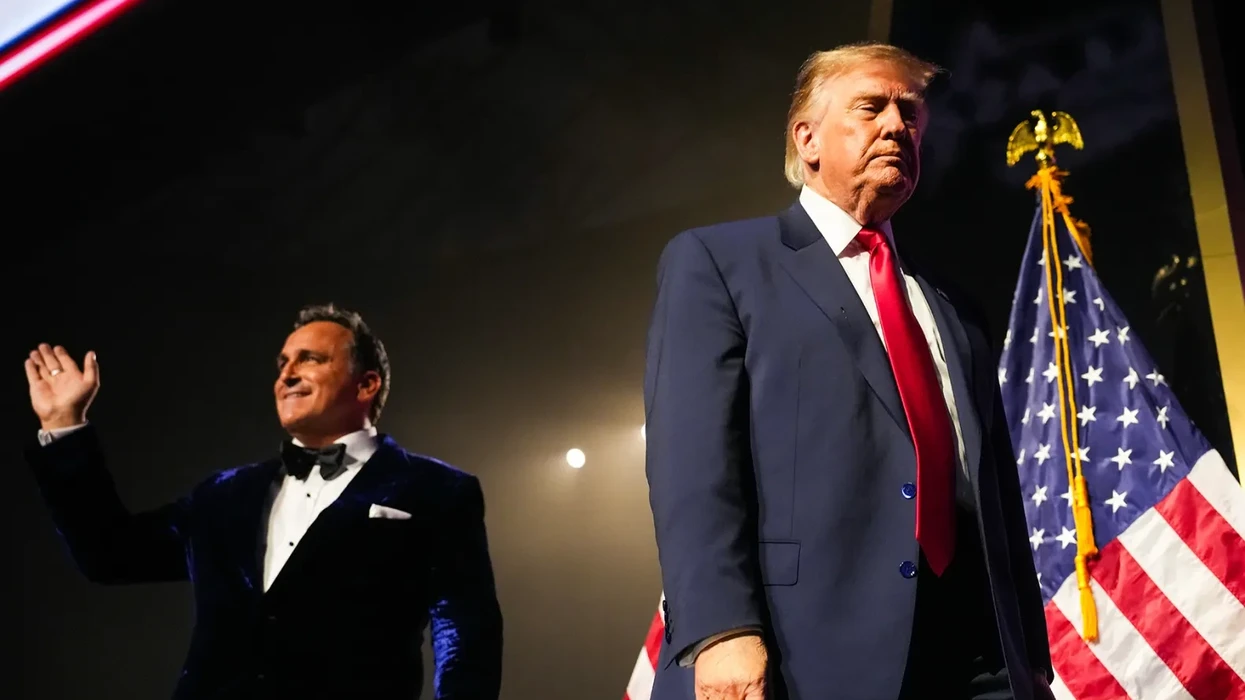
 The first day of the 2026 Republican National Convention at the American Airlines Center, on Sept. 9, 2026 in Dallas, Texas.
 People of all colors listen as Donald Trump speaks on the first day of the Republican midterm convention.
 Trump supporters at the Republican midterm convention.
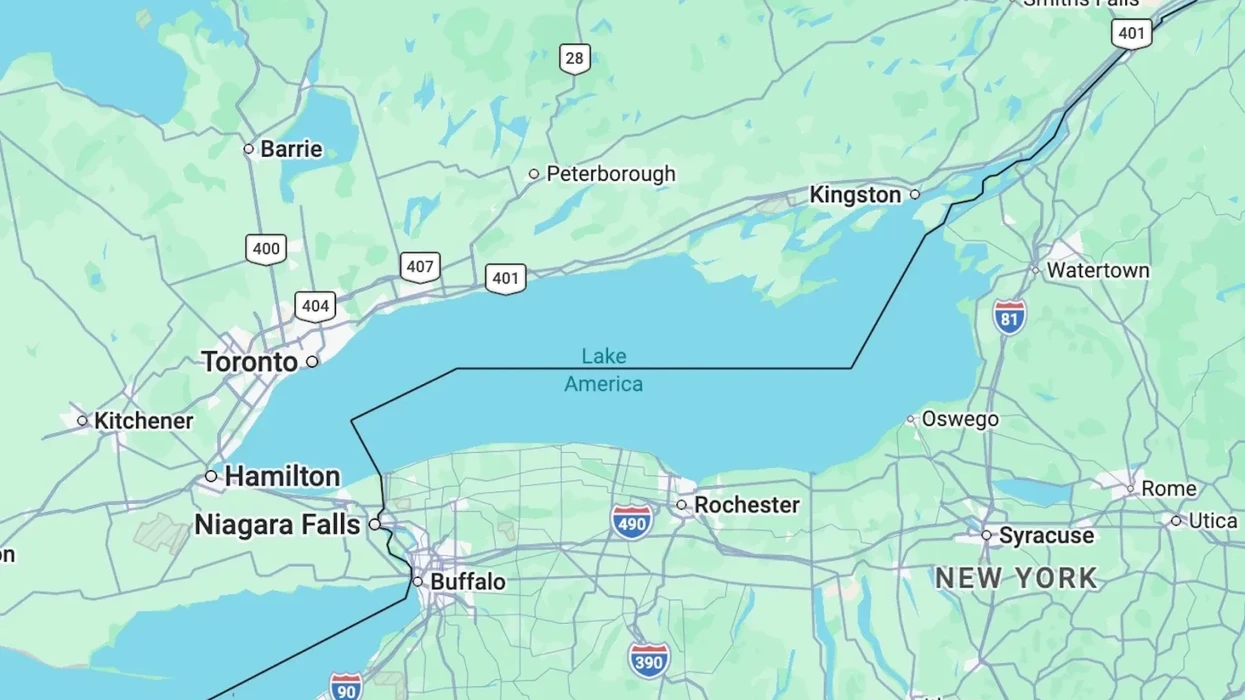
 Apple Maps, August 30, 2026
It’s Been 25 Years Since 9/11. Did the Terrorists Win?
I once had a conversation with Barack Obama about the nature of terrorism. This was during his second term, and he’d been going on for a few minutes about how Islamic terrorism wasn’t actually an existential threat to Americans, but rather a chronic and manageable risk. I was all too familiar with this argument, having conducted the interview with John Kerry in 2004, in which he said terrorism could be reduced to the level of a “nuisance” — a quote that blew up on him during the final weeks of the campaign. I found Kerry’s answer problematic then, and I had the same reaction when Obama said it. I asked him pointedly: What would have to happen for him to decide that terrorism was, in fact, existential? How about a suitcase nuke on a subway car? Then would he concede that terrorists were more than criminal gangs?
Obama didn’t hesitate. Terrorism would only reach the level of an existential threat, he told me, if Americans responded by abandoning their own values and turning on one another. There was nothing a bunch of homicidal zealots could do to destroy the most powerful country on Earth, but we could certainly destroy ourselves if we abandoned our constitutional protections in a fit of panic.
At the time, this struck me as something you might expect to hear from a constitutional-law professor, but not necessarily from the president of the United States. There was an intellectual fatalism about Obama I sometimes found disconcerting — a sense that he saw himself as a twig in the river of history, and it was up to the rest of us to change the current. I doubt he would dispute that assessment. But I thought often of that conversation a few years later, as the country careened into the Trump era. And as we pause now to reflect on the 25 years that have passed since the attacks of Sept. 11, I find myself thinking about it again.
Alternative histories are a tricky business, best left to novelists and sci-fi filmmakers. As a friend of mine in politics likes to say, mockingly, whenever such theories get floated: What if Hitler had won the Civil War? And yet, it’s hard not to see a direct line between the events of 2001 and where we are today — and to wonder how different the country might have looked had it never happened. On the eve of the devastating attacks on the World Trade Center and the Pentagon, George W. Bush’s young presidency seemed to be wobbling. Absent those attacks, he might well have been a one-term president, and he almost certainly would not have invaded Iraq. Nor would Democrats become backed into defending the entrenched war in Afghanistan as the “good war” — a way of differentiating their own response to 9/11 from Bush’s without sounding reflexively pacifist.
Without the economic shock of 2001, it’s unlikely that desperate policymakers would have looked the other way while lenders, underwritten by the government, turned the housing market into a casino, leading to the second massive blow of the decade: the market collapse of 2008. All of these things, in quick succession, destroyed what remained of the public’s faith in its governing establishment, leading directly to Obama’s stunning takeover of the Democratic Party and, later, to the election of Donald Trump.
The Trump I met in the late 1990s, while he was flirting with an independent run for president, held himself out as a centrist reformer, in the mold of Ross Perot. By 2015, when he started running as a Republican, Trump had fully embraced a reactionary, white-nationalist movement — a response to Obama, yes, but also to Bush, whose instinct in the months after 9/11 had been to speak out forcefully in defense of Muslim Americans, and whose support for liberalized immigration infuriated much of his party’s base. Trump’s core appeal then, as it is now, was rooted firmly in the nativist, anti-globalist backlash that emerged in 2001. (According to Pew Research, roughly 42 percent of Americans believe Muslims are having a negative impact on the country.) The animating idea of Trump’s second term is that white, English-speaking Americans are the only authentic Americans. It shouldn’t be controversial to say that he will twist or shred any page of the Constitution to enact this vision, since he really makes no effort to conceal it.
Nor is America’s hard turn away from pluralism and liberal democracy happening in a vacuum — far from it. In the past decade, similarly reactionary, anti-immigrant movements have rocked Britain and taken over Italy, and they now seem poised to wrest power in France and Germany. Maybe some of this would have happened without 9/11; the hollowing-out forces of globalization and automation were already fueling plenty of economic fury here and in Europe by the turn of the century, and the revolution in social media wasn’t far off. But there’s little doubt that the “War on Terror,” which became the first real foreign policy framework since the end of the Cold War, focused all of that anxiety toward an identifiable enemy, fracturing societies that had been held together by a 50-year consensus around personal liberties. If Obama were being honest, he’d probably say he told me so, and he’d be right.
IN THE MONTHS after 9/11 and before the invasion of Iraq, it was hard to get much perspective, and genuine patriotism mixed — as it always does — with a series of mindless gestures and clichés. Flag pins became mandatory even for reporters, peace songs were effectively banned, Republicans brought “freedom fries” and “freedom toast” into the lexicon to protest French misgivings about war. It became rote for politicians to say that the terrorists hated our way of life and we would never let them win. (To this day, when my dog snarls at some terrified Shiba Inu for no reason, I ask her why she hates freedom.)
Twenty-five years on, though, with the benefit of distance and experience, we can ask some questions we couldn’t ask then. And one of them is what the violent extremists who sent those suicide planes into our buildings really hoped to achieve. Did Osama bin Laden think he could win a holy war with America? Did we ultimately frustrate his script for the downfall of the West, or did we simply play our part?
Terrorism is, by its nature, asymmetrical. Whether it’s the Viet Minh under the French, or the IRA in Britain, or Al Qaeda, there’s an inherent understanding that the terrorist can’t win a conventional war against an obviously superior military force. What the terrorist seeks is destabilization of the status quo. His desperate act is an igniter in search of fuses; the goal is to set off a chain reaction inside the fortress that can’t be controlled, to disrupt order with chaos and see what shakes out. The terrorist knows this will likely cause his own people suffering in the short run, but that’s part of the point. He believes the occupier to be a soulless monster, and by reducing it to its basest instincts, he hopes to bare its nature to the world.
We’re seeing this play out, in real time, in Israel. The leaders of Hamas, their military options exhausted and their political goals slipping away, could not have been under any illusion that they would drive out the Israeli occupiers by savagely killing and mutilating more than a thousand innocent people. They must have hoped that Israel would react with blind fury and cruelty, resorting to the instinct for all-out annihilation that its leaders had long managed to suppress. Nearly three years later, Israel has tumbled from legitimatized power to international pariah, its politics riven by disunity, its moral authority in shambles. Do we think Hamas really cares that more than 70,000 of its own people have died in the carnage? Its repugnant leaders almost certainly consider that a cost worth paying in the broader context of history. What they have achieved, in political terms, has exceeded their most feverish dreams.
The Israelis should have looked across the Atlantic and learned something from our own experience. America on Sept. 10, 2001, was an unchallenged superpower at peace — vexed by social and economic divisions, yes, but still stable enough to survive a disputed election with its political consensus intact. A quarter century later, we find ourselves fighting a third unsuccessful war in the Middle East, our society more divided and our politics more poisoned than any time since the 1800s, a foundation of laws imperiled after 250 years of durability, immigrants hunted down like animals by masked agents, violence and extremism on the rise from both right and left, truth and intellectualism in retreat. This is not solely the fallout from Sept. 11, 2001, but it is the result of a series of events that, were you able to hit a rewind button and live it all again in reverse, would lead you directly back to that day. If bin Laden meant for his attack to be the first in a series of similarly epic crimes, then he was soundly defeated — no small achievement for American soldiers and spies. But if his goal was to destabilize America and bring out the worst of our nature, then he may have pulled off the most successful terrorist attack in history.
Over and over we told ourselves, in that agonizing moment, that the terrorists would never win. A quarter century later, it’s getting hard to argue they didn’t.