Skip to content
Search

The Music Industry Is Sending Its Stars to Hollywood

With streaming payouts shrinking and touring costs rising, artists are turning to film for money, control, and creative reinvention

The Music Industry Is Sending Its Stars to Hollywood

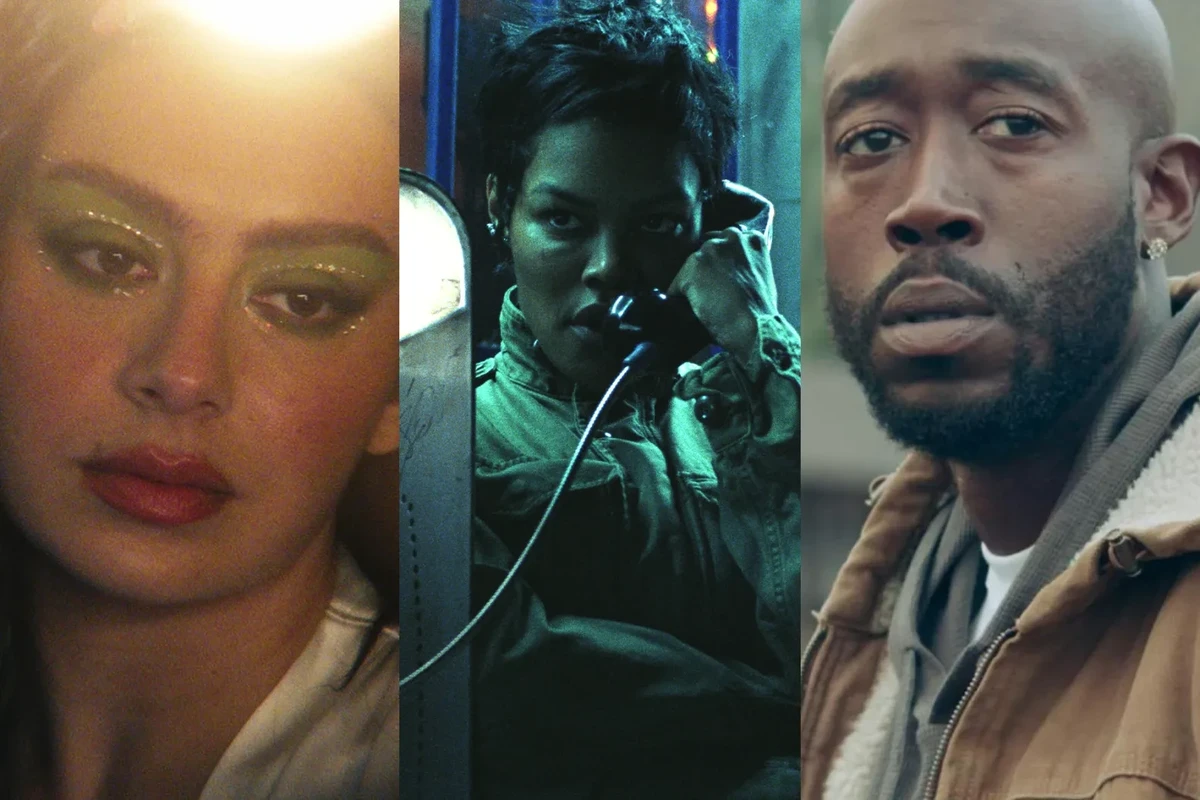
Charli XCX in ‘The Moment’; Teyana Taylor in ‘One Battle After Another’; Freddie Gibbs in ‘Down With the King’

A24; Warner Bros. Pictures; Inside Voices

When her career began, it would have been hard to imagine Teyana Taylor winning a Golden Globe before a Grammy. But there she was at the Beverly Hilton, taking the stage after winning Best Supporting Actress, visibly stunned as she thanked her family, her director Paul Thomas Anderson, and the Black women who paved the way.

“We belong in every room we walk into,” she said. “Our voices matter and our dreams deserve space.”


She didn’t take home the Oscar, but her performance in One Battle After Another reshaped her career, turning years of under-recognition into a full-fledged breakout. It also pointed to a broader shift: Musicians are no longer just crossing into film, they’re becoming essential for the industry.

Taylor is part of a growing wave of artists finding roles across the industry. Producers like Kenneth Blume (Lurker), Animal Collective’s Josh Dibb (OBEX), and St. Panther (Crush) are reshaping film scoring. By mid-2025, Charli XCX had booked roles in seven films while also soundtracking Emerald Fennel’s Wuthering Heights, leaning into the aesthetic world she built with Brat. Elsewhere, Gracie Abrams and Billie Eilish are stepping into major film roles, leading new projects from Halina Reijn and Sarah Polley.

For some, the transition still feels surreal. Bay Area rapper Guapdad 4000 recalls being approached for a role in Justin Tipping’s football horror film Him in a moment that felt pulled straight from a thriller. “[He said] ‘You was on Issa Rae’s set, acting your ass off. You’re going to hear from us,’” Guapdad says. “I tapped him like, ‘You the police? Who the fuck is us?’ You can’t do the movie ominous shit with me. I’m paranoid. I used to be a scammer.”

The moment captures the strange overlap now defining the entertainment industry. As streaming has fractured monoculture, the lines between musicians, actors, influencers, and filmmakers have blurred. Fame is more diffuse as content creators often out-earn traditional artists, though Hollywood still carries a gravitational pull. At the same time, musicians bring something studios are increasingly chasing: credibility.

“[It’s partially] corporations seeing who will guarantee them money and putting them in movies,” says Blume, whose credits span work with Vince Staples, Geese, and Dominic Fike. “But there’s also a real creative upside.”

The relationship between music and film isn’t new. Major labels like Sony, Universal, and Warner have long-standing ties to film studios, and artists like Cher and Barbra Streisand made similar transitions decades ago. But what’s changed is the scale, and the accessibility. Studios like A24 have leaned into this shift, even launching a record label in 2025 and becoming what The Hollywood Reporter called “the go-to studio for recording artists who want to act.” The strategy reflects a broader convergence, where artists are no longer guests in Hollywood but part of its infrastructure.

That convergence is visible on red carpets as much as on screens. At last year’s Academy Gala (dubbed the “Met Gala of the West”), musicians including Charli XCX, Olivia Rodrigo, Haim, Ed Sheeran, and Bruce Springsteen mingled with film’s biggest names, signaling how fully the two worlds have intertwined.

There are practical reasons behind the shift. Streaming payouts remain notoriously low, and touring has become increasingly expensive, often making profitability elusive. According to the Living Wage for Musicians Act, an artist needs over 800,000 monthly streams to earn the equivalent of a $15-an-hour full-time job. Film, by contrast, offers both financial opportunity and creative expansion. Scoring, in particular, has become a viable lane. While sync placements can be lucrative, they offer limited creative control. Composing for film, on the other hand, allows artists to shape entire narratives—and earn consistent income, with industry-standard rates ranging from $250 to $1,000 per minute of music.

“I assume part of this is people scrambling,” says Dibb. “The economy of media is bottoming out, and everyone’s looking for an island. But there’s a side to it that’s really exciting.”

That excitement shows up in the work. St. Panther’s score for Crush reimagines the high school romance through a queer, alt-R&B lens. “I brought a Mexican trans interpretation to a movie like Crush, music-wise,” they say. “I was making choices outside the traditional box.” Blume sees that kind of experimentation as essential. “We’ve had remakes of remakes, samples of samples,” he says. “At some point, people are going to want something new. I think that’s what this opens up.”

Some of those new directions are already taking shape. Questlove’s documentaries have revisited overlooked moments in Black music history, while Anderson .Paak stepped into directing with K-Pops!, a family comedy grounded in the realities of the global music industry. “I was shitting bricks,” .Paak says of directing his first feature. He credits collaborator Dumbfoundead with helping him navigate the process, which he began developing during the pandemic, when touring stopped and he found himself spending more time with his family.

Though film remains more gatekept than music, the barriers are lowering. Artists can now self-fund projects, partner with independent distributors, or strike deals with streaming platforms. The result is a wider range of stories and a wider range of voices telling them. Rappers, in particular, are breaking out of the narrow roles they were once confined to. Performances from Vince Staples, Freddie Gibbs, and .Paak show a growing range from comedic self-awareness to emotional depth, expanding what’s possible for artists on screen.

“The more we see that traditionalism being broken, we’re just getting better artwork,” says St. Panther. “We want creativity. We want vibrant art. We want movies that actually hit — we want to hear that too.”
More Stories

‘America’s Next Top Model’ Warped Her Story. Dani Evans Is Having the Last Word

Dani Evans

Courtesy of Netflix

‘America’s Next Top Model’ Warped Her Story. Dani Evans Is Having the Last Word

Dani Evans has learned to trust her gut instinct. It’s a habit she’s developed since the events that took place 20 years ago on America’s Next Top Model and after she walked away with the grand prize, only to learn that it had come with a hefty price. “If something within me is a ‘no,’ then I can’t give my attention to it, no matter what it is,” she tells Rolling Stone. “That’s how I’ve built my personal ethos.”

In 2005, Evans saw winning the hit reality TV show as a one-way ticket out of Little Rock, Arkansas. At the time, ANTM was an entertainment juggernaut. Evans says she knew the series — which had young models living under one roof and competing in high-stakes photo shoots to win a modeling contract — was made to humiliate the girls on-screen, but her brother convinced her it was an opportunity to fulfill her dreams as a model in New York.

Keep Reading Show less
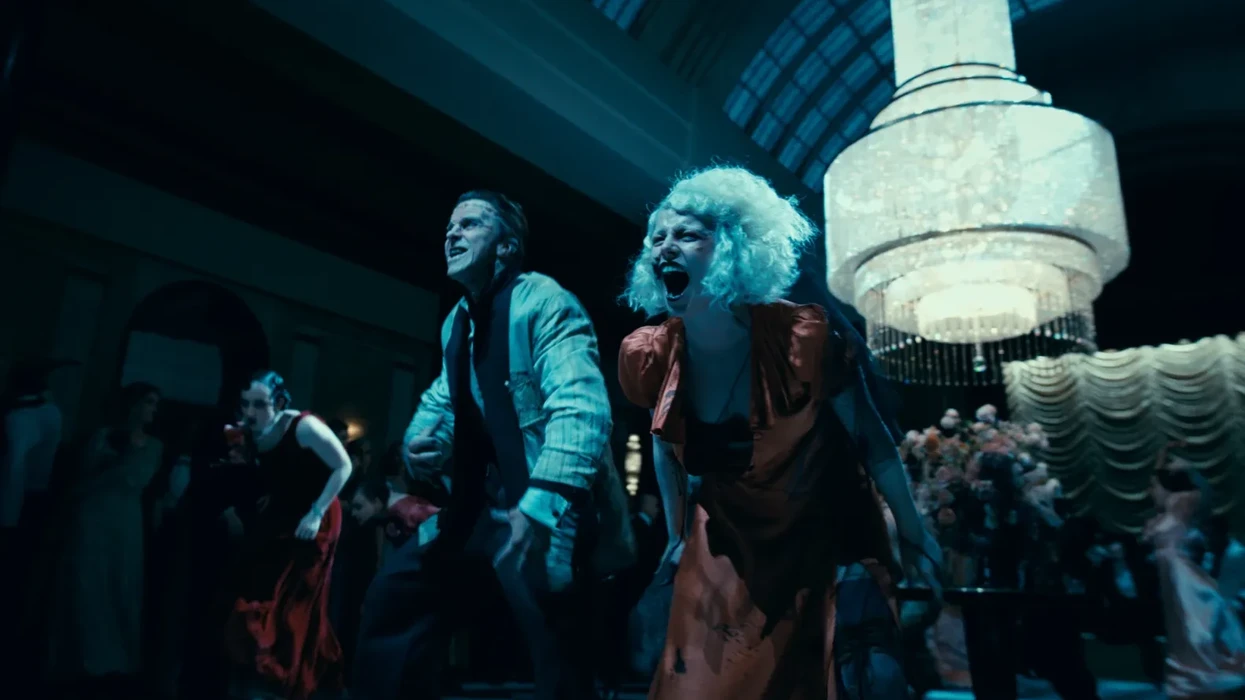
‘The Bride!’ Is a Monster Mash-Up of Sex, Violence, Resistance, and Ideas. Many, Many Ideas

Christian Bale and Jessie Buckley in 'The Bride!'

Warner Bros

‘The Bride!’ Is a Monster Mash-Up of Sex, Violence, Resistance, and Ideas. Many, Many Ideas

He’s a reanimated corpse, cursed to wander the land in a state of existential misery for centuries! She’s a former moll for a two-bit gangster, brought back from the dead to become his soulmate! You could say they’re made for each other — literally, in her case. Not that this young woman with a serious bone to pick with the patriarchy had much of a choice in the matter. Her would-be groom and his doctor friend dug her up, enlisted a scientist to pump thousand of volts of electricity through her, and now they simply expect her to play house for all of eternity? Fuck that! Doesn’t she have a say in any of this? Why, it’s enough to make a once-dead, now alive again and extremely angry lady start a revolution and burn the whole rotten, sexist infrastructure to the ground.

The Bride! — Maggie Gyllenhaal’s radical, fit-to-burst take on The Bride of Frankenstein — is, at its molten core, all about agency. Who gets it, who doesn’t, and how so much of it seems to run across chromosome-based lines. It’s also about the joys of true partnership, and the need to be taken on your own terms or not be taken at all. And the concept of the outlaw couple, and how that everlasting cliché of lovers on the lam has become part of our nation’s collective pop mythology. And about reclaiming Mary Wollstonecraft Shelley’s legacy from the male-dominated canon. And about the infinite pleasure of watching actors in 1930s swells-and-dames cosplay. And the joys of old-timey musical numbers — who doesn’t like old-timey musical numbers? And… and…

Keep Reading Show less
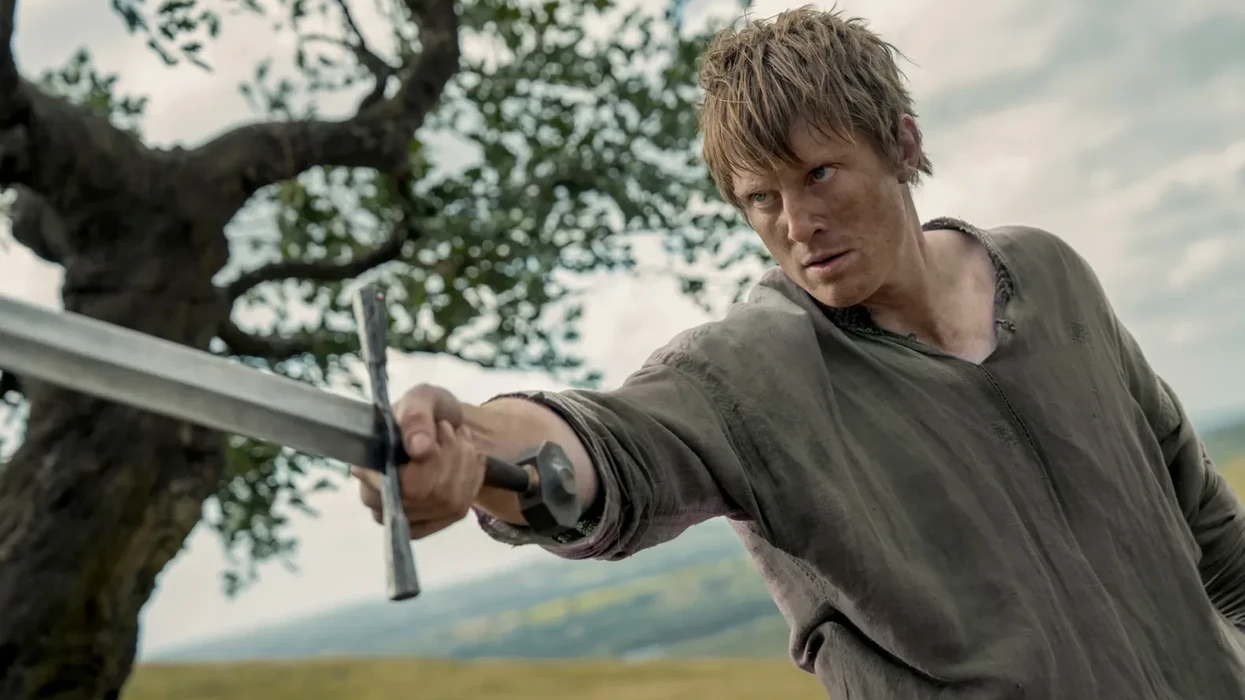
‘A Knight of the Seven Kingdoms’ May Save the ‘Game of Thrones’ Franchise

Peter Claffey in ‘A Knight of Seven Kingdoms’

Steffan Hill/HBO

‘A Knight of the Seven Kingdoms’ May Save the ‘Game of Thrones’ Franchise

If you tuned into HBO on the night of Jan. 18, or logged onto HBO Max soon after, you would have been greeted with the sight of a man digging a grave under a dark, gray sky. A trip of horses neigh uneasily as a storm rains down upon them. After lowering a body into the ground, the hulking figure with the shovel gives a eulogy. He’s a squire who goes by the name of Dunk, and he’s laying his former master to rest. This elderly knight wasn’t always the kindest, or the most sober of mentors. But given that he virtually raised the orphaned Dunk from boyhood, the young man still mourns his death.

The next day, Dunk vows to continue on, in search of adventure. This strapping young lad fancies himself a “Ser,” the title held by the illustrious knights of the realm; the casual namedropping of King’s Landing and Lannisport confirms which particular universe you’re in. He’s heard tales of a tournament in nearby Ashford, where men with boundless bravery and sword skills can make a name for themselves. A recognizable theme — DUN du-du-du-duh Dun, DUH-du-da-du-daaa-DUN — begins playing over the scene. Dunk promises to make his late master proud. He strikes a heroic pose. The theme swells, getting louder… and louder.…

Keep Reading Show less
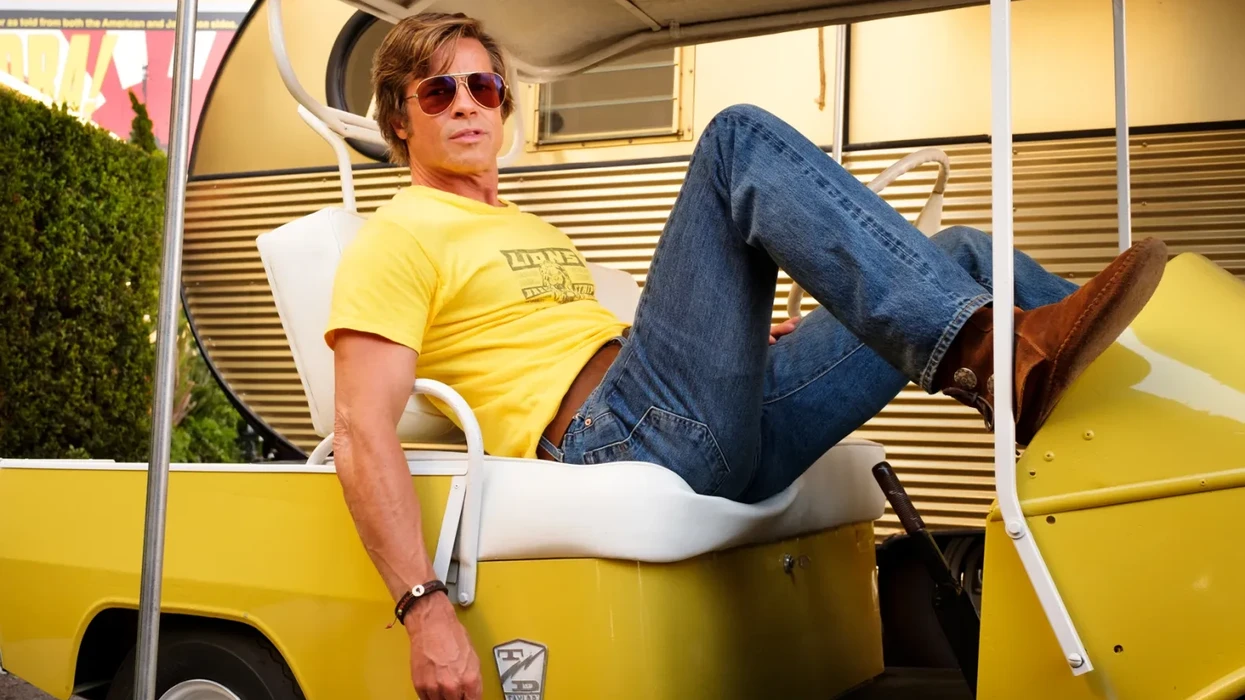
Everything We Know About the ‘Once Upon a Time in Hollywood’ Sequel
Andrew Cooper/Columbia Pictures

Everything We Know About the ‘Once Upon a Time in Hollywood’ Sequel

It’s been seven long years since we’ve seen Cliff Booth, Brad Pitt‘s World War II veteran turned stuntman in Quentin Tarantino‘s Once Upon a Time in Hollywood. Do you miss his groovy trailer, or his pit bull, Brandy? How about the way he repairs a TV antenna on the roof, shirtless while smoking a cigarette? Well, we have good news for you: Booth is getting a film of his own. The Adventures of Cliff Booth, one of our most anticipated movies of the year, is coming to Netflix. Here’s everything we know about the sequel.

Brad Pitt will reprise his role, with David Fincher directing

In April 2025, it was announced that Pitt will return as Booth. And while Tarantino wrote the script, he isn’t returning as director. Instead, David Fincher will be at the helm, who previously worked with Pitt on 1995’s Seven, 1999’s Fight Club, and 2008’s The Curious Case of Benjamin Button.

Keep Reading Show less
Courtney Love Sets the Record Straight

Courtney Love in a scene from the documentary 'Antiheroine.'

Edward Lovelace/Sundance Institute

Courtney Love Sets the Record Straight

Courtney Love knows what you think about her. She’s heard the names you’ve called her as well as the praise you’ve heaped upon her, the spurious accusations and the salacious rumors, the questions about her sanity and well-being. She’s even watched some of the TikTok videos people have made that revolve around her, though she drew the line at one where she was allegedly getting sodomized by Satan. These kinds of things still affect her, Love admits. But she doesn’t have time for that negative shit now. Love has a batch of songs she’s writing, studio time she’s booked, a producer — Butch Walker — who’s there to give her the space and time to get back what Love calls her “sea legs.”

Still, the singer knows the stories and the histories that will follow her to her dying day, the ones that precede her when she walks into a room and linger like an expensive perfume or cigarette smoke when she exits it. Ms. Love would like to set the record straight. More than a few records, to be honest. And filmmakers Edward Lovelace and James Hall have turned on their cameras and handed her a mic so she can do just that.

Keep Reading Show less