
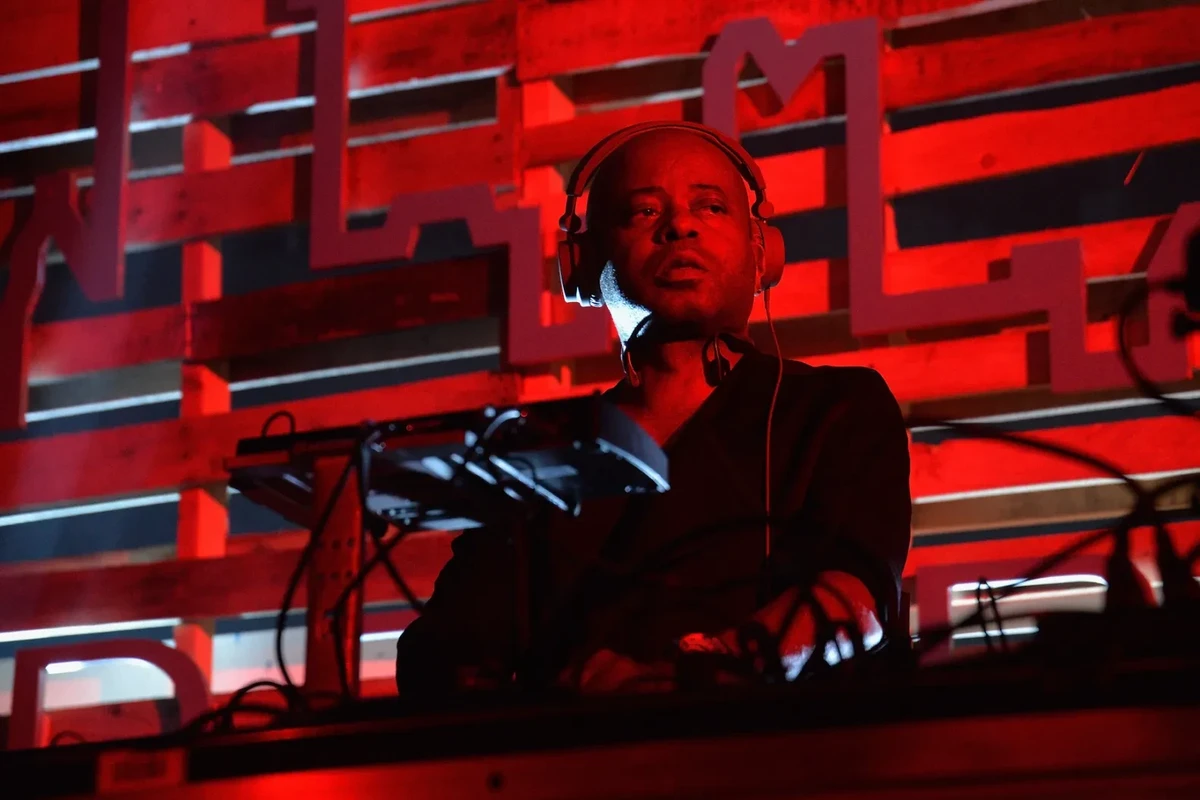

Juan Atkins, the originator of techno music and a founding member of the electronic music group Cybotron, has died at the age of 64.
Atkins’ talent agency Greensmith Artists confirmed the DJ and producer’s death on social media. Resident Advisor reports that Atkins was found unresponsive in his hotel room prior to his performance Saturday in Mexico City. Atkins was declared dead at the hospital soon after.
Born in the Motor City and raised in nearby Belleville, Michigan, Atkins became synonymous with techno music alongside fellow classmates Kevin Saunderson and Derrick May, the “Belleville Three” who are credited as the architects of Detroit Techno, which fused the house music playing in Chicago and the electronic music of bands like Kraftwerk and Yellow Magic Orchestra.
After initially first performing as a DJ, Atkins formed the electronic music group Cybotron with college classmate Rik Davis in 1980. The duo released one album together, the influential 1983 LP Enter, before splitting up in 1985.
Atkins next formed his own record label, Metroplex, as well as began recording under the moniker Model 500. It was under that name that Atkins released his 1985 single “No UFO’s,” a track credited with bringing Detroit techno across the Atlantic when it inspired the U.K. compilation Techno! The New Dance Sound of Detroit.
“Juan Atkins invented techno, full stop — he conceived it and named it — and one of its many aspects that he pioneered was the use of multiple aliases for different types of work,” Rolling Stone wrote in 2025 when “No UFO’s” landed on our list of the 200 Greatest Dance Songs of All Time.
“Lush and insistent, ‘No UFO’s,’ the first Model 500 12-inch, set the template for the Detroit approach. ‘They make these synthesizers and keyboards with functions that allow you to get as close to a human feel as they possibly can,'” Atkins said in 1997. “‘I think this is the beauty of Detroit, we were able to put that emotion into our music.'”
“The term ‘techno’ got exploited. I mean, even now, techno in Germany is different from techno in Spain. Here in Detroit everybody loved the music,” Atkins told Rolling Stone in 2024. “Nobody knew that it was techno music. Especially the Black kids in Detroit. All they knew was that this was a new sound. And whatever it was, whatever the frequency makeup was, it just pushed a button somewhere. When it got to Europe, Europe had to give it some kind of title.”
Atkins continued to record under the Model 500 moniker over the next three decades, as well as the aliases Infiniti (for his minimalist techno work, highlighted on the 1998 album Skynet), Audio Tech, and his own name.
Atkins also released albums with fellow electronic music artist like Moritz von Oswald (as Borderland) and toured with May and Saunderson as The Belleville Three in the 2010s.
“Heartbreaking news today. My brother Juan Atkins has passed away,” Saunderson wrote on social media Sunday. “Juan was the originator of Techno, a true visionary who opened the door for so many of us, myself included. I’ll never forget how he showed me how to finish my first record, Triangle of Love. That meant a lot to me then, and it still does today.”
Saunderson continued, “We shared a journey that changed music forever, and I’ll always be grateful for his friendship, guidance and everything he gave to our scene.”
“A great DJ is a leader. A mediocre DJ is a follower,” Atkins told Rolling Stone in 2024. “That’s what I try in DJ’ing and making music and presenting music. The public attention span is pretty short, and people are always interested in what’s next. Not so much what happened yesterday. Not so much what’s happening right now. But what’s next?”
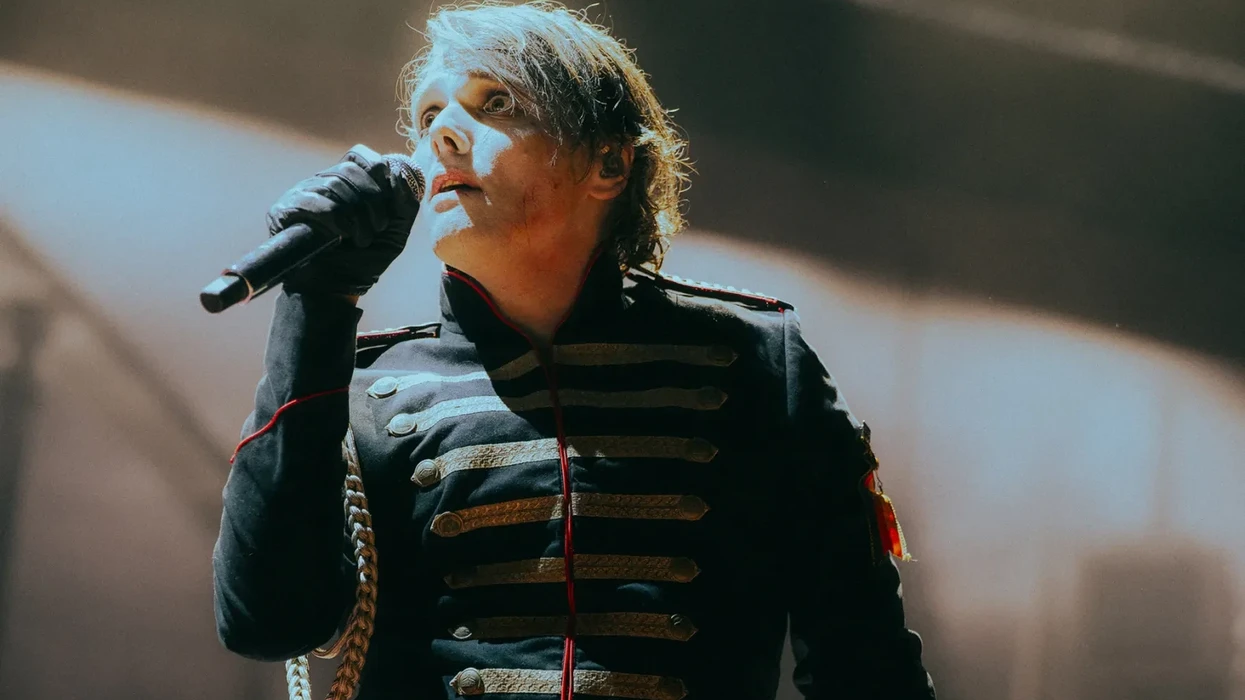


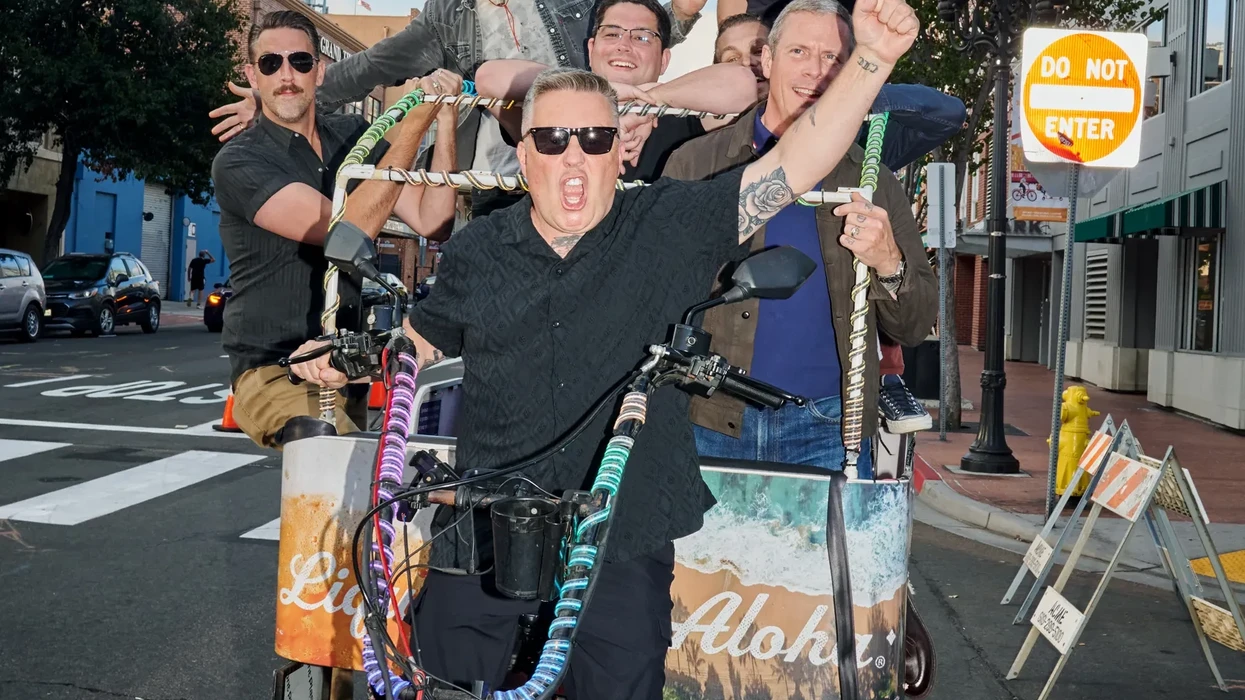
 Ken Casey stuck around after the show in San Diego, California, talking to members of the International Brotherhood of Electrical Workers.John Francis Peters for Rolling Stone
 Some of the challenge-coin haul.
 The band started as a bet. “My band has a show in three weeks,” Casey’s coworker told him in 1996. “I dare you to open for us.”John Francis Peters for Rolling Stone
 Dropkick Murphys (from left): Casey, DaRosa, Webster, Kelly, Rheault, Brennan, and Lynch John Francis Peters for Rolling Stone
 Casey is largely the voice of the band, but the other members back him up. “We’re so lucky he’s the mouthpiece,” says Brennan, left. John Francis Peters for Rolling Stone
 “Only the Irish can take a song about death and destruction, famine, alcoholism, and raise a glass like it’s an anthem,” says Casey. John Francis Peters for Rolling Stone
 “Anytime it feels like things are about to plateau for us, something gives us a little bump,” says guitarist Lynch. “It feels exciting. It feels dangerous. It feels like doing something.” John Francis Peters for Rolling Stone

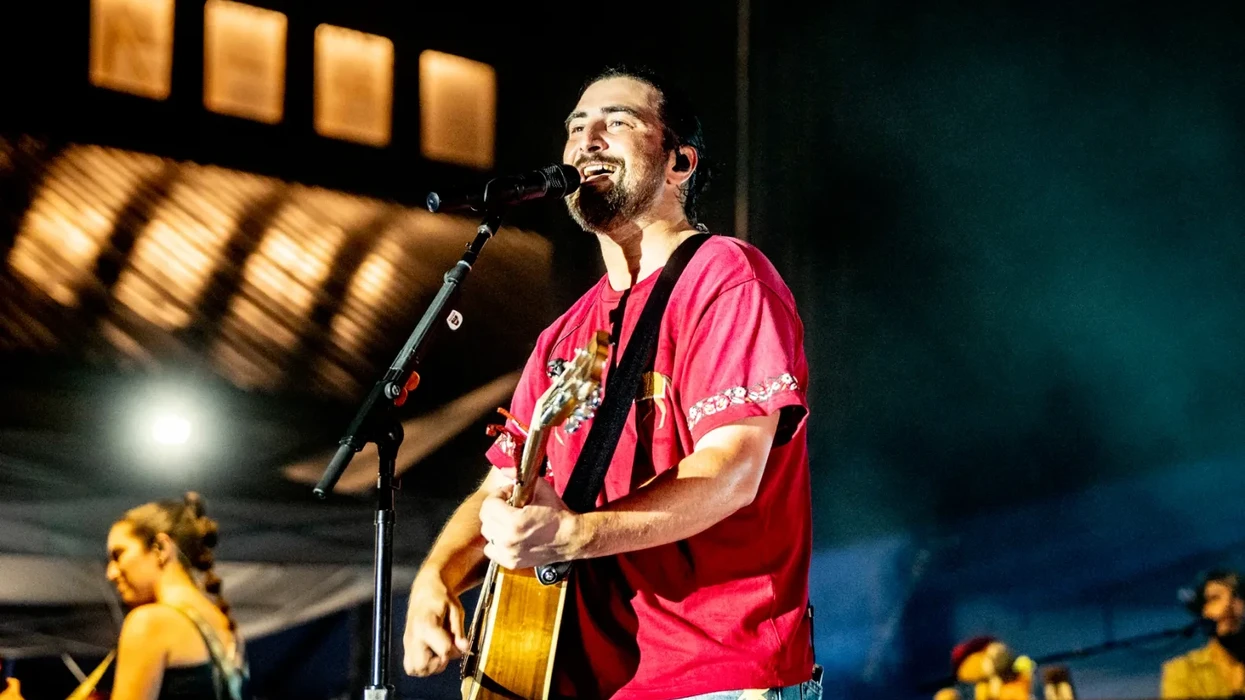

Jay-Z performing at the Stade de France in Saint-Denis in Paris.
Jay-Z Deserves the Super Bowl Halftime Gig
Where’s the love? Jay-Z asked that question 25 years ago, in the chorus of one of many songs in his catalog that still move audiences today. If he performs “Heart of the City” as part of his Super Bowl halftime show next February, those indignant bars are sure to be a highlight: “First the Fat Boys break up, now every day I wake up, somebody got a problem with Hov…” It would be an appropriate choice, too — because then as now, any time Jay-Z notches a new achievement, people find a way to complain.
The jokes and nonsense started almost as soon as the first rumors trickled out that Jay, whose company Roc Nation has executive-produced the Super Bowl halftime show since 2019, might be choosing himself to headline next year’s show. “Jay-Z just Dick Cheney’d himself for the Super Bowl,” Puck‘s Matthew Belloni quipped on X last week, alluding to the time that the late prince of darkness, who’d been asked to run the vice-presidential search committee for George W. Bush’s 2000 campaign, put himself on the ticket. (Super hip and current reference, and not at all apples-and-oranges.) Others pointed to TMZ reports that pop stars like Harry Styles and Justin Bieber had been asked first. “How are they the frontrunners, and he end up in the front?” Cam’Ron, who’s delighted in trolling Jay for many years, wondered aloud on his podcast. “Out of all the people on the roster, they couldn’t pick nobody else?” asked Cam’Ron‘s co-host, Ma$e.
These critiques miss the point, which is that Jay-Z is one of the best choices for a high-profile gig like this. He’s a superstar with a comparable level of name recognition to any other A-lister in music. He has a deep stack of classic songs going back decades. And he’s a highly skillful live performer who knows his way around a stadium stage, as he’s spent this year reminding people on his Jay-Z 30 tour. He tore down Yankee Stadium three nights in a row this summer; just last week, he rocked SoFi Stadium, which happens to be the same place where the 2027 Super Bowl is being held. He held the crowd’s attention with ease at all of those shows, and though there were plenty of glittery guests — that’s a given at a Jay show, and it will surely be true at the Super Bowl, too — he did it mostly through the force of his own magnetic energy. Let’s state the obvious here: Jay-Z is really, really good at rapping. We’re talking about one of the slickest, sharpest talkers in the history of words, someone who made it to the top through a sustained act of myth-making, then kept going. Are we seriously asking whether he can handle a 15-minute televised performance?
And yeah, there’s a touch of self-congratulation in the way he appointed himself. So what? Praising his own gifts is arguably Jay-Z’s greatest talent of all. He made a fine art out of self-applause. He told his story again and again, retracing the steps from Marcy Projects to the corner suite, and he made us believe. It would almost be insulting to the audience if he didn’t give himself the gig at some point.
Pop culture observers in recent years surely remember the backlash to Super Bowl headliners like Kendrick Lamar and Bad Bunny — all of it at least culturally conservative, and much of it frankly just racist. The blowback to Jay’s announcement is mostly coming from other quarters, at least for now (let’s just wait to see what the right-wing swamps make of this one). But it’s disappointing in a different way. Jay-Z has spent his career expounding hip-hop as a mainstream commercial force. He’s not a businessman, he’s a business, man. But he’s also an artist. He’s made huge amounts of money, and gotten himself into the rarefied rooms where he even has the ability to give himself a gig like this, by spinning his experiences into compelling narrative art, one verse at a time. Let’s not lose sight of how impressive his life’s work really is. Jay-Z is not some random C-suite bro, and he’s definitely not Dick Cheney. He’s one of the greatest rappers of all time, by any measure. He’s earned that Super Bowl spot.