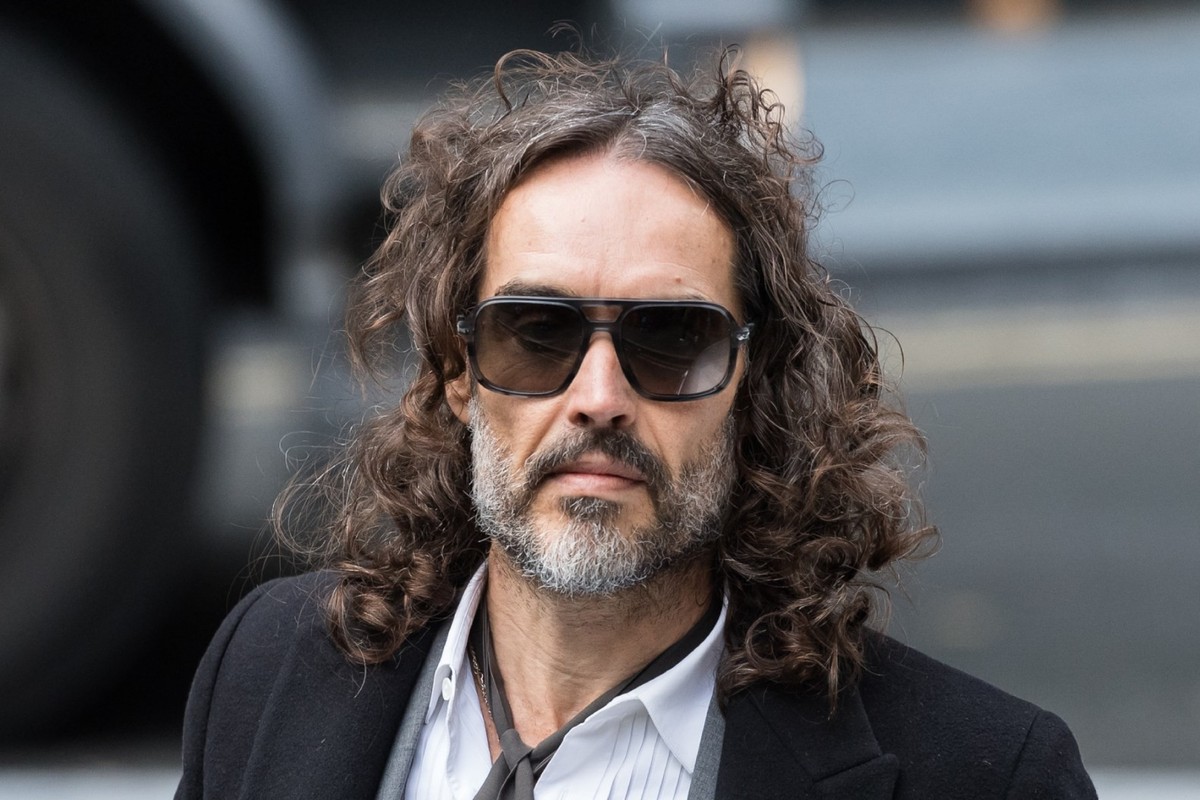

Russell Brand’s defense attorney said the women who came forward with accusations of rape and sexual assault were “thoroughly contaminated” by a 2023 documentary that first aired allegations of misconduct against the comedian and YouTuber.
In his closing arguments Monday, Nov 2, attorney Ian Winter worked to discredit and downplay the six women whose allegations anchor the criminal case against Brand (via Sky News). He suggested their decision to come forward was “not random,” and that they did not act independently of each other.
“They have all come forward because they have been brought at the invitation of that program,” Winter said of Channel 4’s investigative show, Dispatches. ”They are all, we say, thoroughly contaminated by the program. The very existence of them as complainants is fundamentally corrupted by that program and publicity and [that] renders it fundamentally unfair.”
Winter further claimed the reporting on Brand in Dispatches, along with a story in the Sunday Times, “poisoned the wells in the hope and intention that other people come forward and make allegations against him.”
Winter further tried to downplay the allegations by zeroing in on the behavior of Brand’s accusers. He appeared to suggest that the encounters were consensual because none of the women “resisted or screamed or even tried to leave.” He specifically singled out the fifth complainant, who claimed Brand anally raped her in 2009. “She din’t roll over, or kick out, or try to stop him in any way,” Winter said. Later in his speech, Winter characterized this woman as “an obsessed fan.”
Elsewhere, Winter tried to use the confusion some of the women felt after the alleged assaults against them. For instance, Winter claimed the first complainant — who accused Brand of raping her in 1999 — “behaved normally” the day after the alleged assault, and admitted to being unsure if she was raped when she spoke with police. Winter insisted that it was “simply not possible for you to be raped and think it is normal.”
Furthermore, Winter said the women described Brand’s behavior after these alleged assaults as “normal,” which “cannot have occurred if he was guilty.” Winter stated there ’s “no evidence [Brand] is some kind of psychopath who rapes people and thinks it’s normal.” He added, “The fact he behaved normally during and after all of those rapes tells you what you need to know. He believed they were all consenting.”
During his closing argument, Winter did make some concessions about Brand. In discussing the claims of the second complainant, who accused Brand of trying to drag her into a bathroom and assault her in 2001, Winter admitted his client “was behaving like a crazy lunatic.” But, he said, when the woman “put her foot down and said ‘no way,’ [Brand] accepted it.”
Additionally, Winter acknowledged that Brand had had an “immense amount of sex” in his life, but insisted that none of it “was unlawful.” He encouraged the jury to look past any compunctions they might have about this behavior, saying, “Living a highly promiscuous life is entirely lawful however morally distasteful you may find it. Disgusting, distasteful, immoral, who cares? It’s irrelevant to your consideration.” Winter added, “even being manipulative in the pursuit of consensual sex is completely lawful.”
Winter’s closing argument comes after the government rested its case against Brand last Friday. Prosecutor Riel Karmy-Jones defended the women who came forward, stressing their independence and rejecting the notion that the reporting on Brand had “such a subliminal hold on the minds of six perfectly rational women” that it caused them to “invent, reimagine, recharacterize, recast” their encounters with Brand (via The Guardian).
And of Brand himself, Karmy-Jones stated: “Women as a whole were disposable to him, they didn’t matter, he didn’t even need to know their names. When you take the time to properly analyze the evidence, [I believe] you will be satisfied that the six complainants are telling the truth.”
Brand has pleaded not guilty to all seven charges against him. Before closing arguments began, the judge told the jury that he would only accept unanimous verdicts on all the charges once deliberations begin.