
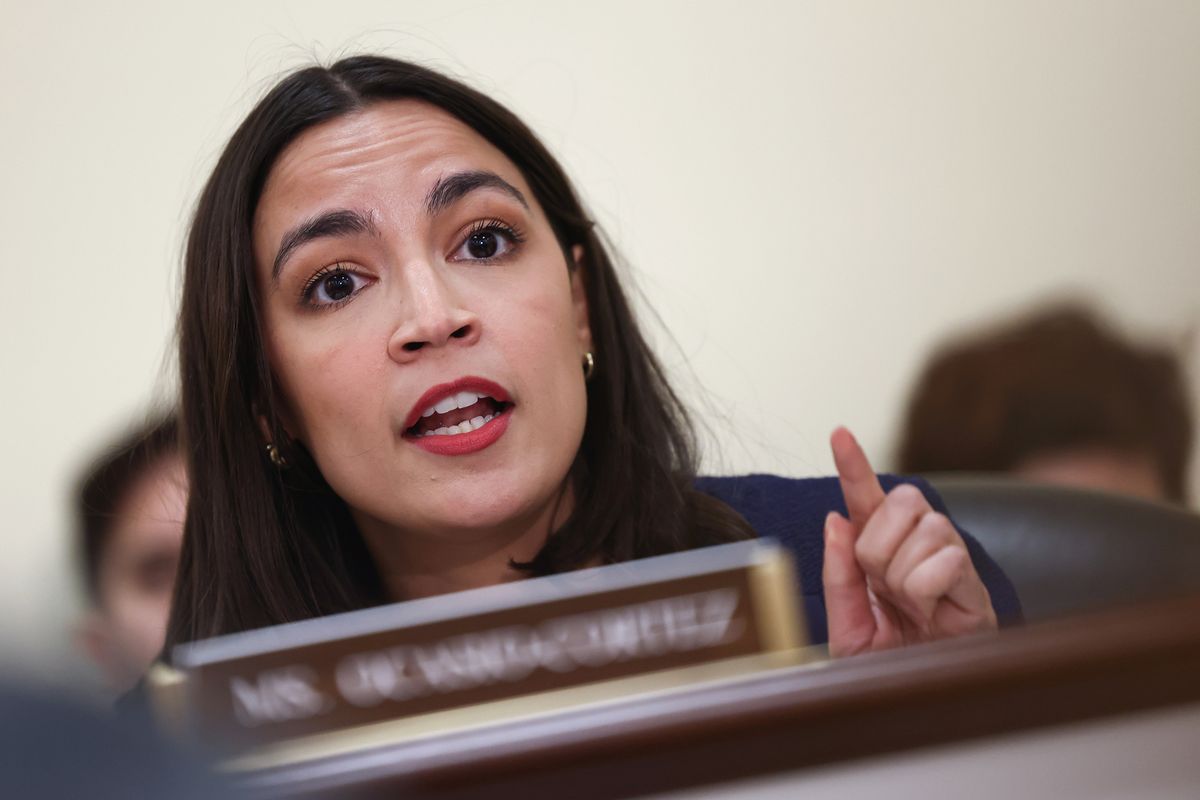

The Senate unanimously passed a bipartisan bill to provide recourse to victims of porn deepfakes — or sexually-explicit, non-consensual images created with artificial intelligence.
The legislation, called the Disrupt Explicit Forged Images and Non-Consensual Edits (DEFIANCE) Act — passed in Congress’ upper chamber on Tuesday. The legislation has been led by Sens. Dick Durbin (D-Ill.) and Lindsey Graham (R-S.C.), as well as Rep. Alexandria Ocasio-Cortez (D-N.Y.) in the House.
The legislation would amend the Violence Against Women Act (VAWA) to allow people to sue those who produce, distribute, or receive the deepfake pornography, if they “knew or recklessly disregarded” the fact that the victim did not consent to those images.
“Current laws don’t apply to deepfakes, leaving women and girls who suffer from this image-based sexual abuse without a legal remedy,” Durbin posted on X after the bill’s passage. “It’s time to give victims their day in court and the tools they need to fight back. I urge my House colleagues to pass this bill expediently.”
Senate Majority Leader Chuck Schumer (D-N.Y.) praised the bill’s passage, commending Durbing for his work. “This isn’t just some fringe issue that happens to only a few people — it’s a widespread problem,” said Schumer. “These types of malicious and hurtful pictures can destroy lives. Nobody is immune, not even celebrities like Taylor Swift or Megan Thee Stallion. It’s a grotesque practice and victims of these deepfakes deserve justice.”
Ocasio-Cortez, the progressive New York lawmaker, first announced she was co-leading the bicameral legislation in an interview with Rolling Stone. She’s had personal experience with this specific type of abuse, and discussed the trauma it can cause.
“There’s a shock to seeing images of yourself that someone could think are real,” she told us in March. “And once you’ve seen it, you’ve seen it. It parallels the same exact intention of physical rape and sexual assault, [which] is about power, domination, and humiliation. Deepfakes are absolutely a way of digitizing violent humiliation against other people.”
In a press release following the bill’s passage in the Senate, Ocasio-Cortez said it “marks an important step in the fight to protect survivors of non-consensual deepfake pornography,” adding: “I’m committed to collaborating with colleagues from both sides of the aisle to shepherd the bill through the House of Representatives to get it to the president’s desk. Together, we can give survivors the justice they deserve.”
When the bill first came up for a unanimous vote in the Senate in June, it was blocked by Rep. Cynthia Lummis (R-Wyo.). The most recent version of the bill now includes a “findings” section, refining the definition of “digital forgery” and updating the available damages to ensure victims receive appropriate compensation, along with some other clarifications.
The “findings” section discusses facts previously reported on by Rolling Stone: Technology like generative AI has made it easier for people to quickly generate digital forgeries without technological experience; victims of this abuse can potentially experience depression, anxiety, and suicidal ideation; the harms of this abuse are not mitigated through labels depicting the image as fake; and victims do not know how to prevent future abuse.
“I had no idea if the person who did it was near me location-wise, [or] if they were going to do anything else to me,” one survivor told Rolling Stone in our April print issue. “I had no idea if anyone who saw that video was going to try to find me. I was very physically vulnerable at that point.”
The Senate introduced the DEFIANCE Act on Jan. 30, about a week after several AI-generated, sexually-explicit deepfakes of Taylor Swift went viral on X. If the bill passes the House, it would become the first federal law to create a civil cause of action for deepfakes. There are currently a few federal statutes that can be used for criminal prosecution of deepfakes for minors, but DEFIANCE would allow both adults and minors to sue.
Past legislative efforts by Rep. Yvette Clarke (D-N.Y.) and Rep. Joe Morelle (D-N.Y.) to rein in deepfakes were not successful. Those bills involved criminal penalties, while DEFIANCE focuses on civil legal recourse.
“It’s so important to me that people understand that this is not just a form of interpersonal violence, it’s not just about the harm that’s done to the victim,” Ocasio-Cortez previously told Rolling Stone. “Because this technology threatens to do it at scale — this is about class subjugation. It’s a subjugation of entire people. And then when you do intersect that with abortion, when you do intersect that with debates over bodily autonomy, when you are able to actively subjugate all women in society on a scale of millions, at once digitally, it’s a direct connection [with] taking their rights away.”


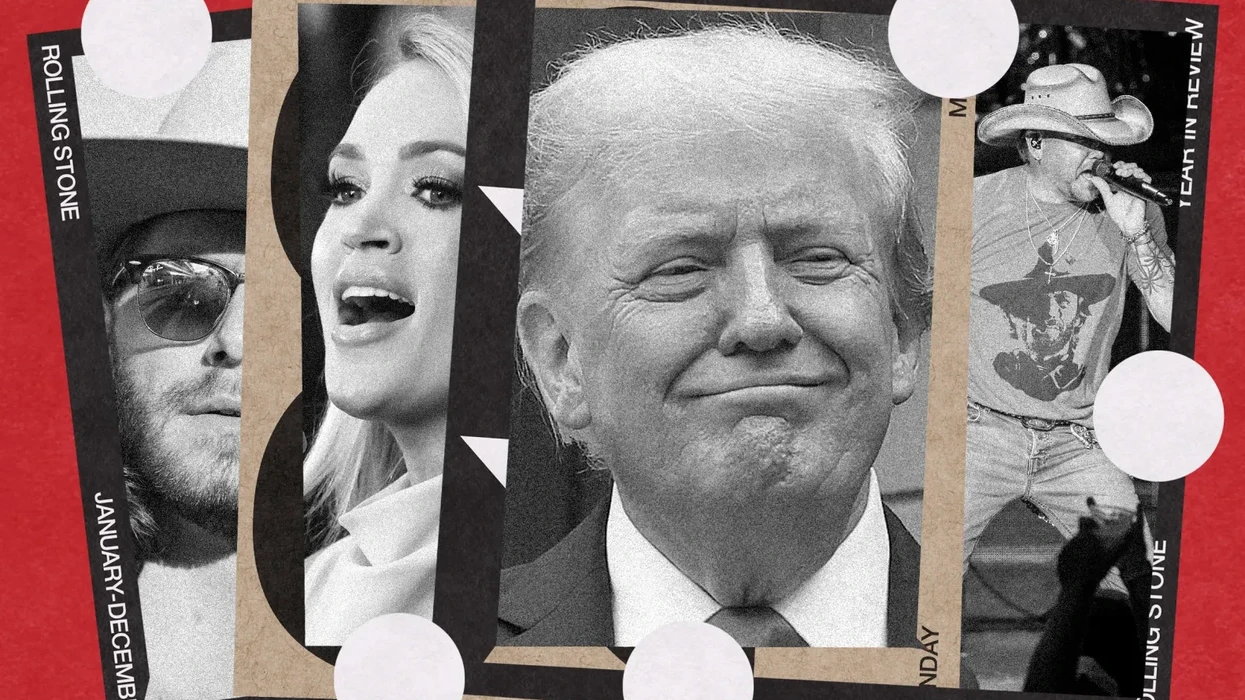


Donald Trump looks to an image of Michigan Democratic Senate candidate Abdul El-Sayed during a campaign rally on Sunday, Oct. 25, 2026, in Port Huron, Mich.
Republicans Are Driving the Most Racist Election Cycle in a Generation
In 2010, a splinter group of far-right Republicans known as the Tea Party summoned a red wave of Republican voters in Barack Obama’s first midterm elections, capitalizing on the remnants of the global financial crisis and troop surges in Afghanistan to help the GOP win 63 seats in Congress. The Tea Party wanted to be known as fiscal conservatives, but their darkest power was abject, open fury that the United States had dared to elect a Black man as president.
But 2010 was not, somehow, the most racist election in recent memory. It’s the 2026 midterms, thanks to the invective spewed by the man in the White House and the worst dregs of his movement around the country. With a war in Iran, skyrocketing gas prices, rampant inflation, and a burgeoning housing crisis, the GOP has no claim to fiscal conservatism this election cycle. Instead, all they have is race.
“There’s five hundred million Arabs in the world,” Health and Human Services Secretary Robert F. Kennedy Jr. said recently. “And yet they don’t produce science. They don’t win the Nobel Prize. They don’t win the Fields Prize. They don’t win the Wolf Prize. They don’t produce literature.”
RFK was making a barely veiled reference to the primary target of Republican racism this cycle: Michigan Senate candidate Abdul El-Sayed. El-Sayed is a muslim, and is sufficiently left wing so as to invite the ire of basically every faction of American politics, including centrist Democrats, centrist Republicans, and the far right, who have taken up the cause of cutting him down with particular zeal. Trump has joined in:
“If Abdul and the Democrats win, they will open the floodgates and invite hordes of jihadis to our shores, creating a nightmare of violence and terror until you cannot even have a Christmas,” Trump said at a rally in Port Huron on Sunday.
Trump has repeatedly issued some of the worst attacks against El-Sayed, repeating the claim that he is a member of the Muslim Brotherhood and calling him a “jihadist.” He has also gleefully mocked El-Sayed’s name at multiple campaign stops, and said over the weekend that he would “be the only senator that has to go through a metal detector before he is allowed to go in the Senate,” the implication, of course, being that he is a potential terrorist.
Vice President JD Vance, not one to be out-done, accused El-Sayed of “anti-white” racism, a familiar line of attack by members of the far right looking to mobilize economically disadvantaged white voters.
“Abdul El-Sayed, who maybe more than any Democrat running in the nation has engaged in the kind of explicitly anti-white racial hatred that has become common in the Democratic Party,” Vance said at a rally in Michigan on Tuesday. “I’d say that person should not be elected.”
The attacks on El-Sayed are shocking and crude, but they didn’t spring out of a vacuum. Racist dogwhistles — and more explicit attacks — have been common fodder for the GOP for decades, from Ronald Reagan’s popularization of the term “welfare queen” — a veiled attack on impoverished Black Americans — to Trump’s support of the Barack Obama birth certificate conspiracies. Some of Trump’s earliest political breakthroughs came on the back of demonizing Latin American immigrants and painting undocumented migrants as a boogeyman threatening the livelihoods of “real” Americans.
All these threads have come together in the second Trump administration, with the persecution of Haitian immigrants who were stripped of their Temporary Protected Status by the Department of Homeland Security, a campaign of terror across the heartland committed by Immigration and Customs Enforcement agents, repeated denigration of African countries in public speeches, and constant racist dogwhistles in official government communications. The Trump administration has raided the home of a sitting congresswoman, Somali-American Representative Ilhan Omar, reportedly as part of an investigation aiming to strip her of her citizenship. Trump has repeatedly suggested Omar should be deported, while making fun of her head coverings.
Trump’s racism has spread throughout the GOP, emboldening the most fringe candidates to take positions so blatantly bigoted that some squeamish members of their party are cringing. In Texas, Railroad Commissioner candidate Bo French recently doubled down on a racist post he made remarking on the number of Indian-American students at a recent University of Texas football game. Republican megadonor Elon Musk, a white South African born and raised under apartheid, has spent entire months this year posting incessantly about race, repeatedly returning to racist tropes to attack Democratic candidates as he pours money into attack ads in several states.
This kind of animus is the sign of a desperate party — one whose own consultants are already admitting might be “fucked.” The idea they’re selling to American voters is simple: Hate your neighbor, based not on what they say or do, but because of who they are. The problem is, most of their enemies are just as American as their marks, and no amount of rhetoric can cover up the fact that they’re here to stay.