
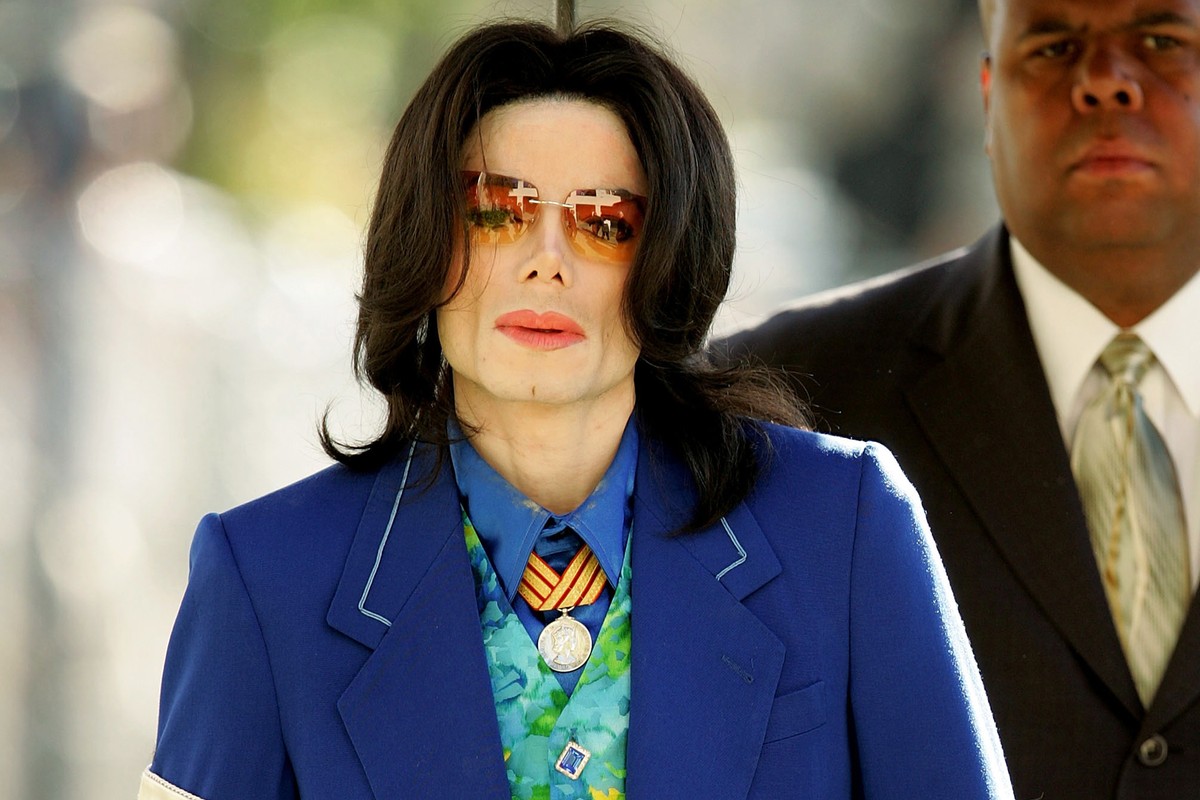

A judge sided with Michael Jackson’s estate Thursday and blocked an attempt by accusers Wade Robson and James Safechuck to obtain “the entirety of the criminal file” involving child molestation allegations leveled against the singer in two California counties since the early Nineties. Photographs of Jackson’s nude body and genitalia taken by Santa Barbara County sheriff deputies in connection with a 1993 criminal investigation were part of the rejected request.
“These requests for evidence relate to basic fairness, so we can all have the same evidence,” John Carpenter, the lawyer representing Robson and Safechuck, argued in a Beverly Hills courtroom shortly before the judge shut him down. “It can’t be disputed that this evidence is relevant. … We need these subpoenas not only to get the evidence but to establish foundation [for other alleged evidence].” In a related filing, Carpenter said the records might help identify new witnesses for his clients’ case.
Los Angeles County Superior Court Judge Michael E. Whitaker said Thursday that it wasn’t “lost” on him why Robson and Safechuck were seeking “this body of evidence” leading up to trial. “It goes without saying why you want this. But you’ve got procedural problems,” the judge said. After hearing from both sides, Judge Whitaker blocked the records requests for two reasons. First, he cited a 2018 ruling that quashed similar subpoenas in Robson’s case before it was consolidated with Safechuck’s earlier this year. Second, he said Robson and Safechuck failed to send the requisite warning notices to related parties informing them that their private, possibly highly sensitive personal information might be contained in the documents sought.
Robson, 41, and Safechuck, 46, allege in their combined case that Jackson’s business entities, now controlled by his estate, should be held liable for their alleged abuse by the late singer when they were prepubescent minors. Robson, a choreographer and director, first sued the estate in May 2013 with allegations his abuse started in 1990 and lasted approximately seven years. Safechuck, a writer, actor, and director, first sued in May 2014 with claims his purported abuse occurred between 1988 and 1992.
After their cases were consolidated in February, Robson and Safechuck sent their jointly served subpoenas to police and prosecutors in Los Angeles County and Santa Barbara County in March. The subpoenas requested everything in Jackson’s investigation files starting with the 1993 probe of allegations the singer sexually abused a 13-year-old boy at Neverland Ranch. (No criminal charges were filed over the 1993 allegation. Jackson reached a private settlement with the boy’s family.)
The March subpoenas were detailed, seeking evidence collected during searches of both Neverland Ranch and Jackson’s Hayvenhurst home in Los Angeles as well as the photographs of Jackson’s nude body and genitalia taken by the Santa Barbara County Sheriff’s Office (SBCSO) during a search warrant served on Dec. 20, 1993. Carpenter argued Thursday that Jackson’s estate already has all the files, so his clients deserve them too. One of the estate’s defense lawyers in the current case is Tom Mesereau, the lawyer who won Jackson’s 2005 acquittal on criminal molestation charges involving another boy in Santa Barbara County.
In their motion to quash the subpoenas granted Thursday, lawyers for Jackson’s estate argued that Robson’s prior attempt to serve such subpoenas on the Los Angeles County Police Department (LAPD), the Los Angeles County District Attorney’s Office (LACDA) and the Santa Barbara County District Attorney’s Office (SBCDA) was blocked by a different judge in a ruling on July 5, 2018. For his part, Carpenter questioned the value of that ruling since it came after Robson’s case was dismissed on a summary judgment ruling in December 2017. (Robson, like Safechuck, appealed his case dismissal, and both cases were revived in an appellate ruling last summer that sent the lawsuits back to Los Angeles County Superior Court for trial.)
On Thursday, Carpenter tried to argue that even though a judge shot down Robson’s subpoenas in 2018, Safechuck had never issued any subpoenas to the authorities in the two counties before this year. The judge said it didn’t matter since the cases had been consolidated. The judge added that the subpoenas issued in March were defective because they lacked the necessary third-party notice.
Speaking to Rolling Stone on Thursday night, Carpenter said he planned to try again.
“This is not a permanent ruling, in my opinion. I have to fashion a different subpoena on behalf of Mr. Safechuck and somehow give notice to the known [alleged] victims of Michael Jackson and the ones that I don’t know about, probably by way of publication,” Carpenter said. He agreed that any alleged victims and witnesses previously involved in the investigations deserved notification. “They have the right to come forward and make sure that their privacy and anonymity are protected in every way possible. I’m definitely in favor of that,” he said.
Lawyers for Jackson’s estate did not respond to an email seeking comment.
Judge Whitaker, meanwhile, ordered the parties back to court in October to discuss setting a trial date. He said considering the complexity of the case, he believes any trial would involve more than 100 hours of witness testimony, qualifying it for a special assignment to a different courtroom. He said if that’s the case, the parties likely would have to wait until at least the spring 2025 to face a jury. A lawyer for Jackson’s companies said last February that she didn’t believe the case would be ready for jurors until after December 2026. She said the trial likely would last more than 20 days with dozens of witnesses.
The case is a novel one. The August 2023 appellate ruling that revived the previously dismissed complaints from Robson and Safechuck found that companies can owe their own separate duty to protect victims even if they’re “solely owned” by an alleged perpetrator of abuse.
Jackson’s estate has denied any liability in the now consolidated lawsuit. In a 2019 interview with Rolling Stone, Jackson’s family members claimed Robson and Safechuck had made false claims for financial gain. “It’s about the money,” Marlon Jackson said at the time.
Robson and Safechuck both appeared in HBO’s two-part documentary, Leaving Neverland, where they detailed how Jackson, who died in 2009, allegedly groomed and sexually abused them for years while they were boys.
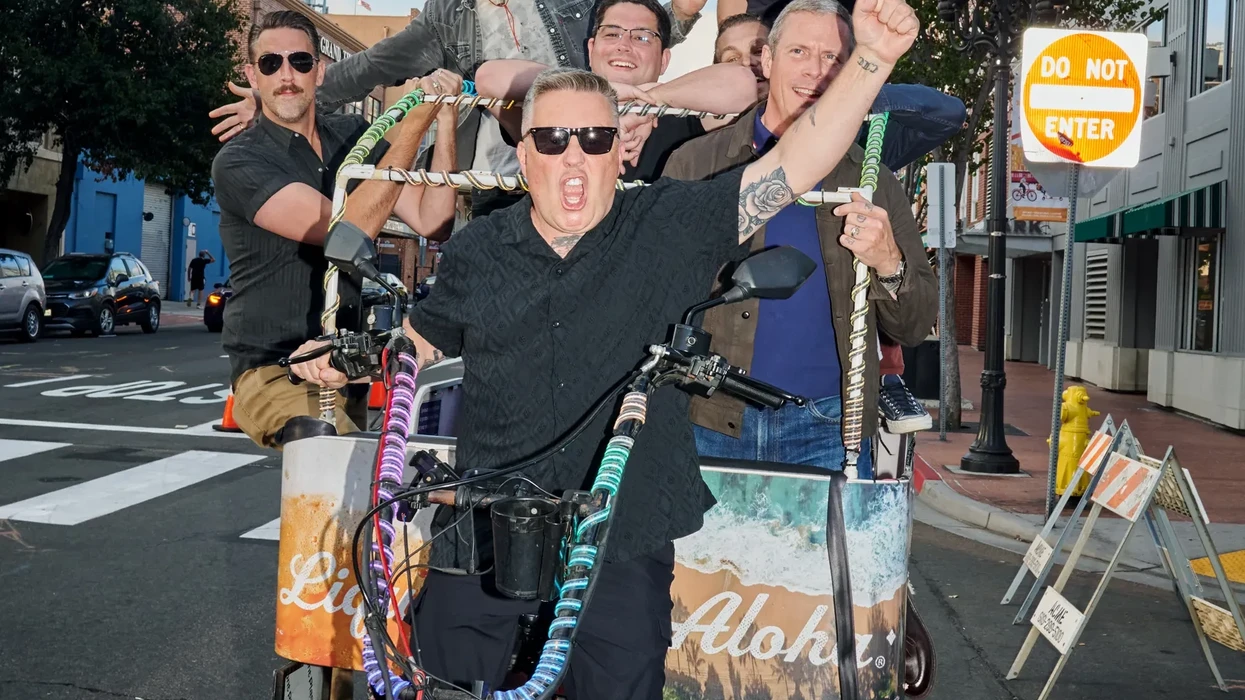
 Ken Casey stuck around after the show in San Diego, California, talking to members of the International Brotherhood of Electrical Workers.John Francis Peters for Rolling Stone
 Some of the challenge-coin haul.
 The band started as a bet. “My band has a show in three weeks,” Casey’s coworker told him in 1996. “I dare you to open for us.”John Francis Peters for Rolling Stone
 Dropkick Murphys (from left): Casey, DaRosa, Webster, Kelly, Rheault, Brennan, and Lynch John Francis Peters for Rolling Stone
 Casey is largely the voice of the band, but the other members back him up. “We’re so lucky he’s the mouthpiece,” says Brennan, left. John Francis Peters for Rolling Stone
 “Only the Irish can take a song about death and destruction, famine, alcoholism, and raise a glass like it’s an anthem,” says Casey. John Francis Peters for Rolling Stone
 “Anytime it feels like things are about to plateau for us, something gives us a little bump,” says guitarist Lynch. “It feels exciting. It feels dangerous. It feels like doing something.” John Francis Peters for Rolling Stone


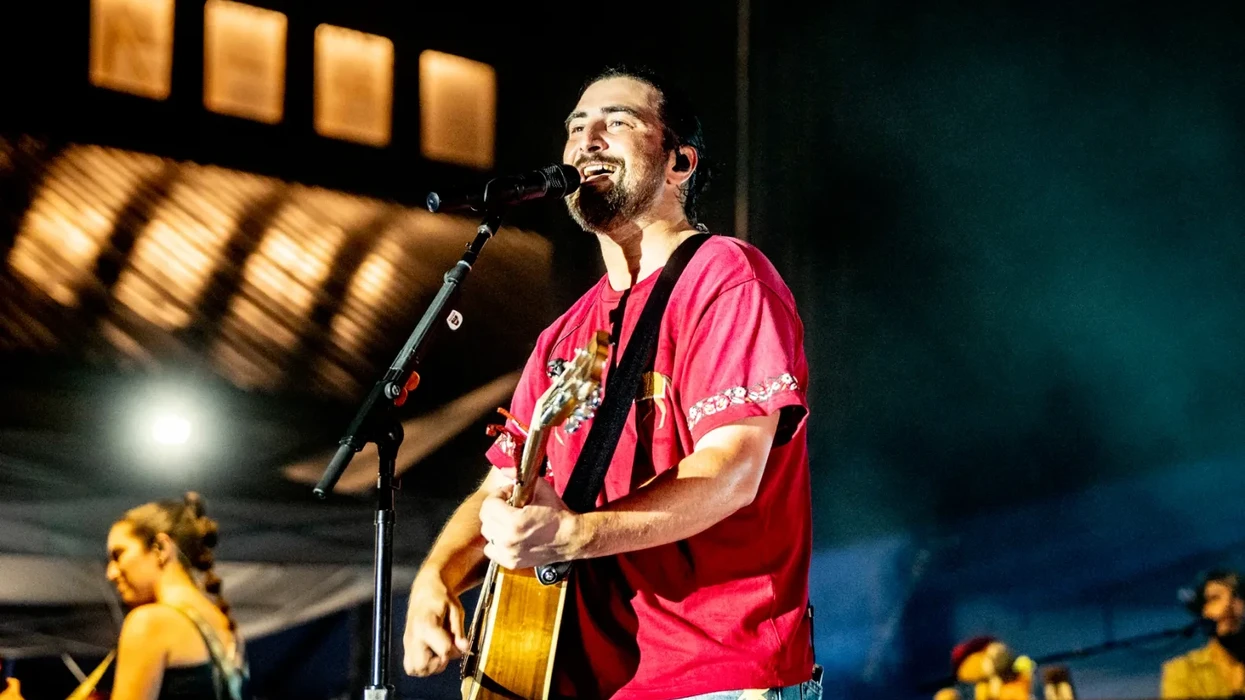

Jay-Z performing at the Stade de France in Saint-Denis in Paris.
Jay-Z Deserves the Super Bowl Halftime Gig
Where’s the love? Jay-Z asked that question 25 years ago, in the chorus of one of many songs in his catalog that still move audiences today. If he performs “Heart of the City” as part of his Super Bowl halftime show next February, those indignant bars are sure to be a highlight: “First the Fat Boys break up, now every day I wake up, somebody got a problem with Hov…” It would be an appropriate choice, too — because then as now, any time Jay-Z notches a new achievement, people find a way to complain.
The jokes and nonsense started almost as soon as the first rumors trickled out that Jay, whose company Roc Nation has executive-produced the Super Bowl halftime show since 2019, might be choosing himself to headline next year’s show. “Jay-Z just Dick Cheney’d himself for the Super Bowl,” Puck‘s Matthew Belloni quipped on X last week, alluding to the time that the late prince of darkness, who’d been asked to run the vice-presidential search committee for George W. Bush’s 2000 campaign, put himself on the ticket. (Super hip and current reference, and not at all apples-and-oranges.) Others pointed to TMZ reports that pop stars like Harry Styles and Justin Bieber had been asked first. “How are they the frontrunners, and he end up in the front?” Cam’Ron, who’s delighted in trolling Jay for many years, wondered aloud on his podcast. “Out of all the people on the roster, they couldn’t pick nobody else?” asked Cam’Ron‘s co-host, Ma$e.
These critiques miss the point, which is that Jay-Z is one of the best choices for a high-profile gig like this. He’s a superstar with a comparable level of name recognition to any other A-lister in music. He has a deep stack of classic songs going back decades. And he’s a highly skillful live performer who knows his way around a stadium stage, as he’s spent this year reminding people on his Jay-Z 30 tour. He tore down Yankee Stadium three nights in a row this summer; just last week, he rocked SoFi Stadium, which happens to be the same place where the 2027 Super Bowl is being held. He held the crowd’s attention with ease at all of those shows, and though there were plenty of glittery guests — that’s a given at a Jay show, and it will surely be true at the Super Bowl, too — he did it mostly through the force of his own magnetic energy. Let’s state the obvious here: Jay-Z is really, really good at rapping. We’re talking about one of the slickest, sharpest talkers in the history of words, someone who made it to the top through a sustained act of myth-making, then kept going. Are we seriously asking whether he can handle a 15-minute televised performance?
And yeah, there’s a touch of self-congratulation in the way he appointed himself. So what? Praising his own gifts is arguably Jay-Z’s greatest talent of all. He made a fine art out of self-applause. He told his story again and again, retracing the steps from Marcy Projects to the corner suite, and he made us believe. It would almost be insulting to the audience if he didn’t give himself the gig at some point.
Pop culture observers in recent years surely remember the backlash to Super Bowl headliners like Kendrick Lamar and Bad Bunny — all of it at least culturally conservative, and much of it frankly just racist. The blowback to Jay’s announcement is mostly coming from other quarters, at least for now (let’s just wait to see what the right-wing swamps make of this one). But it’s disappointing in a different way. Jay-Z has spent his career expounding hip-hop as a mainstream commercial force. He’s not a businessman, he’s a business, man. But he’s also an artist. He’s made huge amounts of money, and gotten himself into the rarefied rooms where he even has the ability to give himself a gig like this, by spinning his experiences into compelling narrative art, one verse at a time. Let’s not lose sight of how impressive his life’s work really is. Jay-Z is not some random C-suite bro, and he’s definitely not Dick Cheney. He’s one of the greatest rappers of all time, by any measure. He’s earned that Super Bowl spot.