


A few songs into Kings of Leon’s new album, frontman Caleb Followill asks something uncomfortable: “Are we still having fun?” The answer: yes, but maybe in a way you wouldn’t expect. Over two decades after the Tennessee rockers released their excellent debut Youth & Young Manhood, Kings of Leons’ ninth studio LP serves as a fresh start for the band. It’s the sound of veteran musicians searching for an answer as they underpin their characteristic gritty Southern arena-size garage-rock with surprisingly sleek-and-polished grooves. Following the band’s introspective 2021 LP When You See Yourself, the band has enlisted the help of Grammy-winning producer Kid Harpoon, who’s perhaps best known for his recent work on Harry Styles’ Harry’s House and Maggie Rogers’ acclaimed 2022 sophomore release Surrender.
Recorded in Nashville, Can We Please Have Fun eases into the good times with some unexpected sonic twists. Album opener “Ballerina Radio” twirls in glistening synths as Followill croons “I’m a masochist, I know,” pulsing with Britpop-ish energy and the sound of windchimes in the distance. The band dances straight into Joy Division territory on “Rainbow Ball,” with a propulsive bassline undulating behind Followill’s casual phrasing: “Get some/Tough love/Sweetheart, it’s just bad luck.”
“Nowhere to Run” breaks into a carefree, grooving bop, with a funk bass line dancing beneath poignant lyrics like “I state my case and hope for grace/Take my place/There’s a war outside/We should all get high and give a kiss goodbye.” The next track is the rollicking lead single “Mustang,” a fun, fast, stone-cold Kings of Leon classic complete with a shoutout to the band’s old stomping grounds in Nashville. The Kings also find time to let loose and kick the party into high gear on “Hesitation Generation,” a rowdy rock & roll stomper that takes you back to their early days with crashing guitars and drums over Followill’s raucous howl. But those standouts are among the few hard-rocking moments you’ll find here.
Drummer Nathan Followill recently said the band’s new project was more “musically vulnerable” than what we’ve come to expect from the Kings. They prove that point by taking things down to a smooth simmer, weaving between mid-tempo beats and the slinky guitars on “Actual Daydream,” and delivering a brooding ballad with “Split Screen.” The highlight “Don’t Stop the Bleeding” shows another decidedly subdued side of the band that they don’t always get to embrace; they forgo stadium-sized guitars for an unexpectedly minimalist track, with Followill’s laidback vocal floating over sexy, slick production and restrained percussion. As it turns out, sometimes having fun doesn’t always have to sound like a rager.
The mellow country-tinged slow-dance “Ease Me On” exudes a peaceful, easy feeling, with Followill singing “Ease me on/When you’re ready, I’ll be ready, steady, go,” as the band shuffles on with tranquil acoustic strumming. “Always on my mind,” Followill repeats while sun-drenched guitars glow behind his tender vocal. The muddy garage opening of the final track “Seen” eventually builds to an overwhelming choir of the Kings’ harmonies before the song dissolves into a soothing climax. Can We Please Have Fun shows that these family rockstars aren’t afraid of change, and they’re sliding smoothly into whatever their next phase will be.

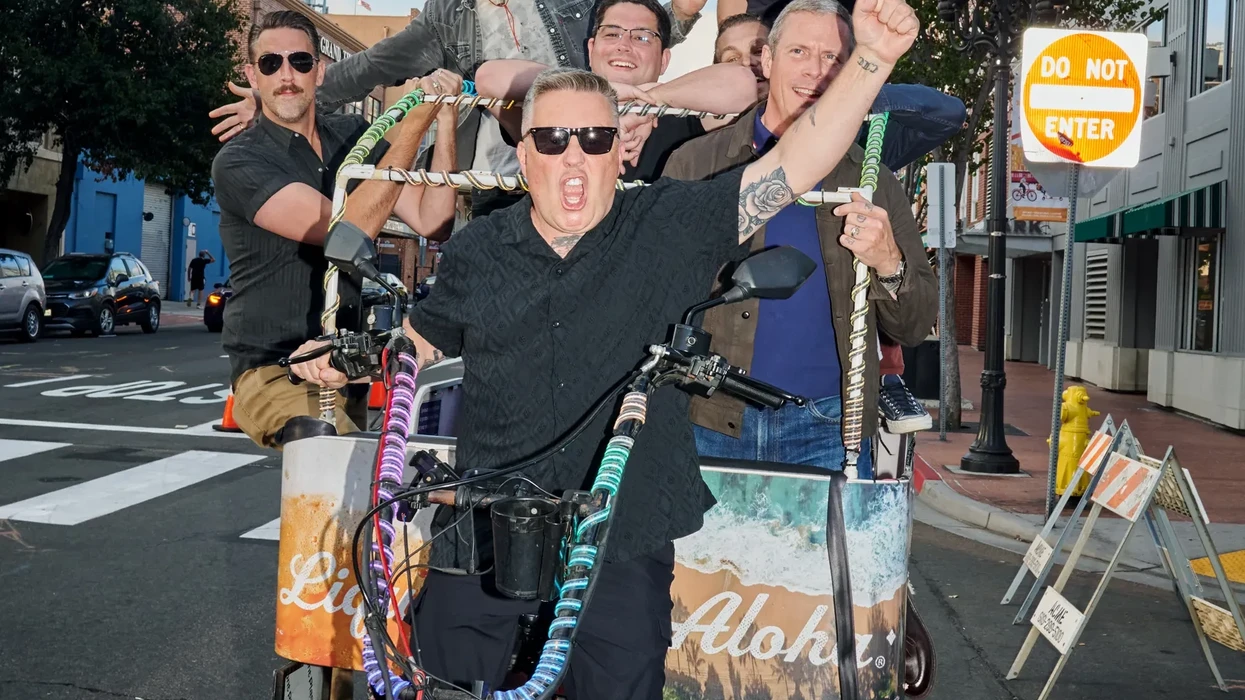
 Ken Casey stuck around after the show in San Diego, California, talking to members of the International Brotherhood of Electrical Workers.John Francis Peters for Rolling Stone
 Some of the challenge-coin haul.
 The band started as a bet. “My band has a show in three weeks,” Casey’s coworker told him in 1996. “I dare you to open for us.”John Francis Peters for Rolling Stone
 Dropkick Murphys (from left): Casey, DaRosa, Webster, Kelly, Rheault, Brennan, and Lynch John Francis Peters for Rolling Stone
 Casey is largely the voice of the band, but the other members back him up. “We’re so lucky he’s the mouthpiece,” says Brennan, left. John Francis Peters for Rolling Stone
 “Only the Irish can take a song about death and destruction, famine, alcoholism, and raise a glass like it’s an anthem,” says Casey. John Francis Peters for Rolling Stone
 “Anytime it feels like things are about to plateau for us, something gives us a little bump,” says guitarist Lynch. “It feels exciting. It feels dangerous. It feels like doing something.” John Francis Peters for Rolling Stone

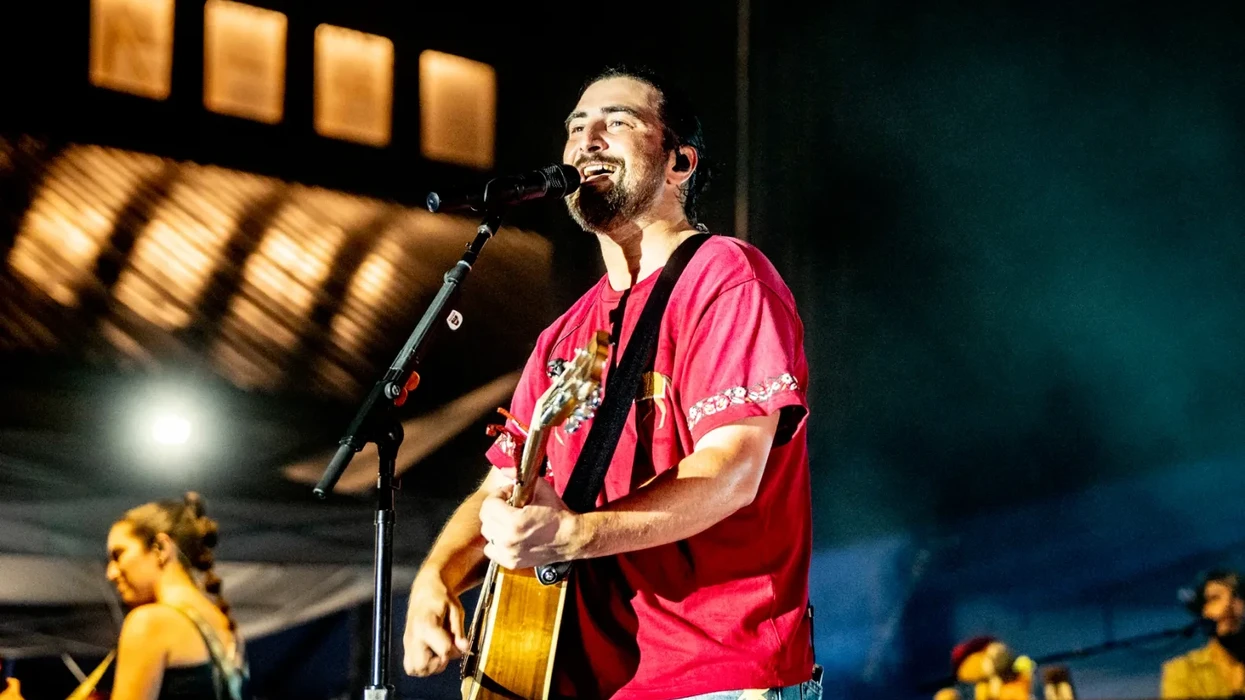
Jay-Z performing at the Stade de France in Saint-Denis in Paris.
Jay-Z Deserves the Super Bowl Halftime Gig
Where’s the love? Jay-Z asked that question 25 years ago, in the chorus of one of many songs in his catalog that still move audiences today. If he performs “Heart of the City” as part of his Super Bowl halftime show next February, those indignant bars are sure to be a highlight: “First the Fat Boys break up, now every day I wake up, somebody got a problem with Hov…” It would be an appropriate choice, too — because then as now, any time Jay-Z notches a new achievement, people find a way to complain.
The jokes and nonsense started almost as soon as the first rumors trickled out that Jay, whose company Roc Nation has executive-produced the Super Bowl halftime show since 2019, might be choosing himself to headline next year’s show. “Jay-Z just Dick Cheney’d himself for the Super Bowl,” Puck‘s Matthew Belloni quipped on X last week, alluding to the time that the late prince of darkness, who’d been asked to run the vice-presidential search committee for George W. Bush’s 2000 campaign, put himself on the ticket. (Super hip and current reference, and not at all apples-and-oranges.) Others pointed to TMZ reports that pop stars like Harry Styles and Justin Bieber had been asked first. “How are they the frontrunners, and he end up in the front?” Cam’Ron, who’s delighted in trolling Jay for many years, wondered aloud on his podcast. “Out of all the people on the roster, they couldn’t pick nobody else?” asked Cam’Ron‘s co-host, Ma$e.
These critiques miss the point, which is that Jay-Z is one of the best choices for a high-profile gig like this. He’s a superstar with a comparable level of name recognition to any other A-lister in music. He has a deep stack of classic songs going back decades. And he’s a highly skillful live performer who knows his way around a stadium stage, as he’s spent this year reminding people on his Jay-Z 30 tour. He tore down Yankee Stadium three nights in a row this summer; just last week, he rocked SoFi Stadium, which happens to be the same place where the 2027 Super Bowl is being held. He held the crowd’s attention with ease at all of those shows, and though there were plenty of glittery guests — that’s a given at a Jay show, and it will surely be true at the Super Bowl, too — he did it mostly through the force of his own magnetic energy. Let’s state the obvious here: Jay-Z is really, really good at rapping. We’re talking about one of the slickest, sharpest talkers in the history of words, someone who made it to the top through a sustained act of myth-making, then kept going. Are we seriously asking whether he can handle a 15-minute televised performance?
And yeah, there’s a touch of self-congratulation in the way he appointed himself. So what? Praising his own gifts is arguably Jay-Z’s greatest talent of all. He made a fine art out of self-applause. He told his story again and again, retracing the steps from Marcy Projects to the corner suite, and he made us believe. It would almost be insulting to the audience if he didn’t give himself the gig at some point.
Pop culture observers in recent years surely remember the backlash to Super Bowl headliners like Kendrick Lamar and Bad Bunny — all of it at least culturally conservative, and much of it frankly just racist. The blowback to Jay’s announcement is mostly coming from other quarters, at least for now (let’s just wait to see what the right-wing swamps make of this one). But it’s disappointing in a different way. Jay-Z has spent his career expounding hip-hop as a mainstream commercial force. He’s not a businessman, he’s a business, man. But he’s also an artist. He’s made huge amounts of money, and gotten himself into the rarefied rooms where he even has the ability to give himself a gig like this, by spinning his experiences into compelling narrative art, one verse at a time. Let’s not lose sight of how impressive his life’s work really is. Jay-Z is not some random C-suite bro, and he’s definitely not Dick Cheney. He’s one of the greatest rappers of all time, by any measure. He’s earned that Super Bowl spot.