
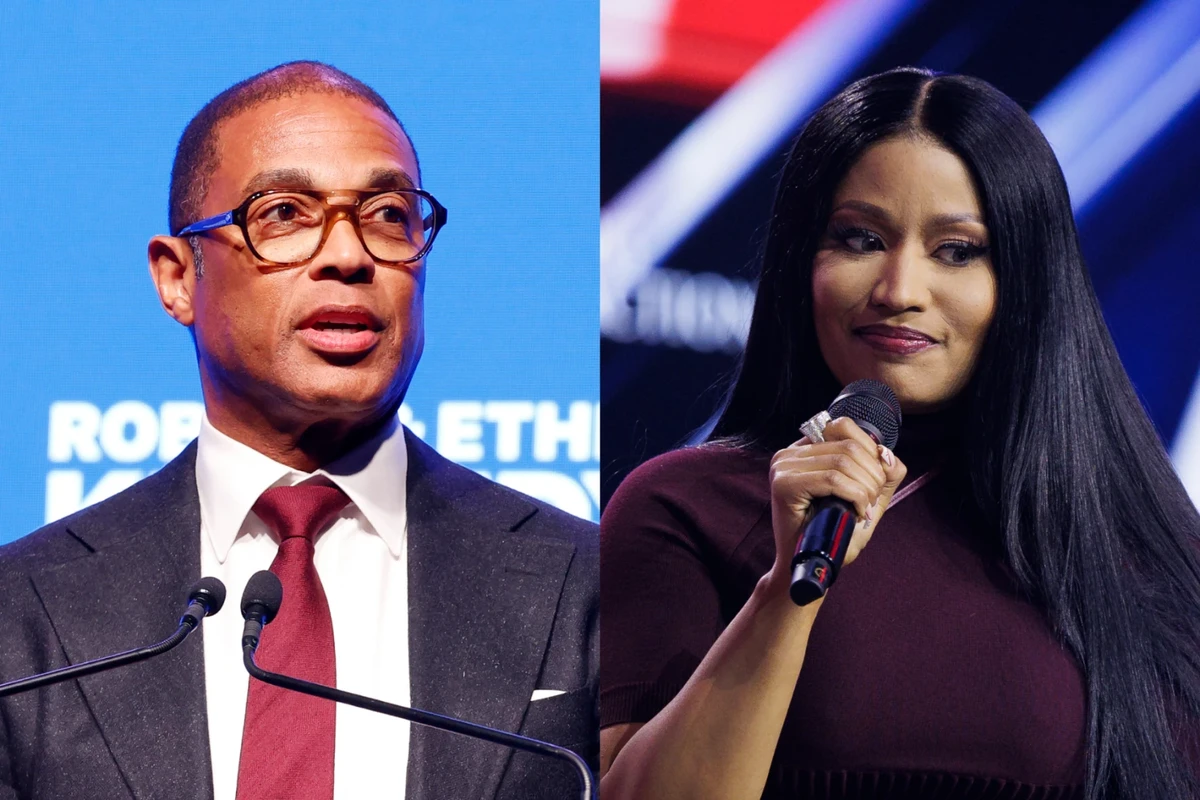
Former CNN anchor Don Lemon had time to address Nicki Minaj‘s homophobic social media post about his coverage of the anti-ICE protests in Minnesota.
“People have been asking about responding to Nicki Minaj’s unhinged, homophobic tweet about me,” he began in his Instagram video posted on Monday (Jan. 19). “I usually don’t respond to this stuff, but let me just say this. Nicki Minaj, stop talking about sh-t which you know nothing about. This is out of your depth, by the way. And you are a homophobic bigot…She doesn’t understand politics. She doesn’t understand journalism. And I’m not surprised that she is weighing in on something that is beyond her capacity.”
After catching wind of Lemon’s on-the-ground coverage of the protest that disrupted a church service in St. Paul, Minnesota, Minaj took to her X account earlier in the day to share her thoughts, posting a photo of Chucky. “DON ‘COCK SUCKIN’ LEMON IS DISGUSTING. HOW DARE YOU?” she wrote. “I WANT THAT THUG IN JAIL!!!!! HE WOULD NEVER DO THAT TO ANY OTHER RELIGION. LOCK HIM UP!!!!!”
“I think she put the Chucky doll in [her post]. A better symbol that should have been represented in that picture is a ‘Pick Me’ doll because Nicki Minaj is a pick me,” Lemon added in his clapback. “She will do anything that is expedient for her politically. And again, she’s ignorant. She doesn’t know what she’s talking about. She’s always weighing in on things that she doesn’t know about. Nicki Minaj should just sit the f-ck down.”
As media coverage of Minaj and Lemon’s exchange hit the web, one Barb/X user wrote, “Now that entire media leg posting that ‘slur’ lie lol [laughing emoji] Mannnn Nicki can tear these ppl up ,these be full blown smear campaigns ,these media outlets are careless and tacky .”
Minaj replied to the post with a picture of Chucky flicking the middle finger. “LOL!!! And I purposely wrote it that way b/c I knew that would be the only way to get the cock suckas to post about it,” she explained. “They would’ve all collectively ignored the despicable behavior displayed by Lemon head. I’m glad they’re angry. They’re about to get angrier.”
The Department of Justice’s Assistant Attorney General for Civil Rights, Harmeet Dhillon, told podcaster Benny Johnson that the DOJ is considering charging Lemon under the Ku Klux Klan Act for his conduct and that Lemon is officially “on notice.” She also noted that the federal executive agency is investigating the demonstration as a potential violation of the Freedom of Access to Clinic Entrances Act or the FACE Act, which prohibits “injuring, intimidating, or interfering with, or attempting to injure, intimidate, or interfere” with the public’s access to religious places of worship and reproductive health services.
“Don Lemon himself has come out and said he knew exactly what was going to happen inside that facility,” Dhillon said on The Benny Show. “He went into the facility, and then he began — quote, unquote — ‘committing journalism,’ as if that’s sort of a shield from being a part, an embedded part, of a criminal conspiracy. It isn’t.”
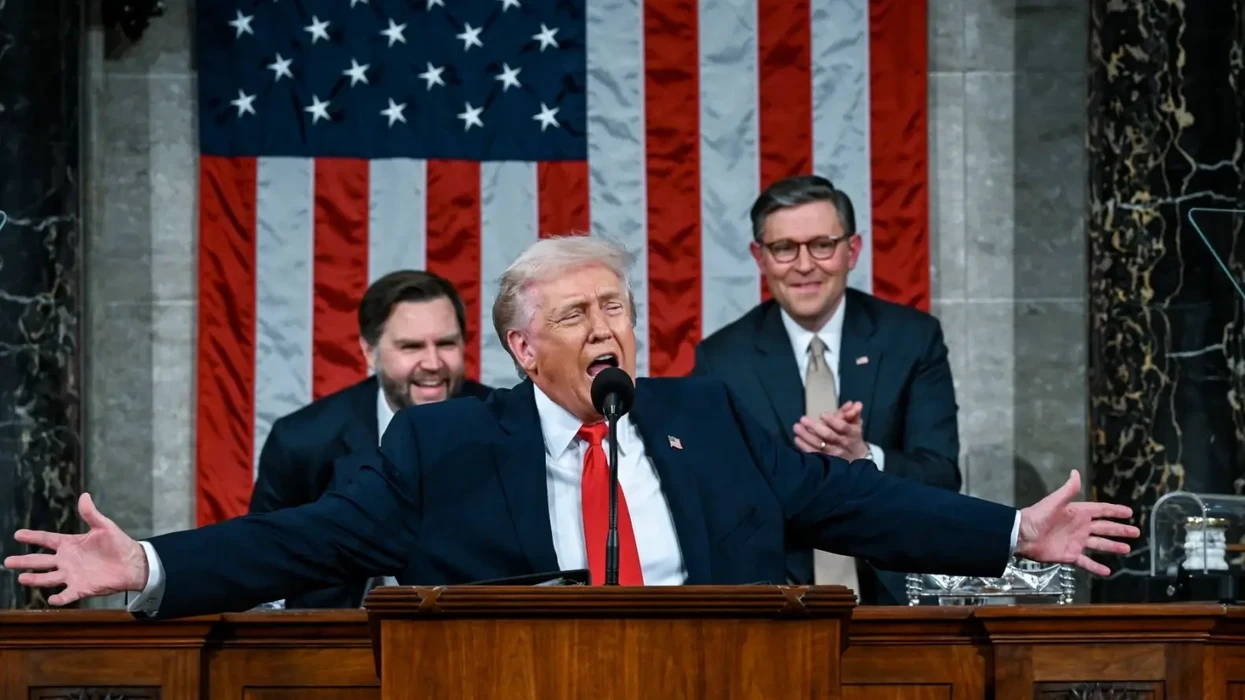
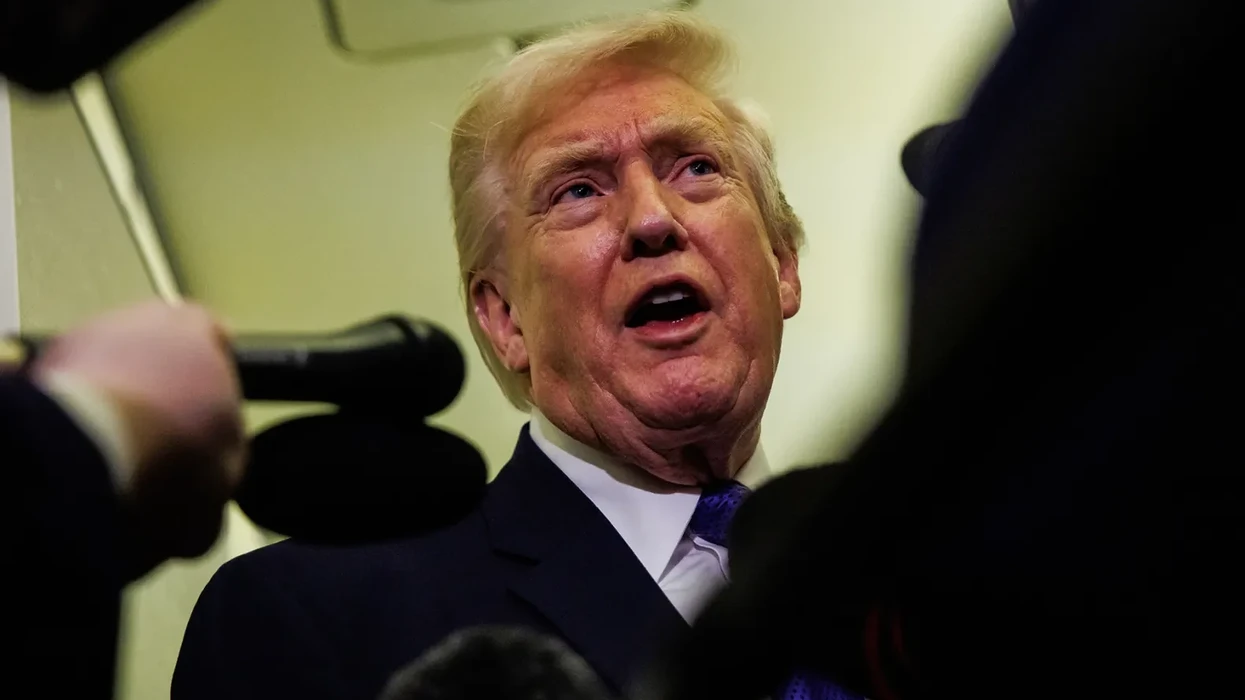


President Donald Trump discussing Venezuela at a press conference at Mar-a-Lago.
Why Venezuela Could Be a Turning Point in Gen Z’s Support for Trump
When Donald Trump called himself “the peace president” during his 2024 campaign, it was not just a slogan that my fellow Gen Z men and I took seriously, but also a promise we took personally. For a generation raised in the shadow of endless wars in Iraq and Afghanistan, it felt reassuring. It told us there was a new Republican Party that had learned from its failures and wouldn’t ask our generation to fight another war for regime change. That belief stood strong until the U.S. overthrew Venezuelan President Nicolás Maduro.
Growing up in the long wake of the wars in Iraq in Afghanistan shaped how my generation learned to see Republicans. For us, “traditional” Republican foreign policy became synonymous with unnecessary conflicts that caused young people to bear the consequences. We heard how Iraq was sold to the public as a necessary war to destroy weapons of mass destruction, only to become a long conflict that defined the early adulthood of many millennials. Many of us grew up watching older siblings come home from deployments changed, and hearing teachers and coaches talk about friends who never fully came back. By the time we were old enough to pay attention, distrust of Bush-era Republicans wasn’t ideological, it was inherited from what we had heard.
As the 2024 election was rolling around, that dynamic had flipped. After watching wars in Ukraine and Gaza dominate headlines while Joe Biden was president, the Democrats were now the warmongers. My friends constantly told me how a vote for Kamala Harris was a vote to go to war. On the other hand, Donald Trump and the Republicans were the ones my friends thought could keep us safe. “I’m not voting for Trump because I love him,” one friend told me. “I’m voting for him because he cares about us and I don’t want to go fight in a stupid war.” For many of my friends, much of their vote came down to one question: Who was less likely to send us to fight? The answer to them was pretty clear.
Fast forward to now, and Venezuela has begun to complicate that belief. Even without talk of a draft or a formal declaration of war, the renewed focus on U.S. involvement and troops on the ground has brought back the same language of escalation my generation was taught to distrust. Young men online have been voicing the same worries, concerned that the ousting of Maduro mirrors the early stages of wars they were raised to fear. When I asked a friend what he thought about Venezuela, he shared that same sentiment. “This is how all these wars always start,” he told me. “They might try to make it sound like it’s not actually a war, but people our age always end up being the ones that pay the price for it.” For young men who supported Trump because they believed he represented a break from interventionist politics, Venezuela blurs the line between the “new” Republican Party they thought they were backing and the old one they were raised to reject.
For many young men, Venezuela has become a major part of a broader shift of how they view Trump. A recent poll from Speaking with American Men (SAM) found that Trump’s approval rating has fallen 10 percent among young men, with only 27 percent agreeing with the statement that Trump is “delivering for you”.
Gen Z men’s support of Trump was never about ideology or party loyalty, it was about the idea that he had their back and would fight for them. But that’s no longer the case. Recently, Trump proposed adding $500 billion to the military budget. Ideas like that will only hurt the president with young men. My friends don’t want more military spending that could get us entangled in foreign wars; they want a president who keeps them home and fights for their economic and social needs. As Trump pushes for a bigger military and more intervention abroad, the promise that once made him feel like a protector of young men now feels out of reach.
For my generation, Venezuela isn’t just another foreign policy dispute, it’s a conflict many young men worry they could be the ones sent to fight. Gen Z men didn’t support Trump because he was a Republican, but because they believed he was different from the old Republicans. He would be a president who would have their back, fight for their interests and keep them from fighting unnecessary wars. Now, that promise feels fragile, and the fear of being the ones asked to face the consequences has returned. For a generation raised on the effects of the wars in Iraq and Afghanistan, the idea of another war isn’t abstract, it’s personal.