
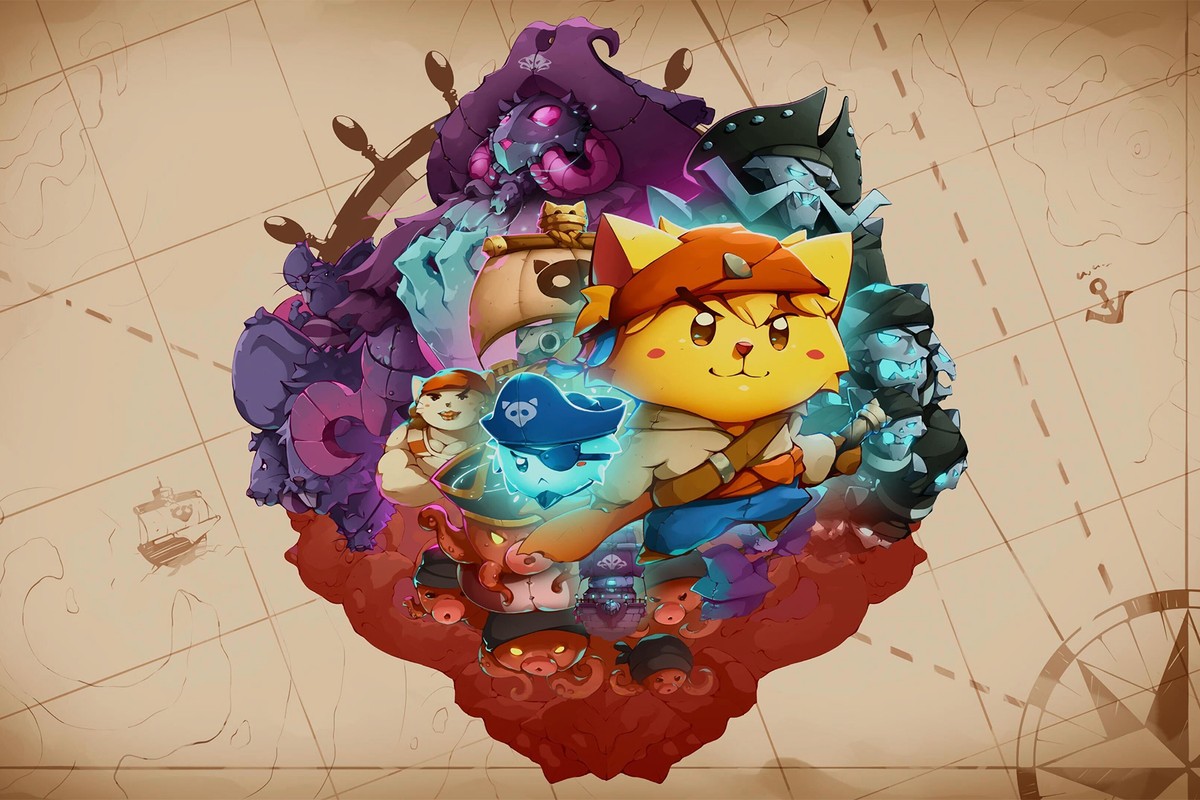

When looking back at classic adventure games like Nintendo’s The Legend of Zelda, there’s a few things that come to mind. There’s the swashbuckling action, complex puzzles, and far-reaching exploration, and even surprisingly deep lore all wrapped up in a whimsical fairytale aesthetic.
The Cat Quest series, from Singapore-based team the Gentlebros, doesn’t really have any of these qualities. It has a facsimile of them, with a watered-down approach to combat, treasure hunting, and questing that check off all the boxes of what you’d expect from a fantasy action-adventure, but everything is scaled back — streamlined to the point of braindead ease. But that’s kind of their charm.
2017’s Cat Quest and 2019’s Cat Quest II function like the broadest, most simplistic idea of what a role-playing game can be, and mostly appeal to children or newcomers. Great for families playing together on a Saturday afternoon, they’re also surprisingly effective distractions for adults looking to completely tune out and mindlessly go through the motions of gaming for a checklist dopamine fix.
But the newest game in the series, Cat Quest III (out Aug 8), does things a little differently by taking the franchise’s five-year break to finally evolve. At least, a little bit.
Whereas its predecessors were basically baby’s first Zelda devoid of any meaningful challenge or demanding much thought for anyone over the age of 10 to complete, Cat Quest III infuses some much-needed depth to its systems.
In previous iterations of Cat Quest, combat required little more than button mashing. Though the games had dozens of swords and spells at players’ disposal, pretty much any weapon would do the job. Here, aimless hack ‘n slashing will still go far, but there’s more nuance to everything. Choosing between different melee weapons like swords and shields, paired with long range pistols and wands, has an impact in how the action plays out.
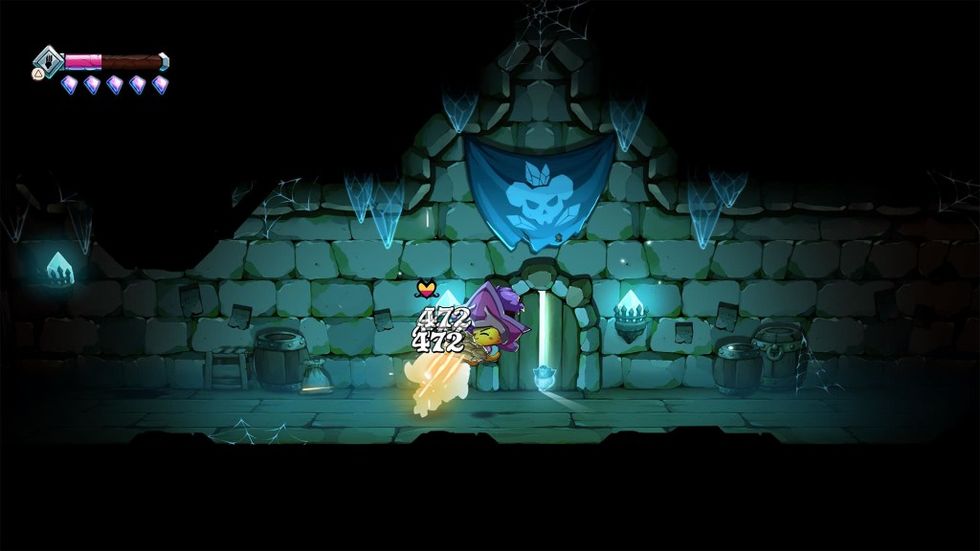
A greater variety of enemies and more strategically minded boss battles will require mentally checking in at times. Combined with a reworked progression system that prevents players from easily over-leveling, the game doles out challenges at a steadier pace, and leaves room for a more satisfying endgame experience filled with hearty high-level foes to hunt down for rewards.
Puzzles, too, have been overhauled to necessitate basic deduction. In the first two games, quests were both too hollow and plentiful with upwards of 100 missions to tackle, usually requiring players to literally follow an arrow to the exact spot or object they need to find to complete their task. With less handholding, Cat Quest III aligns more closely with the tenets of a true Zelda-like experience, with quests providing more ambiguous clues or directions that need to be deciphered to figure out where to go next. By the time I finished the roughly five-hour story and side quests, there were still tons of puzzles I hadn’t solved and secrets to be found.
From top to bottom, there’s a huge leap in quality in just about every aspect of Cat Quest III over its predecessors. With a less-is-more mindset, the sheer number of things to do has been scaled back extensively — fewer items to collect or levels to obtain for each spell, and less than half the number of quests and locations as before, but everything feels more meaningfully designed. With greater effort required to suss out the where and how of progression, it’s a game with a similar runtime as earlier entries, despite having substantially less dead weight.
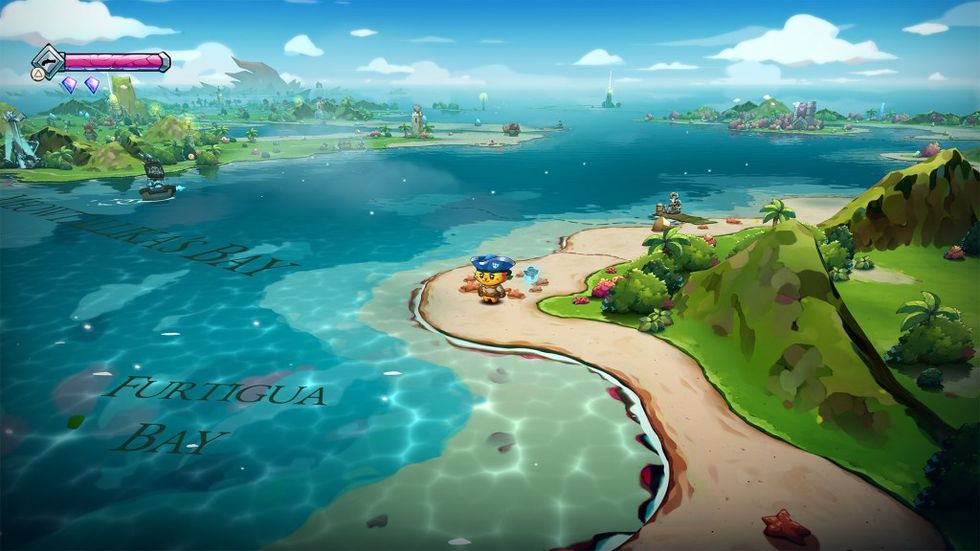
While previous games saw a full continent or continents to explore by foot, with bodies of water to traverse in between, the setting of Cat Quest III switches from a medieval fantasy to a pirate adventure, breaking its world into snack-sized mini-locales across the Purribbean archipelago that can be found traveling by ship. And whereas the original maps appeared sprawling in size, they lacked substance, littered with dozens of dungeons and towns that all felt mundane, copy and pasted to fill space.
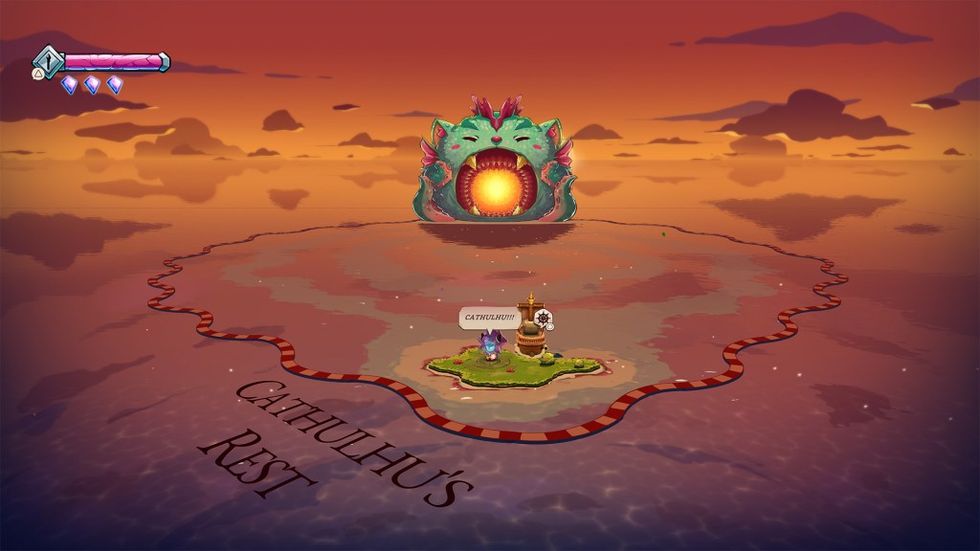
By changing the setting to a series of islands, the regional biomes are less diverse than, say, the desert zone or snowy one, but contain individualized puzzles and dungeons unique to each. The decision to hinge exploration on sailing gives the game a shot in the arm reminiscent of 2002’s Zelda experiment, The Wind Waker, which also turned to an seafaring pirate vibe to reinvent the franchise.
Dungeons have also been revamped to be smaller in scope, and in some cases move away from the game’s top-down, isometric view to a 2D design ripped straight from Link’s Awakening’s playbook. It’s a fresh look for the series that lets the cutesy and vibrant art direction shine as the game zooms in more closely than on the main overworld.
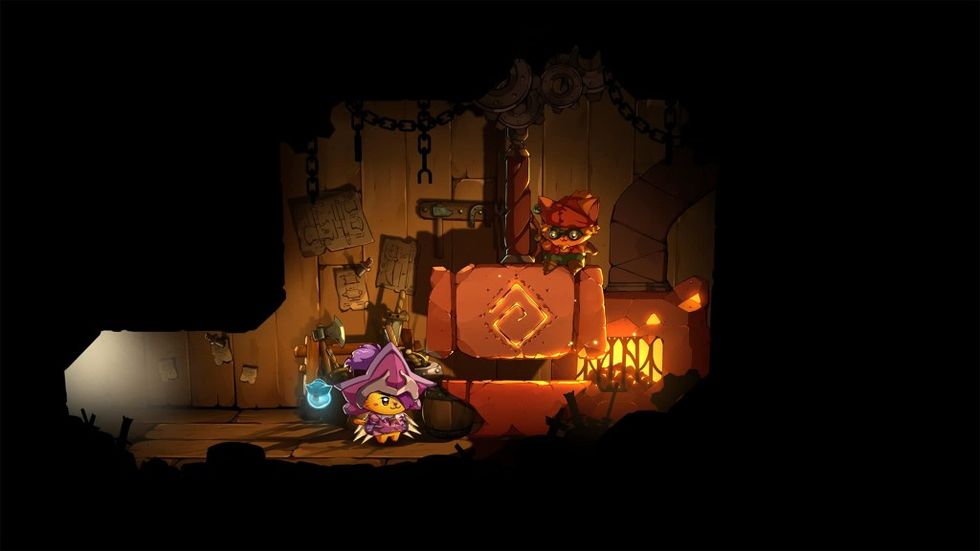
Even with a fraction of the same real estate and only a single town to drop into, gameplay in Cat Quest III feels more consequential, with missions that require deeper engagement to complete that makes the game feel denser, despite having fewer menial tasks in the grand scheme.
The story is still gibberish, with a thinly written plot that centers on a heroic kitty of destiny chasing MacGuffins to ultimately square off against “God.” It’s an old RPG trope that the series uses as its framework for each installment, but it works here thanks to the game’s more facetious tone. Like the previous games, Cat Quest III exists in its own timeline alongside the other tales, all bound together by ominously faceless gods — the creators (humans) — whose secretive workings will lead to a multidimensional convergence known as the “Apawcalypse” in the eventual Cat Quest IV. It’s all cheeky nonsense, woven together through light pop culture parody and feline-based puns peppered throughout the dialogue.
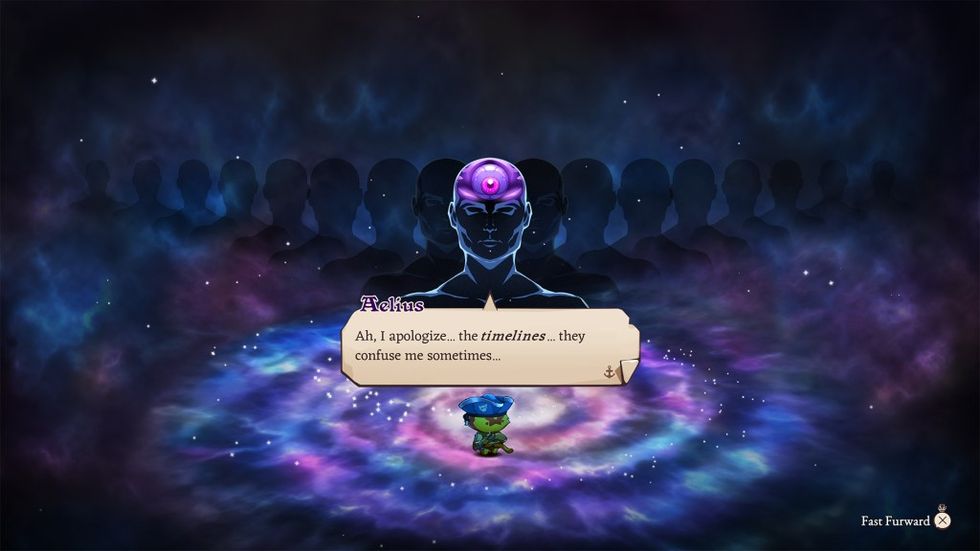
All in all, Cat Quest III is dumb, but that’s not to its detriment. It’s an empty calorie gaming experience with a cozy veneer whose cartoonishness will appeal to kids, with a quirkier underpinnings like fourth wall breaks and a self awareness that will amuse adults. Like Cat Quest I & II, it provides the satisfaction of doing “video game things” without requiring much cognitive investment — it’s a game you can beat in a single day while listening to an audio book or streaming TV in the background.
But, with genuine effort put behind the puzzles and action, surprisingly difficult challenges in its endgame, and a New Game+ mode that carries over progression into an even harder version of the game, Cat Quest III may actually force you to lean forward in your chair from time to time when shit gets real. By executing the basics of action adventure gameplay it only emulated previously, the series has finally shown some teeth. This kitty’s all grown up.
Cat Quest III comes out Aug. 8 on PlayStation 4 & 5, Xbox Series X|S and Xbox One, Nintendo Switch, and Windows PC.











 David Manheim and Hunter Biden Courtesy of David Manheim
Everybody Likes Drake Again. That Means We’re Healing