

At a bellwether trial where billionaire Meta CEO Mark Zuckerberg was grilled under oath, a Los Angeles jury handed a landmark victory Wednesday to a woman who said she became hopelessly hooked on Meta’s Instagram and Google’s YouTube as a child and suffered serious harm.
In her closely watched lawsuit — the first to reach trial among thousands of individual personal-injury cases filed in recent years against social media companies — the woman claimed the negligently-designed platform features fueled a powerful addiction that dominated her childhood. Jurors heard evidence that the addiction led to anxiety, body dysmorphia, self-harm, and suicidal thoughts.
On their ninth day of deliberations, the jurors awarded $3 million in compensatory damages to the plaintiff, known throughout the case by her initials, K.G.M. They allocated 70 percent of the responsibility to Meta and 30 percent to YouTube. They also found both Meta and Google acted with “malice, oppression, or fraud,” opening the companies up to potentially millions, or even billions, more in punitive damages. Lawyers started presenting evidence late Wednesday morning on the size of potential punitive awards to be determined after further deliberation.
“I’m just so thankful. This jury was able to step back and look at all the evidence, without outside influences. This is our kids’ day,” Lori Schott — a Colorado mom with a separate, but similar, pending lawsuit against Instagram — said as she broke into tears after stepping outside the courtroom minutes after the verdict. Her 18-year-old daughter, Annalee, died by suicide in November 2020 after she was allegedly inundated with content related to disordered eating, self-injury, and suicide.
“We knew something was wrong, and this just validated that my gut was right. It’s not a victory, because we’ve all lost so much. But now we can push forward. Now we can go to Congress, and we can take our stories, and we can take the proof, and they sure as hell better listen now,” Schott tells Rolling Stone.
In opening statements last month, lawyers clashed on the question of whether the platforms, or K.G.M.’s complicated home life, caused her injuries. Lawyers for the social media companies pointed to evidence that K.G.M. witnessed domestic abuse at home as a young child and later struggled with depression over the absence of her father.
K.G.M.’s trial lawyer, Mark Lanier, argued that his client’s background made her particularly vulnerable to exploitation by the platforms’ design features, including infinite scroll, autoplay, cosmetic filters, and push alerts. He said the companies’ algorithms were engineered to maximize engagement by spacing out dopamine-triggering stimuli with intermittent “gaps,” a pattern he described as intentionally addictive. He argued Instagram and YouTube functioned as “digital casinos,” deliberately marketed to children despite their underdeveloped brains and limited impulse control.
“Imagine a slot machine that fits into your pocket,” he said. “It doesn’t require you to read. It doesn’t require you to type. It’s just one physical motion — the swipe. This motion is the handle of a slot machine.” The reward, he said, isn’t money but a “dopamine hit” in the form of likes or unexpected videos.
Shortly before the trial started, co-defendants TikTok and Snap reached private settlements with K.G.M. The deals meant the companies could watch the trial from the sidelines without facing public scrutiny of their executives or internal documents in the packed courtroom in downtown Los Angeles.
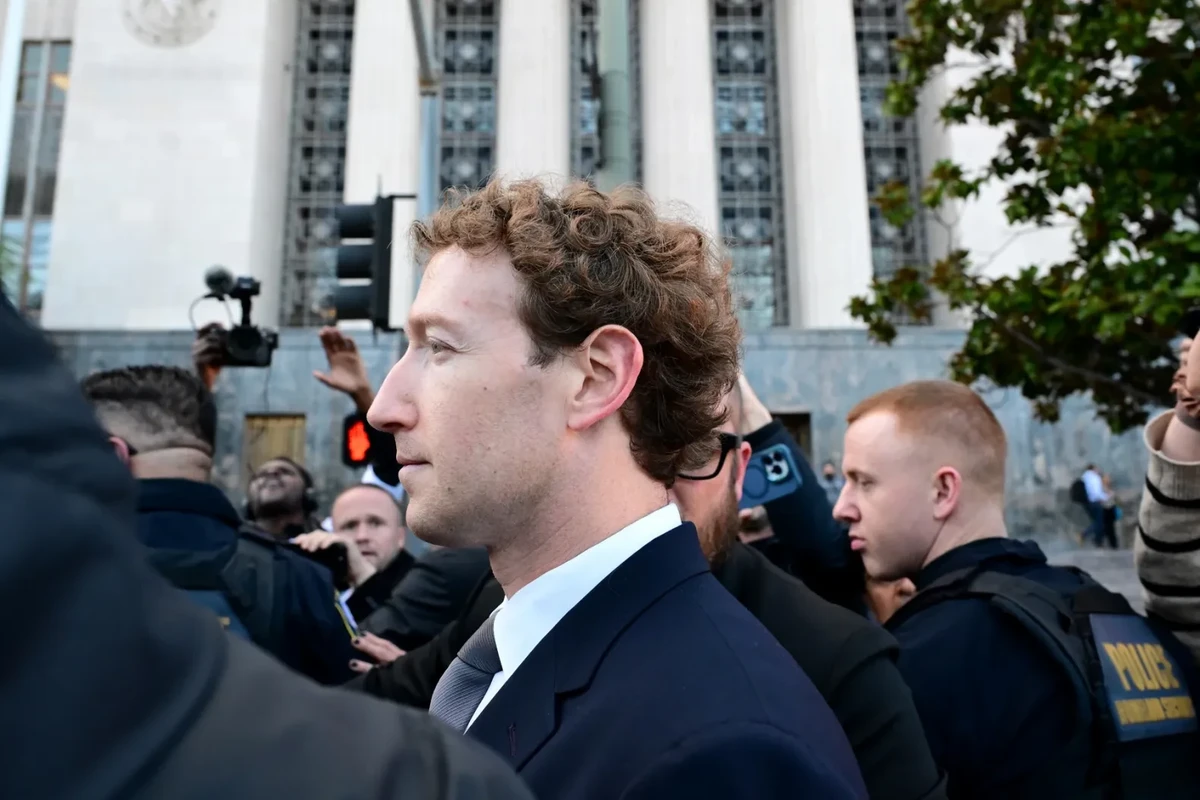
Now 20 years old, K.G.M. took the witness stand, telling jurors she started using YouTube when she was six years old and Instagram when she was nine. She described spending all of her free time on social media and feeling a powerful urge to return whenever she was offline. She claimed the use left her feeling anxious and insecure, leading to a diagnosis of body dysmorphia.K.G.M. made her first appearance at the trial the morning Zuckerberg took the witness stand. During a full day of testimony, the Meta founder denied claims that his company tries to lure children under 13 onto Instagram or increase “time spent” on its platforms at the expense of users’ well-being.
Zuckerberg told jurors that Instagram’s terms of service have long barred users under 13, and that “when you sign up, you have to agree to the terms.” But Lanier pressed him on whether he truly expected a nine-year-old to read the “fine print” and comply. The lawyer also showed jurors an internal document indicating that in 2018, the company estimated about 4 million Meta users were under 13 years old. That’s around 30 percent of all children aged 10 to 12 in the U.S., Lanier said.
Lanier also confronted Zuckerberg with confidential company emails and slide decks obtained through discovery. In one internal exchange, Zuckerberg said he was concerned about “being paternalistic” in banning cosmetic filters. Zuckerberg said he didn’t want to be “overbearing” in dictating how people express themselves. Lanier suggested the billionaire was prioritizing a child’s right to free expression over the advice of 18 experts who warned the company that cosmetic filters posed a mental-health risk to children.
“I feel like you’re mischaracterizing what I’m saying quite a bit,” Zuckerberg replied. At one point, Lanier and his team unfurled a 35-foot banner showing thousands of photographs, many of them filtered selfies, that K.G.M. had posted to Instagram beginning at age nine.
Zuckerberg testified that he placed significant weight on a report from the National Academy of Sciences that reviewed more than 800 studies and concluded that social media had not caused changes in adolescent mental health “at the population level.” But Lanier pressed him in an April 2020 email from Meta’s vice president of product design, Margaret Gould Stewart, who wrote directly to oppose restoring many of the filters. “As a parent of two teenage girls … I can tell you the pressure on them and their peers coming through social media is intense with respect to body image,” she wrote. “There won’t be hard data to prove causal harm for many years, if ever.”
Zuckerberg said cosmetic filters had long been available on other platforms, and “if there had been harm,” experts would have been able to substantiate their claims with evidence. Meta struck what he considered a balanced approach by not actively recommending cosmetic filters to users and removing filters that promoted plastic surgery, he said.
The role of technology in teenagers’ lives loomed large at the trial. Lawyers for Meta and YouTube argued in opening statements that the apps help young people combat loneliness, pursue creative expression, and access educational resources. They also said Instagram and YouTube have steadily added safety features as the platforms have evolved.
In his own turn on the witness stand, Adam Mosseri, head of Instagram, said his job is to strike a balance between safety and freedom of expression. “We want to be careful about banning things because people get really upset. They feel they’re being censored, and they get really angry about that,” he said.
“I believe it’s our responsibility to keep people safe, particularly minors,” he continued. “We’re trying to be as safe as possible, but also censor as little as possible.”
During their first day of deliberations, jurors asked the court where they could find the “Project MYST” study that Mosseri allegedly signed off on as part of a research partnership with the University of Chicago. It was a survey of 1,000 teens and their parents that found teens who experienced more “adverse childhood events,” such as having an alcoholic parent or a bully at school, had greater difficulty moderating their use of social media. It also found that a parent’s “digital supervision” had little impact on teen use.
“We run hundreds of studies all the time,” Mosseri testified when asked why the study was never published. The Instagram boss said he wasn’t familiar with the findings, but either way, he didn’t think the results suggested “a dangerous situation” worthy of sounding an alarm. “I’m sure if we found something dangerous, we would talk about it publicly,” he testified.
Called as the first witness at the trial, Dr. Anna Lembke, medical director of Stanford University’s addiction-medicine program and author of Dopamine Nation, told jurors that adolescents’ brains are “especially vulnerable” to addiction because the prefrontal cortex is not fully integrated with midbrain systems that regulate behavior.
“There’s a lack of communication between the brakes and the accelerator,” she testified, explaining why teens take risks and struggle to anticipate consequences. Social media, she added, has “drugified” connection and validation, and “the younger the exposure, generally speaking, the greater the risk” of addiction.
The trial followed after a survey of American kids aged 13 to 17 from Pew Research found that 48 percent of teens say social media sites have a mostly negative effect on people their age, up from 32 percent in 2022. Alarmingly, suicide rates among young people aged 10 to 24 rose sharply between 2007 and 2021, spiking at 62 percent, according to the Centers for Disease Control and Prevention. Before that, the suicide rate for young people remained stable between 2001 and 2007.
“I want to be really clear. I think the world is changing increasingly quickly, and Instagram needs to change along with it to stay relevant,” Mosseri said during his testimony last month. “So you will always be able to, at any point, look back over a couple years and point out features that didn’t exist before. We’re going to always try to improve and launch new features. Honestly, I feel that’s something I’m proud of, innovating and improving ways to try to keep teens, to give teens a positive experience on the platform.”
The first question jurors had to answer on the verdict form was whether Meta and YouTube were “negligent in the design or operation” of their platforms. If they answered yes, they moved on to questions about whether Meta and YouTube knew, or should have known, their platforms were “likely to be dangerous when used by a minor in a reasonably foreseeable manner.” Another asked whether the platforms failed to adequately warn of the danger.
K.G.M.’s case was selected as a bellwether, a test trial whose outcome could help shape thousands of related lawsuits. But unlike a class action, its verdict is not binding on other plaintiffs.
Legal experts say a sweeping, global settlement — like the one reached in the litigation against tobacco companies — may be harder to achieve in cases involving social media. Meta and Google, among the world’s wealthiest corporations, have the resources to sustain prolonged and costly legal battles. They have already argued that they are shielded by Section 230 of the Communications Decency Act, which generally protects online platforms from liability for user-generated content, and are expected to challenge the ruling that allowed K.G.M.’s case to proceed to trial.
More broadly, defendants with vast financial resources may choose to continue litigating rather than settle, particularly if mixed outcomes in court allow them to preserve a business model that remains highly profitable. Still, the plaintiffs’ lawyers say the trials are necessary, even if they don’t win.
“This case is historic regardless of the outcome because it’s the first of its kind. We’re now getting their documents. We’re getting transparency. This is a plaintiff who survived motions to dismiss and for summary judgment,” Laura Marquez-Garrett, a lawyer with the Social Media Victims Law Center who represents K.G.M., tells Rolling Stone.
Marquez-Garrett, a member of the plaintiffs’ steering committee overseeing the thousands of claims consolidated in Los Angeles County, said a second bellwether trial, expected to begin by summer, would reveal additional internal communications the companies had sought to keep private.
“This is just like Big Tobacco. This is Big Tobacco designing their products to addict kids at a young age so they can create lifelong consumers. And some of them don’t survive,” Joann Bogard, 59, an Indiana mom who lost her 15-year-old son, Mason, when he died attempting a viral choking challenge, previously told Rolling Stone. “They know what they’re doing. Big Tech knows how their products are designed. And our kids aren’t just collateral damage, they’re targets. And these cases are going to bring all of that to the forefront.”
This is a developing story …

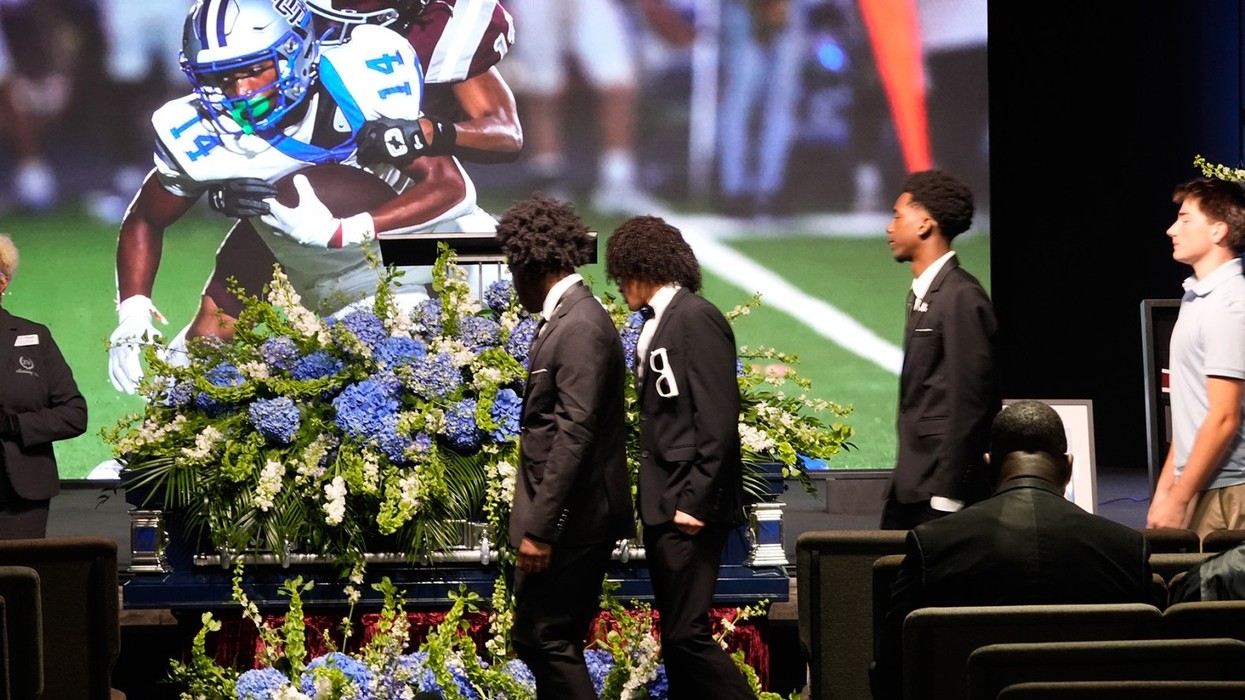
 Christine Wonsley with her husband, Elmore (second from left), attorney Ben Crump (left), and Rev. Al Sharpton (right), during a memorial service for her son Nolan Xavier Wells.Gerald Herbert/AP

Donald Trump and FIFA President Gianni Infantino stand as Spain celebrates its World Cup victory, on July 19, 2026.
America Got the World Cup It Deserves — Good and Bad
For the past six weeks or so I’ve been having a recurring fight with my friends. The dispute is over whether or not it’s ethical to support the U.S. national team in the World Cup.
To the vast majority of people reading this article, this is an absurd question: of course you can and should support the United States Men’s National Team, you weirdo. And look, I’m with you. But despite the fact that my friends are pompous dorks who are no fun to watch the game with, the question they raise is valid: Are our national teams avatars of the administration in power, or of the people and promise of that country?
If you believe the former, then yeah, it’s pretty fucking weird to support the USMNT. In doing so, by that thinking, you’d be engaging in a sort of athletic nationalism on behalf of a country run by Donald Trump, the most corrupt president in history, who forced the Iranian national team to flee across the border immediately after the final whistle of each of their games, whose federal police have shot numerous civilians dead in the street during a brutal immigration crackdown, who has started a war and supported a genocide while covering up his close personal friendship with the most notorious pedophile in modern history.
I mean just look at him. On Sunday he waddled down onto the field to present Spain with their trophy, lingering on stage with the victorious team as they tried to celebrate. The presence of Mexican President Claudia Steinbaum and Canadian Prime Minister Mark Carney did little to dilute the image of Trump standing next to his crony Gianni Infantino, grinning at all the trappings of their power, hands caressing a trophy they’d done nothing to earn, lingering well past his cue to leave Spain to their glory. This World Cup, literally, had Donald Trump’s fingerprints all over it.
And yet, this was one of the most thrilling, beautiful World Cups in recent memory. That’s America, baby — contradictions abound.
Over the past five weeks of the greatest athletic competition on Earth, we’ve seen games that will literally never leave my memory. The final, which I attended yesterday in New Jersey, was remarkably forgettable — a 0-0 draw until the 106th minute, with Spain dominating every second of play and yet unable to score, undone time and time again by their insistence on tricksy passing and the personal heroics of Argentina’s goalkeeper Emi Martinez. The rest of the tournament, however, delivered. Cabo Verde, refusing to lose until the very last moments of the first knockout round, battling back again and again against both teams that would eventually play in the final. The sheer dominance of France’s Kylian Mbappe in front of goal, scoring at will, rivaled only by the aging GOAT Leo Messi and the Norwegian warlord Erling Haaland. England’s heroic stand at the Estadio Azteca in Mexico City, 45 minutes in the rain, a man down, holding out for the win and singing “Wonderwall” with what felt like half the stadium when it ended. Off the pitch, too: the Algerian national team being welcomed with open arms by Lawrence, Kansas; Scottish braves drinking Boston dry and partying wildly with Haitian fans that overcame so much just to be at the tournament. In Mexico, of course, the World Cup was everything, and its fans threw joyous South Koreans pumped full of tequila into the air, and celebrated in the streets with opposing fans even after their hard-fought defeat to England.
For the United States, what the 2026 World Cup was — what our team was, what our fans were, what our performance as hosts was — is a reflection of two things at once: what our nation is and what it can be.
Our star striker, Folarin Balogun, was born here by accident, a citizen only because of a birthright system that our president is currently trying to erase. We have Ricardo and Giovanni and Freeman and Zendejas. We have another striker whose name is Haji, for goodness sake. I look at that team and I see the country America can be, one in which any soul born in or living within our arbitrary borders can become part of a great national project that seeks to improve the lives of everyone it can. And yet, I can also look at that team and see a reflection of what the country is, because there is an anchor around its neck. When Balogun was — albeit unjustly — suspended for a crucial match, Trump himself stepped in. Cronyism saved the day and got Balogun reinstated, but ruined the fragile harmony the team had enjoyed. On the pitch against Belgium, they came apart. Temperamental star Christian Pulisic tried to go alone and then quit, aging defender Tim Ream’s legs failed him when he needed them most, a young goalkeeper slipped and fell when he had no good options for support.
What more can you say about a team, about our country? The team is an entity that is capable of more but still has so far to go, that is vulnerable to the same forces of avarice and selfishness and fear that plague our national identity writ large.
It’s possible to end the story there, to say good riddance to another failed year and fractured team. But I think that’s a mistake. I think if you believe that you haven’t really been watching. I think that’s also why it pissed me off so much that some of my friends wouldn’t root for the U.S. Yes, we have flaws, like every country involved in the tournament. Yes, our current team management and political government are filled with morons. But if you won’t put on the shirt you’re essentially opting out of our future. We can’t wait around for a better world, a better team, a better president, before we deign to lend our support. Progress only comes from effort, from caring, from believing in something more.
One of my favorite images of the World Cup was a crowd shot of the opening match against Paraguay in Los Angeles: every race, color and creed of American there is, all covered in red white and blue. It’s corny and trite, sure. But that’s what it’s all about. That’s why we’re here. You have to believe. The U.S. won that game 4-2. In four years, we’ll be even better.