It’s Tuesday night on the Las Vegas Strip. Crowds have been flowing into the Michelob Ultra Arena for the past two hours, a sea of red and silver and black. The merch line snakes around the entire front of the arena, folded onto itself like a theme-park queue. People nervously ask which Las Vegas Aces jerseys are still left — do you still have Wilson? Gray? Young? Inside, just before seven, nearly every seat is filled when the lights turn low. Signs wave, the stands vibrate with cheers and stomps, strobe lights flash. Tom Brady, part owner of the Aces, walks in. But every eye is on A’ja Wilson when she runs out onto the court. The crowd erupts into a chant.
“MVP! MVP! MVP! MVP!”
Wilson starts to speak, but the audience isn’t done.
“MVP! MVP! MVP!”
A ring as big as a ping-pong ball shines on Wilson’s pinkie finger, the diamonds sparkling in the spotlight set on her. It’s the WNBA’s opening night. In half an hour, Wilson will lead her team, the Las Vegas Aces, against the Phoenix Mercury. She’ll score 17 points in the first quarter and make it look easy, like she’s just warming up. But before all of that, they’ve got to celebrate last year — the Aces are getting their rings for their second championship in a row. And the room is electric.
“We got a game to play, hold up, hold up!” Wilson says into the microphone, smiling. “I just want to say thank you all, each and every last person in this building. You helped us win a championship. We just want to say thank you and once again,” she says, here pausing for dramatic effect, “we blingin’.”
The ring ceremony is over, and the team comes out onto the court as flames shoot out from the hoops at each end. Drake’s “Energy” booms through the speakers. People come to Vegas for a show, and they’re about to get one. This arena has hosted Katy Perry, the Latin Grammys, UFC fights. And on this Tuesday night in May, for the season opener of the WNBA, for Wilson and the reigning champions, a new record is set: the largest Aces audience the venue has ever seen — 10,419 people to be exact.
For the past couple of years, the WNBA has shattered nearly every record it comes up against. Ticket sales have exploded for this season — up 93 percent from last year, according to StubHub. A record 2.45 million viewers tuned in to the WNBA draft this spring on ESPN, nearly five times the previous record in 2004 and up 307 percent from 2023. Before the season tipoff, the Aces, Atlanta Dream, and Dallas Wings all announced season-ticket sellouts. The stars of the game are becoming household names, the faces of campaigns for Skims, along with Nike, Adidas, and Puma. Jerseys are selling faster than they can make them. A handful of players have their own shoes — Wilson’s highly anticipated A’One Nike was announced in May and will be out next year. But this moment has been a long time coming.
“If you would’ve told me we would eventually have sold out arenas,” Wilson, who is in her sixth season, tells me the day after the game, which the Aces won 89-80, “I would’ve probably laughed.”
“Companies [are] actually putting dollars towards women’s sports and not just saying ‘We support, we support.’ ”
THE W, as fans call the league, is just 27 years old — a baby in sports-league terms. The NBA has been around for 78 years, the NFL for 104. But it’s by far the longest running women’s professional league in the U.S. It started out with a lot of promise — more than 14,000 people showed up for the inaugural game in Inglewood, California, in 1997. But if you look back at those early years, it’s still hard to imagine it turning into what it is today. After a few years, some of the early teams ended up folding, and the coverage was rough.
“Let’s end the ongoing charade that this is a mainstream sport.… The mere concept of the WNBA is inherently flawed, like someone opening an inferior pizza place right next to the best pizza place in town, then using female chefs as a marketing hook. Who cares? It’s still subpar pizza, right?” wrote Bill Simmons for his ESPN “Sports Guy” column in 2005. “The vast majority of WNBA players lack crossover sex appeal. That’s just the way it is. Some are uncomfortably tall and gawky, while others lack the requisite, um, softer qualities to captivate males between 18 and 35.”
And it wasn’t just undermining and sexist media coverage they were up against.
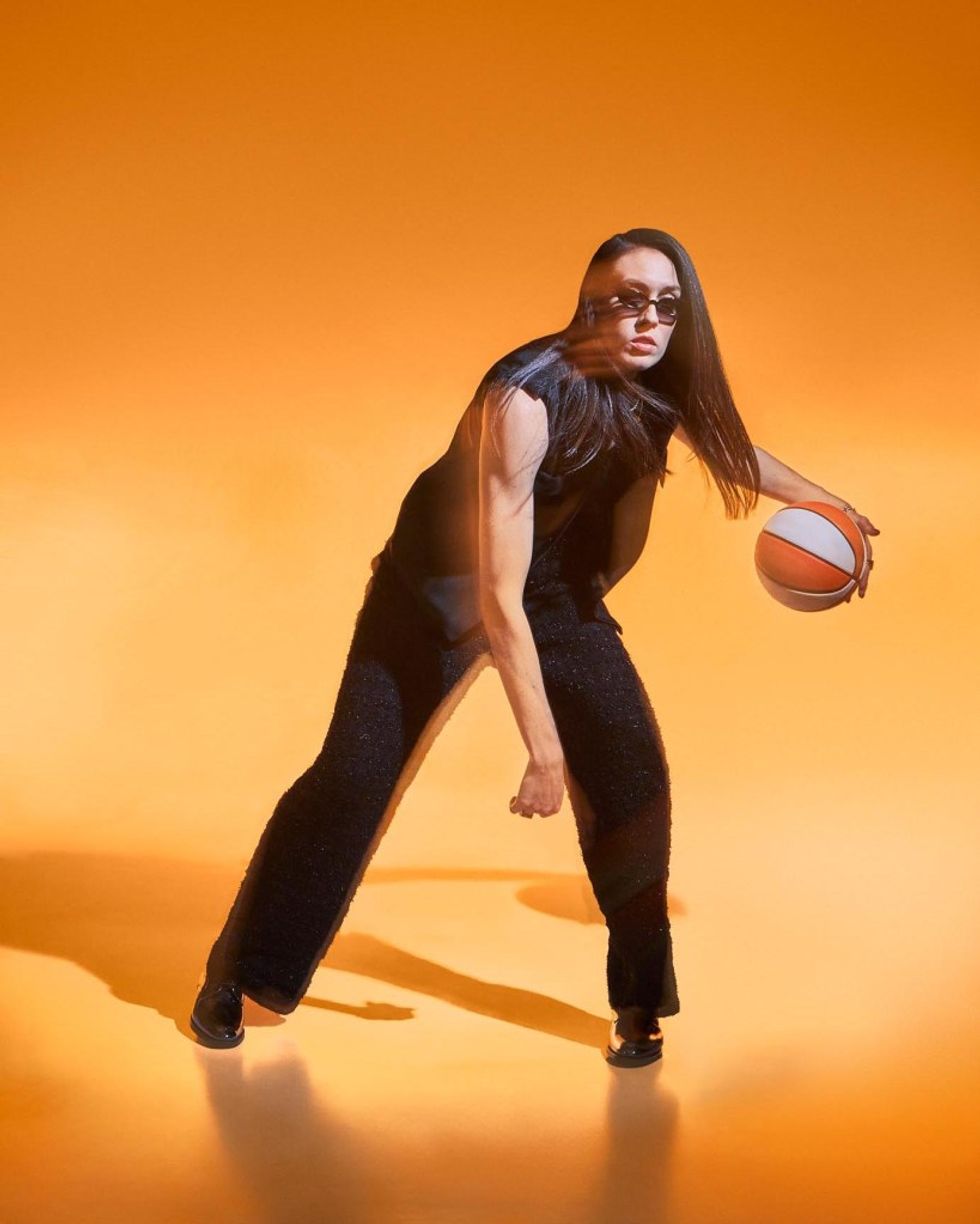
“When I think back to when I first started the W, we had roommates,” says New York Liberty powerhouse forward Breanna Stewart. At age 29, the six-foot-four-inch Stewart is a four-time WNBA all-star. “There were the lifelong WNBA fans,” she says. “But now, this growth of having [the Liberty’s Brooklyn home court] Barclays being sold out almost every single game, to the viewership, the ratings, we’re really going into uncharted territory. But I can’t help but feel like, as a player, we’ve been trying to preach this for a long, long time that we had something special here, and now people are finally catching on.”
When I talk to Stewart, she’s just arriving in Indianapolis to face off against the Indiana Fever. The Caitlin Clark effect can’t be underestimated — the brand-new Fever guard graduated from the University of Iowa this year after leading her team to the NCAA championship game. Clark’s jaw-droppingly consistent long-range three-pointers were exhilarating to watch as she set the record as the NCAA’s Division I all-time leading scorer — across men’s and women’s basketball. Nearly 19 million people tuned in to follow the Hawkeyes in the final. Clark and college stars like LSU’s Angel Reese and University of South Carolina’s Kamilla Cardoso are entering their rookie season in the W and bringing new fans along with them. The Washington Mystics had to move arenas for their game against Reese’s Chicago Sky to accommodate increased demand, and Clark’s Fever jersey was briefly the top-selling jersey ever for a draft pick in any sport (plus that reported $28 million Nike deal).
We’ve been here before, though. There’s long been enthusiasm for college stars. Six years ago, Wilson was the first draft pick after leading South Carolina to a championship — there’s now a bronze statue of her on the Columbia, South Carolina, campus. Five years before that, there was the excitement around Baylor’s Brittney Griner and her incredible dunks. Back in 2002, UConn point guard Sue Bird captured imaginations.
This latest crop of post-grad superstars, though, is entering a growing pro league finding its way onto more TVs and into bigger arenas. Right now, there are 12 teams — 144 players total. Next year, the Golden State Valkyries will be added, and the year after that, they’ll bring on Toronto, the first non-American team in the league.
“I can’t help but feel like, as a player, we’ve been trying to preach this for a long, long time that we had something special here, and now people are finally catching on.”
A COUPLE OF DAYS after facing off against the Aces, the Mercury are back home and crowding around a TV screen playing clips from the game. Pause, rewind, pause, rewind. Griner missed the game with a broken toe — she jammed it at her team’s media day, of all things. And at practice, she wheels out in a big boot propped on a leg scooter. Still, after watching tape, she hobbles on her good foot and practices free throws, hitting shot after shot; her frustration at not being able to play with the rest of the team is palpable.
Last season was Griner’s first one back following her 10-month detainment in Russia after being arrested when her prescription cannabis oil was found in her luggage. Her book, Coming Home, which details the harrowing experience, came out just before this practice and is already a bestseller. She writes about the brutal conditions she faced in the Russian prison and the toll it took on her body. Her six-foot-nine-inch frame being crammed into a cramped cell, the lack of adequate nutrition, the smoking habit she picked up there, which did a number on her lungs.
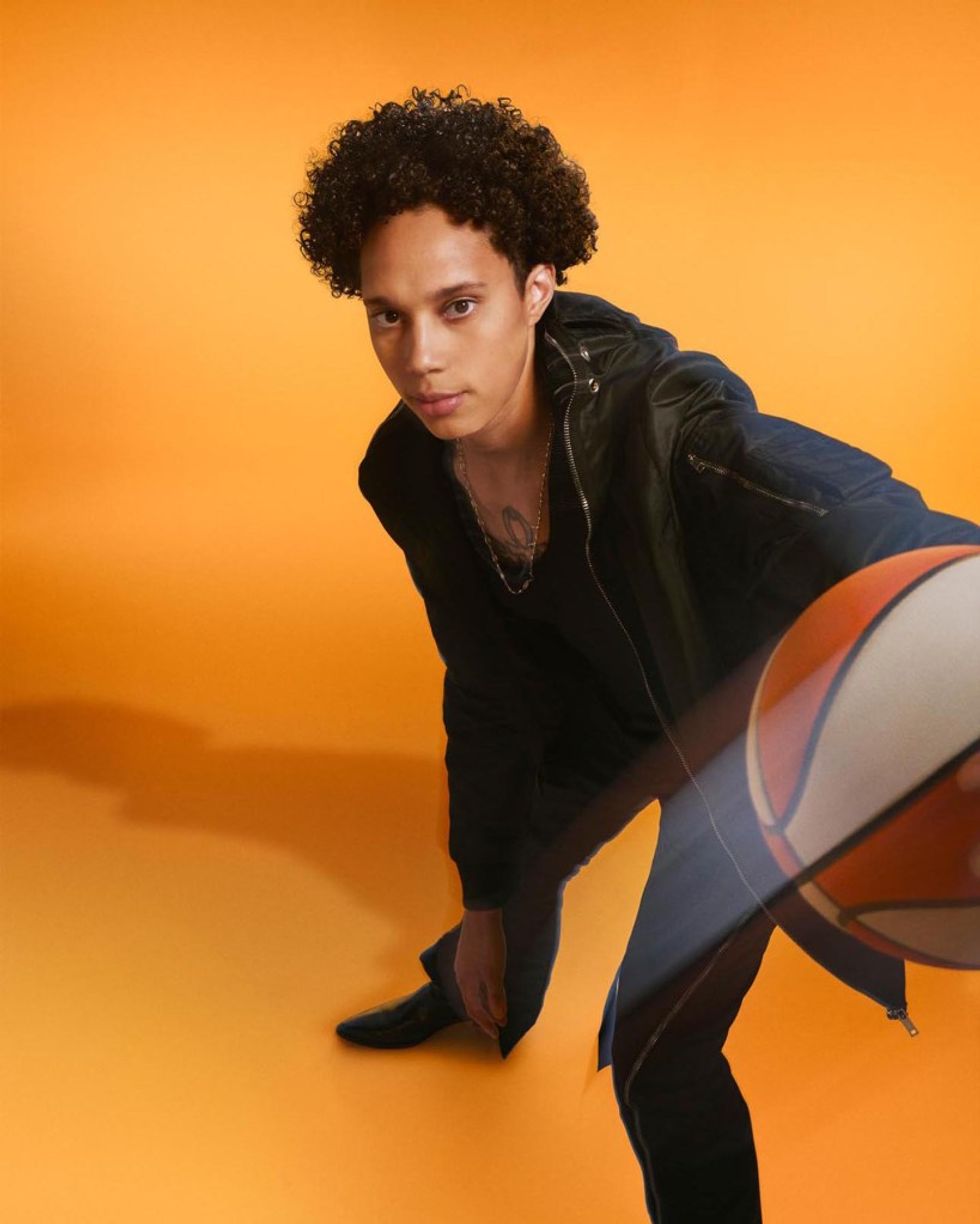
She played last season, getting back to her old self. But she was ready to start fresh this year with a new season and an Olympics this summer. She beams talking about her son with wife Cherelle due in July, too. “I’m super excited about that,” Griner tells me as we sit on the sidelines after practice. “Oh, yeah, I’m going by pops. I really hope he says pop because that’s what I call my dad: Pops.”
She looks out at the court. “I was feeling great about the season. I felt like this was the year, and it still is going to be my year, but I am just going to be a little bit behind joining.”
Griner’s experience in Russia drew attention to the reason she was there in the first place. The year she was detained, Griner earned about $220,000 playing in the WNBA. WNBA players have a hard cap on their salaries and often make hundreds times less than their NBA counterparts. (Steph Curry, for example, makes close to $50 million a year.) Playing in Russia, Griner pulled in more than a million dollars a season. Many WNBA players play internationally to make up that pay difference — which also means they’re playing nearly year-round, putting additional pressure on their bodies, and using off time when they might otherwise be with their families, or training, or simply going on vacation. The players are quick to point out the benefits beyond the money, too — it’s a way to up your game and see the world. If there were a longer, more lucrative season here, though, it would give players more of a choice in the matter.
Griner and I talk about how the league has changed over the past decade — this is her 11th season. “I love the hype,” she says nodding. “I love everything. I love the fact that we have all these new fans. I think the momentum is definitely growing.”
She adds, “The game is evolving, the game’s changing, and you see it in the style of the play. The pace is getting faster. You see a shift in the players, too.… You see more of the rookies coming in and actually making an impact.” Players these days are incredibly versatile — as strong defensively as they are offensively — with more long-range threes and the flash of ball handling leading to dazzling moments on the court.
“The game is evolving, the game is changing, and you see it in the style of play. The pace is getting faster. You see more rookies coming in and actually making an impact.”
After practice, I catch up with Griner’s teammate Diana Taurasi, who, in her 20th — yes, 20th — season in the league has a skeptical, been-there-done-that take on all the recent hype. The changes she wants to talk about are more granular — like how when she started, there was a single trainer for the team, one person in charge of travel, in charge of passing out gear when they got to whatever city, and in charge of food. Today, the court has as many trainers and coaches as players. We’re in the Verizon 5G Performance Center, which the Mercury share with the NBA’s Phoenix Suns. It’s a pristine and impressive facility, just four years old. But they’ve already outgrown it — a brand-new practice facility is being built up the road, which will be just the Mercury’s. And this season, it was announced all W players will start to travel on chartered planes — they’d been flying commercial and traveling by bus all this time.
“When people say the league’s changed in all these ways, to me the biggest change has been internally, where owners are actually putting money into the infrastructure of sustaining a business, a team, an athlete. I think to me, that’s been the biggest change,” Taurasi says. “All the outside noise is nice for everyone else.”
We get to talking about Taurasi’s childhood and how soccer was her first love. Basketball came later, playing with friends. But that was the Nineties, when Team USA women’s soccer was dominant.
“Mia Hamm was a superstar. That whole team kind of took women’s sports into a … Oh, that was another ‘moment,’ right?” she says with a satisfied I-told-you-so smile and a write-that-down head nod toward my notebook. “Nothing’s new under the sun. We’ve seen all this. The whole point is for it to continue. That has always been our biggest thing — how do we make sure we bottle this up and it stays?”
Well, how do you?
“I don’t know. That’s not my job. My job is to be the best basketball player I can be and show up every single year better physically, mentally, skillwise.… I’m not a marketing major. I don’t fucking know how all this shit works. I’m here to ball out and try to kill whoever’s in front of me. You know what I mean?”
THE THING ABOUT HAMM and that ’96 Olympic game is that it never aired in full in the U.S. — just 20 minutes of the historic final against China was shown on NBC. When it comes to sports, visibility is everything — capturing that casual fan flipping channels, the ones watching at sports bars, the fans who want to follow every game. That’s been a challenge for the WNBA.
This year more than ever, though, you’ll be able to turn on a TV and catch a game. Take the Liberty: This season, 31 of the team’s games will be available to watch nationally, while 24 will be on Fox 5 and MY9, reaching 7.5 million households in the tristate area.
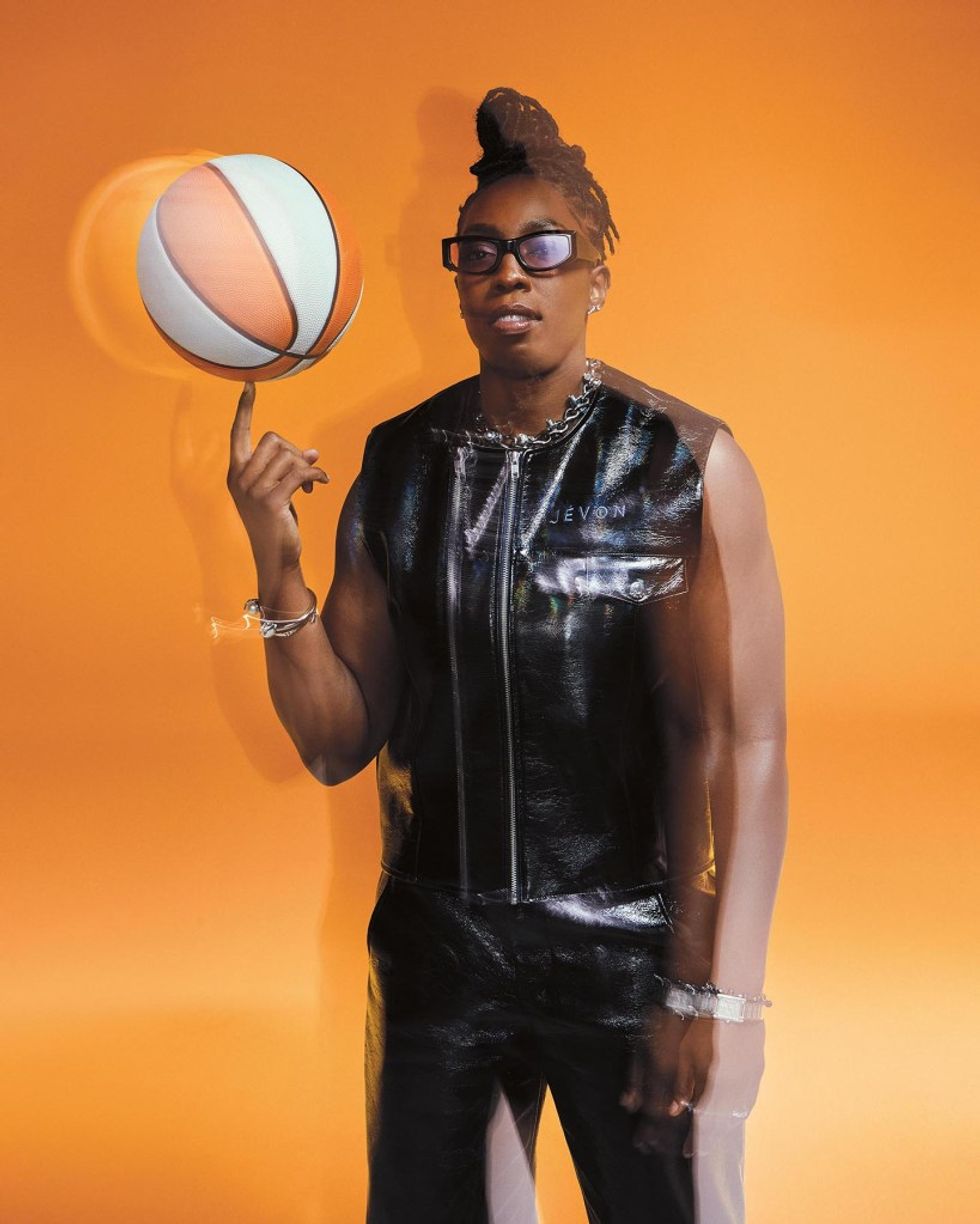
“I feel like the growth has been gradual, but I think recently you’ve seen a big jump visibility-wise in viewership. And so maybe that feels like, ‘OK, now it’s all the way here,’ ” says the Aces’ Chelsea Gray, better known as the Point Gawd. We’re talking the day after the Aces-Mercury game, which Gray, who is nursing a foot injury, missed. But, she was there with her infant son on the court for the ring ceremony. “It’s also these companies actually putting dollars towards women’s sports and not just saying, ‘We support, we support,’ but actually putting their money behind it.”
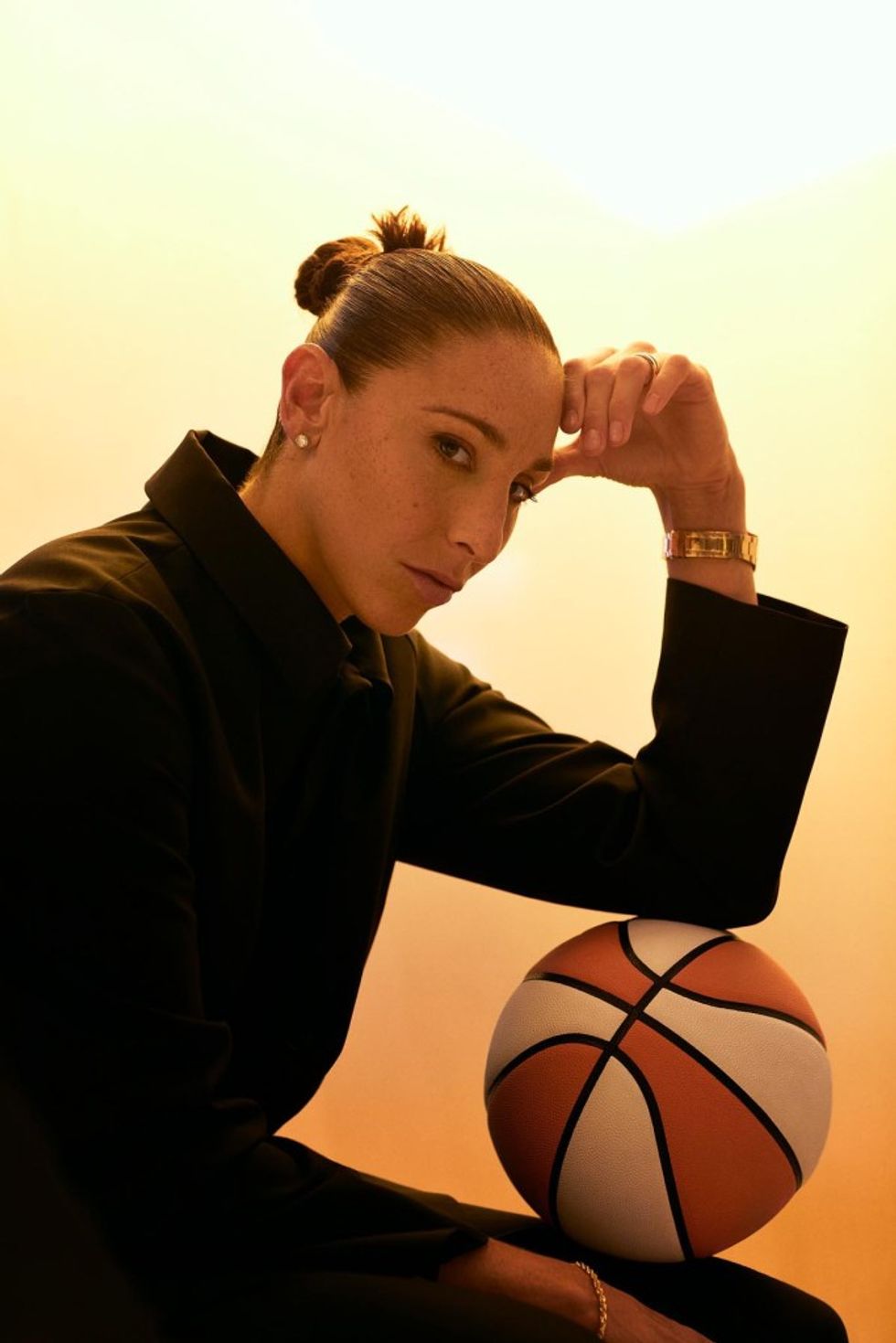
“My job is to be the best basketball player I can be and show up every single year better. I’m here to ball out and try to kill whoever’s in front of me.”
And the Olympics this year is ensuring men and womens sports are scheduled fairly for better visibility. Griner, Taurasi, Stewart, Wilson, and Gray are all gold medalists and were all invited to the Olympic team training camp for the summer games in Paris. It’ll be a year of transition for the team, without Sue Bird and Sylvia Fowles, but with some new players in the mix.
“The Olympics has its own kind of haze and glory around it. They don’t look at us as WNBA players anymore; it’s more so like the three letters across your chest,” Wilson says. “I hope that after the Olympics it carries over and then we form that momentum even more.”
The momentum comes right as the players head into a new contract negotiation in the next couple of years, as well as a new media-rights deal in 2025 — meaning how much TV networks pay the league to air their games. And a new contract is a chance to negotiate for higher revenue sharing — while NBA players get a 50 percent share of the money brought in by the league, WNBA players get about 10 percent.
“We are on the upward scale,” says Wilson the day after the Aces’ big win. “I’m very hard on myself and on the league, and we still have a long way to go.”
BEFORE THE ACES-MERCURY season opener, a restaurant just outside of the Vegas arena has the Indiana Fever versus Connecticut Sun game on one of the TVs at the end of the bar. A man sits quietly watching.
“WNBA! Fuck yeah!” a woman wearing an Iowa shirt shouts as she walks in and pulls out a barstool. She says to the bartender, “I just want to say thank you for having this on.”
The man sitting at the bar tells the two women he’s a second-year season-ticket holder for the Aces. They tell him they’re nurses and that they flew in from Phoenix just for the game.
“Back in the day, the Houston Comets were a big thing, and I was a huge fan when the league started in ’96, and I idolized Cynthia Cooper,” Mandy Crino, one of the nurses, tells me when I ask about her history with the W. “I was always a fan, but it was never televised; you had no access to the games. So, I can say I’m a fan, but I didn’t watch it because the closest was going to Chicago, two and a half hours away. But we moved to Phoenix two and a half years ago and went to our first game. We have been season-ticket holders for two years now.”
I ask the three of them if they feel like there’s a lot of excitement around the game now.
“Whoo, girl, are you kidding me?” Steven Dickerson, the Aces season-ticket holder, says. “It’s the only game in town.… The men’s team is all commercial. It’s all about money. They’re guaranteed their money. You come and see these ladies play, man, it’s like there’s no tomorrow. It’s unbelievable.”
Then the commercial is over, and everyone turns back to the screen in the corner. The other TVs have other sports — a post-game recap and hockey — but tonight, the W game is the only one anyone here is paying any attention to.
Production credits
Photography Direction by EMMA REEVES. Photographic assistance by PAULA-ANDREA AGUDELO POULSEN, MARGOT JUDGE, AND TREMEIKA SMALL (Stewart); UNICO CLEMENTE AND ERIC GUIDENG (Wilson & Gray); MIKE DUNN AND MICHAEL HUNT (Griner & Taurasi). Production assistance by ZACH SMITH (Wilson & Gray). Retoucher: MORGAN PALMER.
A’ja Wilson: Styling by AMADI BROOKS. Hair by MYESHA JAMERSON. Makeup by REGINA CRAIG. Styling assistance by JAXX RAMIREZ. Jacket by BOOHOOMAN VIA BLK PR. Top by AVIDLOVE. Harness by RAVELAND VIA JPR.LA. Skirt by IN THE STYLE X PERRIE SIAN. Shoes by BURBERRY. Earrings by BANTER.
Chelsea Gray: Styling by SYDNEY BORDONARO. Makeup by LAQUANDA ASHLEY. Top and bottom by JÉVON LONDON. Sunglasses by OSCAR & FRANK. Rings by XTENDED IDENTITY. Bracelets by LOHAVAT. Necklace by APT.1007.
Brittney Griner: Styling by TYRUS DIVINE HOSLEY. Hair by MICHELLE ANDERSON. Makeup by SHAKEIRA DILLARD. Look by RICK OWENS DRKSHDW VIA ONE FIVE ONE (Scottsdale).
Diana Taurasi: Styling by COURTNEY MAYS AT THE ONLY AGENCY. Makeup by SANDRA GREENE. Jacket and trousers by APC. Sneakers by RICK OWENS.
Breanna Stewart: Styling by COURTNEY MAYS AT THE ONLY AGENCY. Hair by ANTOINETTE HILL. Makeup by TARA LAUREN. Top and shoes by SAINT LAURENT. Trousers by BALENCIAGA. Sunglasses by OSCAR & FRANK.



 David Manheim and Hunter Biden Courtesy of David Manheim
 Koko checks a tracker map for Flock locations. Jack Crosbie for Rolling Stone
 Flock surveillance cameras can be seen in a northern Virginia neighborhood. Jack Crosbie for Rolling Stone
 Inside Koko’s home, a Pelican case is full of electrical gear. Jack Crosbie for Rolling Stone
 Flock camera will take photos of pedestrians even at night. Jack Crosbie for Rolling Stone