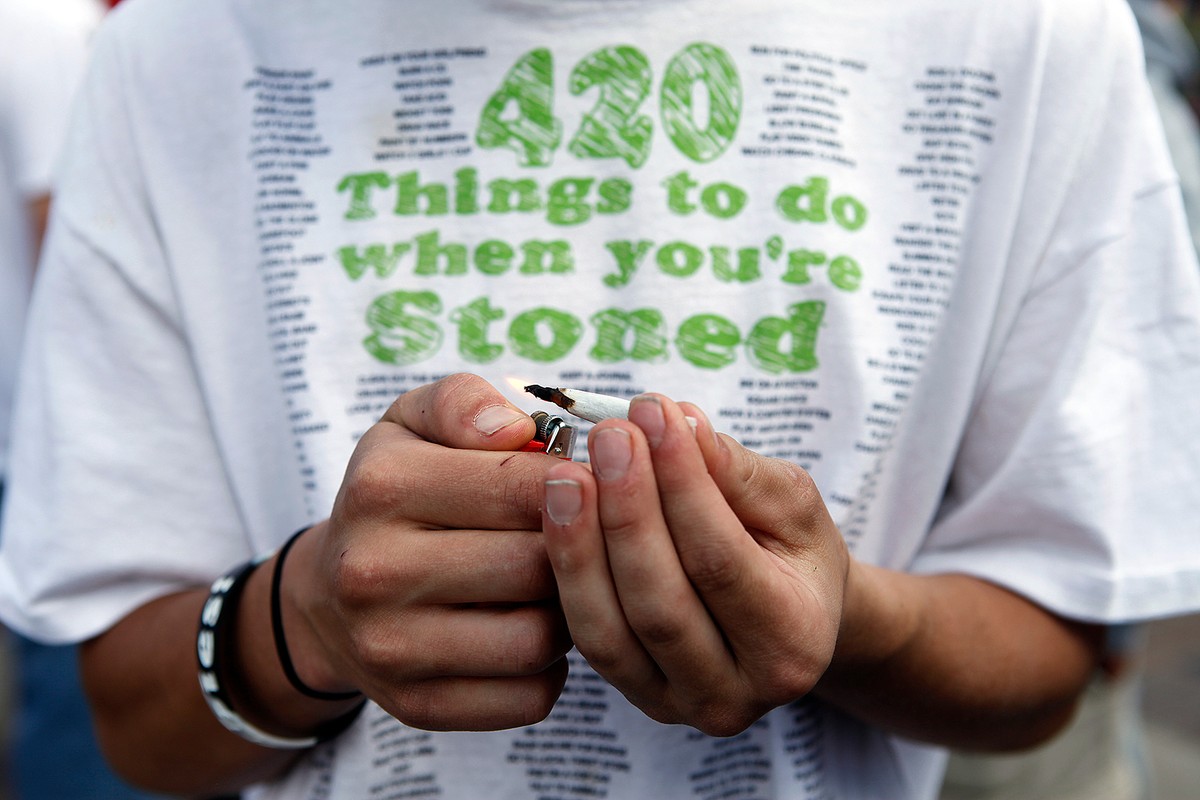

In 2014, I was in Denver for 4/20. It was a heady time. Colorado had recently legalized recreational cannabis, and High Times was capitalizing on the moment by throwing a two-day weed extravaganza known as the Cannabis Cup. I was an editor for them, and I’d been pressed into service along with the rest of the team to run the event. We knew it was going to be big, but we weren’t prepared for how huge and chaotic it turned out to be. Traffic was backed up for miles, people waited hours in line to get in, check-in was a mess, and someone (not me!) forgot to print the tickets for Snoop Dogg’s headlining concert at Red Rocks that night. But none of it mattered in the end, because tens of thousands of people showed up absolutely geeked to light up in public with like-minded folks, drop bundles of cash on flower, hash, and edibles, and ring in the high holiday with a wild, hazy celebration.
Today, most Americans live in a state where cannabis is legal for recreational or medical use. It’s a huge business; according to some projections, revenue is expected to reach over $40 billion this year. My email inbox is overflowing with press releases trumpeting deals and product drops: “Free sandwiches for 4/20 from Arby’s!” “Popeyes Introduces 4/20 Munchies Menu!” “Ric Flair Appearance at Dispensary for Brand Launch!” “4/20 Wedding Data from The Knot!” It’s all mainstream messaging. You’re not a renegade if you toke — everyone and their mom smokes weed nowadays.
The origins of 4/20 as the day to commemorate cannabis culture stretch back to the fall of 1971, when a group of San Rafael High School students inherited a map that allegedly led to a crop of abandoned pot plants. For weeks, the teens met after school at 4:20 p.m. to get high and search for the secret stash, which they never did find. Over the years, 420 became the code for weed, and people assembled at political rallies like Seattle Hempfest on 4/20 to celebrate the plant and call for cannabis reform. Today, April 20 is an international holiday — but in the era of widespread marijuana legalization, do we really need to gather to give a collective middle finger to the man?
Stephanie Shepard was convicted of conspiracy to distribute marijuana in 2010, and as a first-time, non-violent offender, sentenced to 10 years in federal prison. Today she serves as director of advocacy for the non-profit organization Last Prisoner Project, which is mobilizing a 420 Unity Day of Action to put pressure on the Biden administration to legalize cannabis. Shepard believes the holiday is absolutely relevant, and should be used as a day to remember the people who are still incarcerated for cannabis offenses. She cites the case of Michael C. “Mickey” Woods, who was sentenced to life imprisonment for marijuana trafficking on Jan. 14, 2016, and is incarcerated in a high-security prison in West Virginia nicknamed Misery Mountain. “It’s great to celebrate the plant, and all its benefits,” Shepard says. “But how are you going to do that when you have people serving life sentences for that very thing?”
Framing 4/20 as a Cannabis Awareness Day to advocate for change makes sense, says Brian Box Brown, the cartoonist behind the comic strip series and book Legalization Nation. “It’s nice to have a holiday,” he says, “and 4/20 is a day when the mainstream checks in on cannabis culture. We get the spotlight one day a year.”
There’s a certain amount of legal-weed fatigue in the cannabis community. Legalization has failed to bring the social justice and economic benefits promised by cannabis advocates to the communities most impacted by the drug war. Marijuana is still classified as a Schedule I drug under federal law, despite the recent exhortation from Vice President Kamala Harris that the law is “absurd,” and President Biden’s call for a review to assess if marijuana should be reclassified. At the state level, excessive regulations and taxes are choking out small businesses, and the people making money from legal cannabis are the same people who always make money. It feels like significant change is always coming, and never arrives.
Yet cannabis journalist Jackie Bryant, author of the award-winning newsletter Cannabitch, thinks it’s more important than ever to mark the occasion. “Back in the day, it was just for people who were into weed secretly. Now it’s commercialized, but it’s in the popular consciousness,” she says. “Everybody knows what 4/20 means… it’s something you can celebrate, and joke about out loud, and not be shameful about anymore. We have one day that keeps the significance strong, centered, and where it should be.”
My notion that 4/20 might not matter was starting to fade, as I realized that some of my fatigue stems from the privileged position of someone who lives within walking distance of a dozen dispensaries. “People celebrating 4/20 in Texas are having a very different experience than people in California,” says Nishant Reddy, co-founder and CEO of the cannabis company A Golden State. “It’s easy when you’re in a state that has full recreational legalization to forget that there are a lot of people in this country that don’t have those freedoms. 4/20 is a day to talk about advocacy, policy, freedom, opportunity, and the tremendous medicinal potential of the plant.”
Hemp farmer and cannabis advocate Roger Sterling, a.k.a. GanjaGuru, uses the term 420 to gauge when he’s in a safe space: “It’s how we identify our tribe, our lifestyle, the thing that holds us together,” he says. Claiming the day for cannabis culture matters to him because it connects him to his community. “Even if 4/20 has, to some people, become a corporate holiday for stoners, it’s also somebody else’s most magical day.”
Everyone I spoke to, from activists to execs, says they still find meaning in 4/20. “We need silly, unstructured celebrations,” says Luna Stower, chief impact officer for the vape tech company Ispire. “On 4/20, you’ll see an old Asian guy with a young Black kid chopping it up over a joint. You’re not going to see them doing that over alcohol.” A lifelong cannabis consumer, Stower says the day will be relevant as long as people are suffering under prohibitive marijuana laws “We’re going to keep naming Black Lives Matter until we see proof that they actually matter; it’s the same thing with cannabis.”
There’s no doubt that the occasion has been co-opted by brands as a marketing tool, says Sarah ElSayed, founder of the cannabis PR firm Grass is Greener, but she doesn’t think of it as problematic: “It’s an opportunity for weed brands to foot the bill for consumers by handing out products, hosting parties, and offering people the opportunity to witness happiness and celebration, without a cloud of propaganda impacting their judgment of people who choose to partake.”
Taking the day to feel grateful for the advances of legalization is a huge part of why 4/20 matters, says Natasha Przedborski, founder of the feminist cannabis advocacy and education organization PussyWeed. “We might be making money, but there are so many people who are not free. Passover is always around the same time as 4/20; in the Passover tradition, you end the meal by saying ‘Next year, I hope all Jews are free as well.’ Each year, I think ‘I hope, next year, there’s nobody with a record, nobody in jail, and people can access the medicine that they want.’”