
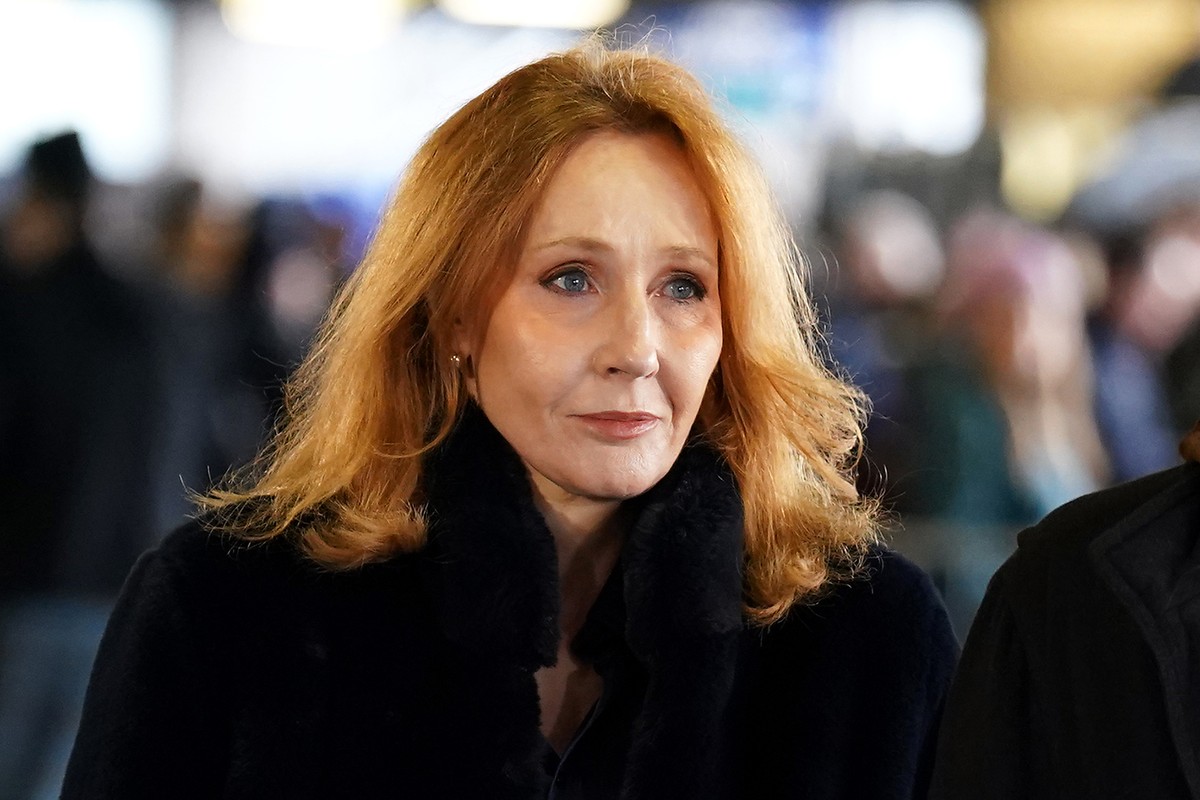

“You’ve seen nothing yet,” tweeted Harry Potter author J.K. Rowling on Sunday. She was responding to another X user who had told her, “Your downfall is so sad,” a reaction to her continued attacks on transgender people. Rowling promised that worse was in store. “Wait til I hit rock bottom. It’s going to be spectacular,” she wrote.
This prediction, and much of what Rowling has said of late, are altogether in keeping with what denizens of X (formerly Twitter) refer to as “Meltdown May,” a month-long season when, for whatever reason, online personalities seem more inclined to self-destructive behavior. Yet for Rowling this is just the next stage of a mounting extremism that has come to overshadow her groundbreaking writing career.
Since 2018, Rowling has shown an affinity for anti-trans influencers and helped to stoke panic over changing norms around gender identity and language. Notably, she used to couch her criticism in a “live and let live” frame, cautioning that while she had no problem with trans individuals per se, she feared that trans women posed a privacy and safety risk to cisgender women in female-only spaces. When defending a U.K. researcher whose employment contract was not renewed at a think tank after her online anti-trans activism came to light in 2019, Rowling still prefaced her supportive tweet by saying that people should dress and identify however they want while living their “best life in peace and security.” In 2020, she claimed to “know and love trans people.”
In the past year, that note of tolerance has vanished from Rowling’s public comments on trans women — and she now tweets about little else, whether proclaiming that she’d go to prison before using their correct pronouns or simply misgendering specific individuals online because she can. The recent “downfall” reply that irked her was in response to her insistence that Lucy Clark, the first openly trans soccer manager in the top English women’s divisions of the sport, is actually a “bloke.” Using her massive platform to direct hate and harassment at Clark, a woman who has done nothing but succeed professionally with the support of her family and team, struck many on social media as cruel. One of Rowling’s tweets misgendering Clark racked up more than 400,000 likes and nods of approval from far-right accounts including @EndWokeness.
These ongoing controversies have driven a wedge between Rowling and fellow creatives, including Harry Potter actors Daniel Radcliffe and Emma Watson. Radcliffe said in an Atlantic profile published two weeks ago that it was “really sad” how he and Rowling had ceased contact in 2020, after he spoke up on behalf of the trans community because of her increasing vitriol.
Not only that, Rowling’s anti-trans tirades have worn thin with would-be allies, including Elon Musk. The owner of X — who has liked, shared, and posted plenty of transphobic material himself and is estranged from his trans daughter — was compelled earlier this month to request that Rowling lighten up a bit, despite their alignment on the issue. “While I heartily agree with your points regarding sex/gender, may I suggest also posting interesting and positive content on other matters?” Musk asked in response to Rowling’s pinned tweet from a month prior, which explained why she believes trans women pose a danger in women’s spaces. (Evidence suggests trans people are more likely to be the victims of violence than cisgender individuals.) The next day, Rowling shared an innocuous interview she’d given about her writing process, quipping that the tweet “should in no way be interpreted as me doing as I’m told.”
The respite didn’t last long, however, and Rowling posted more than 30 tweets in the next week either arguing that women’s spaces are made unsafe by trans inclusivity, deliberately misgendering trans women, or otherwise fighting with anyone who challenged her ideas on gender. This culminated with the Lucy Clark incident, which then saw Rowling escalate into a rage over accusations that she had bullied the soccer manager. “Crossdressing straight men are currently one of the most pandered-to demographics,” she fumed at one point, surely distorting the lived reality of marginalization and prejudice many trans women face. This was a bridge too far for New York magazine columnist Jonathan Chait, someone known to express his own skepticism of youth gender care. He advised Rowling, “Just call people what they want to be called. It’s basic decency.” Rowling dismissed the remark as sexist and condescending.
She didn’t stop there, however. While sparring with an X user whose bio indicates that they are 17 years old, Rowling spun out a bizarre hypothetical about whether she would “get to be black if I like Motown and fancy myself in cornrows.” The parallel drew widespread allegations of racism, with Nikole Hannah-Jones, the New York Times journalist behind the Pulitzer-winning 1619 Project, warning: “Stop using Black people as your comparison group because it almost always reveals more about you than you think it does.”
Rowling’s manic posting and deranged rhetoric, her toxic social feed (a veritable who’s who of “gender critical” types), her newfound proximity to dangerous extremists (Chaya Raichik, who runs the transphobic hate account Libs of TikTok, has lately started tagging and replying to her), her sharing of material from dubious groups such as the Gay Men’s Network (which frames “gender identity ideology” as a type of “homophobia”) and her inability to stop denouncing people like Clark as if they are misogynists and predators all point to an obsession that has only grown stronger over time. What was once a trickle of worrying hints is now a torrent of abuse.
Really, the Musk interaction says it all. If a guy who amplifies Libs of TikTok daily and genuinely believes “cisgender” is a slur thinks you need to cut back on hours spent in the fog of your anti-trans agenda, you’re already past far gone. That, alas, is often the path of the online reactionary — when your opinion receives pushback, you dig in, and the need to feel that you have vanquished all opponents becomes addictive. Soon enough, no matter your wealth or work or celebrity, there is nothing else left.

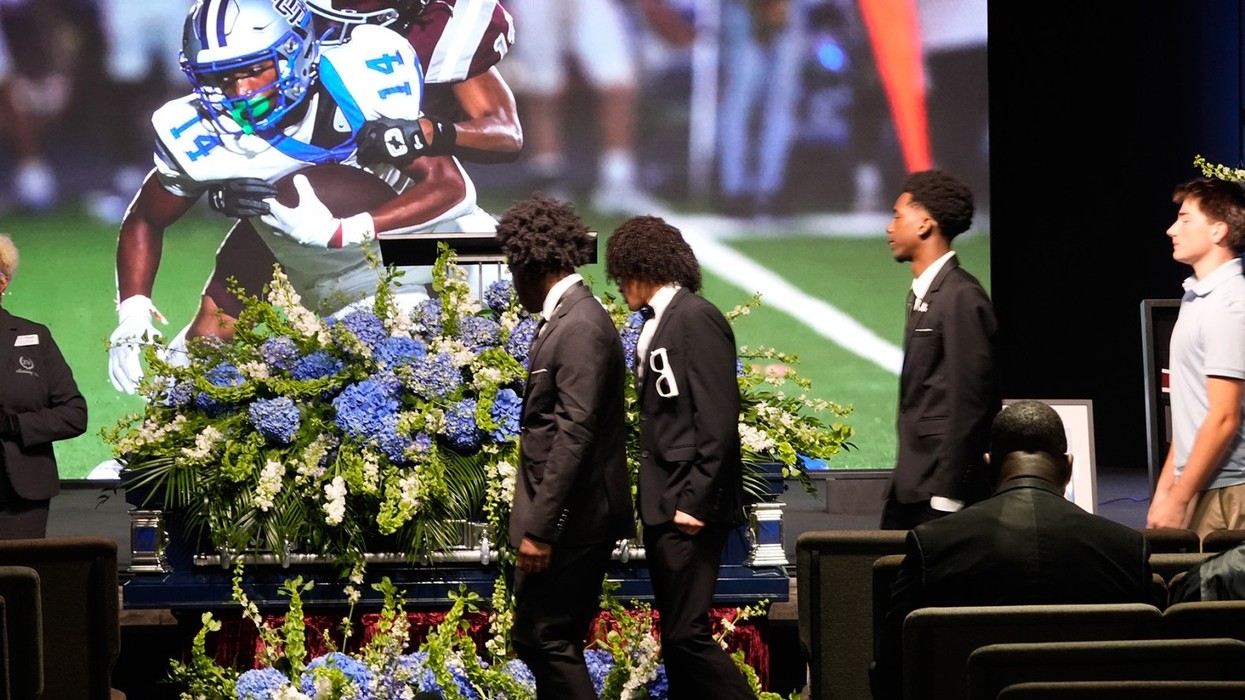
 Christine Wonsley with her husband, Elmore (second from left), attorney Ben Crump (left), and Rev. Al Sharpton (right), during a memorial service for her son Nolan Xavier Wells.Gerald Herbert/AP

Donald Trump and FIFA President Gianni Infantino stand as Spain celebrates its World Cup victory, on July 19, 2026.
America Got the World Cup It Deserves — Good and Bad
For the past six weeks or so I’ve been having a recurring fight with my friends. The dispute is over whether or not it’s ethical to support the U.S. national team in the World Cup.
To the vast majority of people reading this article, this is an absurd question: of course you can and should support the United States Men’s National Team, you weirdo. And look, I’m with you. But despite the fact that my friends are pompous dorks who are no fun to watch the game with, the question they raise is valid: Are our national teams avatars of the administration in power, or of the people and promise of that country?
If you believe the former, then yeah, it’s pretty fucking weird to support the USMNT. In doing so, by that thinking, you’d be engaging in a sort of athletic nationalism on behalf of a country run by Donald Trump, the most corrupt president in history, who forced the Iranian national team to flee across the border immediately after the final whistle of each of their games, whose federal police have shot numerous civilians dead in the street during a brutal immigration crackdown, who has started a war and supported a genocide while covering up his close personal friendship with the most notorious pedophile in modern history.
I mean just look at him. On Sunday he waddled down onto the field to present Spain with their trophy, lingering on stage with the victorious team as they tried to celebrate. The presence of Mexican President Claudia Steinbaum and Canadian Prime Minister Mark Carney did little to dilute the image of Trump standing next to his crony Gianni Infantino, grinning at all the trappings of their power, hands caressing a trophy they’d done nothing to earn, lingering well past his cue to leave Spain to their glory. This World Cup, literally, had Donald Trump’s fingerprints all over it.
And yet, this was one of the most thrilling, beautiful World Cups in recent memory. That’s America, baby — contradictions abound.
Over the past five weeks of the greatest athletic competition on Earth, we’ve seen games that will literally never leave my memory. The final, which I attended yesterday in New Jersey, was remarkably forgettable — a 0-0 draw until the 106th minute, with Spain dominating every second of play and yet unable to score, undone time and time again by their insistence on tricksy passing and the personal heroics of Argentina’s goalkeeper Emi Martinez. The rest of the tournament, however, delivered. Cabo Verde, refusing to lose until the very last moments of the first knockout round, battling back again and again against both teams that would eventually play in the final. The sheer dominance of France’s Kylian Mbappe in front of goal, scoring at will, rivaled only by the aging GOAT Leo Messi and the Norwegian warlord Erling Haaland. England’s heroic stand at the Estadio Azteca in Mexico City, 45 minutes in the rain, a man down, holding out for the win and singing “Wonderwall” with what felt like half the stadium when it ended. Off the pitch, too: the Algerian national team being welcomed with open arms by Lawrence, Kansas; Scottish braves drinking Boston dry and partying wildly with Haitian fans that overcame so much just to be at the tournament. In Mexico, of course, the World Cup was everything, and its fans threw joyous South Koreans pumped full of tequila into the air, and celebrated in the streets with opposing fans even after their hard-fought defeat to England.
For the United States, what the 2026 World Cup was — what our team was, what our fans were, what our performance as hosts was — is a reflection of two things at once: what our nation is and what it can be.
Our star striker, Folarin Balogun, was born here by accident, a citizen only because of a birthright system that our president is currently trying to erase. We have Ricardo and Giovanni and Freeman and Zendejas. We have another striker whose name is Haji, for goodness sake. I look at that team and I see the country America can be, one in which any soul born in or living within our arbitrary borders can become part of a great national project that seeks to improve the lives of everyone it can. And yet, I can also look at that team and see a reflection of what the country is, because there is an anchor around its neck. When Balogun was — albeit unjustly — suspended for a crucial match, Trump himself stepped in. Cronyism saved the day and got Balogun reinstated, but ruined the fragile harmony the team had enjoyed. On the pitch against Belgium, they came apart. Temperamental star Christian Pulisic tried to go alone and then quit, aging defender Tim Ream’s legs failed him when he needed them most, a young goalkeeper slipped and fell when he had no good options for support.
What more can you say about a team, about our country? The team is an entity that is capable of more but still has so far to go, that is vulnerable to the same forces of avarice and selfishness and fear that plague our national identity writ large.
It’s possible to end the story there, to say good riddance to another failed year and fractured team. But I think that’s a mistake. I think if you believe that you haven’t really been watching. I think that’s also why it pissed me off so much that some of my friends wouldn’t root for the U.S. Yes, we have flaws, like every country involved in the tournament. Yes, our current team management and political government are filled with morons. But if you won’t put on the shirt you’re essentially opting out of our future. We can’t wait around for a better world, a better team, a better president, before we deign to lend our support. Progress only comes from effort, from caring, from believing in something more.
One of my favorite images of the World Cup was a crowd shot of the opening match against Paraguay in Los Angeles: every race, color and creed of American there is, all covered in red white and blue. It’s corny and trite, sure. But that’s what it’s all about. That’s why we’re here. You have to believe. The U.S. won that game 4-2. In four years, we’ll be even better.