
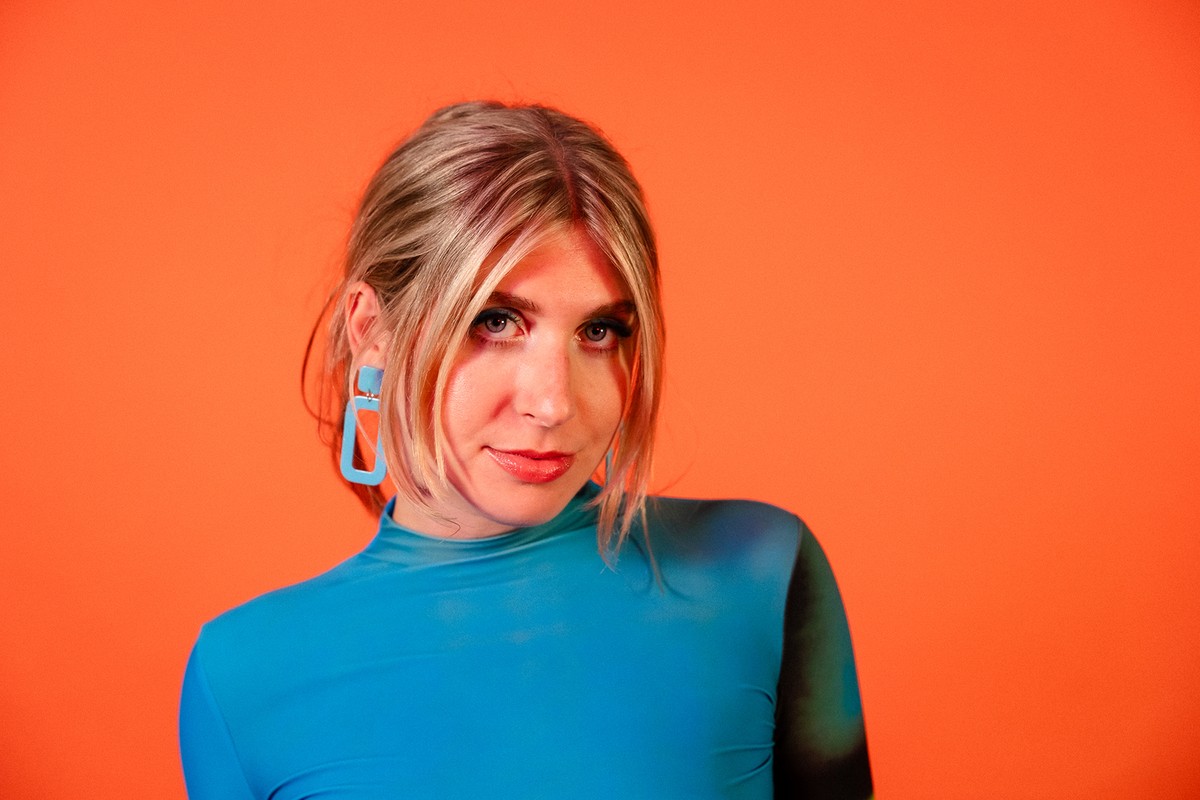

Sabrina Brier knows what it’s like to be everyone’s very best friend. Well, not literally. It’d be a bit of a heavy lift to maintain an intimate relationship with the 800,000 people who follow her on TikTok. But the comedian and content creator, best known for her inventive and wildly expressive point-of-view skits, does have a knack for dissecting the intricate politics of friendship. It’s what took Brier, 29, from a frustrated Hollywood assistant to one of the most recognizable faces on TikTok — paving a new way for comics to find success online.
@sabrina.cinoman.brier #nyc #friends #comedy
Brier’s skits are often recognizable by their premises poking fun of every kind of friend possible. Titles like “That Friend Who Always Calls the Shots,” or “That Friend Who Is Always Right,” showcase Brier out on the street, pouring her all into intensity into discussions about parties, ex-boyfriends, and arrival times. That description might seem trivial, but characters wear their hearts on their sleeves, and most importantly, Brier wears her signature expressions — turning small interrogations about late-night dinners or house parties into tense, amusing negotiations. Much of Brier’s reach comes from her videos’ constant ability to leap platforms — often turning Brier’s expressions or reactions into fast memes on social media. While Brier knows this has helped her star power skyrocket, she believes her popularity is also thanks to her legions of queer fans, noting that they’re picking up on some of the central inspirations in her work.
@sabrina.cinoman.brier #friends #nyc #comedy
“I think there’s something theater about it. There’s such an amazing connection,” Brier tells Rolling Stone from her home in New York. “It makes me think of my mom, who was a playwright in the Nineties hanging out in New York with only gay men. If you did theater as a kid and in high school, that’s where you’re going to meet the queer people. I’m campy. And the meme-ification of what I’m doing on Twitter isn’t my invention. Meme culture is the funniest because queer culture is the funniest. And a lot of what I’m doing is then, in turn, used for a lot of queer conversations online. I just love the queer community and I think there’s something to be said about a genuine connection there coming out [from the work] into the world.”
Growing up in Woodbridge, Connecticut, Brier remembers always wanting to be on stage, whether it was during summer camp or school performances during the year. But it was when she was allowed to have a digital camera, and then eventually a phone, that she discovered a love of editing. “Editing magic was always so interesting to me because I loved the stage, but at that point, I was discovering it’s so fun to put something together that doesn’t disappear into the abyss. After a live performance, it’s this thing I can keep watching.” After high school, she attended Smith College in Massachusetts and, after graduation, moved to New York and became your typical assistant in talent management.
Brier went from one assistant job to another, first in talent management before eventually assisting writers and directors. But as someone who wanted to eventually work not just in entertainment, but as an entertainer, Brier knew that her small gigs were all part of a well-trod path. The only problem? She didn’t want to wait that long. “The impetus behind posting my first video was really coming out of a creative frustration with wanting to really be perceived as a performer,” Brier tells Rolling Stone. “Covid hit and I was in quarantine feeling creatively frustrated, frustrated with my career at large, as I think every single person felt. But it helped me to really face the issue of, ‘What is it you wish you could be doing right now? [My answer] was performing.”
She made dozens of skits, posting them in spurts on Instagram. But when Brier began putting her videos on TikTok, sharing sketches about annoying roommates with passive-aggressive rules, or New York transplants obnoxiously mispronouncing street names (the common Houston dilemma) , she hit algorithm gold. Now, three years later, Brier is fresh off an internet-breaking guest appearance on Abbott Elementary, just announced an upcoming audiobook based on her famous TikTok character, called That Friend, and is closing the gap toward 1 million followers. But she tells Rolling Stone that while the internet recognition feels great, she’s focused on making sure she’s learned what she needs to for the next stage in her career: making it from phone screens to TVs.
“The North Star of [my] present is continuing to build up my skills,” Brier explains. “TikTok is amazing, and I do believe you can do anything on it. But there’s a difference between the algorithm of scrolling and the intentionality of [episodic] television. That’s something that I’m just dying to have the opportunity to create and perform in.”
@sabrina.cinoman.brier That friend who thinks her bestie can ✨do no wrong✨ @Ulta Beauty #ultabeautypartner
She got her first taste of it earlier this year while guest-starring in Abbott Elementary, when she shared the screen with Buzzfeed alum turned Emmy award-winning actress and writer Quinta Brunson. Brier calls the experience “epic,” but says the most meaningful thing was that her debut happened in such a welcoming space.
“I really have been dreaming about my television comedy debut since I was a kid,” she says. “So for it to happen in a space that was so supported and I felt so comfortable in, with this person who I look up to so much, and a whole cast and crew of people I look up to as well. It was just like, ‘Whoa.’ And it also feeds the beast. Like, let’s keep doing it. Let’s get closer and closer [to this].
@sabrina.cinoman.brier Happy Saturday girls 💕
Being the video representation of an entire generation’s relationship with friendship isn’t the easiest battle. What started as a shock — people recognizing Brier on the street and running up to her — quickly became the norm, which can feel overwhelming. But Brier says while she pushes back against parasocial relationships, she is proud that her content has been able to connect such a large group of people together.
“All entertainment, but especially on the internet, is literally about a relationship between you as an entity and this group of people who have chosen to consume what you’re doing and to engage with it,” she says. “I’m proud that that conversation is so positive. I’m proud that [there’s] so many different kinds of people in that conversation. I’m most proud of the relationship with the audience. The things they’ve contributed to it with the dialogue we’ve had, whether it be people making memes on Twitter or me incorporating [conversations] into my performance. I’m just proud of what we’ve made together.”
 Cherry Torres, Jay Armstrong Johnson, Jimin Moon, Ryan Duncan, and Ryann Redmond Matthew Murphy*
 Cherry Torres, Jimin Moon, Ryann Redmond, Jay Armstrong Johnson, and Ryan Duncan Marc J Franklin*
 Christine Wonsley with her husband, Elmore (second from left), attorney Ben Crump (left), and Rev. Al Sharpton (right), during a memorial service for her son Nolan Xavier Wells.Gerald Herbert/AP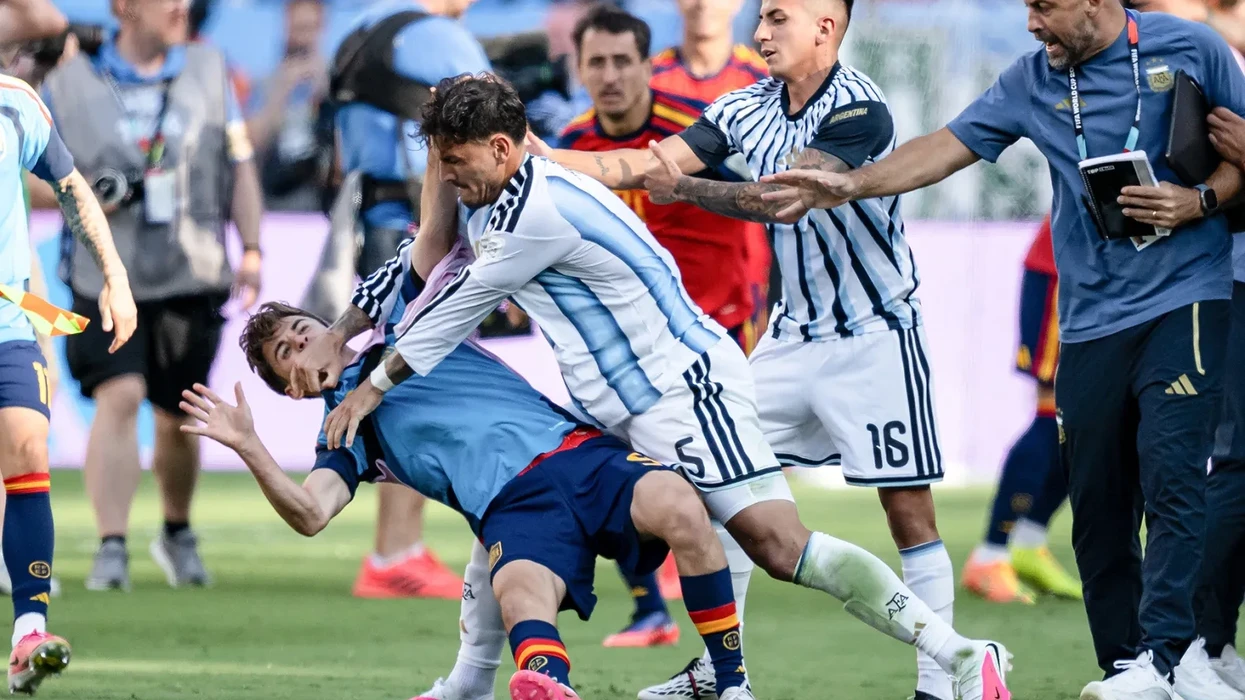
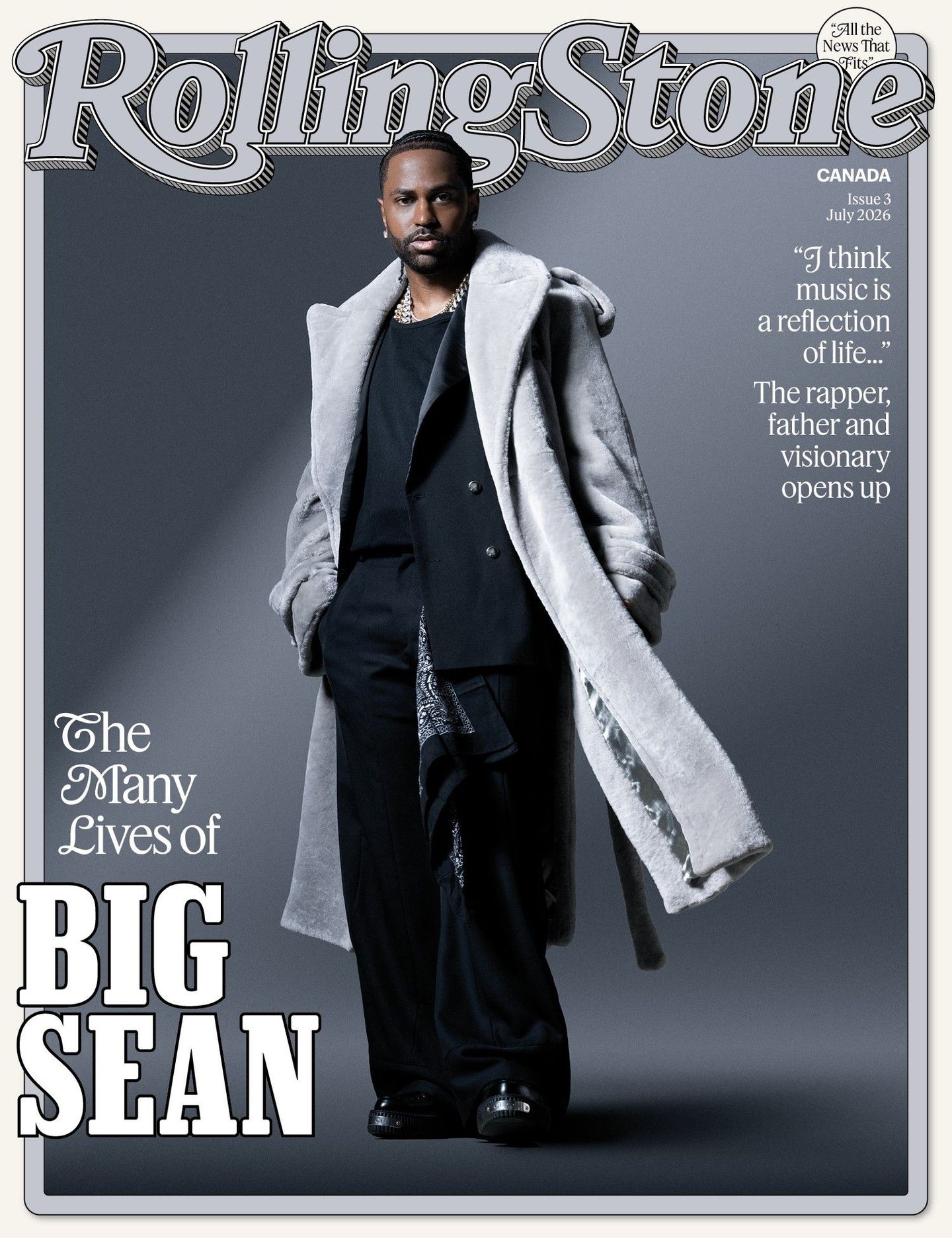
Donald Trump and FIFA President Gianni Infantino stand as Spain celebrates its World Cup victory, on July 19, 2026.
America Got the World Cup It Deserves — Good and Bad
For the past six weeks or so I’ve been having a recurring fight with my friends. The dispute is over whether or not it’s ethical to support the U.S. national team in the World Cup.
To the vast majority of people reading this article, this is an absurd question: of course you can and should support the United States Men’s National Team, you weirdo. And look, I’m with you. But despite the fact that my friends are pompous dorks who are no fun to watch the game with, the question they raise is valid: Are our national teams avatars of the administration in power, or of the people and promise of that country?
If you believe the former, then yeah, it’s pretty fucking weird to support the USMNT. In doing so, by that thinking, you’d be engaging in a sort of athletic nationalism on behalf of a country run by Donald Trump, the most corrupt president in history, who forced the Iranian national team to flee across the border immediately after the final whistle of each of their games, whose federal police have shot numerous civilians dead in the street during a brutal immigration crackdown, who has started a war and supported a genocide while covering up his close personal friendship with the most notorious pedophile in modern history.
I mean just look at him. On Sunday he waddled down onto the field to present Spain with their trophy, lingering on stage with the victorious team as they tried to celebrate. The presence of Mexican President Claudia Steinbaum and Canadian Prime Minister Mark Carney did little to dilute the image of Trump standing next to his crony Gianni Infantino, grinning at all the trappings of their power, hands caressing a trophy they’d done nothing to earn, lingering well past his cue to leave Spain to their glory. This World Cup, literally, had Donald Trump’s fingerprints all over it.
And yet, this was one of the most thrilling, beautiful World Cups in recent memory. That’s America, baby — contradictions abound.
Over the past five weeks of the greatest athletic competition on Earth, we’ve seen games that will literally never leave my memory. The final, which I attended yesterday in New Jersey, was remarkably forgettable — a 0-0 draw until the 106th minute, with Spain dominating every second of play and yet unable to score, undone time and time again by their insistence on tricksy passing and the personal heroics of Argentina’s goalkeeper Emi Martinez. The rest of the tournament, however, delivered. Cabo Verde, refusing to lose until the very last moments of the first knockout round, battling back again and again against both teams that would eventually play in the final. The sheer dominance of France’s Kylian Mbappe in front of goal, scoring at will, rivaled only by the aging GOAT Leo Messi and the Norwegian warlord Erling Haaland. England’s heroic stand at the Estadio Azteca in Mexico City, 45 minutes in the rain, a man down, holding out for the win and singing “Wonderwall” with what felt like half the stadium when it ended. Off the pitch, too: the Algerian national team being welcomed with open arms by Lawrence, Kansas; Scottish braves drinking Boston dry and partying wildly with Haitian fans that overcame so much just to be at the tournament. In Mexico, of course, the World Cup was everything, and its fans threw joyous South Koreans pumped full of tequila into the air, and celebrated in the streets with opposing fans even after their hard-fought defeat to England.
For the United States, what the 2026 World Cup was — what our team was, what our fans were, what our performance as hosts was — is a reflection of two things at once: what our nation is and what it can be.
Our star striker, Folarin Balogun, was born here by accident, a citizen only because of a birthright system that our president is currently trying to erase. We have Ricardo and Giovanni and Freeman and Zendejas. We have another striker whose name is Haji, for goodness sake. I look at that team and I see the country America can be, one in which any soul born in or living within our arbitrary borders can become part of a great national project that seeks to improve the lives of everyone it can. And yet, I can also look at that team and see a reflection of what the country is, because there is an anchor around its neck. When Balogun was — albeit unjustly — suspended for a crucial match, Trump himself stepped in. Cronyism saved the day and got Balogun reinstated, but ruined the fragile harmony the team had enjoyed. On the pitch against Belgium, they came apart. Temperamental star Christian Pulisic tried to go alone and then quit, aging defender Tim Ream’s legs failed him when he needed them most, a young goalkeeper slipped and fell when he had no good options for support.
What more can you say about a team, about our country? The team is an entity that is capable of more but still has so far to go, that is vulnerable to the same forces of avarice and selfishness and fear that plague our national identity writ large.
It’s possible to end the story there, to say good riddance to another failed year and fractured team. But I think that’s a mistake. I think if you believe that you haven’t really been watching. I think that’s also why it pissed me off so much that some of my friends wouldn’t root for the U.S. Yes, we have flaws, like every country involved in the tournament. Yes, our current team management and political government are filled with morons. But if you won’t put on the shirt you’re essentially opting out of our future. We can’t wait around for a better world, a better team, a better president, before we deign to lend our support. Progress only comes from effort, from caring, from believing in something more.
One of my favorite images of the World Cup was a crowd shot of the opening match against Paraguay in Los Angeles: every race, color and creed of American there is, all covered in red white and blue. It’s corny and trite, sure. But that’s what it’s all about. That’s why we’re here. You have to believe. The U.S. won that game 4-2. In four years, we’ll be even better.