
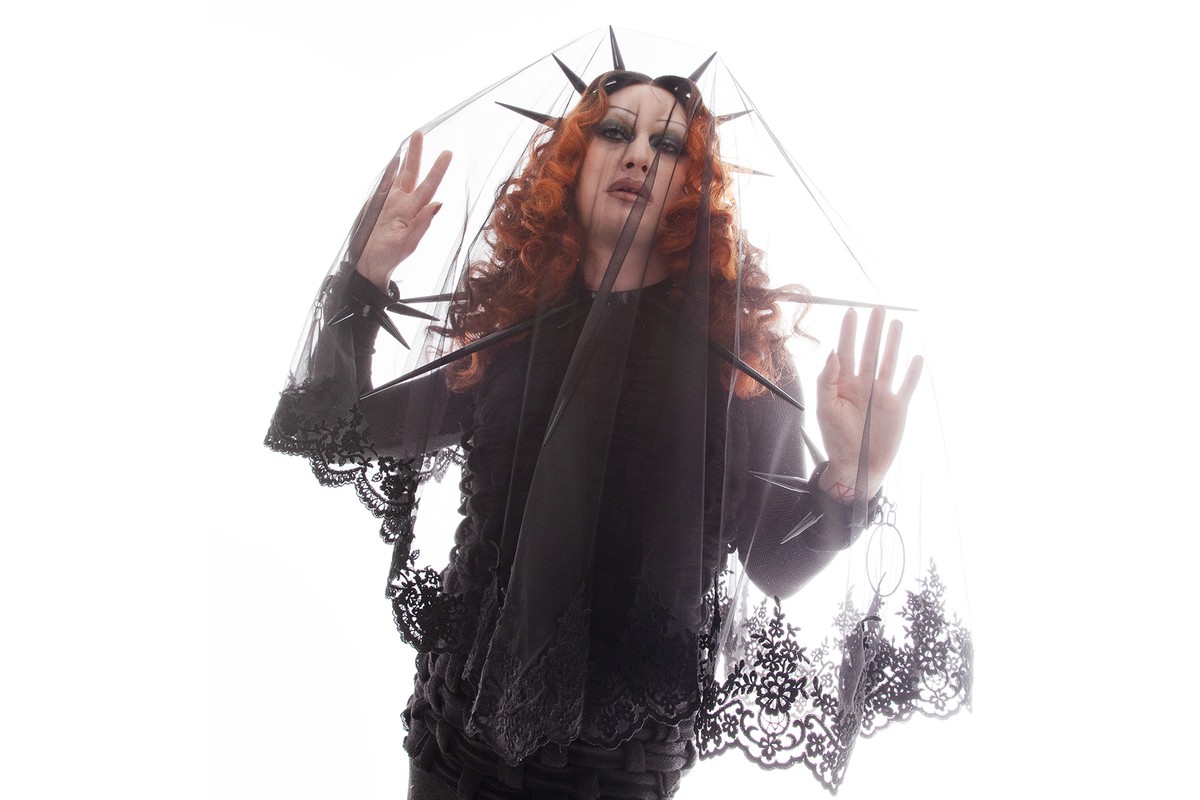

More than a decade ago, Jinkx Monsoon manifested her dream life. During her winning run on Season Seven of RuPaul’s Drag Race, she confessed that her biggest goal after the show was to “do drag on Broadway.”
She’s more than made good on her word since. After finishing a celebrated run as Matron “Mama” Morton in Chicago last year, she took on the role of Audrey, the sweet but beleaguered bleach-blonde in the off-Broadway production of Little Shop of Horrors, and is set to return to Chicago at the end of the month. In between these stage performances, she won acclaim for her villainous turn as Maestro in the latest season of Doctor Who, released her own fragrance, and reunited with frequent collaborator Major Scales for their comedy show, Together Again, Again!, in Seattle.
It wasn’t that long ago that Monsoon felt like she’d never make it here. Onstage, the 36-year-old drag queen, actress, singer (and textbook Virgo) has always been comfortable as “Jinkx” — a brassy, witchy starlet with an arsenal of showtunes and a knack for Old Hollywood impressions. Offstage, things were more complicated.
After initially identifying as nonbinary, Monsoon later came out as trans, revealing her chosen name out of drag as Hera Hoffer, and undergoing facial feminization surgery earlier this year. It’s been a long journey for her — one that involved getting sober, going to therapy, and “ten years of really, really hard work.” But now, when she looks in the mirror, she’s elated to see the person looking back at her.
“I thought I’d missed my chance to be the person I always wanted to be,” Monsoon tells Rolling Stone. Instead, she is giddy at the knowledge that the opportunity was waiting for her. “I’m excited to be me,” she says. “I always had this vision of myself in my mind, but it just felt like it was out of the question. When I learned that that wasn’t true, it felt like I got my life back.”
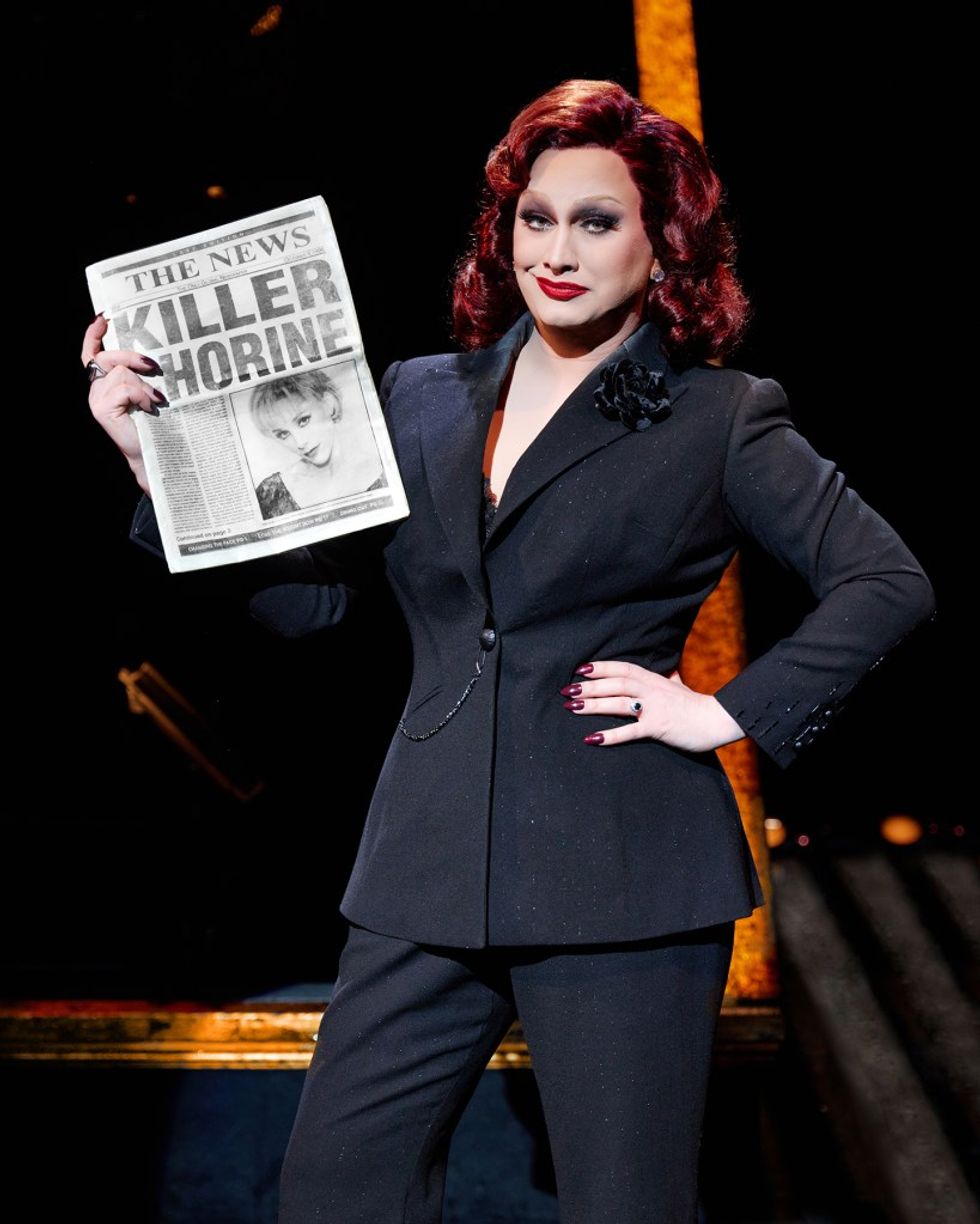
The timing couldn’t be better. As Monsoon has come into her own, she’s not only gotten to take on roles she’s always dreamed of playing, but she’s done it to great acclaim, breaking box-office records and performing to standing room only crowds in Chicago. This is only the beginning, she says, not just for her, but for all trans and gender nonconforming performers.
“There was a time when the world wasn’t ready to just let people be who they were meant to be,” she says. “I feel so lucky to be living at a time where people are letting me be exactly who I was meant to be, because who I am is an actress, a drag queen, and a trans woman. And I can be all of those things at once.”
Every time I check, it feels like you’ve just announced another project. You’re going to be Reno Sweeney in Anything Goes at the Pasadena Playhouse next January, and you’re going to make your Carnegie Hall debut not long after. How are you feeling?
It’s surreal, because a lot has happened. I’m just brimming with gratitude and graciousness, but at the same time, when you’ve been putting in the work for 10 years, you’re kind of able to accept it when things start to happen.
Most people know you as a drag queen first, but you went to school to study acting. What’s your relationship to acting versus drag?
I had always hoped that drag would be how I got to where I wanted to be. But I do think there were points in my life where I thought I had to give up drag to be a serious actor, and other points where I thought I had to give up acting to be a serious drag queen. But I knew in my heart of hearts that theater and drag are all part of the same world. There’s a way to marry the two in a believable, earnest, grounded way.
There’s also the fact that over the years I’ve been on a slow and steady gender journey. Drag means something different to me now that I’m allowing myself to express my femininity in my day-to-day life.
Audrey in Little Shop is this very ditzy, lovable character who’s been dealt a bad hand, but remains pretty hopeful. How did your own journey factor into your portrayal of her? ?
It was on my mind a lot while I was playing Audrey, because she was at the crossroads of all these parts of who I am. She’s this big, larger-than-life character, with this hyper-feminine personality. She’s like a drag persona. I’ve also known Audrey my whole life. I’ve been familiar with the show since I was five years old. And on top of that, even as a kid, I’ve always felt like “Oh my gosh, my mom is Audrey.”
As an actor, I thought: The audience is either going to just see me as Audrey, and not think twice about it, or they’re going to see me as a trans-feminine take on Audrey. I just wanted to do the work beforehand, so that it made sense to the audience either way.
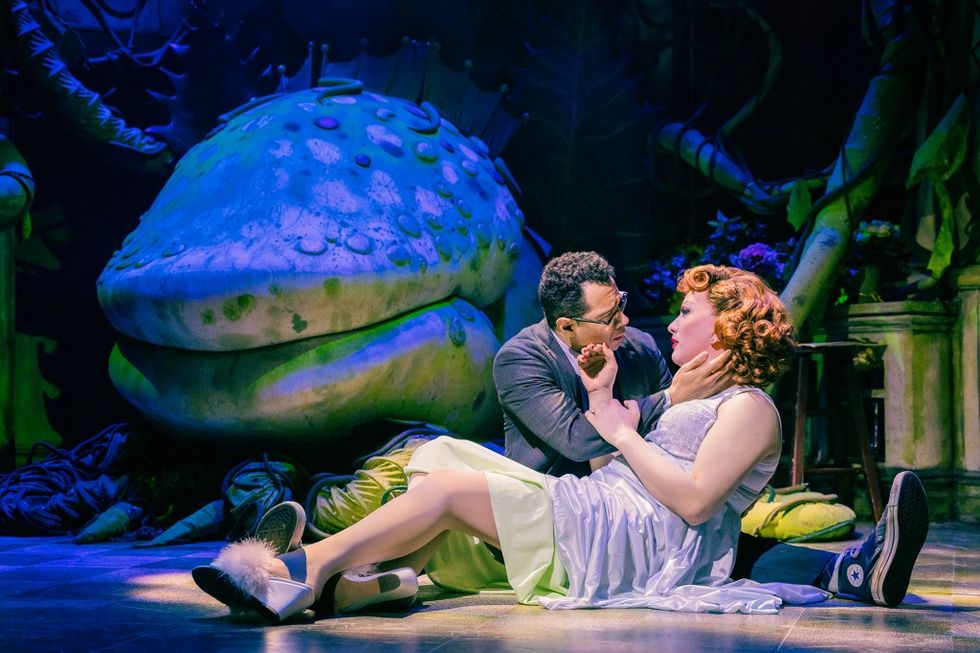
High School Musical star Corbin Bleu played the lovesick Seymour to your Audrey in the show’s most recent run. What was your experience with him like?
There are not enough words to describe how wonderful he was. It was Corbin and James Carpinello [as Orin] who were coming into the cast with me. Both of them were so completely affirming. They treated me like the leading lady, and that’s all there was to it. There was no question about why I was playing Audrey, and no comment on my gender even once. I never felt any anxiety about being a trans-feminine actor working with a straight male heartthrob. Through working on the show together, we’ve gotten to know each other, and [Corbin] and his wife, Sasha, are just going to be lifelong friends of mine.
Oh wow, that’s beautiful.
It is! Every trans woman should be so lucky as to play Audrey opposite Corbin Bleu. Like, oh my God, if you could pay for that service?
You’re stepping back into your role as Mama Morton in Chicago later this June. What was the original audition process like?
I had been asked to audition for [tabloid reporter] Mary Sunshine before, but for the first time, they added Mama Morton to the list. I told them I only wanted to audition for Mama Morton, because I just felt it in my bones. That is a character I can nail. It was one of those rare auditions where I left the room feeling like I hit the bullseye.
You’ve always been a theater queen, but what was it like to make that jump over to Broadway?
When you make the step from reality to scripted, you feel the need to prove that you’re not just there to check something off your bucket list. It’s the same in theater, especially Broadway, and off-Broadway productions. If you’re gonna do it, you should want to be serious, because the people who keep those shows going, who are there night after night, they deserve to work with good actors, not just people who are there to get their rocks off.
It seems like all of these opportunities are coming in pretty quick succession. Do you think you would’ve been ready to take them on if they had come earlier in your career?
It’s funny that you ask, because yesterday was my five-year sober anniversary from alcohol. I’m still a huge weed user, and that will probably never change [laughs]. I had so much anxiety around being perfect, and I put so much pressure on myself that alcohol kind of eased that pressure. But when you get so used to that help, you start relying on it, and it just becomes a huge deterrent. Doing the work that I’ve done on myself, it felt like everything else just followed.
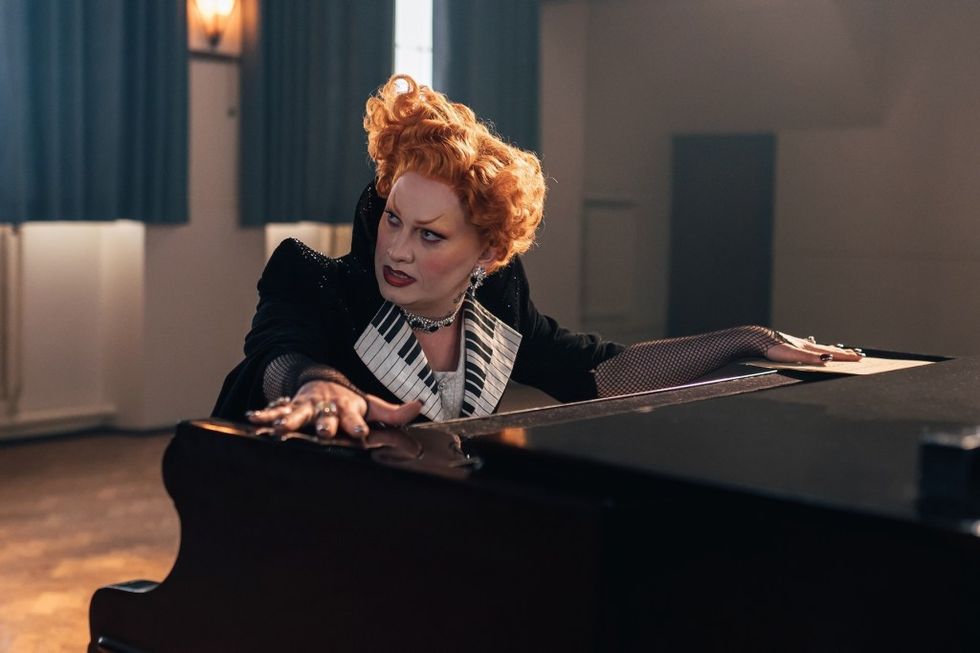
You recently had an amazing TV appearance as a Doctor Who villain. What was it like stepping into such an iconic show?
I’ve seen everything that [head writer, Russell T. Davies] has been a part of, and I’ve always loved the show. On set with Ncuti [Gatwa, who plays the Doctor], Millie [Gibson, who plays his companion, Ruby], and the crew, we all knew we were making something really special, but I had no idea that so many people would respond so positively, because when you think about it, that episode is just a cacophony of representation.
On that note, how important is queer representation onscreen?
I’ve seen in my own life the effect it’s had on me. As long as I’ve wanted to be a woman, I’ve also wanted to be an actor. But for years, there was this fear that I wouldn’t have a career. There were no trans roles, and even when they were written, they’d go to the same three people. Then I saw Hari Nef in Barbie, and it was this affirmation of It’s OK, honey, you can be an actor and transition. Now’s the time. Now, I get to be someone’s Hari Nef, by playing Audrey in Little Shop.
I’d imagine that it’s been really affirming to not only make history in these productions, but also see them performing well.
Of course, that objective success helps when producers are the shot-callers. But we also need people taking the chance. The producers of Chicago, of Little Shop, everyone who gave me these opportunities, they knew they were taking a calculated risk. Who knows? I could have gone there and really fucked things up. But I felt a responsibility. I wanted to show that gender-blind casting works, because the audience is ready, and they need to be given more credit. Little Shop was a testament to that. Every day, Corbin and I got this electric response from the audience, which was just absolute joy and celebration for seeing these two hot dorks get together.
Are there any other roles you have your eye on? What’s on your Broadway bucket list?
I’m really happy where I’m at. This is where I always wanted to be. And that doesn’t mean I’m going to say no to more opportunities or more steps forward. I want to do a lot more of this. I’m only 36! Maybe in five years, I’ll come up with what my opus should be, but right now, I’m really just enjoying where I’m at.
Actually, that was an authentic answer, but I’m also wondering if I’m missing an opportunity to manifest things. [Laughs.] I’m just gonna say the roles that are on my mind right now: Charity in Sweet Charity, Mame [Dennis] in Mame, and Zaza in La Cage aux Folles. Also, honorable mention to Miss Hannigan in Annie, because James Carpinello and I think it would be so fun to play Hannigan and Rooster, and be two sleazeballs together.
Why did you choose Hera as a first name?
Like many queer kids, I had an obsession with Greek mythology, and I was always drawn to Hera, probably because, of all the goddesses, she was the queen. I feel like through the patriarchal lens, she’s been interpreted as this vengeful and spiteful, vindictive shrew of a wife. But if you actually look at the stories through a modern lens, you’re like, Yeah, of course she was. Her husband was a fucking dick. [Laughs.] There’s so much I like about Hera, and so when I was considering what my chosen name might be, my assistant said, “Just name yourself, Hera. You know you want to.” And I did! That was that.




 David Manheim and Hunter Biden Courtesy of David Manheim
Everybody Likes Drake Again. That Means We’re Healing