Skip to content
Search

Evan Wright, ‘Generation Kill’ Author and Rolling Stone Contributor, Dead at 59

Evan Wright, ‘Generation Kill’ Author and Rolling Stone Contributor, Dead at 59

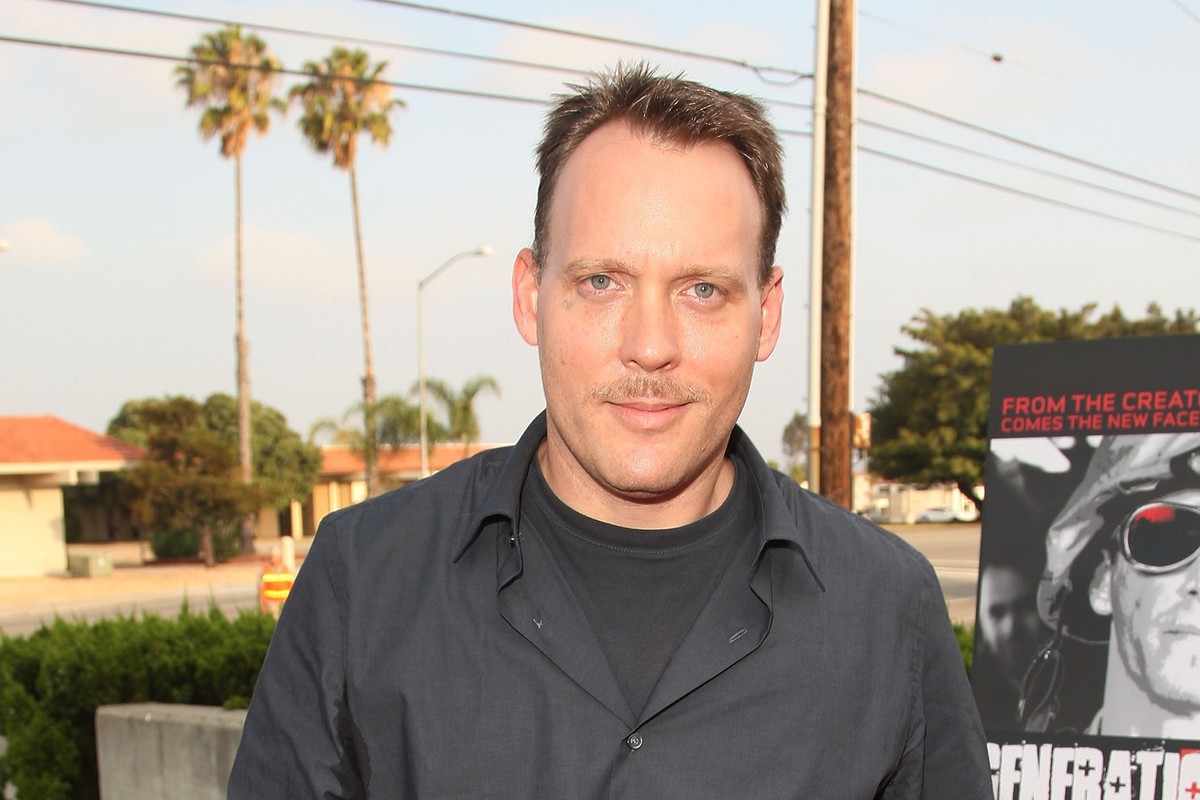
Evan Wright, the National Magazine Award-winning journalist and longtime Rolling Stone contributor whose reporting on the Iraq War served as the basis for the book and television series Generation Kill, has died at the age of 59. Wright’s wife confirmed his death to Rolling Stone. The cause of death was suicide.

As a writer for Rolling Stone, Wright journeyed to war zones like Afghanistan and Iraq, delivering harrowing first-person reporting from the battlefields. Wright’s series of articles on Iraq — where he was embedded with a U.S. Marine Corps. battalion — was serialized for a series of Rolling Stone articles titled “The Killer Elite,” which earned him a National Magazine Award for Excellence in Reporting in 2004.


That same year, Wright expanded on his “Killer Elite” reporting for his book Generation Kill, which was later adapted into an HBO miniseries by The Wire creator David Simon in 2008; Wright served as a writer on the miniseries alongside Simon and Ed Burns, and was portrayed in the show by actor Lee Tergesen.

“We’ve lost a fine journalist and storyteller. Evan’s contributions to the scripting and filming of Generation Kill were elemental,” David Simon wrote via social media on Sunday. “He was charming, funny and not a little bit feral, as many reporters are. So many moments writing in Baltimore and on set in Africa to remember.”

“I knew Evan as a good and gentle guy in a place that was neither good nor gentle,” Lt. Nathan Fick, who was featured prominently in The Killer Elite, wrote in a statement. “He wasn’t a Marine, but many of us who spent March and April 2003 alongside him have thought of Evan for the past two decades as one of us. Rest in peace, brother.”

In 2002, Rolling Stone published Wright’s true crime article “Mad Dogs & Lawyers,” a story that weaved together murder, illegal dog breeding, and the California penal system. The article was later included in the following year’s edition of The Best American Crime Writing for true crime.

During Wright’s time at Rolling Stone, he also penned features on Shakira, Quentin Tarantino, and female boxer Lucia Rijker, investigated the secret life of sorority girls at Ohio State University, reported from the anarchist underground, and detailed the little-known circumstances behind Jimi Hendrix’s mob kidnapping; the latter was an excerpt from the book American Desperado, which Wright co-wrote with drug trafficker Jon Roberts.

In addition to his time at Rolling Stone, Wright also contributed articles to Time and Vanity Fair, as well as an early career stint at Hustler, where he was that magazine’s main pornographic film reviewer. His books also include 2009’s Hella Nation and 2012’s How to Get Away With Murder in America. Most recently, Wright was featured in the HBO docuseries Teen Torture Inc., where he revisited the Seed juvenile delinquent center he was sent to in his youth; that experience was also captured in Wright’s book The Seed: A Memoir.


More Stories

Bad Bunny, Taylor Swift, and Sydney Sweeney’s Bathwater Are Up for Webby Awards in 2026

Taylor Swift, some bathwater (to represent Sydney Sweeney's bathwater), and Bad Bunny

Robyn Beck/AFP/Getty Images; Getty Images; Kathryn Riley/Getty Images

Bad Bunny, Taylor Swift, and Sydney Sweeney’s Bathwater Are Up for Webby Awards in 2026

The nominees for the most chaotic award show the internet has to offer are here, with Bad Bunny, Taylor Swift, and Sydney Sweeney’s bathwater all up for Webby Awards in 2026.

The 30th edition of the show — which celebrates excellence on the internet in all its deranged forms — is set to take place May 11 in New York City, with comedian and Daily Show correspondent Josh Johnson serving as host. As always, the Webbys feature a wide-ranging assortment of categories, covering everything from AI, viral marketing, and social media, to podcasts, digital creators, and music videos.

Keep ReadingShow less
Meta and YouTube Found Negligent, ‘Dangerous’ to Minors. Jury Awards $3 Million

Meta CEO Mark Zuckerberg leaving Los Angeles Superior Court on Feb. 18

Wally Skalij/Getty Images

Meta and YouTube Found Negligent, ‘Dangerous’ to Minors. Jury Awards $3 Million

At a bellwether trial where billionaire Meta CEO Mark Zuckerberg was grilled under oath, a Los Angeles jury handed a landmark victory Wednesday to a woman who said she became hopelessly hooked on Meta’s Instagram and Google’s YouTube as a child and suffered serious harm.

In her closely watched lawsuit — the first to reach trial among thousands of individual personal-injury cases filed in recent years against social media companies — the woman claimed the negligently-designed platform features fueled a powerful addiction that dominated her childhood. Jurors heard evidence that the addiction led to anxiety, body dysmorphia, self-harm, and suicidal thoughts.

Keep ReadingShow less
Woman Who Says Bill Cosby Drugged and Raped Her in 1972 Wins $19.3 Million Jury Award

US Entertainer Bill Cosby arrives for a scenting hearing in Norristown, PA, on September 25, 2018. Cosby appears before Judge Steven O'Neil after a jury found the 81 year old entertainer guilty of three counts of aggravated indecent assault in a April 2018 retrial.

Bastiaan Slabbers/NurPhoto/Getty Images

Woman Who Says Bill Cosby Drugged and Raped Her in 1972 Wins $19.3 Million Jury Award

A woman who claims Bill Cosby drugged and raped her in 1972 won a $19.25 million jury award on Monday, decades after first stepping forward as Jane Doe Number 8 in the 2005 lawsuit filed by former Temple University athletics director Andrea Constand against the disgraced comedian.

Jurors found Cosby liable for the sexual assault of an intoxicated woman as well as sexual battery. They awarded plaintiff Donna Motsinger $17.5 million for past mental suffering and $1.75 million for future suffering. In another major finding, they determined Cosby acted with “malice, oppression, or fraud,” opening the door to punitive damages to be decided in a second phase of the trial.

Keep ReadingShow less
Chuck Norris, ‘Walker, Texas Ranger’ Star and Champion Martial Artist, Dead at 86

Chuck Norris promotes the film *Pumping Iron* in Taormina, Sicily, on July 24, 1985.

Frederic Meylan/Sygma/Getty Images

Chuck Norris, ‘Walker, Texas Ranger’ Star and Champion Martial Artist, Dead at 86

Chuck Norris, the martial arts champion who became an emblematic Eighties action star, died on Thursday. He was 86.

Norris’ family confirmed his death on Instagram Friday morning after reports emerged that Norris had been hospitalized in Hawaii earlier this week after an unspecified medical emergency. No cause of death was given, with the family saying they “would like to keep the circumstances private.” But they added, “please know that he was surrounded by his family and was at peace.”

Keep ReadingShow less
The Last Great Weed Smuggler

Prager (right) sailing in the Bahamas in 1977

Courtesy of Harvey Prager

The Last Great Weed Smuggler

The smugglers were halfway to Key West, Florida, with a boat full of bad weed when the winds turned against them. The winds had not been kind the whole trip, and when you’re running weed in a 61-foot steel-hull sailboat, you need the wind on your side. Harvey Prager had been on watch for hours, steering through lashing rain and 20-foot waves in the Yucatan Channel. Watches were four-hour shifts, day in, day out. Belowdecks, crew members tried to sleep despite the violent pitching of their ship, called The Escape. On deck, Prager knew he had to be vigilant. The passage was a good place to get snatched by the Coast Guard, or worse, get run over by a cargo ship. The Escape had a powerful engine that recharged the batteries that powered the crew’s rudimentary lights and equipment, but it was struggling, chewing through diesel as it pushed the ship up and down through mountainous waves. The end was in sight, though: If they could grind their way through the channel, dodge the container ships and cops, they’d catch the Gulf Stream winds and be able to shoot straight north to the coast of Maine, where they’d tuck the boat into a quiet little inlet, offload the weed, and rake in the cash, living like kings in New England just as the summer of 1976 came to a close. That’s what Prager was dreaming of, at least, before the radio crackled below.

The radio, a battered old Zenith Trans-Oceanic, was their only link to the outside world, bringing them occasional weather reports and little else. They had no cell phones, no radar, no satellite uplink. They navigated by sextant and map. If they went down, no one would ever find them, and the radio told them the weather was about to go from bad to worse. A hurricane had formed north of the Bahamas, swelling in size and hooking west, cutting off their route to Maine and leaving the smugglers adrift at sea with no port to call home.

Keep ReadingShow less