
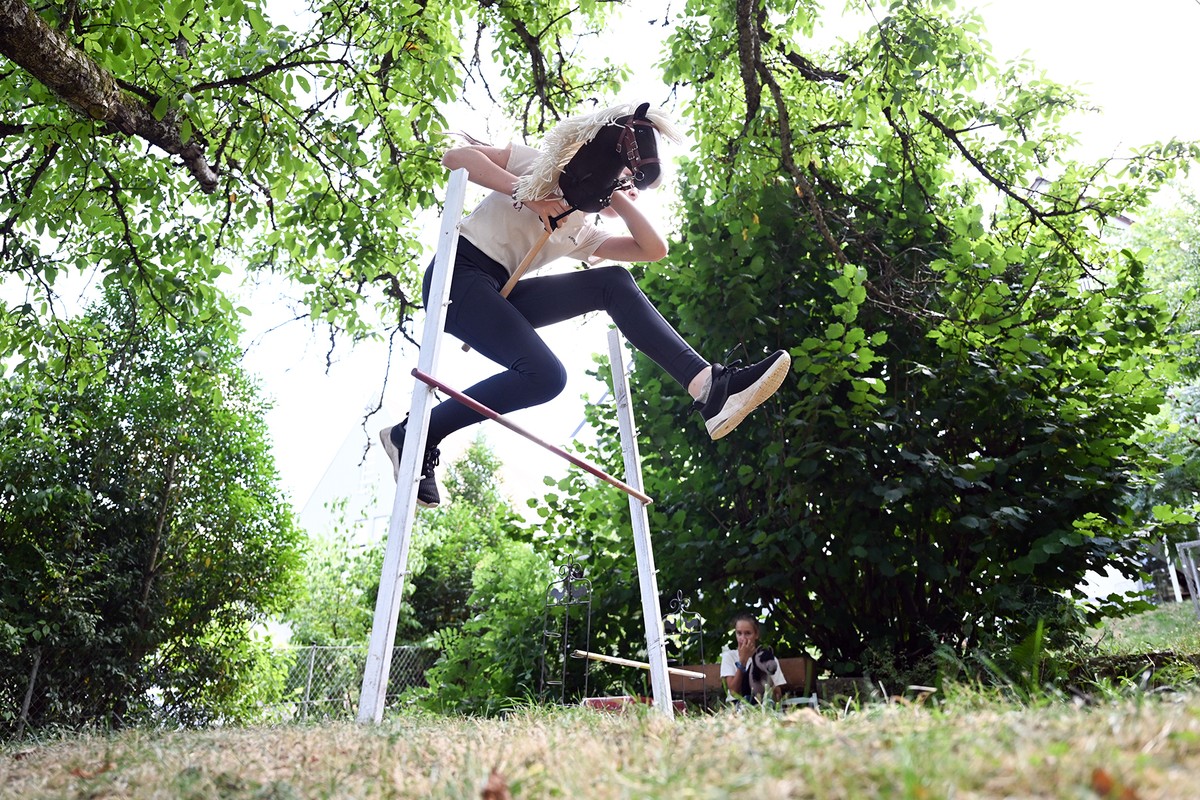

They might call it a hobby, but the girls and young women who competitively prance and jump around holding stick-mounted felt horse heads ride with a certain passion.
“Hobbyhorsing,” which replicates equestrian events with a toy in place of the actual horse, of course has its roots in childhood play. But around the early 2000s, it began to catch on in Finland as an athletic pursuit and craft community — you could design your own horses, trade or collect them, organize dressage shows and bond with fellow enthusiasts. The 2024 Finnish Hobbyhorse Championships, the largest event in the sport, will celebrate its 11th anniversary this weekend, welcoming international competitors. (The country has an official hobbyhorsing association and has helped to set up others around Europe.)
To an outsider, hobbyhorsing may appear as strange as Quidditch, the flying-broomstick sport from Harry Potter that college students adapted into a real-world but earthbound game in which players nonetheless move around with brooms clasped between their legs. Even the Finnish Hobbyhorse Association acknowledges this: “Understandably many of those who have just heard about our hobby are more or less confused,” the group’s website notes.
Accordingly, when videos of hobbyhorse routines go viral online — as one did this week — bafflement and ridicule tend to follow. In this case, a hobbyhorse rider shared a TikTok of herself struggling to catch her breath after competing at this year’s Slovakia Championships. She meant the clip to demonstrate that while the pastime “looks easy,” it requires significant athletic exertion. Commenters didn’t buy it and accused her of overdramatizing the difficulty of the sport, while many objected to even categorizing the activity as such.
Still, there’s an upside to the exposure, says Nele Nöhrbaß, an 18-year-old hobbyhorse rider and content creator in Germany: widely shared videos raise the community’s profile and draw in curious newcomers. “On social media, there were hardly any videos that you could learn from,” Nöhrbaß says of the period in 2017 when she first took up hobbyhorsing. “I started uploading videos myself, and I think because of me and some other ‘hobbyhorsinginfluencers’ the sport has grown a lot over the last five years. Many people felt inspired by the videos, and I feel like it’s getting more and more every year. And nowadays, if I tell people what I do, they know what it is — most of the time,” she says.
“I thought it was a little weird at first,” Nöhrbaß admits when describing how she discovered hobbyhorsing on YouTube at age 12, “but after a while I just tried it out, and I immediately enjoyed it. I was able to convince my parents to buy me my first hobbyhorse. I also started my YouTube channel and posted my training there.” Nöhrbaß now trains two to four times a week — and more often of late, as she will be competing in the Finnish Championships this weekend. Germany hosts plenty of tournaments as well, and will soon have its own championships for the first time, she says. “In the summer, I usually go to one or two tournaments a month, in winter it’s slightly less. Most of them are organized by private persons, but sometimes they’re also sportclubs,” Nöhrbaß explains.
Nöhrbaß certainly seems to be an effective ambassador to the hobbyhorsing world, boasting a total of more than 80,000 followers across her YouTube, TikTok, and Instagram accounts. She sews hobbyhorses herself and likes to highlight the eclectic and imaginative qualities of the sport. “You can be creative and active!” she says. “You can make your own equipment, make videos or take pictures, and you can make lots of new friends.” Riding clubs and hobbyhorse camps foster those close connections.
@hobbyhorsingde_official Visit TikTok to discover videos!
While you might assume hobbyhorsers don’t have access to actual horses and are simply acting out a fantasy of having their own stable, Nöhrbaß says this is a common misconception. She grew up with horses, has equestrian experience, and estimates that “80 percent of the hobbyhorsers I know ride real horses too.” That knowledge carries over to the training and performances with the inanimate horses: “We often look at real horses in order to copy the movements a bit,” Nöhrbaß says. “I sometimes study equestrian competitions to learn.” But hobbyhorsing demands a synthesis of gymnastic movement as both rider and animal. “It’s a completely different requirement on the body,” she says. “It’s much more about stamina.”
Nöhrbaß knows that not everyone will catch hobbyhorse fever, and that some are skeptical of its merits. “Just try it if you think you might like it,” she advises. “If you’re afraid of someone else’s reaction, you don’t have to tell them. And if you don’t like it, you can stop. It’s normal to feel weird at the beginning, because when do you ever see someone riding a hobbyhorse? But after a while, you will get used to it and maybe you will see how much fun it can be.”
Maybe it’s this element of whimsy that draws these nimble and high-jumping young women to hobbyhorses rather than traditional track and field competition. In any case, they don’t appear fazed by anyone dismissing their pursuit as childish. The cynics can sneer all they want — they’ll never get to ride those happy trails.





 Today, Prager lives in Brooklyn, in the same apartment building as the story’s author.Sacha Lecca
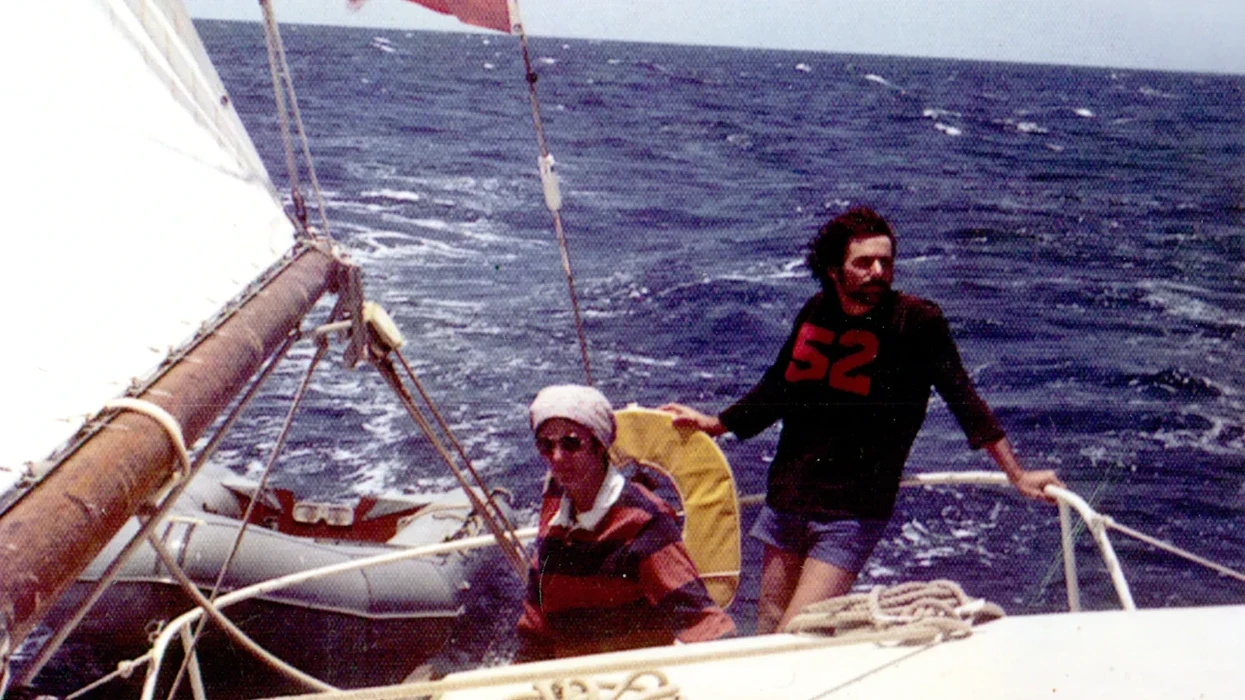
 The Escape was the vessel Prager used for years.Courtesy of Harvey Prager
 Mike “Cochise” Pace (with his son, Simon, in 1977) was one of Prager’s original crew members, and was elected captain of the group early on.Courtesy of Harvey Prager
 Prager and his crew hung out with Jimmy Buffett in Key West.Michael Ochs Archives/Getty Images
 The Knightsbridge Safe Deposit Centre in London was broken into — but Prager’s belongings were left behind.PA Wire/AP
 Today, Prager is a lawyer at a firm focused on civil rights.Sacha Lecca
 Prager, Jake “Pigpen” Keenan, and Mike “Cochise” Pace got together in 2009 for a reunion