
Skip to content
Search

Are Clavicular’s Followers Rethinking His Influence?

The ‘looksmaxxing’ influencer had a reported overdose on a livestream last week, leaving fans wondering how much they should trust his advice

Are Clavicular’s Followers Rethinking His Influence?

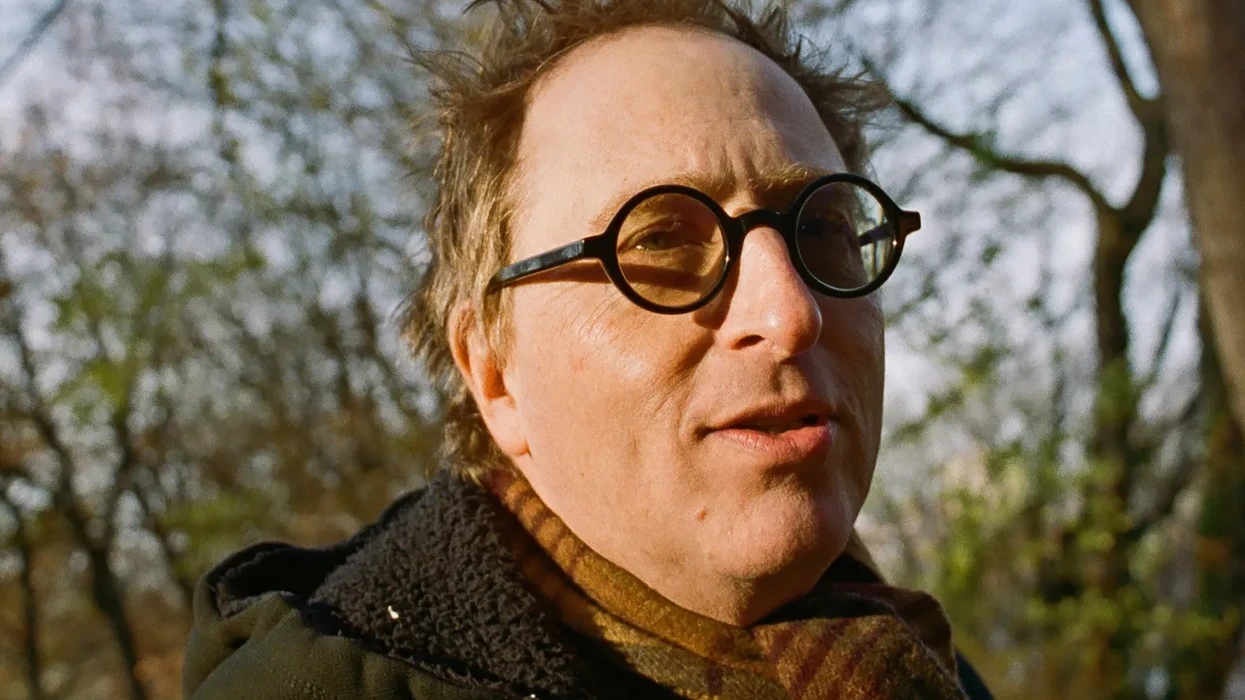
Braden Peters, also known as Clavicular

Cassidy Araiza/“The New York Times”/REDUX

Clavicular’s rise was not just fast. It marked a shift in how a lot of young men see themselves. Over the past year, the streamer and social media personality became one of the most prominent figures in the world of “looksmaxxing,” a subculture built around the idea that every part of a man’s appearance can be improved and perfected through discipline and effort. That world had existed mostly in smaller forums and niche communities, but Clavicular brought it into the mainstream. What had once seemed extreme or obsessive now felt socially acceptable.

A major reason his content was so popular was because of how he explained his processes. Clavicular did not just show results or post before and after pictures. He broke everything down into clear steps. His videos explained routines, habits, and daily choices in a way that made self-improvement feel structured and achievable. His content — whether it was about crystal meth, peptides, anabolic steroids, or even bone smashing, which is a pseudoscience that involves hitting your face with a hammer to improve your looks — was fascinating even if it fell outside of the bounds of what’s recommended by doctors or even considered to be safe. Though some viewers may have been hate-watching, I saw many of my friends and fellow college students begin to take him seriously.


Clavicular’s content landed at a time when a lot of young men were already searching for direction. Many of my friends feel uncertain about where they stand socially, financially, and romantically. There is a constant sense of comparison online, where it feels like everyone else is ahead. In that environment, Clavicular’s message was simple and direct. If you improve yourself, especially your appearance, everything else will follow.

What stood out to me was not just how many people watched his content, but how many people I knew acted on it. My friends told me that watching him encouraged them to go to the gym more consistently. I also saw many of those same friends change their diets, their routines, and the way they talked about their bodies. In group chats, people would send his videos and debate about whether things like bone smashing, which only a few friends tried, worked. The term “looksmaxxing” was sometimes used jokingly, but in reality, they were trying to optimize their appearance in very specific and intentional ways because of what they were seeing from Clavicular.

For a while, that belief held. His rise showed how much demand there was for this kind of guidance and how quickly it could spread. But, his advice started to become too much. Three friends told me they had started to feel uncomfortable with how far Clavicular’s routines were going.

Lately, they’ve noticed Clavicular has been acting increasingly erratic. Earlier this week, Clavicular was hospitalized after a reported overdose. He was released the day after, and said he would quit substances, “hopefully forever.” But those around him remained worried — his representative, Mitchell Jackson, announced he would not work with the streamer until Clavicular agreed to get treatment.

The reactions among my friends surprised me. Many who followed his content and listened to his advice said that he needed to get his act together and were doubtful about whether they would still follow him and the more extreme looksmaxxing routines he pushes. Others still support him, but were shocked at what happened, especially because he always presented himself as someone in control. As one of my friends said, “He made it seem like if you just followed everything, your life would be perfect. But now it feels different.” They related to Clavicular in many ways and thought he was worth listening to. Now, my friends are not just questioning him as a person, but how much weight they should give to what he says.

One friend recently told me, “I still care about improving myself, but I don’t need to listen to everything he says so seriously.” My friends still want to look good, but many of them will no longer look to Clavicular or other looksmaxxers to do that. They are starting to see his advice as too radical, and believe they could get the results they want on their own.

More Stories

A History of Mario, Nintendo’s Golden Boy
Photo Illustration by Matthew Cooley

A History of Mario, Nintendo’s Golden Boy

Going into 1981, Japanese game designer Shigeru Miyamoto was facing a problem. Working on one of his first games ever, he hoped to use Popeye, the famed sailor of 1930s cartoons, to serve as the hero. Yet despite the fact that Nintendo held the rights to make Popeye-themed playing cards and handheld games, a full-fledged title wasn’t approved for unknown reasons. The solution was to create original characters: Popeye became a plumber, simply dubbed Jumpman, while brutish antagonist Bluto ended up the titular ape Donkey Kong (a legend in his own right).

Following his impromptu genesis, Mario quickly evolved. By 1982, he had a real name, as well as a set of core elements. Miyamoto didn’t have a lot of specifics for him, but he knew the basics. “Mario’s around 26-years-old,” Miyamoto tells Rolling Stone. “Has a mustache. May not be the brightest, but has guts. He’s got emotion, he’s got heart.”

Keep ReadingShow less
Inside the Multibillion-Dollar Business of Child Influencers
Seventyfour - stock.adobe.com

Inside the Multibillion-Dollar Business of Child Influencers

What is it like to live your entire life in front of an audience of millions — from your birth to potty-training to puberty to adolescence? For many child influencers, this is their reality. They are public figures before they are even born; both the milestones and the mundane moments of their lives are captured by their parents and sold as content. Though child influencers — and the mom influencers and family vloggers who prop them up — are part of the multibillion dollar influencing industry, until now, we haven’t known much about what it was like to be one. That’s what I’m changing with my book Like, Follow, Subscribe: Influencer Kids and the Cost of a Childhood Online. To answer these questions, I talked to kid influencers themselves, family vloggers, experts in the industry, digital ethicists, psychologists, and more.

Keep ReadingShow less
The Last Great Weed Smuggler

Prager (right) sailing in the Bahamas in 1977

Courtesy of Harvey Prager

The Last Great Weed Smuggler

The smugglers were halfway to Key West, Florida, with a boat full of bad weed when the winds turned against them. The winds had not been kind the whole trip, and when you’re running weed in a 61-foot steel-hull sailboat, you need the wind on your side. Harvey Prager had been on watch for hours, steering through lashing rain and 20-foot waves in the Yucatan Channel. Watches were four-hour shifts, day in, day out. Belowdecks, crew members tried to sleep despite the violent pitching of their ship, called The Escape. On deck, Prager knew he had to be vigilant. The passage was a good place to get snatched by the Coast Guard, or worse, get run over by a cargo ship. The Escape had a powerful engine that recharged the batteries that powered the crew’s rudimentary lights and equipment, but it was struggling, chewing through diesel as it pushed the ship up and down through mountainous waves. The end was in sight, though: If they could grind their way through the channel, dodge the container ships and cops, they’d catch the Gulf Stream winds and be able to shoot straight north to the coast of Maine, where they’d tuck the boat into a quiet little inlet, offload the weed, and rake in the cash, living like kings in New England just as the summer of 1976 came to a close. That’s what Prager was dreaming of, at least, before the radio crackled below.

Keep ReadingShow less
Curried Lobster and Philly Cheesesteaks: Talking to Bruce Springsteen’s Personal Chef

Bruce Springsteen's personal chef Andre Fowles on his new cookbook and what he likes to serve the E Street Band leader.

Michael Condran; Shirlaine Forrest/Getty Images

Curried Lobster and Philly Cheesesteaks: Talking to Bruce Springsteen’s Personal Chef

Most mornings, world-renowned chef Andre Fowles wakes up at around six in his home in Harlem, goes to some markets to buy ingredients — Citarella for seafood; Agata & Valentina for fresh mozzarella — and then makes the hourlong commute to his place of work: Bruce Springsteen’s kitchen. He’s there by 9 a.m., ready for the day’s labor of preparing and cooking lunch and dinner for Springsteen and his wife Patti Scialfa at their expansive estate in Colts Neck, New Jersey. Lunch time at the Springsteen residence is between noon and one; dinner between six and seven; and Fowles often joins him and the E Street Band on the road.

Keep ReadingShow less
Boulevard of Dreams on the Future of PR in a Post-Newsroom World
Photo by Lane Dorsey. Shot on site thanks to the Bisha Hotel.

Boulevard of Dreams on the Future of PR in a Post-Newsroom World

When Lori Harito started noticing the shift traditional media was taking, she just knew she couldn't stay where she was. In the volatile world of Canadian content, where the ground shifts daily beneath the feet of creators, Harito’s transition from the newsroom to the boardroom of her own boutique PR agency, Boulevard of Dreams, feels less like a career pivot and more like a necessary evolution.

“Journalism is an unstable, unsteady career path, but it was something I truly, truly loved,” Harito reflects. That foundation, a deep-rooted respect for the trenches of storytelling, is exactly what is currently disrupting the often-sterile and overly corporate world of public relations. Along with her partner-in-strategy, Kelly McCabe, Harito is proving that in 2026, the most valuable currency isn't just reach, it’s keeping a finger on the pulse.

Keep ReadingShow less