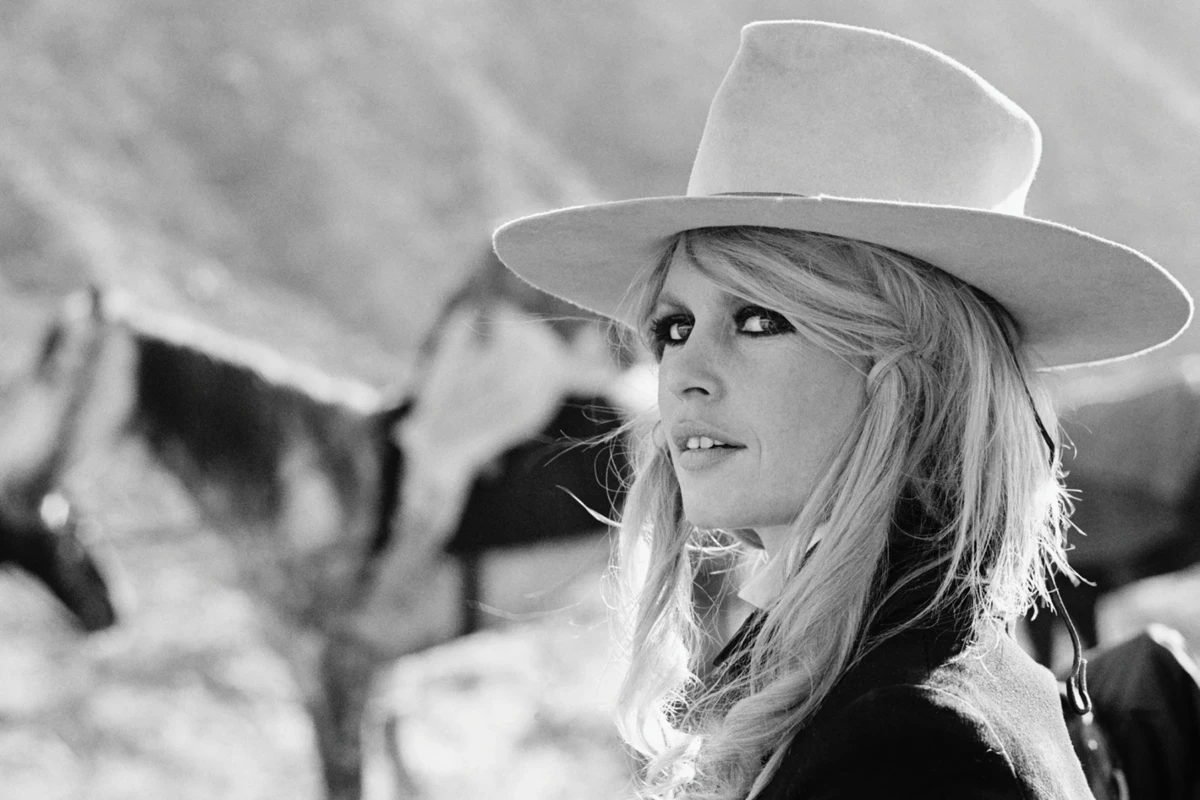

Brigitte Bardot, one of cinema’s most iconic sex symbols who quit the business to focus on activism, has died at age 91.
“The Brigitte Bardot Foundation announces with immense sadness the death of its founder and president, Madame Brigitte Bardot, a world-renowned actress and singer, who chose to abandon her prestigious career to dedicate her life and energy to animal welfare and her foundation,” the foundation announced on Sunday. A cause of death and date was not immediately available.
“Her films, her voice, her dazzling glory, her initials, her sorrows, her generous passion for animals, her face that became Marianne, Brigitte Bardot embodied a life of freedom,” French President Emmanuel Macron said in a statement. “French existence, universal brilliance. She touched us. We mourn a legend of the century.”
Although only acting for about 20 years from the 1950s to the 1970s, the French performer left an indelible mark, embodying the sexual revolution that swept across society at the time. Becoming a global celebrity thanks to 1956’s And God Created Woman, in which she played a liberated, unapologetically libidinous teenager, Bardot broke barriers in the depiction of eroticism on screen. As a result, her film career was littered with movies in which she was the object of desire, enrapturing the other characters and the audience simultaneously. Bardot walked away from acting in 1973 to crusade for animal rights, starting the Brigitte Bardot Foundation in 1986. But although she remained the platonic ideal of female beauty onscreen even after she retired, Bardot insisted she didn’t see herself that way.
“To tell you the truth, I don’t feel all that exceptional,” she said in a 2014 interview. “That’s how it always has been, and that hasn’t changed.”
Born in Paris on September 28, 1934, Bardot grew up in a well-to-do, conservative Catholic family. She bristled at her strict parents, exacerbated by the fact that she came of age during the Nazi occupation of France, but she found an escape dancing to records at home. That interest led to a stint in ballet, and later modeling. Her appearance on the cover of magazines such as Elle caught the eye of director Marc Allégret, who was interested in possibly casting her in his next film. The project never ended up happening, but it was how Bardot met aspiring filmmaker Roger Vadim, whom she married in 1952. (Her parents made her wait until she was 18 to wed.)
Bardot appeared in a series of mostly unremarkable pictures — including her English-language debut in the 1955 hit comedy Doctor at Sea — before And God Created Woman. But it was that 1956 romantic drama, Vadim’s directorial debut, that launched her. Playing Juliette, an 18-year-old orphan tempting every man in Saint-Tropez, Bardot oozed playful sex appeal. In his New York Times review, Bosley Crowther aptly (and somewhat crudely) summed up the movie’s appeal: “This round and voluptuous little French miss is put on spectacular display and is rather brazenly ogled from every allowable point of view. She is looked at in slacks and sweaters, in shorts and bikini bathing suits. She wears a bedsheet on two or three occasions, and, once, she shows behind a thin screen in the nude. What’s more, she moves herself in a fashion that fully accentuates her charms. She is undeniably a creation of superlative craftsmanship.”
The movie made Bardot a superstar — not just in France but overseas, where demand for more of her films quickly skyrocketed. Although male film critics were more taken by her looks than her movies’ artistic merits, Bardot wasn’t concerned. Asked around the time of And God Created Woman whether she wanted to be thought of as a serious actress, she responded, “I will be a serious actress when I’m older.”
Labeled a “sex kitten” in the press, Bardot continued to portray characters who flaunted their sexuality, including in the 1958 crime-thriller In Case of Adversity, which saw her play a murder suspect who seduces Jean Gabin’s married attorney. She had several commercial successes with Vadim, who had written or co-written her other 1956 smashes Naughty Girl and Plucking the Daisy. But after their divorce a year later, she was determined to prove that her stardom wasn’t simply because of him, even though they continued to occasionally collaborate in later years. As Bardot once put it, “To be fair, if Vadim discovered and manufactured me, I created Vadim.”
If anything, her celebrity only grew in the 1960s, with box-office smashes like the 1959 comedy Babette Goes to War paving the way for director Henri-Georges Clouzot’s highly-anticipated 1960 courtroom drama The Truth, which starred Bardot as a woman on trial for the murder of her boyfriend. Earning a Best Foreign-Language Film Oscar nomination and proving to be another commercial triumph, The Truth contains arguably Bardot’s finest performance — indisputable evidence that she could be a “serious actress,” but on her own terms and on her own timetable. Plus, it was impossible not to think about her character’s dilemma — a free-spirited young woman trying to escape a repressive upbringing — and not connect it to the similar break Bardot had orchestrated from her family.
Perhaps tellingly, she later said The Truth was one of the films she was proudest of, stating that she hoped the movie “would turn me into a tragic actress, a recognized actress; it would be the crowning glory of my career.” The David di Donatello Awards — the Italian equivalent of the Oscars — agreed, voting her Best Foreign Actress for the film.
Bardot continued to enjoy a string of hits — including the 1962 romantic drama A Very Private Affair, which took inspiration from her life story — while expanding her list of acclaimed directors with whom she collaborated. Louis Malle, who had helmed A Very Private Affair, guided her to a BAFTA nomination for 1965’s Viva Maria!, and she teamed up with Jean-Luc Godard for Contempt, a blistering portrait of a marriage in disarray. But although by that point Bardot had long established her bona fides as a legitimate actress — she shined in Contempt as a chilly, brittle wife being used as a professional bargaining tool by her husband (Michel Piccoli), a floundering screenwriter — Godard’s producers reportedly forced him to include shots of her nude to help bolster the box office.
Not content to simply be a movie star, she also pursued a singing career, recording several albums in the 1960s. Working with, among others, her future lover Serge Gainsbourg, she released Brigitte Bardot Sings and B.B., finding her greatest success with their 1968 collaborative album Bonnie and Clyde, which featured their dreamy, effortlessly cool duet on the title track. Naysayers dismissed her musical aspirations, accusing her of trading on her beauty and stardom. Bardot was defiant. Looking back at her life, she declared in 2012, “I’ve always done what I liked. … I know that I have more balls than many men. They could learn a lesson from me.”
Although she was quite fond of her romantic comedy The Bear and the Doll, in which she plays a woman trying to woo Jean-Pierre Cassel’s musician, as the 1970s beckoned, her stardom began to fade. After starring in 1973’s The Edifying and Joyous Story of Colinot, she quit acting. She had never had an easy relationship with celebrity: “Nobody can imagine how terrible it is,” she told Vogue Hommes. “It’s an ordeal. I could not live like this anymore.”
Instead, she started speaking out about the mistreatment of animals. Becoming a vegetarian, Bardot used her wealth to help bankroll her own foundation dedicated to animal rights. In a 2014 interview, she reflected on her long struggle to stop everything from the wearing of fur to the slaughter of dolphins: “It is a battle. A fight against cruelty, stupidity, and the indifference of humans,” she declared. “It’s animals against man, a furious fight meant to better the conditions of animals in the world, to open people’s eyes, to fight their selfishness, and to protect the weakest from the most destructive forces.”
But her passion for animals was sometimes eclipsed by her controversial comments on other topics. In her 2003 memoir A Cry in the Silence, Bardot disparaged members of the LGBTQ+ community, using a homophobic epithet and referring to them as “circus freaks.” She also railed against what she perceived as “the Islamization of French society.” Accused of inciting racial hatred, Bardot was fined 5,000 Euros, which was not the first time she had been accused of such crimes. (Later, in 2007, she publicly blasted the Muslim practice of killing sheep as part of Eid al-Adha: “I am fed up with being under the thumb of this population which is destroying us, destroying our country and imposing its acts,” she wrote at the time.)
Bardot further angered fans in 2018 by expressing no sympathy for her fellow performers who called out predatory men in the wake of #MeToo. Dismissing them as “hypocritical,” she told a reporter from Paris Match, “Many actresses flirt with producers to get a role. Then when they tell the story afterwards, they say they have been harassed … in actual fact, rather than benefit them, it only harms them.” Bardot claimed she had never experienced such harassment, asserting, “I thought it was nice to be told that I was beautiful or that I had a pretty little ass. This kind of compliment is nice.”
She made good on her promise to never return to acting, but nonetheless remained forever etched in the culture’s mind as a great film beauty challenging taboos in the depiction of sexuality on screen — forever the picture of youthful exuberance and endless possibility. Not that Bardot noticed as she devoted herself to animals rights and closely guarded her privacy. She granted journalists few interviews — a rare exception was in 2012 for Vanity Fair. “I don’t feel old or used up,” she said, “and I don’t have time to waste thinking about aging, because I live only for my cause. Today, there are more regulations on cars than for animals.” As for her years as a so-called sex kitten, those were just distant memories that she was happy to have forgotten.
“The other day, I came across And God Created Woman on TV,” she said, “which I haven’t seen in ages. I told myself that that girl wasn’t bad. But it was like it was someone other than me. I have better things to do than study myself on a screen.”