
Skip to content
Search

Why Venezuela Could Be a Turning Point in Gen Z’s Support for Trump

Growing up in the wake of endless wars, young men liked his pledge to be “the peace president.” This latest move breaks that promise.

Why Venezuela Could Be a Turning Point in Gen Z’s Support for Trump

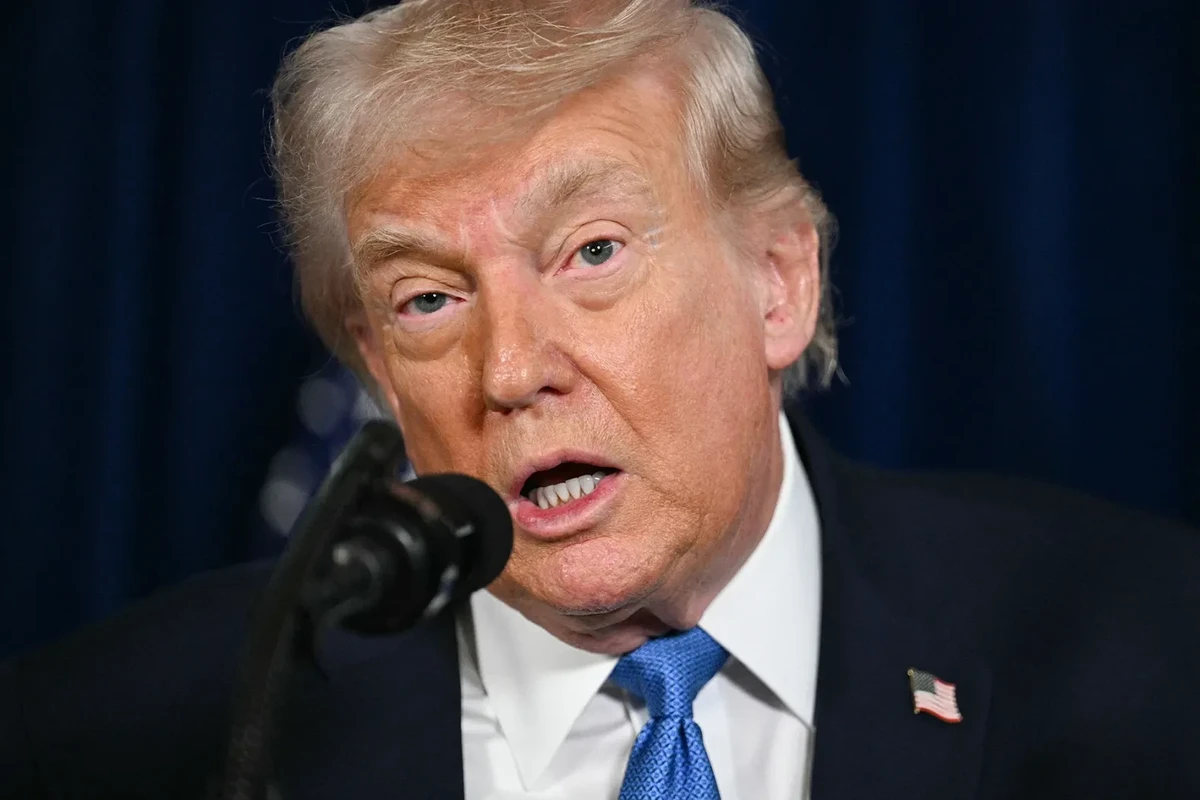
President Donald Trump discussing Venezuela at a press conference at Mar-a-Lago.

Jim WATSON/AFP/Getty Images

When Donald Trump called himself “the peace president” during his 2024 campaign, it was not just a slogan that my fellow Gen Z men and I took seriously, but also a promise we took personally. For a generation raised in the shadow of endless wars in Iraq and Afghanistan, it felt reassuring. It told us there was a new Republican Party that had learned from its failures and wouldn’t ask our generation to fight another war for regime change. That belief stood strong until the U.S. overthrew Venezuelan President Nicolás Maduro.

Growing up in the long wake of the wars in Iraq in Afghanistan shaped how my generation learned to see Republicans. For us, “traditional” Republican foreign policy became synonymous with unnecessary conflicts that caused young people to bear the consequences. We heard how Iraq was sold to the public as a necessary war to destroy weapons of mass destruction, only to become a long conflict that defined the early adulthood of many millennials. Many of us grew up watching older siblings come home from deployments changed, and hearing teachers and coaches talk about friends who never fully came back. By the time we were old enough to pay attention, distrust of Bush-era Republicans wasn’t ideological, it was inherited from what we had heard.


As the 2024 election was rolling around, that dynamic had flipped. After watching wars in Ukraine and Gaza dominate headlines while Joe Biden was president, the Democrats were now the warmongers. My friends constantly told me how a vote for Kamala Harris was a vote to go to war. On the other hand, Donald Trump and the Republicans were the ones my friends thought could keep us safe. “I’m not voting for Trump because I love him,” one friend told me. “I’m voting for him because he cares about us and I don’t want to go fight in a stupid war.” For many of my friends, much of their vote came down to one question: Who was less likely to send us to fight? The answer to them was pretty clear.

Fast forward to now, and Venezuela has begun to complicate that belief. Even without talk of a draft or a formal declaration of war, the renewed focus on U.S. involvement and troops on the ground has brought back the same language of escalation my generation was taught to distrust. Young men online have been voicing the same worries, concerned that the ousting of Maduro mirrors the early stages of wars they were raised to fear. When I asked a friend what he thought about Venezuela, he shared that same sentiment. “This is how all these wars always start,” he told me. “They might try to make it sound like it’s not actually a war, but people our age always end up being the ones that pay the price for it.” For young men who supported Trump because they believed he represented a break from interventionist politics, Venezuela blurs the line between the “new” Republican Party they thought they were backing and the old one they were raised to reject.

For many young men, Venezuela has become a major part of a broader shift of how they view Trump. A recent poll from Speaking with American Men (SAM) found that Trump’s approval rating has fallen 10 percent among young men, with only 27 percent agreeing with the statement that Trump is “delivering for you”.

Gen Z men’s support of Trump was never about ideology or party loyalty, it was about the idea that he had their back and would fight for them. But that’s no longer the case. Recently, Trump proposed adding $500 billion to the military budget. Ideas like that will only hurt the president with young men. My friends don’t want more military spending that could get us entangled in foreign wars; they want a president who keeps them home and fights for their economic and social needs. As Trump pushes for a bigger military and more intervention abroad, the promise that once made him feel like a protector of young men now feels out of reach.

For my generation, Venezuela isn’t just another foreign policy dispute, it’s a conflict many young men worry they could be the ones sent to fight. Gen Z men didn’t support Trump because he was a Republican, but because they believed he was different from the old Republicans. He would be a president who would have their back, fight for their interests and keep them from fighting unnecessary wars. Now, that promise feels fragile, and the fear of being the ones asked to face the consequences has returned. For a generation raised on the effects of the wars in Iraq and Afghanistan, the idea of another war isn’t abstract, it’s personal.
More Stories

Trump Posts Wildly Racist Video of the Obamas

Donald Trump speaks during the 74th annual National Prayer Breakfast at the Washington Hilton on Feb. 5, 2026 in Washington, D.C.

Trump Posts Wildly Racist Video of the Obamas

President Donald Trump went on a wild social media posting spree late Thursday night and into Friday morning, one that included a video depicting Barack and Michelle Obama as apes, set to “The Lion Sleeps Tonight.”

The clip of the Obamas, which appears to be AI-generated, comes near the end of a 62-second video about election conspiracy theories. Trump posted the video just before midnight on Thursday, and as of Friday morning it is still up on his Truth Social page.

Keep ReadingShow less
Oh, Just Trump Saying Republicans Should ‘Nationalize’ and ‘Take Over’ Elections

Oh, Just Trump Saying Republicans Should ‘Nationalize’ and ‘Take Over’ Elections

Donald Trump’s approval numbers are in the tank, which may or may not have something to do with the fact that on multiple occasions in recent weeks he has teased the idea of somehow canceling the midterm elections. The White House has insisted Trump was “joking,” but it certainly didn’t seem like he was playing around when he proposed another wild idea to Dan Bongino: that Republicans should “take over” and “nationalize” the nation’s voting systems.

“The Republicans should say, we want to take over, we should take over the voting, the voting in at least many — 15 places. The Republicans ought to nationalize the voting,” the president told the podcaster-turned-top FBI official-turned-podcaster in an interview that aired Monday, after pushing the false idea that Democrats bring non-citizens into the United States specifically so they will vote for them.

Keep ReadingShow less
Don Lemon Arrested After Filming Minneapolis Church Protest
Tasos Katopodis/Getty Images

Don Lemon Arrested After Filming Minneapolis Church Protest

The former CNN journalist Don Lemon was arrested Thursday night, not two weeks after he was on the ground covering an anti-ICE protest that disrupted a church service in Minneapolis.

Lemon entered Cities Church on Jan. 18 with a group of demonstrators rallying against ICE’s deadly presence in the city. The demonstrators stormed Cities Church because its pastor, David Easterwood, is an ICE director. The Trump administration was quick to admonish the protesters, vowing to bring them to justice for impeding a religious service. The Justice Department attempted to bring charges against several people involved in the demonstration, but a magistrate judge approved them for only three protesters.

Keep ReadingShow less
Nicki Minaj Bravely Vows to Protect World’s Biggest Bully
Win McNamee/Getty Images

Nicki Minaj Bravely Vows to Protect World’s Biggest Bully

Two of the world’s most infamous bullies — one a U.S. president bitten with the imperialist bug and another a rap icon known for attacking other celebrities online in her orbit — joined forces in Washington, D.C., on Wednesday in a public show of support.

During a U.S. Treasury event, Nicki Minaj stood next to Donald Trump and from behind a podium, declared: “I am probably the president’s Number One fan.” Following her words of devotion, Minaj took to social media later that evening and posted a photo of a “Trump Gold Card” alongside the caption “Welp.” According to the official website, the card requires a $1,000,000 contribution plus a $15,000 processing fee, and in return, offers “U.S. residency in record time.”

Keep ReadingShow less
The Anti-Fascist Group Fighting Trump — And Some Critics on the Left

Refuse Fascism gathers to protest against President Donald Trump in November.

Celal Gunes/Anadolu/Getty Images

The Anti-Fascist Group Fighting Trump — And Some Critics on the Left

On the bright, clear morning of Nov. 5 in Washington, D.C., the anti-fascist hordes gather near the base of the Washington Monument. Many are gray haired and kind of frail looking; few are wearing all black, and almost none are masked. Some dance around in inflatable animal costumes, and a contingent dressed as handmaids in dark-red robes and white bonnets carry signs that read “Shame.”

Milling through the crowd near a stage on the south side of the monument is Sunsara Taylor, exuding the slightly frantic air of someone who’s just arrived at her own party. Taylor is a leader and co-founder of Refuse Fascism, the group that organized today’s protest and the march through the streets of the capital that will follow. If you’re thinking it might be an unnerving moment to be the most visible representative of an organization that spells out its anti-fascist intentions right there in its name, you wouldn’t be wrong.

Keep ReadingShow less