

It’s been 20 years since Warren Jeffs, the “prophet” who ran the cult-like polygamist Mormon offshoot the Fundamentalist Church of Jesus Christ of Latter-Day Saints in Short Creek, Utah, was arrested for sexual assault and abuse of minors.
In director Rachel Dretzin’s 2022 docuseries Keep Sweet: Pray and Obey, the documentary filmmaker explores how the religious leader used his power and influence to build an insular community in Utah and facilitate the abuse of young girls, both by himself and other church members. In 2011, Jeffs was convicted of aggravated sexual assault and sexual assault of a child, which came with life in prison plus an additional 20 years. The women and children previously under his power were supposed to be safe. But in a new Netflix docuseries, Trust Me: The False Prophet, two filmmakers who moved to Utah in 2016 stumble upon a new religious leader aiming to take over where Jeffs left off — and go undercover to try to save a new generation of girls being targeted.
“This community is highly isolated. They’re in a remote part of Utah on the Arizona border. There’s very little interaction with the rest of the world. And I think that the premium from birth in that community is obedience and particularly, obedience to men,” Dretzin recently told Vanity Fair. “So, for women that can get very complicated when the man above you, whether it’s your husband or the prophet, is telling you to do things in the name of God that are wrong, but your entire worldview [is] that you must obey. That’s part of the problem.”
 COURTESY OF NETFLIX
Filmed by husband and wife duo Tolga Katas and Christine Marie, Trust Me gives audiences an unprecedented, behind the scenes look at the insular FLDS community that spanned Utah, Arizona, Colorado, and Nebraska, and its attempted new leader, Sam Bateman. Bateman built a small but incredibly tight-knit community around claims that he was Jeffs’ religious heir, destined to lead the FLDS. In addition to spreading religious teachings, Bateman claimed that God spoke to him and pointed out wives that were meant to belong to him. He “married” 23 women, nine of whom were minors.
When Katas and Marie discovered his abuse, the couple used a growing relationship with Bateman to try and get evidence of his crimes on camera so the police would act. Trust Me compiles hours of the couple’s personal footage with first-hand interviews from FLDS community members, including two of Bateman’s victims, to detail how Bateman’s arrogance led to his eventual downfall. In 2024, when he was 48, he was convicted of sexually abusing girls as young as nine and sentenced to 50 years in prison.
Here are four things we learned from the docuseries Trust Me: The False Prophet.
After Warren Jeff’s arrest, his followers couldn’t have sex, marry, or have children. The community was desperate — and Bateman used this to his advantage.
As an offshoot of the mainstream Church of Jesus Christ of Latter-Day Saints, one of the FLDS strongest mandates is the strict separation of roles of men and women in the home. Men are the spiritual leaders, while women’s main job is to give birth to as many children as possible and always obey their husbands, fathers, and church leaders. It’s this cultural understanding that both Jeffs and Bateman exploited to their advantage.
While Jeffs was a predator in the eyes of the law, even after his conviction, many of the people in the FLDS still believed that he was a prophet with a divine mandate from God. So when he told his followers that, people in the community were not allowed to get married or have children while he was in prison — if he couldn’t procreate, neither could they — the community obeyed. Bateman was able to convince people he was Jeffs’ replacement by telling everyone that Jeffs was actually dead — and Bateman had been given express permission that people could marry and have children again. In several cases, men in the community were so grateful that Bateman told them he was supposed to marry their daughters and they agreed.
During their time in Utah, Katas and Marie told Bateman they were filming their interactions because they wanted to make a documentary about his journey and teachings. Bateman believed this, often inviting them over to his home, setting up hours of filming time, and eventually letting his wives be alone with Marie.
The filmmakers used this trust to get close to the women in Bateman’s home, hoping to build enough of a personal rapport in order to get them to disclose they needed help and were being sexually abused by Bateman.
 Christine Marie told Samuel Bateman that she was making a documentary, but slipped footage to the authorities.COURTESY OF NETFLIX
“While we were filming I was trying to get to know the girls more and try to understand the women in Sam’s group,” Marie says in the docuseries. “I knew they were putting on a show but I didn’t know exactly what was going on behind the scenes.”
Police believed Bateman was committing crimes, but required more proof than Christine’s secret recordings for an arrest warrant
According to Katas and Marie, the filmmakers went to Utah police multiple times over their concerns with Bateman and his underaged wives. David Wilkinson, a sergeant with the Colorado City-Hildale Police Department, says in the docuseries that police officers believed the footage was genuine, but they required more evidence before they could build an arrest warrant.
Child Protective Services was called several times. But Bateman circumvented authorities by often marrying the mothers of his young wives. So when authorities arrived, he would use the mothers’ presence as evidence nothing untoward was happening. The case would also require testimony, which meant that at least one of Bateman’s wives needed to realize she was being manipulated and abused.
“What we know and what we can prove beyond a reasonable doubt are two very different things,” Wilkinson says.
Katas and Marie continued to give their raw footage to the police and sent even more when the FBI got involved. But the police were clear that they needed incontrovertible proof in order to give prosecutors the best chance at a straightforward arrest and conviction.
“We were hoping we would have something to indict Sam on so that we could arrest him when we conducted the search warrants, but without a disclosure from an underage victim, the United States Attorney for the District of Arizona would not approve child sexual abuse charges,” FBI Special Agent Dawn Martin says in the docuseries. “We still needed more evidence against Sam. So we needed Christine to keep playing her part and stay close to Sam. You know, give him a rope and let him hang himself.”
When the FBI were ready to raid Bateman’s home, they got Katas and Marie to set up a morning interview with him. The couple purposely separated the girls from Bateman so the FBI could conduct the raid.
Even after his arrest, Bateman held unwavering control over his followers. His victims are still recovering.
Bateman was arrested in September 2022 on suspicion of child sexual abuse. The Department of Child Services showed up after the raid and took all nine of the minor “wives” into custody. They were placed in an Arizona group home, while the adult wives were questioned by police. But even after Bateman’s arrest, the false prophet still held extreme power over his followers. Almost all of the wives lied to police and refused to disclose that the minors were forced to engage in sexual acts. And less than two months later, Bateman convinced his followers to kidnap the girls. Police found them five days later in Washington.
In 2024, Bateman pleaded guilty for transporting a minor for sexual activity and conspiracy to commit kidnapping. He was sentenced to 50 years. Some of Bateman’s wives, like Naomi, a sister wife who spent two years in prison for her part in the girls’ kidnapping, were able to begin a process of recovery. In an interview in Trust Me, Naomi says that her time in prison exposed Bateman’s lies and allowed her to realize she was being lied to. But for many of the women who were under Bateman’s pull, the prophet’s arrest did not end their relationship.
“There were nine minors. They are all free of this. They’ve all testified against him. But their mothers, their sisters, the adults that were part of this group, the majority of them still do follow Sam. They live together. And I think they reinforce each other,” Dretzin told Vanity Fair . “They speak to him from prison, if not on a daily basis, on a near daily basis. So the mind control is still going on. Breaks my heart, actually. Although I’m really hoping that the documentary, because I suspect that at least some of them will watch it, helps unstick some of the hold that he has.”



 Video game designer Shigeru Miyamoto poses with his creation, Mario.Ralf-Finn Hestoft/CORBIS/CorbisGetty Images
 Mario in Super Mario Bros., which changed modern gaming.GamesDB
 Bob Hoskins in 1993’s Super Marios Bros. The movie was such a flop it scared Nintendo off adaptions for 30 years.Buena Vista Pictures/Everett Collection
 The Super Mario Bros. Movie, starring Chris Pratt, got a much better reception than its live-action counterpart.©Universal/Everett Collection
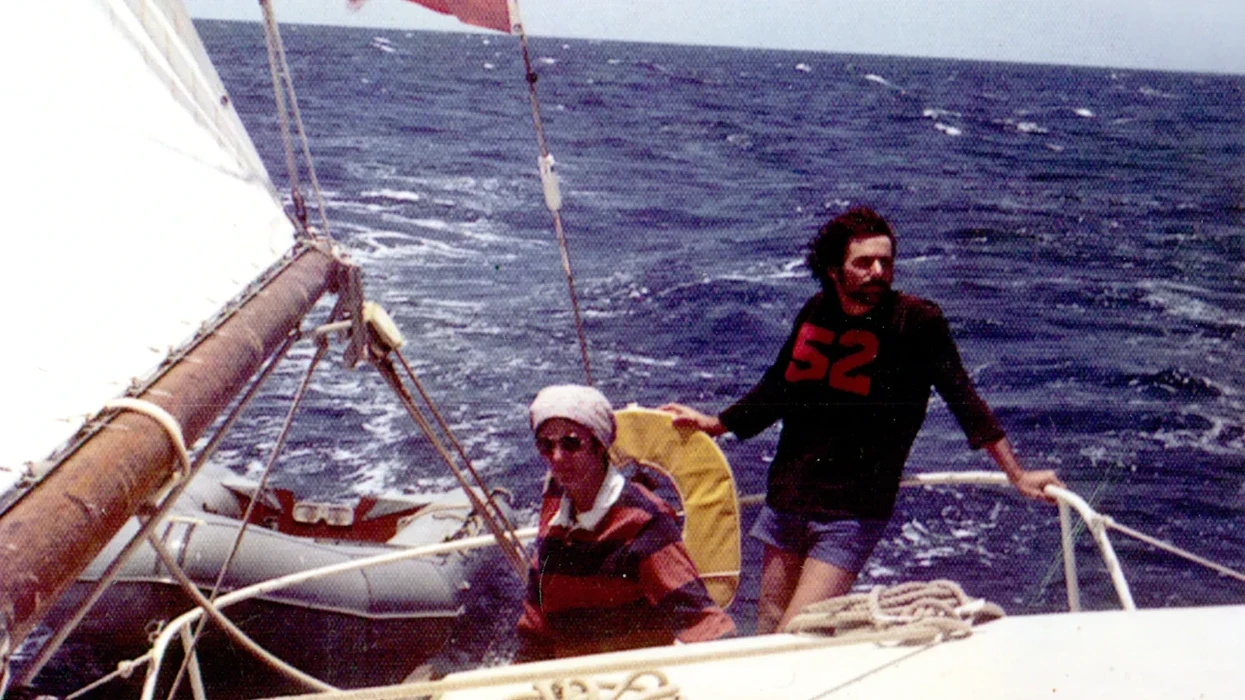
 Today, Prager lives in Brooklyn, in the same apartment building as the story’s author.Sacha Lecca
 The Escape was the vessel Prager used for years.Courtesy of Harvey Prager
 Mike “Cochise” Pace (with his son, Simon, in 1977) was one of Prager’s original crew members, and was elected captain of the group early on.Courtesy of Harvey Prager
 Prager and his crew hung out with Jimmy Buffett in Key West.Michael Ochs Archives/Getty Images
 The Knightsbridge Safe Deposit Centre in London was broken into — but Prager’s belongings were left behind.PA Wire/AP
 Today, Prager is a lawyer at a firm focused on civil rights.Sacha Lecca
 Prager, Jake “Pigpen” Keenan, and Mike “Cochise” Pace got together in 2009 for a reunion
 Courtesy Artisan Books


 Eric Perardi met Kota Youngblood through his son’s hockey team — then was conned into investing money with him for year.Christopher Lee for Rolling Stone
 Kota Youngblood is pictured in a 2023 mugshot.
 Youngblood met marks through youth hockey.
 Fake allegations about Eric Perardi (pictured last fall at his Austin home) popped up on social media.
 Youngblood gave Perardi this Confederate First National flag as collateral.
 Youngblood sitting at a restaurant table before the undercover FBI sting to bring him down.
 Youngblood was found guilty of five counts.