
Last week, TikTok‘s Chinese parent company, ByteDance, finalized a deal that gave a group of U.S. investors an 80 percent stake in TikTok USDS Joint Venture LLC, an entity which now operates the app within the country, and has free rein to moderate content that Americans share on the video platform. The companies with stakes in the U.S. version of TikTok include Oracle, the software company founded by billionaire Larry Ellison, one of the richest people in the world and a close ally of Donald Trump, as well as Emirati investment company MGX, which was previously involved in a crypto deal done with a digital currency developed by the Trump family’s World Liberty Financial.
This unusual ownership coalition and its ties to the Trump administration have raised concerns about the security and privacy of U.S. TikTokers, as well as questions about whether videos on politically fraught subjects may be blocked or hidden to quell criticism of the government. Over the past several days, many American users have claimed that their comments on the need to resist or abolish U.S. Immigration and Customs Enforcement (ICE) — calls for action prompted by the murders of Renee Good and Alex Pretti by federal agents during the chaotic siege of Minneapolis this month — were suppressed, with clips often receiving zero views. Comedian and Hacks star Meg Stalter, for example, announced via Instagram on Sunday that she would delete TikTok after she discovered that the app wasn’t letting her post anything about ICE. Stalter claimed that “we are being completely censored and monitored.”
In addition to venting suspicions of being silenced because their videos were stuck indefinitely “under review,” American users also reported that their For You Page was no longer serving personally targeted content, and, in some cases, that they couldn’t log in at all.
On Monday, TikTok USDS sought to dispel accusations that it was effectively administering state-controlled media with a comment blaming technical glitches for any perceived censorship. “Since yesterday we’ve been working to restore our services following a power outage at a U.S. data center impacting TikTok and other apps we operate,” the joint venture said on its X account. “We’re working with our data center partner to stabilize our service. We’re sorry for this disruption and hope to resolve it soon.” In an update on Tuesday, TikTok USDS added: “We’ve made significant progress in recovering our U.S. infrastructure with our U.S. data center partner. However, the U.S. user experience may still have some technical issues, including when posting new content.”
In the meantime, the company said, those accessing TikTok in the U.S. “may notice multiple bugs, slower load times, or timed-out requests, including when posting new content.” It also acknowledged that users were seeing view counts of zero and inaccurate earnings data, describing these as display errors caused by server timeouts.
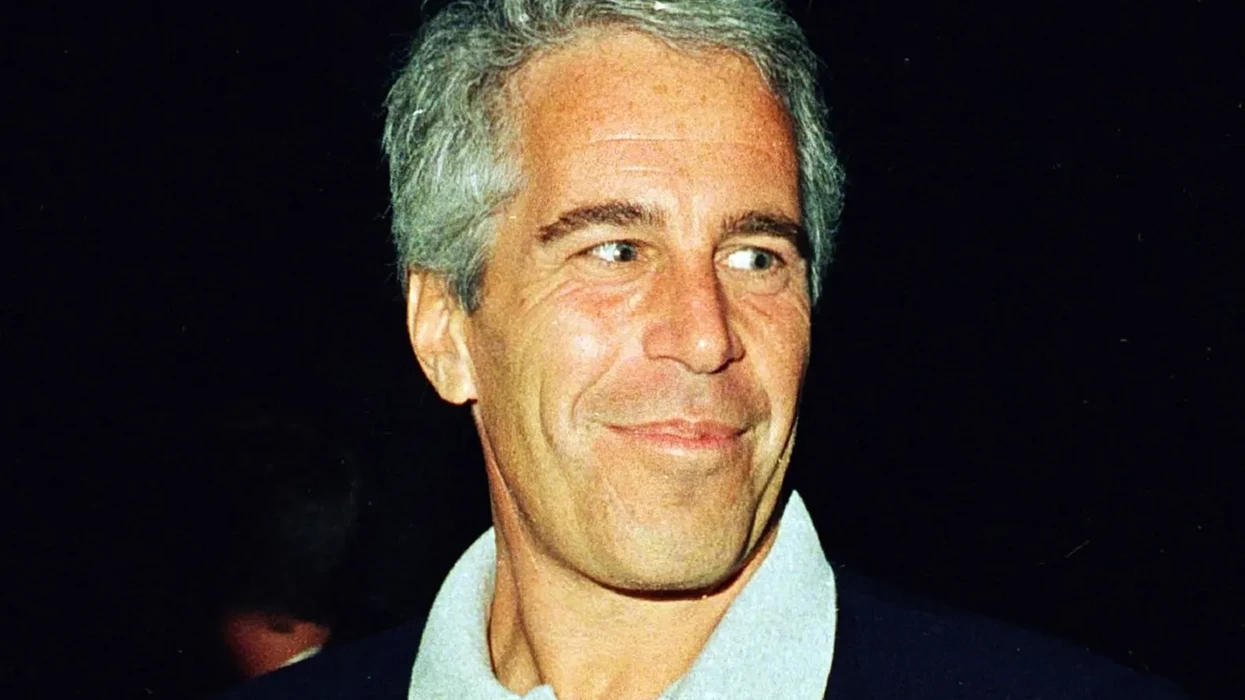
But while a data center blackout may account for these problems, which have escalated a collective paranoia over how TikTok USDS might seek to filter certain hot-button topics, users noted another curious wrinkle. As seen in screenshots disseminated on other social media platforms and independently confirmed by Rolling Stone, anyone attempting to send the name “Epstein” in a TikTok direct message on Monday received an error message that read: “This message may be in violation of our Community Guidelines, and has not been sent to protect our community. If you believe this was a mistake, let us know so we can review this along with recent messages.” The same warning was triggered by more direct references to the late sex offender Jeffrey Epstein, such as “Jeffrey Epstein is alive,” or “Trump and Epstein were best friends.”
As of Tuesday, it was once again possible to mention Jeffrey Epstein in TikTok DMs without triggering the content warning. Reached for comment, TikTok USDS said that it did not have rules against sharing the name “Epstein” in direct messages and was investigating why some of these DMs had apparently run afoul of community guidelines. Other users had not encountered this issue, the company claimed.
Videos about Epstein, his known associates, and files related to his crimes remained accessible on TikTok even while certain users were blocked from sending messages that named him. Yet users interpreted the blocked DMs as evidence of possible corporate meddling in their private conversations. Some quickly jumped to the conclusion that TikTok USDS was complicit in a scheme to shield Trump and other public figures linked to Epstein. On X, California Gov. Gavin Newsom shared a screenshot showing a flagged Epstein message and declared that it was “time to investigate,” adding, “I am launching a review into whether TikTok is violating state law by censoring Trump-critical content.”
The president has been haunted by the specter of his longtime friend throughout the first year of his second term in office, having failed to deliver on a campaign promise to unseal millions of documents from law enforcement investigations of Epstein’s notorious sex trafficking operation. More than a month after a Congress-imposed Dec. 19 deadline for the Justice Department to release these materials, just a tiny fraction have been made public. A recent CNN poll found that half of Americans are dissatisfied with how the case has been handled, while two-thirds believe the government is intentionally withholding information.
Even while Trump has tried to distance himself from Epstein, noting that they had a falling out in the mid-2000s, continuous reporting on their close relationship over more than a decade has taken its toll. His attempts to wave away eyebrow-raising artifacts such as an innuendo-laden letter he wrote to Epstein for his 50th birthday have occasionally escalated into contempt for his own supporters, whom he attacked last summer for caring about a “bullshit” scandal he sought, unconvincingly, to dismiss as a “hoax.”
Besides the data center troubles and the still unexplained blocking of the Epstein DMs, TikTok USDS has faced scrutiny for the terms of its user agreement. After the U.S. takeover, American users were prompted to sign amended policy guidelines that reflected the venture’s broadened power to collect data from customers, including “precise” GPS location and data from user interactions with TikTok’s AI tools. This language raised alarm bells from activists who warned that the app could theoretically be used to track the movements of protesters, though the GPS feature has reportedly not yet been enabled and is expected to be opt-in only.
Similarly, while the current agreement states that TikTok can collect sensitive information about a user’s “sexual life or sexual orientation, status as transgender or nonbinary, citizenship or immigration status” — a condition that spooked many given the current political climate in the U.S. — this same disclosure appeared in earlier terms of service, in compliance with state laws on consumer privacy and corporate transparency. Moreover, Oracle, which is handling data storage for TikTok in the U.S., began storing American user data back in 2022 as a means of limiting ByteDance’s ability to access this material, so anyone in the U.S. who has been on TikTok since then has already consented to that arrangement.
An important change under the TikTok USDS joint venture, however, is that Oracle will oversee any changes to a licensed copy of TikTok’s algorithm, which determines what ultimately shows up in everyone’s scrolling feeds. Contrary to some claims, videos assailing ICE for their violence in Minnesota are not presently being restricted; the company could, however, put a thumb on the scale when it comes to political content. From Trump’s Truth Social to Elon Musk‘s X, right-wing ideologues have looked for every advantage in setting the terms, incentives, and limitations of online discourse. We have yet to see exactly what the Trump allies at the helm of the newly formed U.S. TikTok will do with influence over its core functionality, but for the moment, people are on high alert for anything amiss.




 Artist Boo Patterson with her painting, “The People’s Husband,” in Liza Mandelup’s Luigi.Benjamin WhatleyADVERTISEMENT