
Skip to content
Search

Prevost: the Québec company behind the biggest tours

From Beyoncé to the White House, comfort and security for the world’s biggest names starts in Sainte-Claire.

Prevost: the Québec company behind the biggest tours
Photo via Prevost

If you’ve ever wandered backstage at a festival or through the private parking lot of an arena during a concert, you’ve probably noticed something: a long row of tour buses. And if you looked closely, you may have seen the same name on every single one: Prevost.

The story of these coaches, like that of nearly every tour bus in North America, doesn’t begin in Los Angeles but just outside Québec City.


That’s where I find myself on a rainy morning, the day after Def Leppard’s show at the Festival d’été, in Sainte-Claire, about thirty minutes from the city. From the moment you enter the village, you feel Prevost’s impact: a source of local and national pride and by far the region’s largest employer. The founder’s house still stands here, as do those of many of his descendants, including his grandson, Marco Prévost, who gives me a tour of the company’s massive factory.

The family dynasty, he explains, began when his ancestor Eugène Prévost, a cabinetmaker by trade, was hired to build the body of a REO truck that would transport villagers to the capital.

From War to World Tours

His skills quickly earned him a reputation, and orders started pouring in, but he limited production to one bus a year, since his main business at the time was building church pews. In 1939, he opened his first factory dedicated to bus manufacturing, which boosted output to ten vehicles per year. It came at the perfect time, as Prevost received a major contract from the Ministry of Defence during the Second World War.
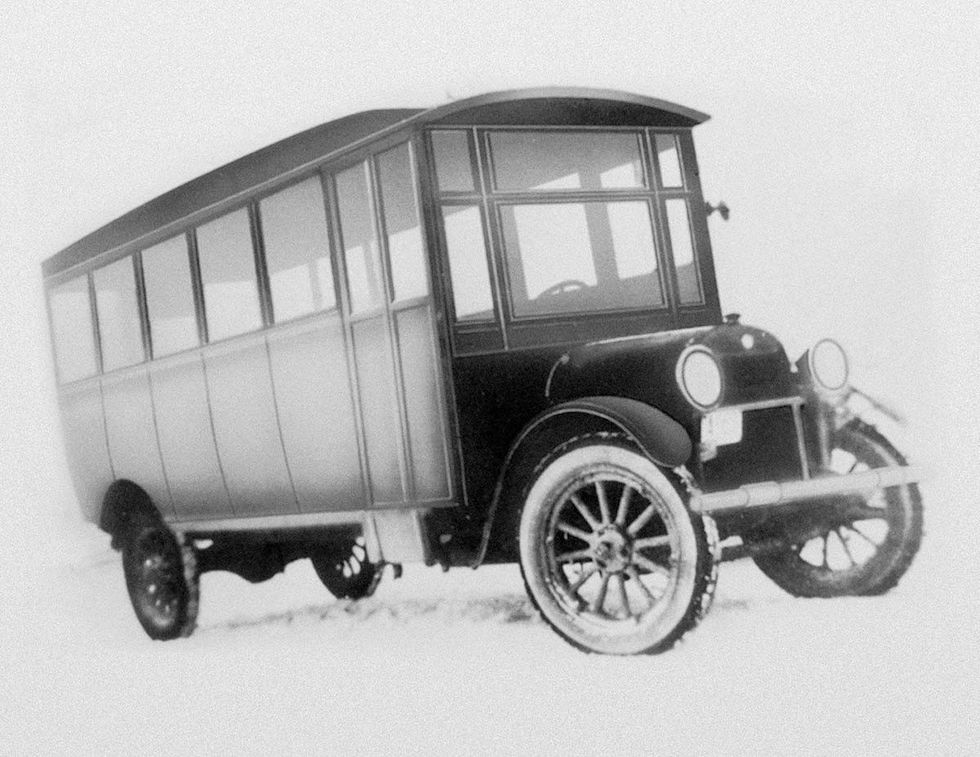
The very first Prevost coach, built in 1924

Gradually becoming the continent’s leading coach manufacturer, Prevost began specializing in tour buses for artists in the 1980s and soon dominated the field entirely.

“Today, there are about 1,500 of our buses across North America, and we basically cover the entire entertainment industry since we’re the only player in that segment,” says François Tremblay, Prevost’s president.

Ingenious Québec Craftsmanship

What truly sets Prevost apart is the structure of its chassis, all built in Sainte-Claire. Normally, RVs and motorhomes are mounted on truck frames topped with fiberglass shells. “As you can imagine, over time, everything shifts and starts to go crooked,” Tremblay explains. Building on a stainless-steel bus chassis allows everything to stay perfectly aligned for decades. Even if a converter installs marble or tile flooring, “the floor will never crack.”
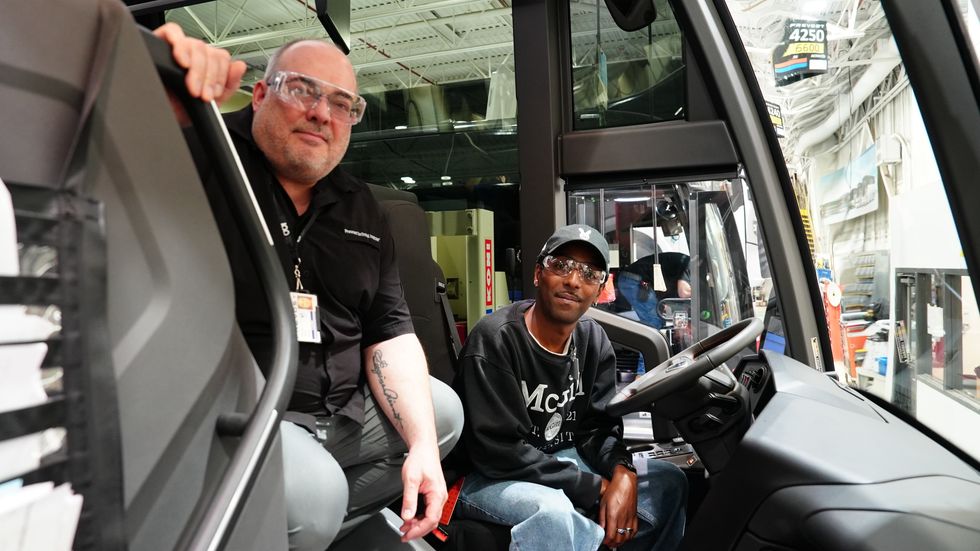
The author tours the plant with Marco Prévost, grandson of the company's founder.

This durability translates into impressive numbers: Prevost coaches are designed to last an average of 20 years and often rack up more than 1.6 million kilometers over their lifetime. To ensure this, each bus undergoes rigorous testing in Sainte-Claire, including in a special chamber that simulates extreme weather to make sure they can withstand anything from a snowstorm in Thunder Bay to the California desert.

A Home on the Road

For touring professionals, driving comfort isn’t a luxury, it’s a survival requirement.
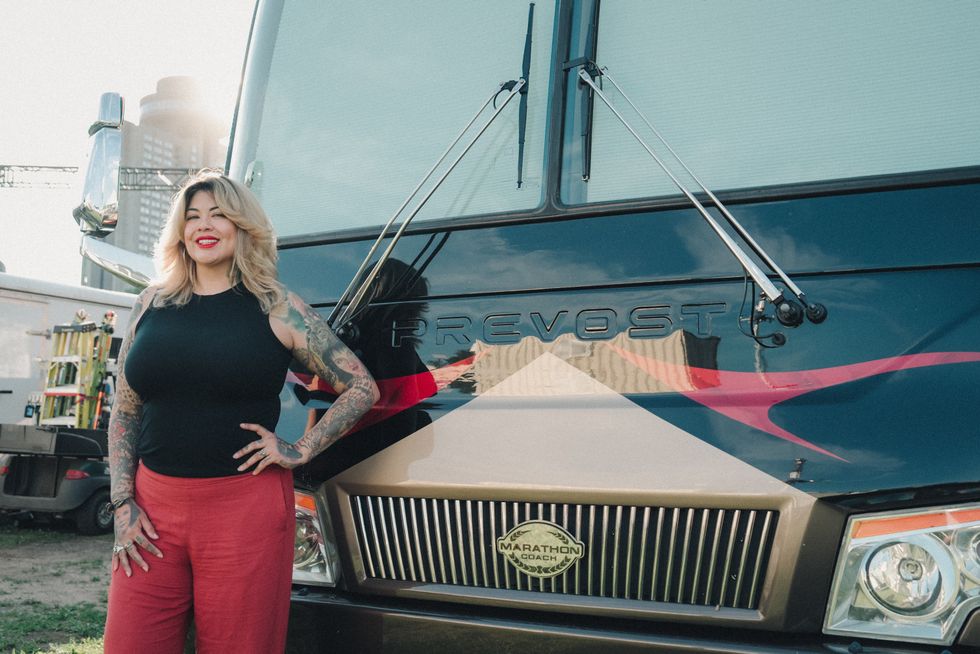
Laura Jean Clark poses in front of Slayer's tour bus
Photo: Émilie Gratton

When I meet Laura Jean Clark in Québec City, she’s on tour with Slayer. “The bus becomes more of a home than my actual home,” she tells me. A tour manager for artists like Drake, Coldplay and Shakira, Clark spends more time in Prevost coaches than in her own house.

For artists, moving from a minivan to a real tour bus is a game changer, not only for logistics but for the crew’s health and morale. A bus means no need to book hotels or eat out for every meal, since there’s a kitchenette onboard. Most importantly, each bus has a bathroom, and some even include showers.

On Beyoncé’s Cowboy Carter Tour, for example, that convenience is crucial, as she reportedly ordered around thirty Prevost buses.

Another reason the world’s biggest artists, as well as Formula 1 drivers, mobile banks in rural areas and even the U.S. president, choose Prevost is the near-infinite level of customization. “Justin Bieber even had a fireplace installed in his,” reveals Tremblay. While Prevost builds the vehicles themselves, several specialized companies handle interior conversions.
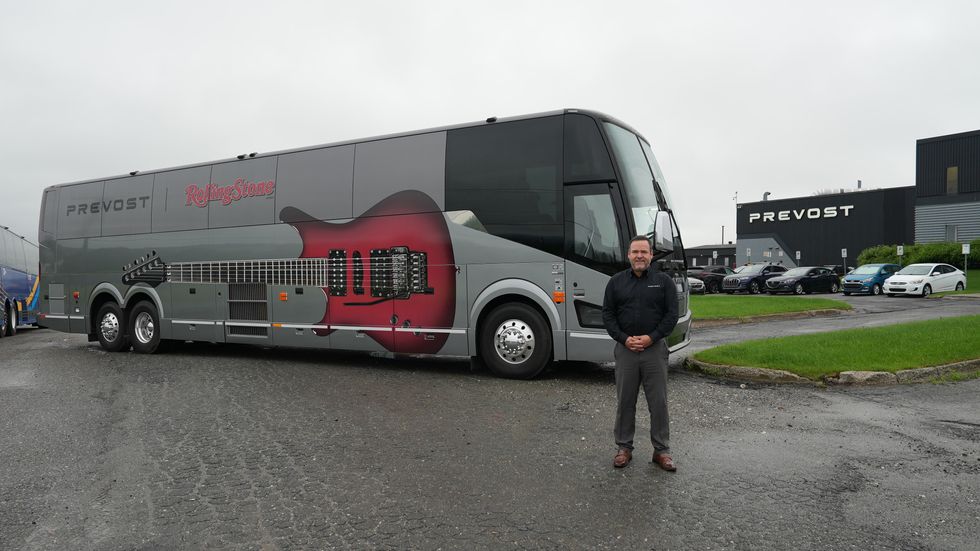
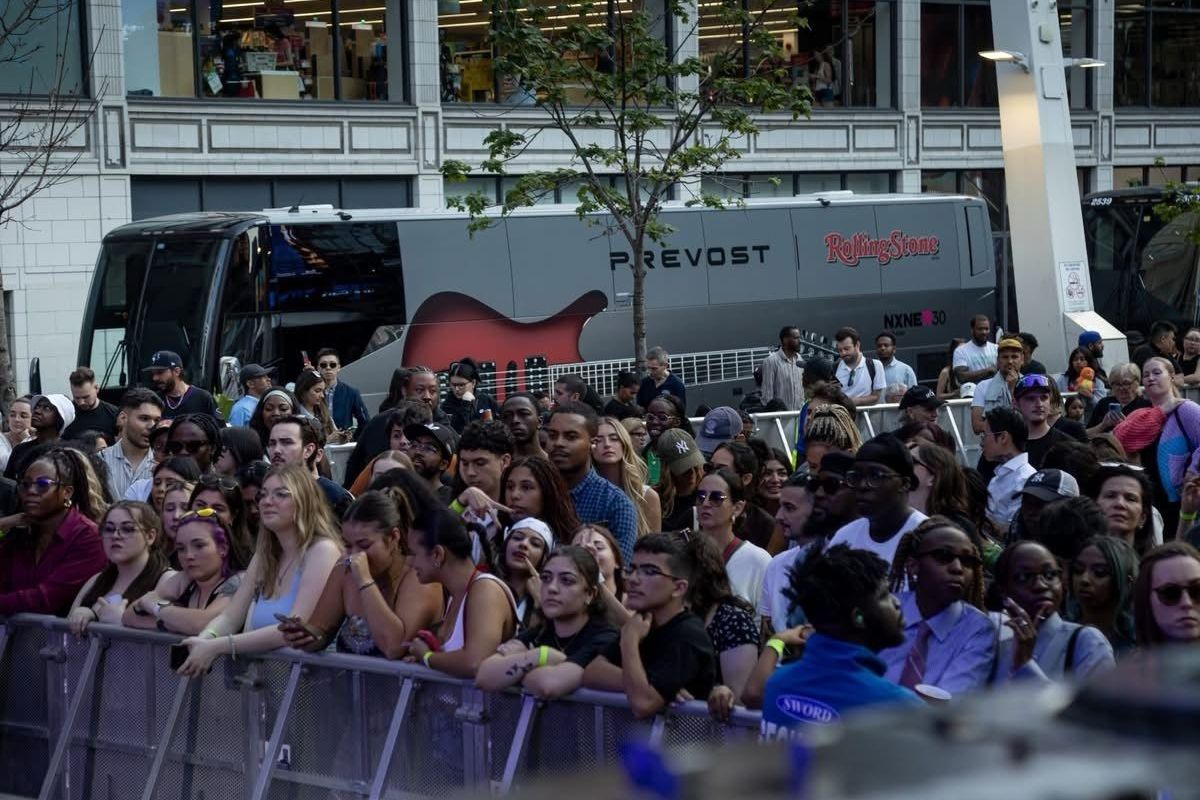
François Tremblay and the Rolling Stone x NXNE Prevost bus, in front of the company's plant in Sainte-Claire

Each bus, made up of roughly 9,000 parts assembled over about 48 days, is then sent to a converter who tailors it to the client’s needs. Many amateur and professional sports teams also travel in Prevost coaches, while F1 drivers use their customized motorhomes as mobile headquarters.

Limitless Customization

Some artists opt for a full bedroom or a recording studio. As Clark tells me, the studio bus that followed Drake on his early tours was key to the creation of several of his biggest hits.


Other clients have more specific requirements, like Ground Force One, the code name for the two Prevost buses used by the U.S. president and the Secret Service. Equipped with ultra-secure communications systems and a range of classified features, they’re built on the X3-45 VIP model, the same type I saw being assembled that morning in Sainte-Claire. According to the Secret Service, Prevost was the only manufacturer with a chassis strong enough to support the extensive modifications and security systems required.
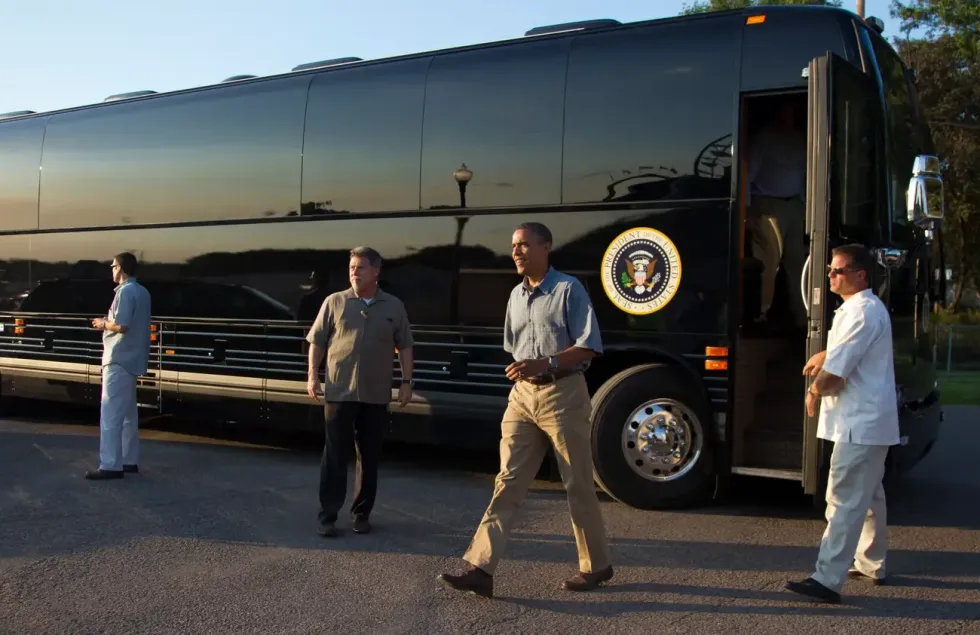
Former president Obama stepping out of his Prevost. (Screenshot via YouTube)

The Promise of Greener Touring

Today, the original factory site built by Eugène Prévost serves as a research and development center, ensuring the company continues to innovate. In the coming years, Tremblay says, the biggest challenge will be electrification. The first all-electric tour buses could be ready as soon as next year.“More and more artists are trying to reduce their carbon footprint. When you’re going from stadium to stadium, it’s actually pretty simple to plug in the bus and get ready to hit the road again, but of course, range is still the biggest challenge.”
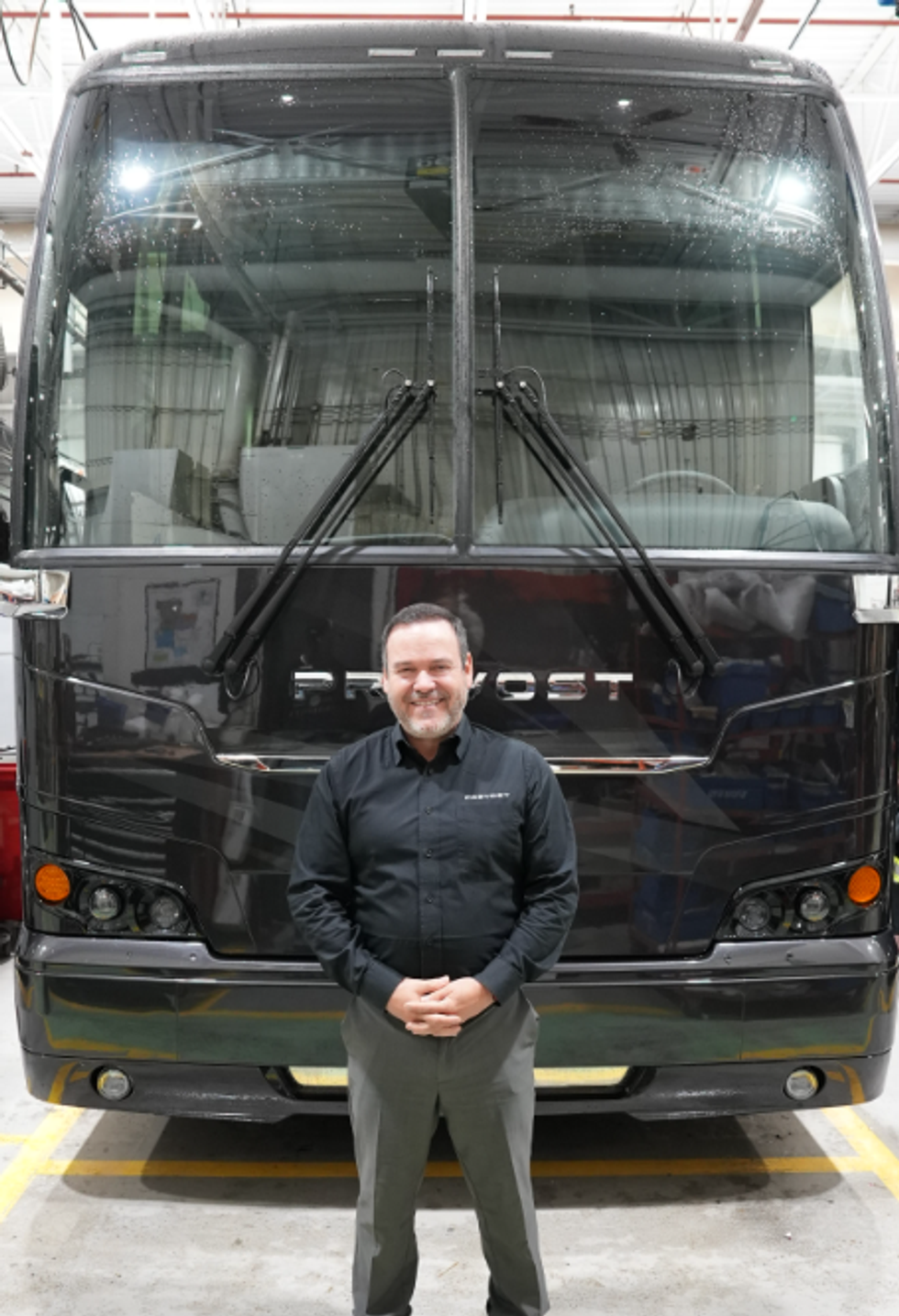
As I leave the factory, a row of brand-new buses stands in the yard, lined up like spacecraft ready to launch into another world. Within days, they’ll be bound for Nashville, Rouyn-Noranda or Los Angeles, joining massive concert tours or professional sports convoys. It’s striking to think that from this village of just 3,000 people comes such a vital piece of North America’s entertainment infrastructure. Each bus assembled here carries not just Québec’s engineering expertise but also a distinct sense of craftsmanship, comfort and pride.

The models have changed, and so has the market, but the artisanal spirit imagined by Eugène Prévost still runs through every detail. The artists who sleep, write or celebrate aboard these buses may not realize it, but they’re living, quite literally, inside a small fragment of Québec.
More Stories

Sunn O))) announce new album and North American tour
Peter Beste

Sunn O))) announce new album and North American tour

After seven years of silence, Sunn O))) are firing up the amps and hitting the road once again. The emblematic drone metal duo are set to launch a North American tour this spring for a long-awaited run that will include stops in Canada.

Keep ReadingShow less
Chris Stapleton’s ‘Tennessee Whiskey’ Is First Country Song to Earn a Double Diamond
Astrida Valigorsky/WireImage

Chris Stapleton’s ‘Tennessee Whiskey’ Is First Country Song to Earn a Double Diamond

Chris Stapleton’s inescapable rendition of “Tennessee Whiskey” has become the first country song to gain a double diamond certification from the Recording Industry Association of America (RIAA).

The organization announced the news on Monday, revealing that the track has sold more than 20 million units. Only two other songs have been recognized as double diamond including Bruno Mars’ 2010 hit track “Just The Way You Are” and 2018’s “Sunflower” by Swae Lee and Post Malone.

Keep ReadingShow less
BTS unveil highly-anticipated comeback world tour dates
BIGHIT MUSIC*

BTS unveil highly-anticipated comeback world tour dates

2026 is the year of BTS. The supergroup will mark their live return with an extensive tour launching in April 2026 and running through March 2027, with additional dates to be announced. The trek arrives in support of their upcoming musical return, scheduled to arrive on March 20 as part of their comeback following an extended hiatus.

The BTS world tour will kick off in Goyang, South Korea, on April 9. The band will spend multiple nights in each city on the trek, which includes stops in Tokyo, Mexico City, Las Vegas, Busan, London, Paris, Chicago, Toronto, East Rutherford, Buenos Aires, Sydney, Bangkok, Hong Kong, Manila, and more. Specific venues for each city have not been announced, though the routing suggests the band will be booking stadiums.

Keep ReadingShow less
A$AP Rocky shares new single 'Helicopter'
Filmmagic

A$AP Rocky shares new single 'Helicopter'

It very much looks like A$AP Rocky is back in full force.

It has been nearly eight years since the New York rapper last released a new album. In the meantime, he has become the father of three children with his partner, Rihanna, who herself has not shared any new music in over a decade.

Keep ReadingShow less
Bob Weir, Grateful Dead Co-Founder and Guitarist, Dead at 78
Mark Sullivan/Getty Images

Bob Weir, Grateful Dead Co-Founder and Guitarist, Dead at 78

This article was initially published by Rolling Stone on Jan. !0, 2026.

Bob Weir, the singer, songwriter, guitarist, and co-founder of the Grateful Dead, whose songs about sunshine daydreams and truckin’ helped turn the jam band into a 60-year musical empire, has died at age 78.

“It is with profound sadness that we share the passing of Bobby Weir,” Weir’s family wrote in a statement. A date of death was not immediately available. “He transitioned peacefully, surrounded by loved ones, after courageously beating cancer as only Bobby could. Unfortunately, he succumbed to underlying lung issues.”

“Bobby will forever be a guiding force whose unique artistry reshaped American music,” the statement added. “His work did more than fill rooms with music; it was warm sunlight that filled the soul, building a community, a language, and a feeling of family that generations of fans carry with them. Every chord he played, every word he sang was an integral part of the stories he wove. There was an invitation: to feel, to question, to wander, and to belong.”

As the band’s co-lead singer, writer, and guitarist beside Jerry Garcia, his elliptical riffs, eccentric song structures, and slightly off-kilter stage presence made him an intrinsic ingredient to the Dead, up to and beyond its demise following Garcia’s death in 1995. Weir often went under-recognized compared to the larger-than-life Garcia (one of the first songs he wrote in the Dead was called “The Other One”). Yet, the band’s bassist Phil Lesh characterized Weir’s contribution as that of “a stealth machine.”

Robert Hall Weir was born in San Francisco on Oct. 16, 1947, to a college student who gave him up for adoption. He was raised in an affluent Bay Area suburb, where he managed to get kicked out of both preschool and the Cub Scouts, and suffered from undiagnosed dyslexia. At Fountain Valley, a Colorado school for boys with behavioral problems, he met John Perry Barlow, who would become his most frequent lyricist.

Weir began playing guitar at 13 and was soon hanging out at the Tangent, a Palo Alto folk club, where he performed bluegrass numbers with the Uncalled Four and first saw Garcia playing banjo during a “hoot” night. Weir picked up his first guitar licks from David Nelson and future Jefferson Airplane member Jorma Kaukonen.

On New Year’s Eve, 1965, Weir and his friends heard banjo music emerging from Dana Morgan’s Music Store. He went in and found Garcia, and the two decided to form a band. The acoustic Mother McCree’s Uptown Jug Champions evolved into the electric Warlocks, who changed their name to the Grateful Dead.

As the youngest and best-looking member of the Dead, Weir had to pay some dues. Weir admitted that too much LSD during the group’s stint as house band for Ken Kesey’s Acid Tests made him withdrawn, especially as Garcia and bassist Phil Lesh were uniting more musically. “I was definitely low man on the totem pole,” he told Rolling Stone in 1989, “especially at the beginning. And for a long time I had to just shut up and take it.”

The lyrics to “The Other One” described Weir’s introduction to both LSD and Neal Cassady, the trickster hero of Jack Kerouac’s beat-generation masterpiece On the Road, with whom Weir shared a room in the Dead’s infamous 710 Ashbury Street house. In 1968, Weir and fellow founding member Ron “Pigpen” McKernan were booted from the band for their musical deficiencies, though both returned within months.

Throughout the Seventies, Weir thrived as a member of a band that could deliver music of nearly ineffable warmth and country-rock majesty — as on their pair of 1970 masterpieces, Workingman’s Dead and American Beauty — while also playing more freely improvised music to countless listeners. Weir sang the band’s country covers and his own material, and played rhythm guitar in a brilliantly eccentric manner that belied the job’s second-string implications — even while soundman Dan Healy was turning him down in the mix. Lesh described Weir’s technique as “quirky, whimsical, and goofy,” while Weir claimed jazz pianist McCoy Tyner’s left hand as his greatest influence.

With Pigpen’s death in 1972, Weir stepped into the second-vocalist role smoothly. Ace, his first solo album, established him as the band’s second most fruitful songwriting source with solo songs turned Dead standards like “Playing in the Band,” “One More Saturday Night,” and “Cassidy.”

- YouTube youtu.be

Usually alternating lead vocals with Garcia, he developed a repertoire that ranged from country-rock originals and rhythmically unorthodox tunes to his ambitious and gorgeous “Weather Report Suite.” He also began gigging outside the Dead with a vatiety of acts: first with Kingfish in 1974, then forming the Bob Weir Band with keyboardist Brent Mydland — who later joined the Dead — in the late Seventies. (They’d go on to release two albums with Bobby and the Midnites in the Eighties.) His second solo album, 1978’s Heaven Help the Fool, proved he could sound as slick as any other California rocker.

Over the course of the Eighties, Weir would have to compensate onstage as Garcia sank into drug addiction — and later admitted that he also sometimes served as “bag man” for the guitarist’s drugs. Garcia temporarily recovered toward the end of the decade, an era Weir lauded as the Dead’s finest. “For me, that was our peak,” he told Rolling Stone in 2013. “We could hear and feel each other thinking, and we could intuit each other’s moves. Jerry, Brent, and I reached new plateaus as singers. We packed a punch.”

- YouTube youtu.be

Though hit hard by Garcia’s August 1995 death, Weir continued to perform, as he famously sang in one Dead classic, “The Music Never Stopped.” His band RatDog played his Dead material and originals, and Weir eventually began singing Garcia’s own material in various 21st-century configurations of former Grateful Dead members, including the Other Ones, the Dead, and Furthur. After collapsing onstage with Furthur in 2013 and canceling RatDog performances in 2014, Weir admitted that he struggled with his own addiction to painkillers.

As the remaining Grateful Dead members approached their golden anniversary in 2015, Weir was the first to support a reunion, telling Rolling Stone, “If there are issues we have to get past, I think that we owe it to ourselves to man up and get past them. If there are hatchets to be buried, then let’s get to work. Let’s start digging.”

Following the surviving members’ Fare Thee Well concerts celebrating the Grateful Dead’s 50th anniversary in 2015, Weir enlisted one of the gig’s guests, John Mayer, to join him, Mickey Hart, Bill Kreutzmann, and other Dead associates in the new offshoot Dead & Company. That group would keep the spirit of the Dead alive for another decade, culminating in a 2023 “Final Tour” and two stints at Las Vegas’ Sphere.

“We speak a language that nobody else speaks,” Weir told Rolling Stone last March. “We communicate, we kick stuff back and forth, and then make our little statement in a more universal language. For us, it’s a look or a motion with one shoulder, or the way you reflect a phrase or something that tips off the other guys where you’re going with this. And then they work on being where you’re headed, getting there with a little surprise for you. That’s a formula that’s worked real well for us over the years, and there just aren’t enough of us left now to do that anymore.”

Weir’s third and final solo studio album, Blue Mountain, arrived in 2016. Two years later, the guitarist embarked on yet another musical project as Bobby Weir and Wolf Bros, alongside bassist-producer Don Was and drummer Jay Lane.

In December 2024, shortly after the death of Dead bassist Phil Lesh, the Grateful Dead’s surviving members were recipients of the Kennedy Center honors. Dead & Company marked the Grateful Dead’s 60th anniversary with a three-night stand at San Francisco’s Golden Gate Park in August. Those concerts marked Weir’s final performances, ending his “long strange trip” onstage.

“Bobby’s final months reflected the same spirit that defined his life. Diagnosed in July, he began treatment only weeks before returning to his hometown stage for a three-night celebration of 60 years of music at Golden Gate Park. Those performances, emotional, soulful, and full of light, were not farewells, but gifts. Another act of resilience,” Weir’s family added in their statement.

“There is no final curtain here, not really. Only the sense of someone setting off again. He often spoke of a 300-year legacy, determined to ensure the songbook would endure long after him. May that dream live on through future generations of Dead Heads. And so we send him off the way he sent so many of us on our way: with a farewell that isn’t an ending, but a blessing. A reward for a life worth livin’.”

Keep ReadingShow less