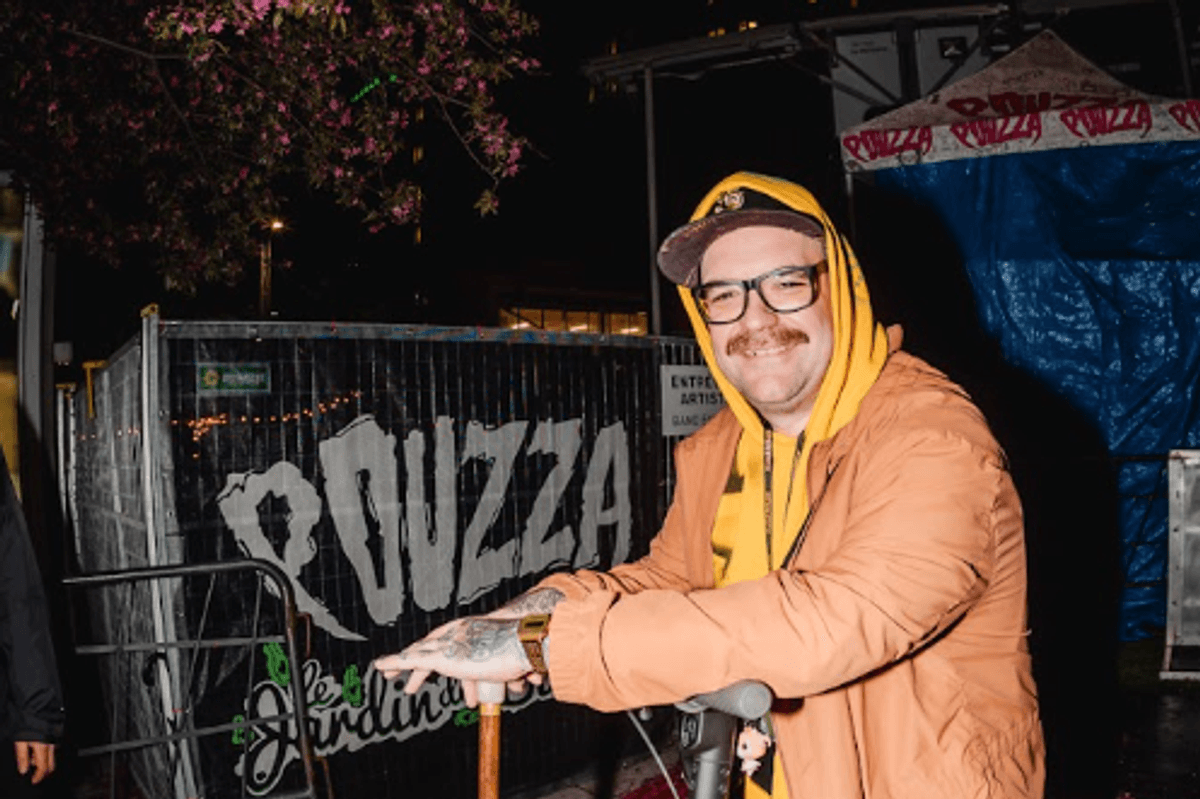

Despite 13 editions under his belt, Hugo Mudie still gets nervous as Pouzza Fest rolls around. Every year since founding the legendary Montréal punk and DIY festival in 2011, the same worries come back. Will the weather cooperate? Did he forget an important detail? And, most importantly, will festivalgoers be happy?
For the past 15 years, Pouzza Fest has occupied a unique place within the punk scene ecosystem. Originally conceived as a relatively modest gathering for punk fans and touring bands, the festival has grown into one of the most respected DIY events in North America.
“Pouzza gets bigger every year, so you keep adding new tasks, but we’re not a big team,” says Mudie, the festival’s only full-time employee. “The rest of the staff are seasonal workers, or friends, or just nice people who want to help.”
Despite that growth, the founder and his team have held onto what defined the festival from the beginning: a strong sense of community. Even as it expanded across dozens of venues and hundreds of artists, Pouzza has never fully lost touch with the local scene that gave birth to it. Montréal has maintained a long history with punk, hardcore, and related scenes since their early days, from institutions like Foufounes Électriques to internationally recognized bands like The Sainte Catherines, for which Mudie serves as frontman.
 Emma Riot
Through his various projects, Mudie has spent much of his life touring through North American and European DIY networks. That experience heavily shaped Pouzza’s philosophy. Rather than building a traditional festival centered around corporate logic or VIP installations, the goal was to recreate, on a city-wide scale, the communal spirit of independent punk touring.
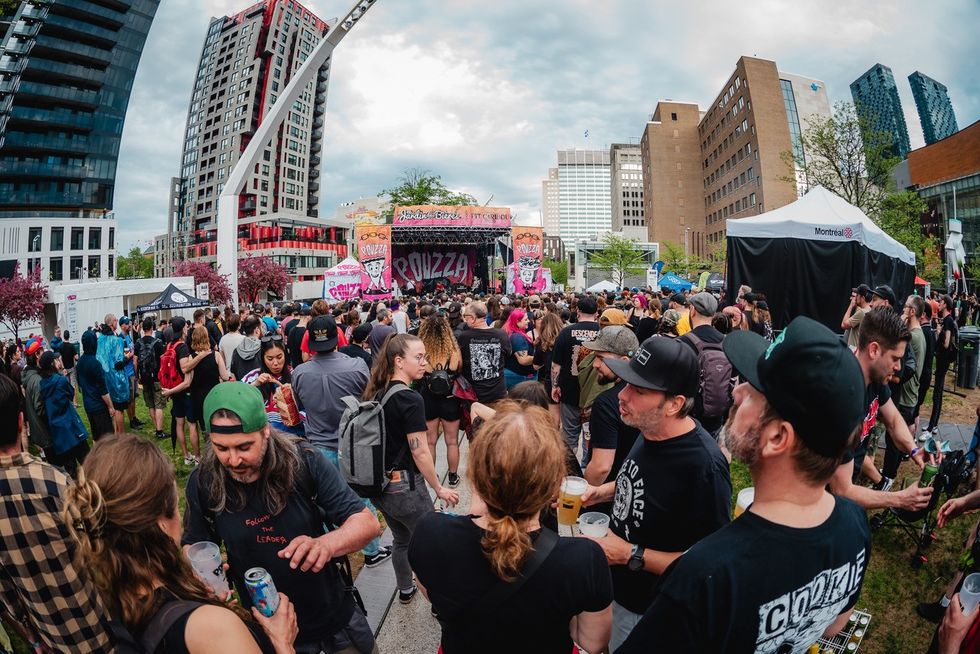
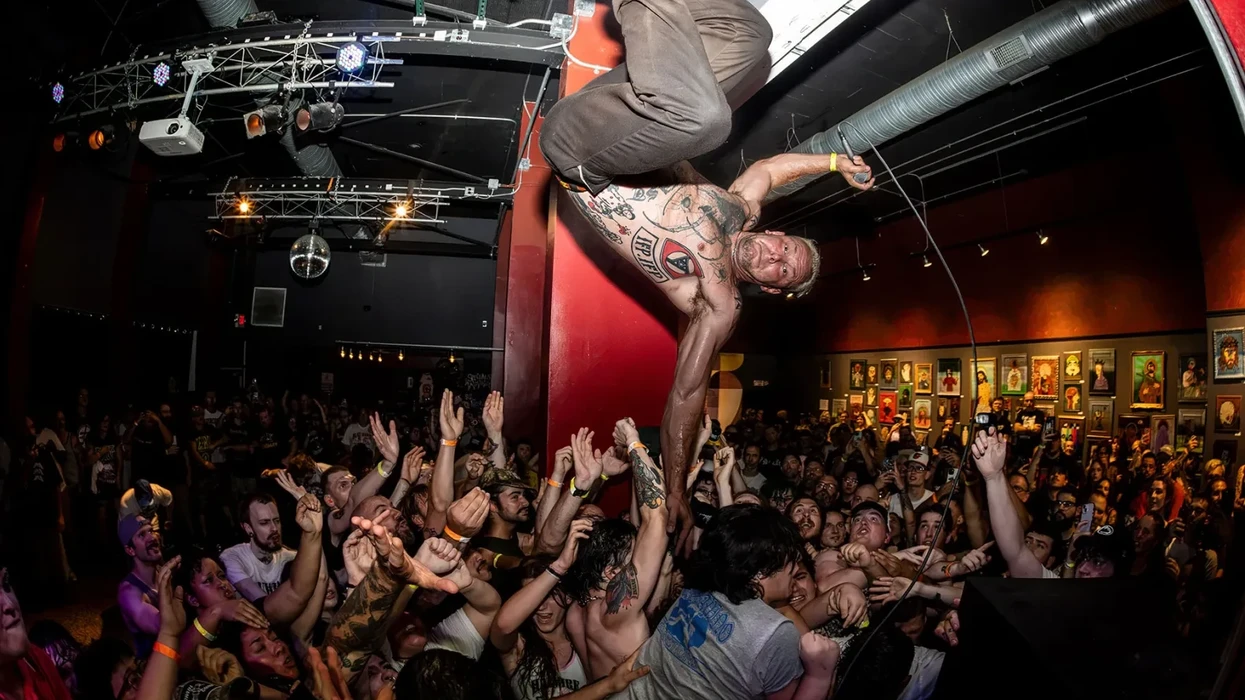
That approach remains central to the festival’s identity. Instead of being confined to a single site, Pouzza spreads across multiple downtown venues within walking distance of one another, alongside a free outdoor program. Festivalgoers move from bars to concert halls to theatres throughout the weekend in an atmosphere that feels more like a massive community gathering than a conventional festival. The format also encourages discovery. Someone might come to see an established headliner, only to find themselves an hour later packed into a tiny room watching a young local band.
“When it comes to programming, we try to find what nobody else is finding. We want to be the first festival for the next big bands. So we build a varied lineup to mix generations. We don’t want to just be nostalgic, and we don’t want only the cool bands of the moment,” says Mudie. “We want young bands, francophone music, bands with women, queer bands. Sometimes we pull it off!”

This year, the gamble appears to have paid off, with close to 150 artists spanning punk, hardcore, ska, post-punk, metal, garage rock, and the independent scene. The lineup includes acts like Toronto punks PUP, British pioneers Buzzcocks, Bedouin Soundclash, Baroness, and Pinkshift. Anniversary performances from Cancer Bats and The Sainte Catherines also highlight the festival’s close ties to multiple generations of the scene.
Pouzza extends beyond concerts themselves. Alongside performances at venues like Foufounes Électriques, Turbo Haus, Café Cléopâtre, and Théâtre Sainte-Catherine, the festival also presents free outdoor activities, community events, artist meetups, children’s performances, and yoga sessions. This year, Mudie is also realizing a longtime ambition by adding an exhibition curated by We Are Wolves member Alex Ortiz.
“It’s kind of like a summer camp for punks,” Mudie says. “When I was a teenager, I imagined the punk scene as what Pouzza has become today. We managed to create a microcosm where people meet and connect, and artists mix with the crowd. There are no rock stars.”




 Anthony Orosz*
 Jeff Yeager*
 Jeff Yeager*
 Brett Murray*
 Brett Murray*
 Jeff Yeager

 The Edge, Larry Mullen Jr, Bono and Adam Clayton (from left) in 1978 Patrick Brocklebank
 Class photo from Mount Temple Comprehensive School in Dublin, 1978. Bono is in the front row, third from left; his future wife, then Ali Stewart, is to his left. The Edge is in the back row, center, in jacket and tie. Courtesy of U2
 U2 in Berlin circa Achtung Baby Anton Corbijn
 Anton Corbijn
 Bono, the Edge, and Clayton perform at the Sphere in Las Vegas in 2023, with Bram van den Berg filling in for Mullen on drums Kevin Mazur/Getty Images
 U2 shooting the “Street of Dreams” video in Mexico City in May Eloisa Sanchez
 Michael Schwartz