
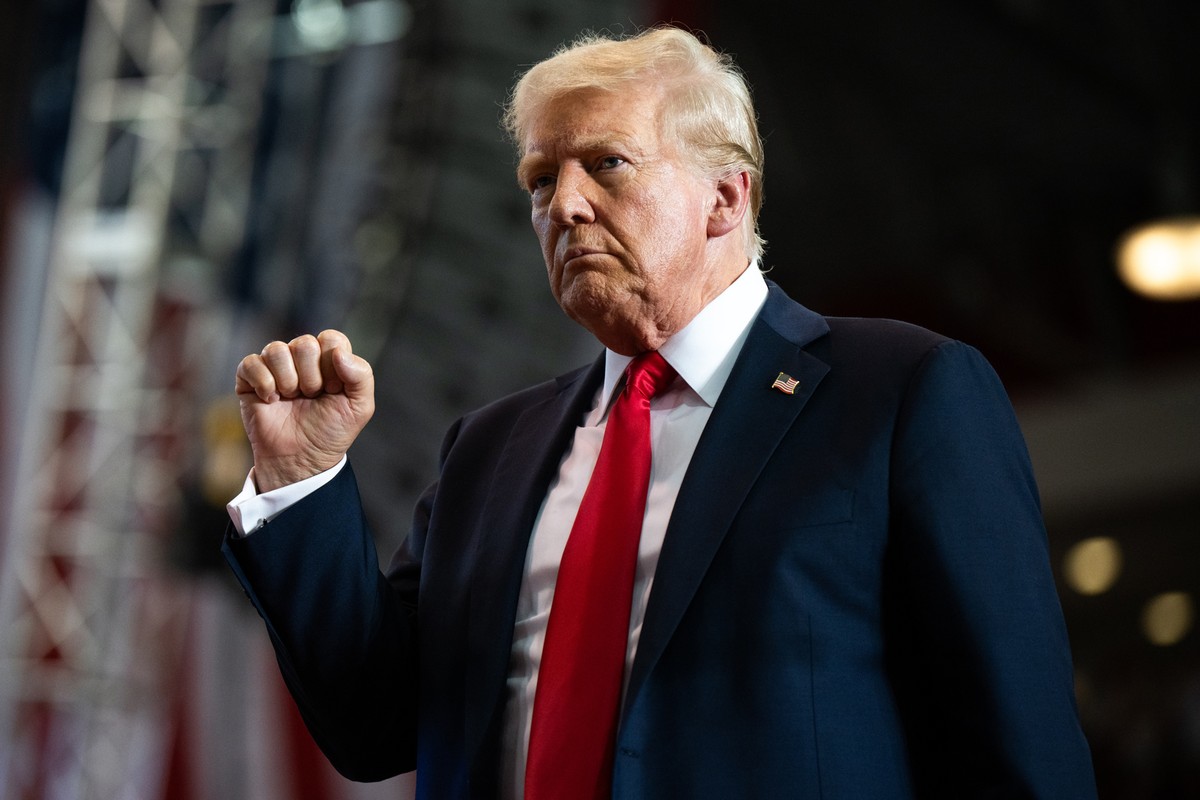
Donald Trump said Sunday that letting states craft their own abortion bans — thanks to a ruling by his conservative Supreme Court appointees — is “going to work out incredibly well.”
As of Monday, abortion is now almost entirely banned in 18 states, now that Iowa’s six-week ban on abortions took effect, all but totally cutting off access to the procedure in the state.
The ban, which originally passed in 2023, was approved by the Iowa legislature amid large protests. The legislation bans the termination of a pregnancy after the detection of a “detectable fetal heartbeat,” a controversial standard medical experts say conflates early electrical signals generated by the fetus with the existence of a functioning heart and cardiovascular system. Many people have no idea they are pregnant at six weeks.
Iowa becomes the 22nd state to enact restrictions on the availability of abortion care since the Supreme Court overturned Roe v. Wade in 2022. This election cycle, at least five states — including Nevada, Florida, and Maryland — will have initiatives seeking to codify the right to abortion into state constitutions on their November ballots. Several other states, including the key swing states of Arizona, are in the process of approving ballot language.
For over a year, Iowa’s ban was stalled after it was challenged by reproductive health advocates. The Iowa Supreme Court issued a 4-3 ruling last month allowing it to proceed.
“This morning, more than 1.5 million women in Iowa woke up with fewer rights than they had last night because of another Trump Abortion Ban,” Vice President Kamala Harris wrote on X (formerly Twitter) on Monday. “In November, we will stop Trump’s extreme abortion bans at the ballot box.”
In a separate post, Harris noted that one in three American women now live in a state with a highly restrictive “Trump abortion ban.” She vowed, “When I am president of the United States, I will sign into law protections for reproductive freedoms.”
The presumptive Democratic presidential nominee’s campaign declared Monday the beginning of a weeklong Fight for Reproductive Freedom action blitz.
Democratic National Committee spokesperson Aida Ross said in a statement, “Anti-choice extremists like Donald Trump and J.D. Vance are the reason why cruel abortion bans are ripping away women’s rights across the country — including the draconian ban going into effect in Iowa today.”
At a campaign rally in Minnesota on Sunday, Trump argued that on abortion, Democrats are “the radical ones, whereas our position is that abortion is now back to the states.” He falsely claimed: “Everybody wanted it back in the states — Democrats, Republicans, liberals, conservatives and legal scholars, every legal scholar wanted it back in the states.”
Trump specifically thanked the conservatives on the Supreme Court for overturning Roe — a decision made possible after he appointed three justices to the court, creating a 6-3 conservative supermajority.
“I want to thank the six Supreme Court justices — Clarence Thomas, Samuel Alito, John Roberts, Brett Kavanaugh, Neil Gorsuch, and Amy Coney Barrett — for the wisdom and courage they showed on this long-term, very contentious issue. But getting it back to the states puts the question where it belongs with the vote of the people. Over time, it’s going to work out incredibly well. An issue that was tearing our country apart for years and years is coming to an end, and people are coming together. It’s going to be the vote of the people, and it’s a state vote. It’s the way it was supposed to be. It should have never been in the federal government.”
As Rolling Stone has reported, Trump wants to campaign this election cycle as a “moderate” on abortion — despite his efforts to overturn Roe. While he flirted with endorsing a national abortion ban, he has since argued that the decision should be left to the states — and his Republican National Committee policy platform reflects this position. On the other hand, the platform also opens the door to establishing the notion of fetal personhood.
Amid the disastrous first few days that Senator J.D. Vance (R-Ohio) has had as Trump’s running mate, his own stance on abortion has already landed him in hot water.
Vance has argued that abortion should be “illegal nationally” — because otherwise, patients can travel to other states for the procedure. In 2022, he predicted that if Ohio were to ban abortion, “every day, George Soros sends a 747 to Columbus to load up disproportionately Black women to get them to go have abortions in California. And of course, the left will celebrate this as a victory for diversity.”
“Vance himself has made it clear that he wants abortion ‘illegal nationally’ while attacking exceptions for rape and incest,” said Ross, the DNC spokesperson. “These extreme bans are as horrifying as they are unpopular, and the American people are ready to stop the Trump-Vance ticket’s all-out assault on our basic rights this November.”
The VP hopeful previously defended his own state’s six-week abortion ban as a “good piece of legislation” before it was blocked, and he backed a similar ban in Texas that included no exceptions for instances of rape and incest.
On top of supporting forcing women to give birth, Vance has made clear his belief that non-parents should be relegated to second-class citizenship. Vance has advocated for giving the parents of children additional votes in elections, saying in a 2021 speech that the nation should “give votes to all children in this country but let’s give control over those votes to the parents of those children.”
“When you go to the polls in this country as a parent, you should have more power,” Vance added. “You should have more of an ability to speak your voice in our democratic republic than people who don’t have kids. Let’s face the consequences and the reality: if you don’t have as much of an investment in the future of this country, maybe you shouldn’t get nearly the same voice.”
As Republicans continue to assault Americans’ access to reproductive freedom, the residents in states facing the vice of restrictions are going elsewhere to obtain legal medical assistance. More than 4,000 abortions were performed in Iowa last year; patients are now scrambling to find care in neighboring states.



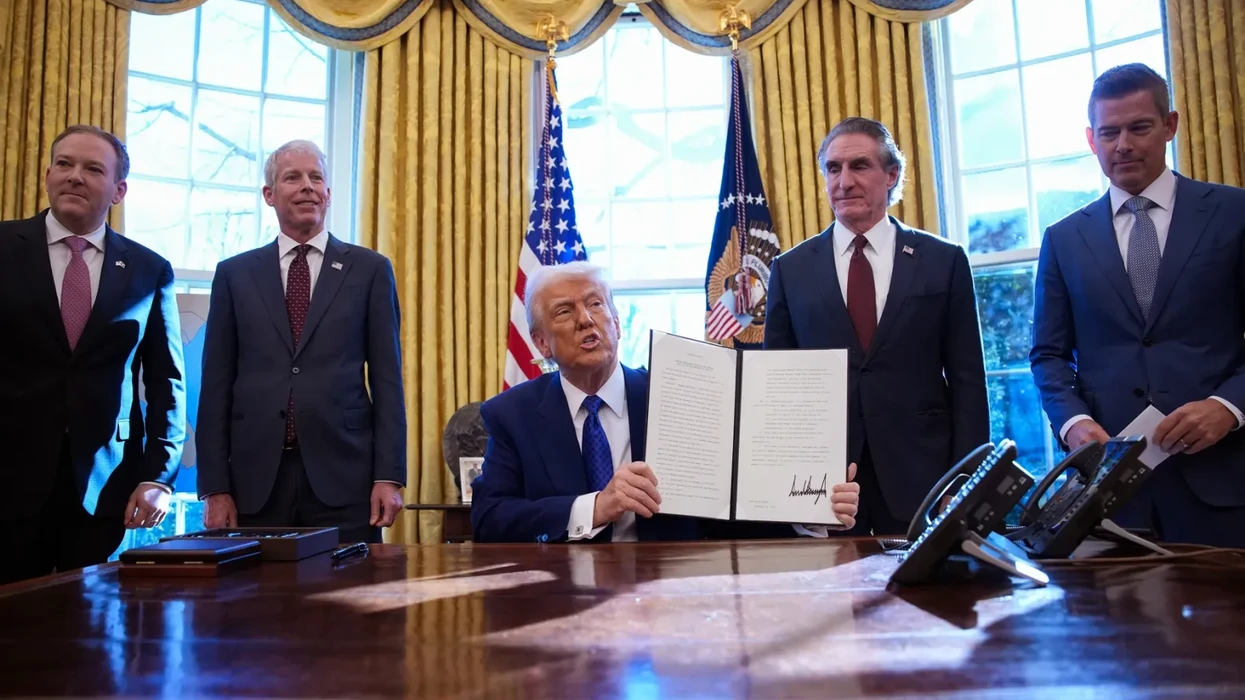
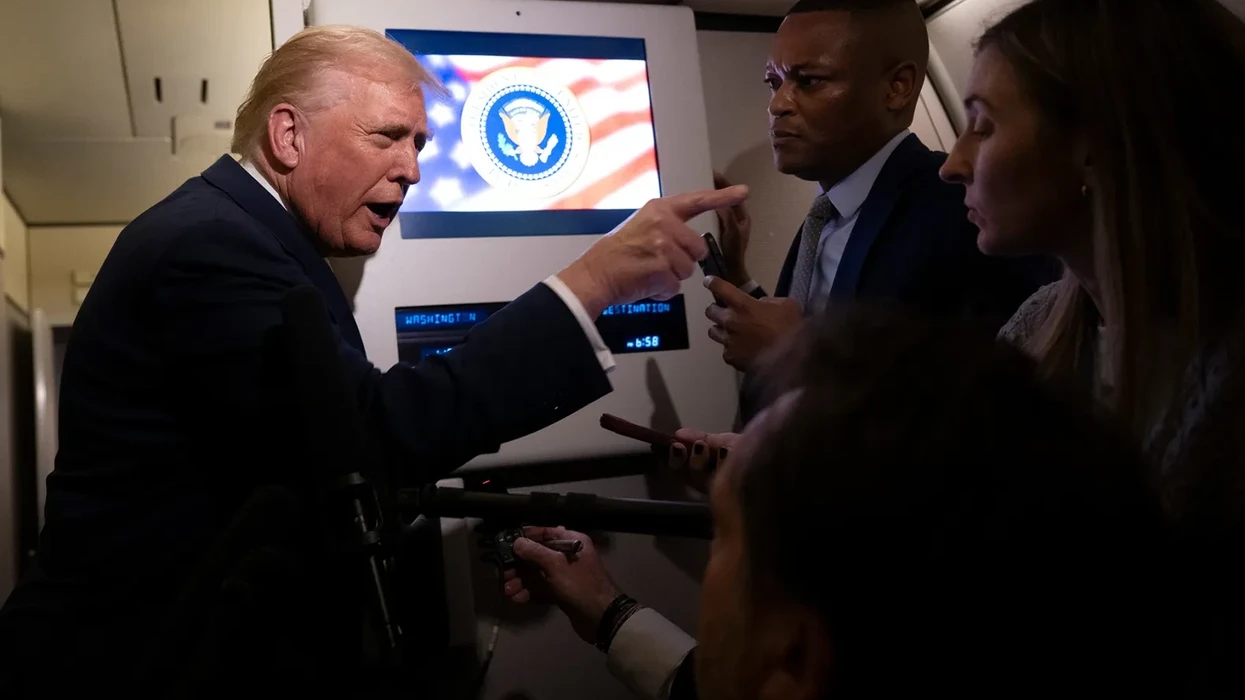

President Donald Trump discussing Venezuela at a press conference at Mar-a-Lago.
Why Venezuela Could Be a Turning Point in Gen Z’s Support for Trump
When Donald Trump called himself “the peace president” during his 2024 campaign, it was not just a slogan that my fellow Gen Z men and I took seriously, but also a promise we took personally. For a generation raised in the shadow of endless wars in Iraq and Afghanistan, it felt reassuring. It told us there was a new Republican Party that had learned from its failures and wouldn’t ask our generation to fight another war for regime change. That belief stood strong until the U.S. overthrew Venezuelan President Nicolás Maduro.
Growing up in the long wake of the wars in Iraq in Afghanistan shaped how my generation learned to see Republicans. For us, “traditional” Republican foreign policy became synonymous with unnecessary conflicts that caused young people to bear the consequences. We heard how Iraq was sold to the public as a necessary war to destroy weapons of mass destruction, only to become a long conflict that defined the early adulthood of many millennials. Many of us grew up watching older siblings come home from deployments changed, and hearing teachers and coaches talk about friends who never fully came back. By the time we were old enough to pay attention, distrust of Bush-era Republicans wasn’t ideological, it was inherited from what we had heard.
As the 2024 election was rolling around, that dynamic had flipped. After watching wars in Ukraine and Gaza dominate headlines while Joe Biden was president, the Democrats were now the warmongers. My friends constantly told me how a vote for Kamala Harris was a vote to go to war. On the other hand, Donald Trump and the Republicans were the ones my friends thought could keep us safe. “I’m not voting for Trump because I love him,” one friend told me. “I’m voting for him because he cares about us and I don’t want to go fight in a stupid war.” For many of my friends, much of their vote came down to one question: Who was less likely to send us to fight? The answer to them was pretty clear.
Fast forward to now, and Venezuela has begun to complicate that belief. Even without talk of a draft or a formal declaration of war, the renewed focus on U.S. involvement and troops on the ground has brought back the same language of escalation my generation was taught to distrust. Young men online have been voicing the same worries, concerned that the ousting of Maduro mirrors the early stages of wars they were raised to fear. When I asked a friend what he thought about Venezuela, he shared that same sentiment. “This is how all these wars always start,” he told me. “They might try to make it sound like it’s not actually a war, but people our age always end up being the ones that pay the price for it.” For young men who supported Trump because they believed he represented a break from interventionist politics, Venezuela blurs the line between the “new” Republican Party they thought they were backing and the old one they were raised to reject.
For many young men, Venezuela has become a major part of a broader shift of how they view Trump. A recent poll from Speaking with American Men (SAM) found that Trump’s approval rating has fallen 10 percent among young men, with only 27 percent agreeing with the statement that Trump is “delivering for you”.
Gen Z men’s support of Trump was never about ideology or party loyalty, it was about the idea that he had their back and would fight for them. But that’s no longer the case. Recently, Trump proposed adding $500 billion to the military budget. Ideas like that will only hurt the president with young men. My friends don’t want more military spending that could get us entangled in foreign wars; they want a president who keeps them home and fights for their economic and social needs. As Trump pushes for a bigger military and more intervention abroad, the promise that once made him feel like a protector of young men now feels out of reach.
For my generation, Venezuela isn’t just another foreign policy dispute, it’s a conflict many young men worry they could be the ones sent to fight. Gen Z men didn’t support Trump because he was a Republican, but because they believed he was different from the old Republicans. He would be a president who would have their back, fight for their interests and keep them from fighting unnecessary wars. Now, that promise feels fragile, and the fear of being the ones asked to face the consequences has returned. For a generation raised on the effects of the wars in Iraq and Afghanistan, the idea of another war isn’t abstract, it’s personal.