


Donald Trump boasted about MAGA supporters taking over Georgia’s State Election Board, part of his team’s efforts to corrupt future elections.
“I don’t know if you’ve heard, but the Georgia State Election Board is in a very positive way … They’re on fire, they’re doing a great job,” Trump said Saturday night at a rally in Atlanta.
The former president went on to name the three MAGA Republicans currently on the five-person board — Dr. Janice Johnston, Rick Jeffares, and Janelle King — calling them “pit bulls fighting for honesty, transparency, and victory.”
According to the State Election Board’s website, their charge is not fighting for “victory” for Trump. The board is “entrusted with a variety of responsibilities and authority to protect all Georgians’ right to cast a ballot.”
At the rally, Trump also pushed his big lie of election fraud, claiming, “I won this state twice, in my opinion.”
As Rolling Stone previously reported, Team Trump is behind efforts to undermine voter integrity in Georgia, and Trump privately pushed state lawmakers to remove a Republican from the State Election Board who was not MAGA enough. The official resigned and was replaced with King.
Trump’s allies have also worked in the state to purge voter rolls and put into place policies that make it easier to challenge election results. A source close to Trump told Rolling Stone that “Georgia is our laboratory.”
“If you can get this up and running in Georgia,” the source continued, “you get a road map for other states, maybe the country as a whole.”
Trump on Saturday applauded a rule requiring hand counting to validate the number of vote totals calculated by machines has not been finalized. It is currently up for public comment.
“[The State Election Board] just passed a rule for Georgia elections requiring that three people at each precinct independently count the total number of ballots before certification,” Trump said Saturday. “Who could be against that?”
Sara Tindall Ghazal, the only appointed Democrat on the State Election Board, opposed the rule. “The reason that this was not put into place is because when it was tested in 2019, it failed … Other counties tried and failed,” she said. “And I don’t want to be setting up our counties for failure.”
Trump also bashed Georgia’s Republican governor, Brian Kemp, as “a bad guy, a disloyal guy, and a very average governor — Gov. Little Brian.” Kemp, along with Georgia Secretary of State Brad Raffensperger, refused Trump’s demand that they “find 11,780 votes” for him after he lost the state in 2020. In other words, they blocked Trump’s demands to illegally overturn the free and fair election — something the former president has clearly not forgiven them for.
“Your Gov. Kemp and Raffensperger are doing everything possible to make 2024 difficult for Republicans to win,” Trump whined.
Trump also called Kemp “very bad for the Republican Party” because “he wouldn’t do anything” to establish a special legislative session to “go over” the 2020 election results. “We want to go over the election. We want to look because there’s too many things,” Trump said, blaming Kemp for refusing to sign Trump-backed legislation that would examine the 2020 votes.
“The governor wouldn’t sign it, and I knew he would because I got him elected,” Trump said. “I sent a young guy over to his office. … The kid came back. He said, ‘Sir, he won’t sign it.’ … Then I said, ‘Go back over. Tell him it’s for me.’ It’s a good thing, not a bad thing. They want to look into possible election fraud.”
Kemp did not sign the legislation, so Trump and his allies have plotted in the state to set up an end run around Kemp and Raffensperger for 2024.
Regardless of the electoral outcome in Georgia, Trump allies are prepping to claim voter fraud, Rolling Stone has reported. And Trump’s work in the state could provide him an advantage, especially if its election results are particularly close. The most recent Georgia polls show Trump and Harris even or just one to two points apart.
Trump isn’t only focusing his efforts on Georgia. Almost 70 pro-Trump election officials are in place in important battleground counties across the country, according to Rolling Stone and American Doom.
“I think we are going to see mass refusals to certify the election” in November, Democratic election lawyer Marc Elias told Rolling Stone and American Doom. “Everything we are seeing about this election is that the other side is more organized, more ruthless, and more prepared.”

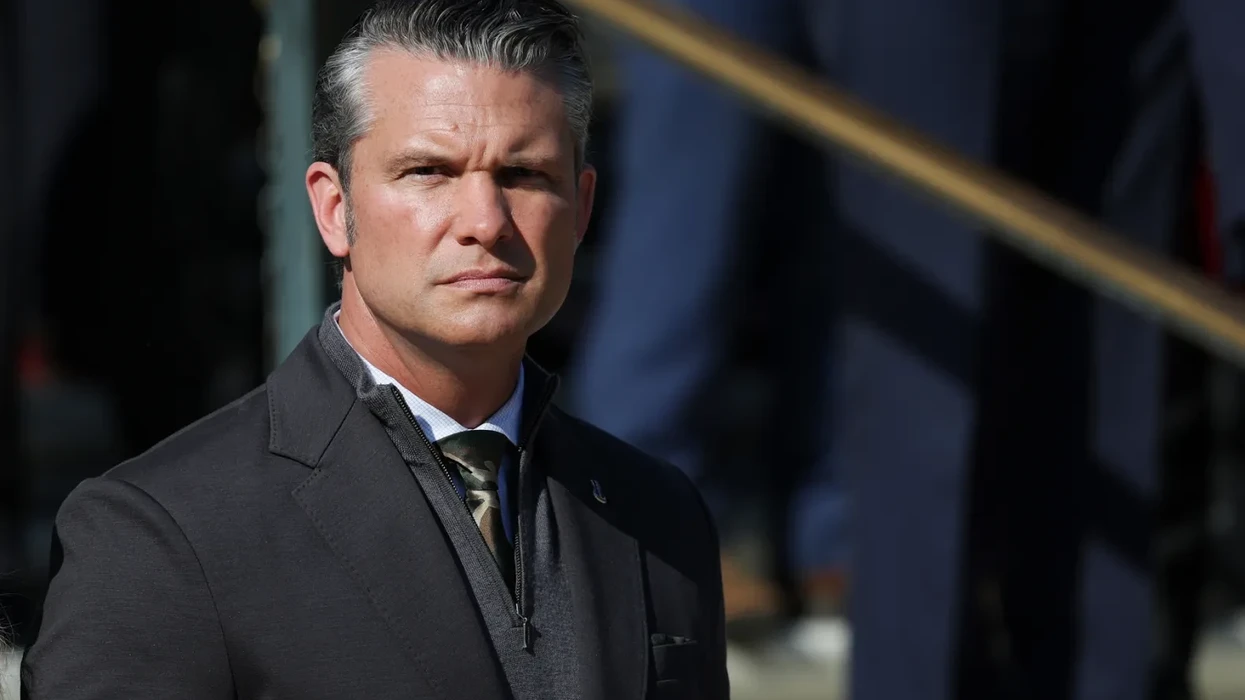

Stephen Miller in Washington, D.C., on Oct.21
Stephen Miller Wants to Win Back Young Men. It Might Not Be So Easy
Stephen Miller is not much of a man, at least by the right wing’s increasingly Herculean standards. Gawky, bald, and pasty, Miller has nevertheless ascended during Donald Trump’s second administration, most recently climbing from an advisory role to the lame-duck leader’s chief of staff.
In that role, Axios reports, Miller has one priority: win back America’s young men to the MAGA cause.
The right sees young men as one of its most important demographics, as they have been less susceptible to the overall leftward shift of young people over the past 20 years. But after making massive gains with the group in the 2024 cycle, Trump’s MAGA Man project stumbled, its support drying up faster than the lawn in front of a Texas frat house. In the 2026 midterms, young men swung 38 points in favor of the Democrats compared with how they voted in 2024. Why this happened is a complex puzzle, but the biggest piece in it is clear: American men are sick of war. In Iran, they faced the existential threat that America would revert to the warlike nation that sucked their older brothers’ and parents’ generation into 20 years of futile bloodshed in the Middle East.
Miller appears to have identified this early. The New York Times reported last week that Miller’s pitch to Trump when he was angling for the chief of staff job involved direct advice to wind down the Iran war, which Miller thought — correctly — had alienated supporters he couldn’t afford to lose.
But Iran is only part of the picture. I’ve reported on masculinity in America for years, and the anxieties that young voters face are more holistic than just a fear of being sent to die in a foreign land. That’s part of it, of course — while Generation Z was mostly too young to fight in the peak of the Global War on Terror, plenty of them remember older siblings or parents who spent years away in Iraq or Afghanistan. But what they remember even more were the economic effects of 20 years of American war. For many young men I’ve spoken to over the past few years, their childhood political memories aren’t Clinton getting a blowjob or the all-encompassing trauma of 9/11. Those on the older side remember their parents losing jobs in the 2008 crash; those on the younger side left high school or college and walked right into the Covid pandemic.
Now, with missiles flying over the Persian Gulf, young men see it happening all over again: gas prices going up, food costs rising, and the promise of owning a home and one day retiring slipping even further down the drain, even if they aren’t drafted to fight for a cause they don’t support.
In 2016, and to a much greater extent in 2024, Donald Trump effectively harnessed young men’s anxiety about their place in the world. In both those campaigns, he met men where they were: in 2016 on social media and in 2024 in a new-media world of podcasters and influencers. Both of these places gave a generation of adrift young men a culture they felt at home in — and in Trump, they had a leader there with them.
This had a profound effect. Some young conservatives, at least, still see their futures as directly linked with Trump, likely because the MAGA movement was the first time they’d ever felt a sense of political agency or control. But for those less ideologically linked with Trump, the relationship is more transactional. Sure, young men may get a kick out of Trump shimmying around on TV and talking trash. But what his successful campaigns have done is promise those men something concrete: their prices coming down, their fortunes going up, a leader who will fight for their place in the world. A few years back, at a UFC fight just after Trump was elected for the second time, a pair of twentysomethings told me that they loved that Trump “comes out like a fighter,” which they said “resonates with a lot of people that are hurting.” “When they see a strong figure like that, it gives a sense of hope,” one said.
The difference, now, is that Trump doesn’t represent that hope anymore. And that means Miller has a very, very tall hill to climb. He can’t, as he did in 2024, just tell men to “show that you are not a beta” and vote for Trump. Axios reports that Miller is expected to focus on more of this culture-war chum, cracking down on “woke” policies at schools and offices.
But all of that is window dressing. In the midterms, young men swung toward Democrats in record numbers because that party offered them something: an end to foreign wars, a better shot at the future. Even if Miller is successful and gets Trump to roll back the Iran war, young men aren’t stupid: you barely get credit for “ending” a war that you started in the first place.
Axios reports that Miller also plans to push other economic reforms the Trump administration has mentioned but not delivered on in the past, like prescription-drug prices, but also that they will continue to focus on fraud and eliminating the federal bureaucracy. The latter points sound like a rehash of DOGE, an idea that may have initially sounded good on paper but yielded unclear, if not disastrous, actual results. Still, it’s a sign that Miller has identified some of the core issues he believes lost Trump votes with every demographic, not just young men. Democrats have their own ideas of what Americans voted on this month, though, and heavy majorities in both houses of Congress they can use to push them.
The next two years, then, will determine which party is able to persuade young men that it’s fighting for them. Miller has taken this task upon himself, which Democrats should see as an opportunity. After all, he doesn’t look like that hard of a guy to beat.