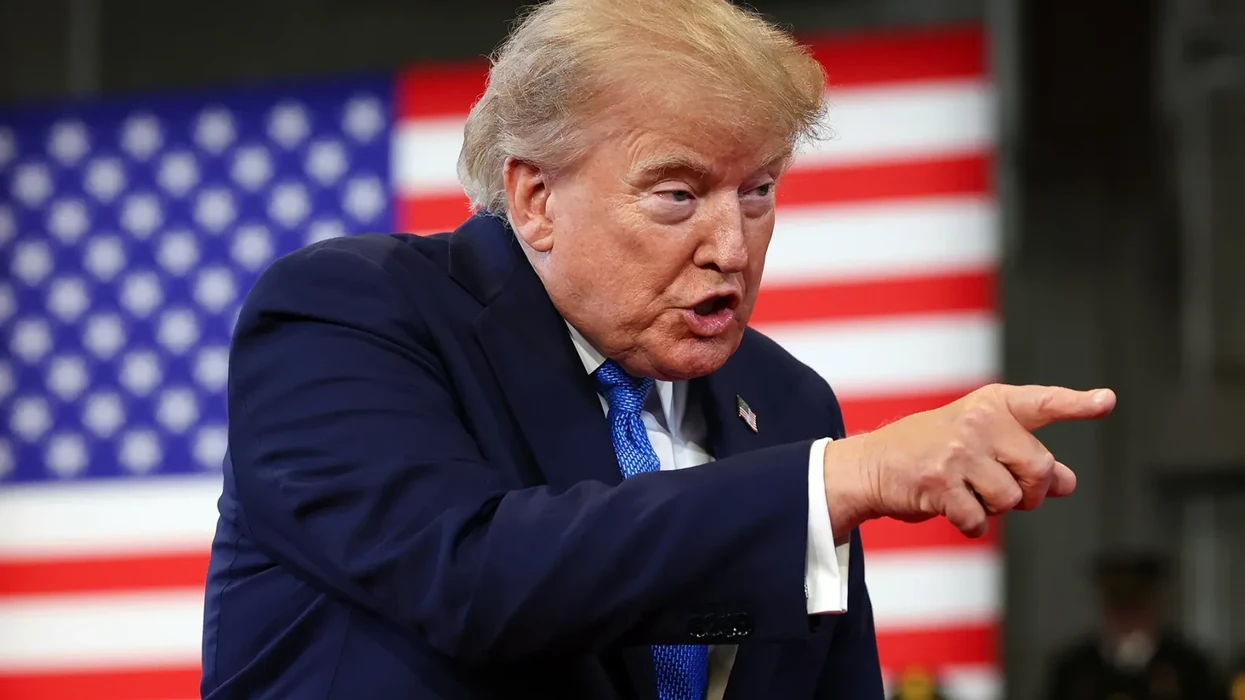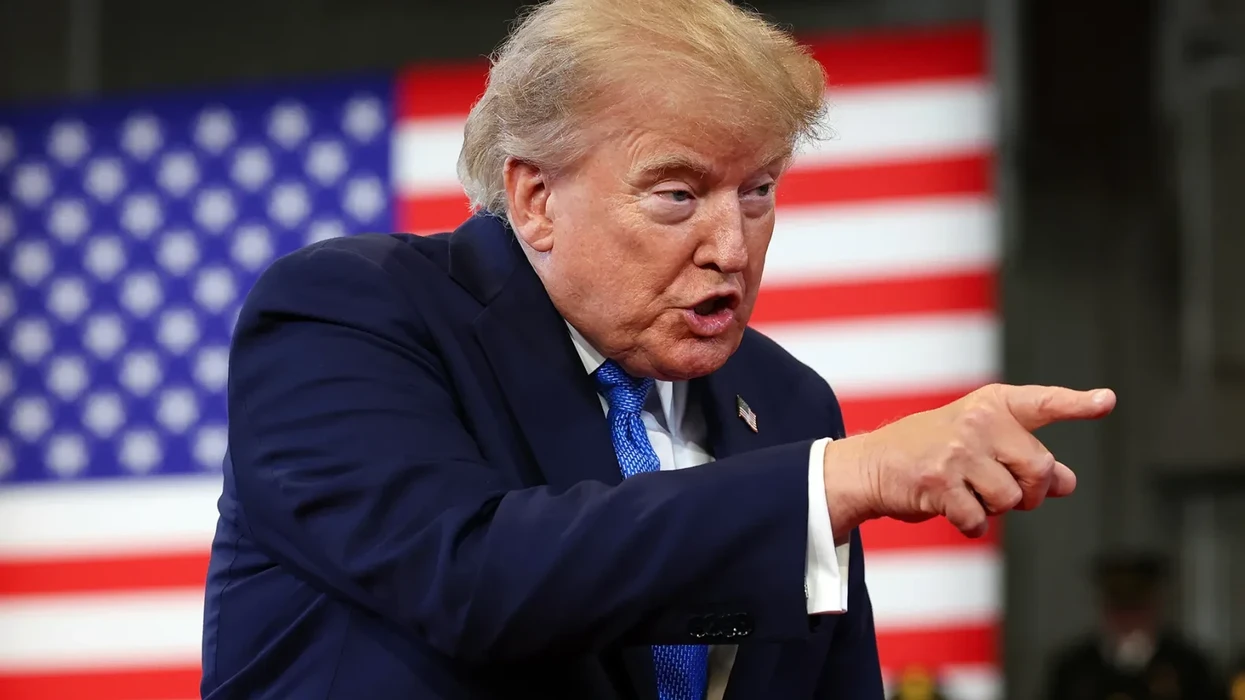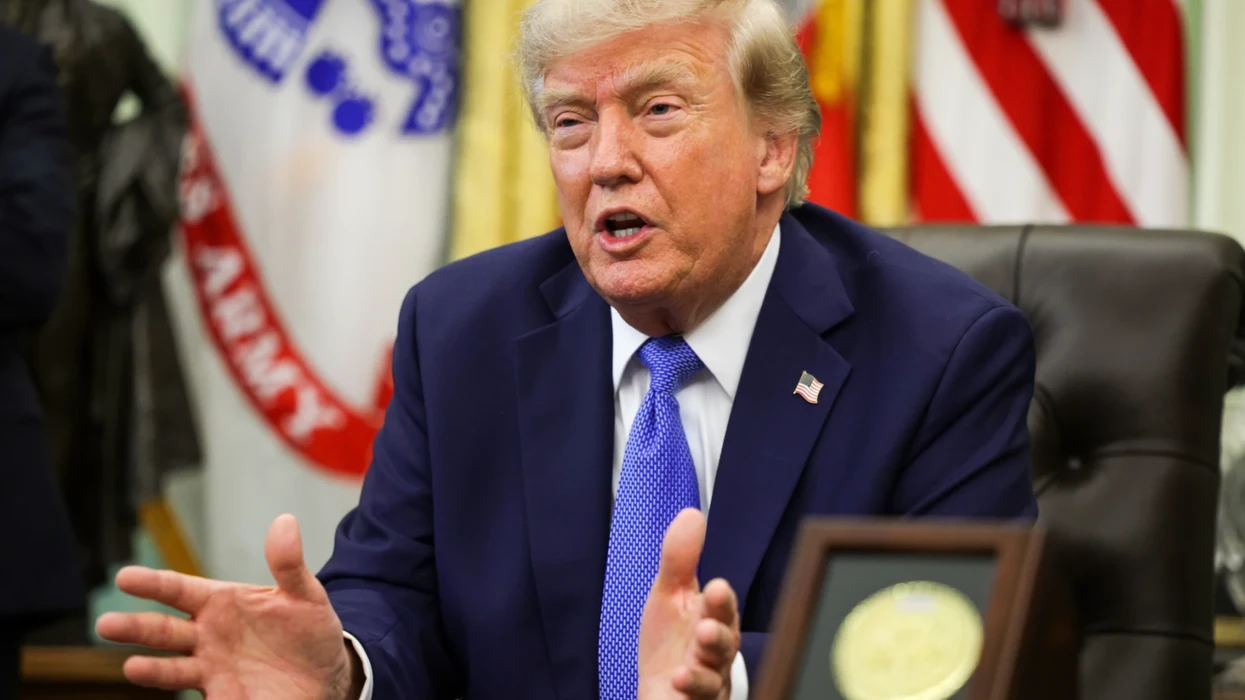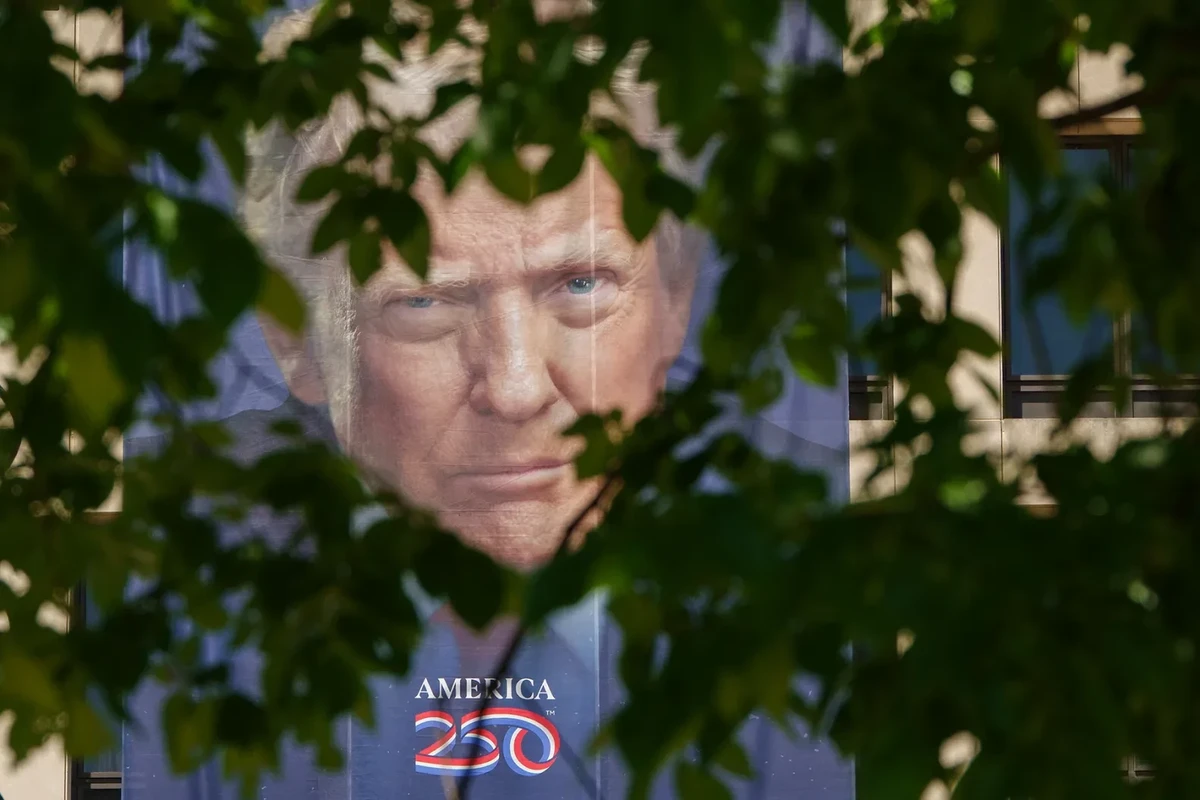
Donald Trump’s favorite thing about America is that he lives in it. It’s hard to point to a president that wasn’t self-absorbed, of course — Obama had an ego on him, as well — but “President DJT,” as he signs his tweets, takes personal pride to a new level.
Trump has put his personal stamp on every American institution within his reach, and the celebration of the country’s 250th anniversary, known confusingly as the semiquincentennial, is no exception. Instead of a celebration of the country, Trump’s “Freedom 250” celebrations honor a particular vision of America — one set by one man, organized largely to boost his ego and flex his power over our political system and way of life.
Trump’s co-option of the semiquincentennial has taken many forms — slow and gradual ones like the subtle rebranding of the event, and bizarre, brazen ones like placing his name and likeness on new U.S. passports, coins, and other items. It’s a fitting demonstration of the current state of America: at the end of its imperial rope, a society that has been degraded so far by its own excesses that the Founding Fathers would barely recognize it now.
Here are some of the ways Trump made our country’s 250th birthday all about himself.
Neutering the America 250 commission and replacing it with Freedom 250
You need time to plan a good party. In 2016, the last year of the Obama administration, the nation began looking ahead toward the 250th anniversary celebrations. Congress established a commission that would theoretically oversee planning of the festivities a decade in advance, to ensure that everything went well regardless of who was in power.
And then Trump happened. In 2025, upon his return to the White House, Trump effectively neutered America 250, and created his own party planning committee: Freedom 250. Where America 250 was supposed to be nonpartisan, Freedom 250 is Trumpian, stuffed with allies of the president and focused on projects that reflect the presidents’ personal style. To top it all off, the funds originally allocated to America 250 have largely been diverted to Trump’s commission, which is not subject to the same oversight and appropriations restrictions as the original group.
Starting the celebration on his birthday with UFC fights at the White House
Trump kicked off the American 250 celebrations not in the month of July, when the actual semiquincentennial falls, but in the middle of June. Specifically, he picked the weekend of June 14, his 80th birthday, to really go all out, hosting a unique Ultimate Fighting Championship event on the grounds of the White House. The event, according to the UFC, was a massive success — they certainly sold enough ads around it — but it was profound how little that had to do with the actual fights themselves. Sure, there was a shock upset when Justin Gaethje beat the Spanish phenom Ilia Topuria, but the real star on display was Donald Trump himself.
Putting his face on a new anniversary edition of the passport
Trump has spent much of his second term obsessing over branding, particularly putting his name and face on every piece of public property he could get his hands on. If seeing Trump’s name on the Kennedy Center or his face on the Department of Interior wasn’t enough, Trump wants to make sure you can’t escape him — even if you leave the country.
In order to commemorate the 250th, the president ordered the creation of 40,000 special edition passports featuring the image of a glaring Trump in front of the Declaration of Independence. An image which — according to Trump — conveys the message, ‘Welcome, but be good.”
Putting his face on “America 250” National Park passes
One of the nation’s greatest treasures are its beautiful landscapes and natural environmental diversity. Amber waves of grain, purple mountains’ majesty, you know the song. One of the ways Americans can enjoy the natural splendor of the country is through its national parks, and the National Parks Service offers a slate of passes for locals and travelers looking to enjoy public lands. The passes have historically featured photos of wildlife or famous American landmarks. But this is Trump’s America, and on the semiquincentennial he wants you to reflect not on the wild beauty that marked these lands centuries before the settlers, and will likely outlast the nation, but on himself.
To add insult to injury, Trump also has been raiding the coffers of the National Parks Service to fund a series of vanity projects for himself. A New York Times report found that nearly $60 million in Park pass revenue was going directly towards Trump’s repairs to Washington, D.C.’s ornamental fountains, and another $7 million is funding the disastrous Reflecting Pool renovation. The administration is being sued over it, but outdoorsmen across the country have already found themselves carrying Trump around in their wallets, all so he can freshen up the finishes on some of D.C.’s ceremonial hardware.
His administration trying to put his face on a $250 bill
If Trump’s favorite thing in the world is solid gold, his second favorite is cash money. Before becoming president and adopting “Y.M.C.A.” as his de-facto anthem, Trump’s theme song was quite literally “For the Love of Money” by The O’Jays.
These days, Trump has a lot more power than when he was on The Apprentice, and he wants to put his face on America’s currency. The Trump administration and the U.S. treasury proposed issuing a 250th anniversary $250 dollar bill featuring not a dead pv resident, but the very much still alive Donald Trump.
It’s actually against the law to put a living politician on currency. It would require an act of Congress to make an exception for Trump and, sure enough, Republicans have introduced legislation to get his face onto a $250 bill — even though it stands almost no chance of passing.
Putting his face on a commemorative gold coin
OK, so maybe a $250 bill isn’t in the cards, but you know what the mint is great at? Commemorative coins! The U.S. treasury did approve a design for a 24-karat gold coin bearing Trump’s presidential portrait on the front, and a bald eagle on the reverse. The size and worth of the coin have not yet been announced..
Replacing 250th anniversary musical performances with a rally speech
The regional musical headliner or aging country star is a vital part of most great fairs, and Trump certainly tried to make his national celebration the same. Unfortunately, he failed, as star after star pulled out when it became clear that Trump was relentlessly politicizing their performances. Instead, Trump did what he always does: took the spotlight himself. Instead of seeing, say, Martina McBride or … Vanilla Ice, for some reason, audiences instead were treated to, and you need to read this full quote by Trump himself, “the Number One Attraction anywhere in the World, the man who gets much larger audiences than Elvis in his prime, and he does so without a guitar, the man who loves our Country more than anyone else, and the man who some say is the Greatest President in History (THE GOAT!), DONALD J. TRUMP, to take the place of these highly paid, Third Rate ‘Artists,’ and give a major speech, rallying the Country forward like I have done ever since being President!”
Incredible stuff, Mr. President. Bars worthy of Vanilla Ice, indeed.
Putting his face on commemorative banners all over the capital
You may have noticed a pattern at this point: Trump likes seeing his own face. Perhaps he is psychologically trapped in the image like Narcissus, or pulling a reverse Dorian Grey in which the more portraits of himself he puts up looking 20 years younger, the older he looks in person. Trump has been hanging banners of himself on buildings across the capital, including on the Department of the Interior, the Department of Justice, and the Department of Labor. Many of the “America 250” banners are placed alongside images of other famed presidents like Abraham Lincoln and George Washington. It’s just another way Trump is trying to associate himself with the idea of American greatness. If the anemic crowds in Washington, D.C., this week are any indication, the effort is falling flat.