


One day well into President George W. Bush’s second term, an ultra-deep-cover Central Intelligence Agency officer flew back to the United States for a break from a yearslong assignment in the Middle East.
The man had a bushy beard and a distinctive, needled scar on one arm from an old barracuda bite, likely earned while surfing — a favorite pastime in another life. But the operative couldn’t just hail a taxi and head to the agency’s Langley, Virginia, headquarters. Even in the United States, his identity had to be carefully shielded from most CIA personnel, let alone the enemy spy services that routinely blanketed the Washington, D.C., area with surveillance.
Since the operative had no known relation to the U.S. government — and the revelation of his real identity could be fatal overseas — the agency undertook extreme precautions to sneak him into Langley during his infrequent visits stateside.
To throw off potential pursuers, the operative would take a circuitous route to CIA headquarters, switching vehicles multiple times along the way. Only after his car slid into an underground garage in the bowels of Langley could he emerge for debriefings with the select group of CIA officials aware of his secret mission. The deep-cover spy was slated to meet CIA chief Michael Hayden himself. The owlish, eloquent Air Force general had assumed the directorship in May 2006. By this time, Hayden was a top veteran of a bruised America’s bloody War on Terror.
It is rare for CIA directors to meet personally with lower-level agency officers. But this deep-cover operative was anything but ordinary.
Recruited into an ultra-secret agency program in the aftermath of 9/11, he lived undercover for roughly half a decade in the Middle East as an Islamist radical, burrowing into extremist groups, a U.S. intelligence officer embedded deeply behind the War on Terror’s front lines. He was the CIA’s equivalent of a jihadist Donnie Brasco.
During his years undercover as an extremist, this man even infiltrated Al Qaeda itself, according to four former CIA officials. Intelligence he gathered was repeatedly briefed to the CIA director and the White House. Hayden, according to former officials, even pushed for an in-person meeting between the deep-cover operative and President Bush himself — the holy grail of honors for most CIA employees. And at one point, he would be sneaked into the White House to meet the president. (Hayden declined to comment for this story. Bush did not return a request for comment.)
The CIA’s veil of secrecy often submerges individuals’ stories, over time, into a compartmented void. But within some agency circles, this operative’s feats were the stuff of hushed renown. He was a “freaking legend,” says a former colleague. A “hero,” says another. “Exceptionally ballsy and committed,” says a third.
But some within the agency questioned the tangible intelligence value of this operative’s work, and the broader efficacy of the CIA’s post-9/11 push to seed more deep-cover officers abroad, including into terrorist circles. For two powerful kingdoms within the CIA, locked in the eternal governmental battle over resources and prestige, his case became emblematic of deep disagreements about the agency’s role in the War on Terror.
It’s doubtful the deep-cover operative was thinking about bureaucratic knife fighting that day in Hayden’s office. Indeed, it’s not clear what he was pondering at all. Unlike many CIA operations officers, who tend toward blustery self-confidence, the deep-cover spy seemed awkward and uncomfortable and slightly withdrawn at the meeting, according to a former senior agency official.
To the former official, the operative behaved as if he just stepped out into the harsh summer sun, blinking and woozy, from inside a pitch-black movie theater. It was “like he was seeing the light of day” for the first time in a long while, this person recalls.
The spy’s behavior that day augured more serious psychological and emotional issues to come — issues that eventually led the CIA to pull him from his dangerous undercover assignment, issues that some former agency colleagues believe culminated in his tragic death in 2016.
Even after this operative’s death, however, disputes about his legacy have not dissipated. Nor have questions ceased about how the CIA ministers to — or disregards — the acute psychic strains sometimes faced by intelligence officers like him, or more broadly, about how it oversees the larger deep-cover corps of which he was a part.
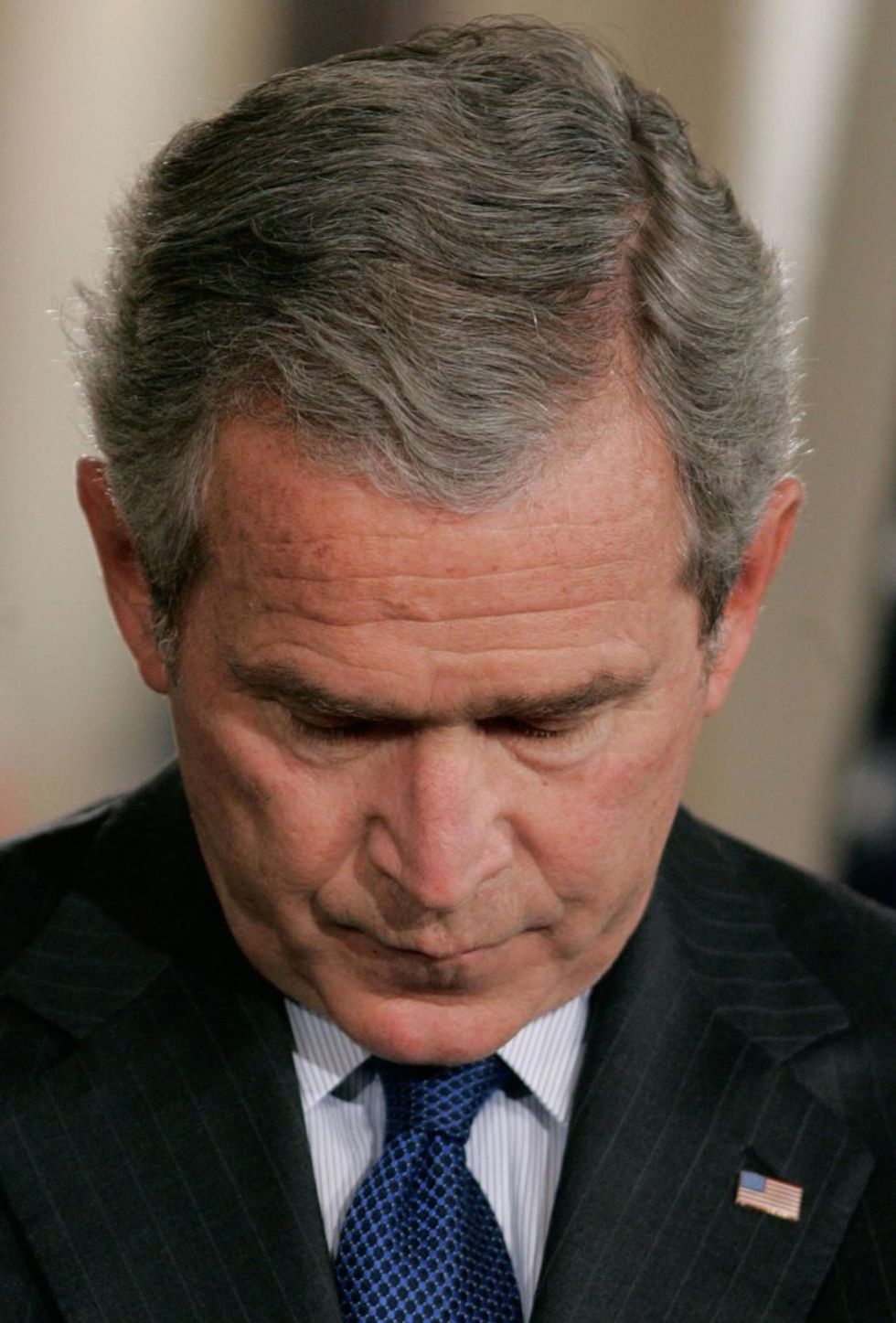
His story serves as a requiem for the CIA’s War on Terror, mirroring its successes as well as institutional and moral disfigurements. And his case speaks to fundamental questions about the viability of the CIA’s human-focused spying mission in the 21st century — quandaries that, if anything, have only become more acute in the years after his death.
“What he did — at the time, we thought it was amazing,” says a former CIA official. But “time and distance” have revised this person’s assessment. “Did he just give his life for nothing? All the risk and danger, so what? What really was accomplished? What was really done?” asks the former agency official.
This article, based on extensive conversations with more than two dozen former CIA officials who spoke to Rolling Stone, is an attempt to answer those questions. It is the story of a man whose life, even for most of his CIA colleagues, is encased in shadow, unheralded and unknown; a spy secreted away from his agency compatriots, who fought in a secret war that was and wasn’t a war; an operative whose legacy is — even today — the object of contention and equivocation among the select CIA cohort who knew him and his work.
It is also the sort of story that, inevitably, contains gaps and blind spots and approximations. It is the result of years of careful biographical stitching of a man who operated in the most rarefied and covert corners of the U.S. government. Former CIA officials — rarely endowed with the “full picture” themselves — shared what they could, or what they were willing, with Rolling Stone.
But much about his life remains secret. And many of those secrets are now sealed, permanently, in the irreversible silence of an early grave.
Many of the former CIA officials who spoke with Rolling Stone for this story requested anonymity in order to discuss sensitive agency programs and operations. “Without commenting on claims specific to any individual, with regard to our workforce, CIA takes the mental, physical, and professional health of our officers very seriously, and in recent years has significantly expanded the resources available to our workforce,” wrote a CIA spokesperson in response to a detailed list of fact-checking questions. “We have no higher obligation than to ensure the safety and well-being of our workforce.” The agency declined to provide further comment.
“He looked out of central casting,” recalls a former CIA official. An Arabic-speaking Midwestern white boy with “a killer beard” turned jihadist.
THE DEEP-COVER OPERATIVE was known as “Anthony Lagunas” within the CIA, according to 13 former agency officials.
That isn’t his real name. It’s a pseudonym. The CIA employs these “pseudos,” as they’re called, as a security measure for undercover agency employees. The CIA is not a normal workplace. You can work closely with colleagues there for years and never know their true identities.
Since, out in the world, deep-cover CIA officers like Lagunas may operate under their real names, the true identities of such operatives are among the most closely guarded secrets in an organization defined by them.
In fact, most of the agency officials who spoke with Rolling Stone never knew Lagunas’ true name — let alone the sorts of biographical details one might expect to learn about a colleague. When it came to spies like Lagunas, “you didn’t touch the core of the other person’s life,” says a former CIA officer.
As a deep-cover operative, Lagunas was a member of a very small club. Most CIA officers abroad pose as diplomats or military personnel or other sorts of U.S. officials, maintaining what is known as “official cover.” Their connection to the U.S. government is overt; it’s their connection to the CIA that’s hidden, at least in theory.
Not so with Lagunas and his cadre. They are known within the CIA as “NOCs,” because they work under “non-official cover.” NOCs commonly pose as businesspeople — think import-exporters, high-tech experts, or financial advisers. Some work for established corporations, others as freelancers or consultants.
NOCs have no overt connections to the U.S. government, and therefore none of the protections afforded to such officials, like diplomatic immunity. If their identities are blown, it can mean arrest — or worse. NOCs can live a “very dangerous life,” remarked former CIA director James Woolsey in a 2010 interview with the University of Virginia.
And NOCs all have to “live their cover,” which means literally working two jobs: one’s day gig and one’s real job, as a spy. “If you’re going to seem to the Iranians to be a Syrian smuggler operating along the border, you have to probably actually go be a Syrian smuggler operating along the border for a few years,” said Woolsey at the same interview.
It’s well known that 9/11 precipitated an epochal shift at the CIA. But it’s easy, two decades on, to gloss over just how thoroughly it transformed the agency. Mired in a post-Cold War slump, the CIA had lacked the animating fire of a global confrontation between two superpowers. It found new purpose after Sept. 11, transforming itself from an organization focused on more traditional human-centered espionage — above all, the subtle art of stealing secrets from foreign governments — to an oft-lethal manhunting force arrayed against nonstate terror groups.
The agency “all went to war at the same time,” says Mick Mulroy, a former senior CIA official. Elite paramilitaries like Mulroy had been trained for combat operations. But for many CIA personnel, the agency’s post-9/11 metamorphosis came as a major shock.
Many had “joined the agency to serve their country for sure, but a whole lot of people weren’t thinking, ‘You know, I’m going to be driving around an ambush alley in an unarmored pickup truck with an M-4 strapped to my chest,’” Mulroy recalls.
The urgency of the post-9/11 world shook the CIA into action. “There was a lot of this, like, ‘Let’s just get out and go and then think about consequences later,’ ” says Janaki Kates, another former senior CIA official.
The new locus of power within the agency was its Counterterrorist Center (CTC), whose budget swelled with funding from Congress. After 9/11, CTC had the money; it had the staffing; it had the clout. And it also had the runway, because the Bush administration took a lax view on oversight as it prosecuted its deadly counterterrorism campaign across the globe. There wasn’t merely a capacious appetite for risk, recalls a former CIA official. “In the early- to mid-aughts, it was ‘Eat as much as you want,’ ” this person says. “There was no shortage of supersensitive, ethically dubious things going on at CTC at the time.”
The War on Terror also convulsed the agency’s NOC programs. Some in the national-security bureaucracy had long believed that the CIA needed to move much of its human spying operations “out of embassy,” away from traditional forms of cover — especially in order to infiltrate extremist groups.
“One needs to use non-official cover officers to recruit spies inside terrorist organizations,” said Woolsey during a 1998 congressional hearing. “Not too many of Mr. Bin Laden’s supporters and friends attend embassy cocktail parties,” he quipped.
After 9/11, powerful elements on the Hill and within the CIA pushed the agency to vastly expand its deep-cover operations. “The CIA must move emphatically to develop an entirely new collection paradigm involving greater use of non-official cover (NOC) officers,” wrote Richard Shelby, the top Republican on the Senate Intelligence Committee, in 2002. Congress would throw billions at the initiative.
The decision was far from universally popular within the CIA itself. Before 9/11, the CIA’s NOC corps had been modest, with under 70 deep-cover operatives deployed worldwide, according to the intelligence historian Loch Johnson. After the attacks by Al Qaeda, the NOC program tripled or quadrupled in size, according to a former senior CIA official.
However, for many at Langley, the new NOCs weren’t properly trained, weren’t properly vetted, and weren’t properly deployed. “In the rush to get all these people out there after 9/11, it was just ‘Hurry up, hurry up, hurry up,’” recalls another former senior official. “Some of the things they did were just absolutely fucking crazy. Just stupid. And just so they could use up this money, and tell Congress, ‘Oh, yeah, we’ve got all these out-of-embassy platforms going on,’ and … they were delusional.”
Moreover, deep-cover CIA officers weren’t going to burrow into Al Qaeda by posing as international businessmen or tech entrepreneurs. If the agency was going to use NOCs to successfully infiltrate terrorist networks, it needed a different strategy. Inspiration would spring from an unlikely place.
IN THE FALL OF 2001, U.S. forces in Afghanistan detained a Taliban fighter who didn’t fit the normal jihadist profile. His name was John Walker Lindh. He was a 20-year-old white American man from California’s ultra-wealthy, left-wing Marin County, just north of San Francisco. Lindh, a convert to Islam, had left the U.S. a few years before to study at a Muslim religious academy in Yemen. From there, he traced a path to Pakistan, and eventually Afghanistan, where he trained at an Al Qaeda terrorist camp, and even met Osama Bin Laden.
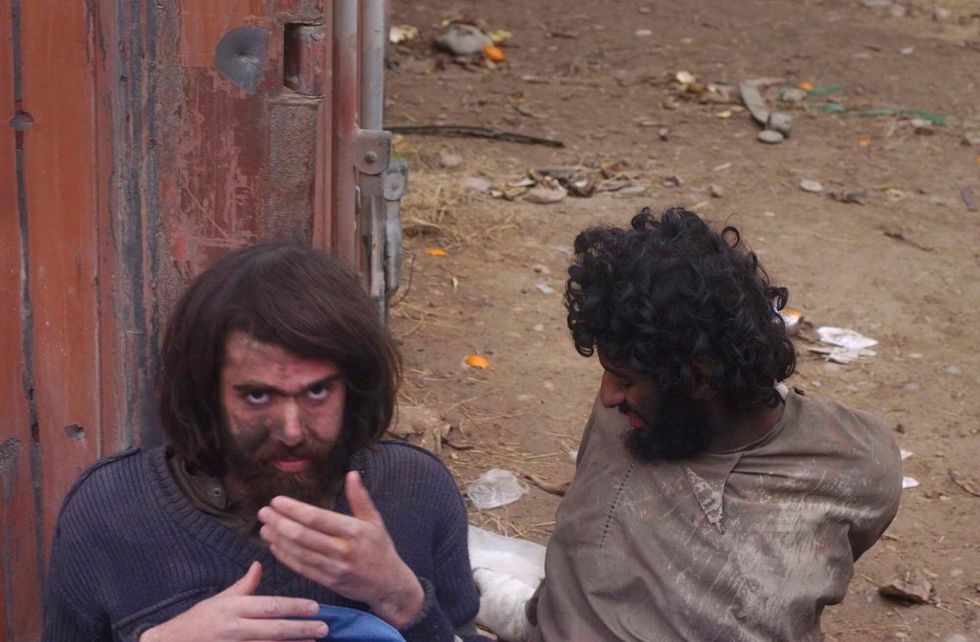
Lindh’s story was “proof of concept” for the sort of NOC program that, just a few years earlier, would have been laughed out of the room, says the former official. But no one was laughing now. This was “some of the impetus” for Lagunas, recalls the former official.
There was a logic to the idea. To maintain its terrorist infrastructure, Al Qaeda needed recruits with Western passports, natives who could embed themselves within Western societies. After Sept. 11, such operatives become an increasingly valuable commodity. “It was Al Qaeda’s dream to be able to recruit an American they could deploy,” recalls a former senior official. This, went the thinking, was a gap the CIA could exploit.
So a tiny, elite band of deep-penetration CTC NOCs was born. The objective was to spy on and disrupt Muslim extremist circles from inside them, to become members of the very terrorist groups the CIA was hoping to dismantle.
“We were able to infiltrate into the ranks of some of these organizations when people thought it was impossible to do so,” says a former senior CIA official. “Nothing’s impossible.”
The “convert NOC” program, as it was informally known, essentially cribbed its methodology from the Lindh case. CIA officers would go undercover as disaffected Westerners drawn to the study of Arabic or Islamic theology. They would “convert” to Islam — or, if the CIA spies happened to be Muslim already, evidence a radicalizing faith. They would enroll at madrassas abroad, institutions where the CIA believed these operatives could befriend people with connections to Islamist extremist or terrorist groups. And they would slowly, over years undercover, and through these deepening, concentric circles of trust, penetrate the terrorist groups themselves.
This was a radical proposition for the CIA, for several reasons. One related to the fundamental profile of the undercover CIA officials — and their targets. “What CTC did for the first time was the religious aspect of it,” says a former CIA official. “It was ‘We need to target people by their religious background.’ It was ‘I don’t need to seed people into IBM, I need to seed them into the local mosque.’”
Knotty legal issues were also inevitable. Neither undercover CIA officers nor recruited agency sources are allowed to provide “material support” to sanctioned terrorist groups without a legally prescribed waiver granted by CIA lawyers, sometimes in consultation with the Department of Justice. And even these waivers are highly circumscribed, permitting, say, an undercover CIA officer or asset to pony up funding for a terrorist group’s safe house, but not money for bomb-making materials.
Lagunas chafed over these seemingly arbitrary regulations, recalls a former colleague. He was incredulous over the idea that he could, in theory, “hand over a bag with 12 but not 13 Glocks, because that’s assisting terrorism — you’re expecting this guy to count the number of pistols?” recalls the former CIA official. “If that’s what you’re getting into — 12 or 13 — at this point, it doesn’t matter.” (Lagunas was underlining his frustrations with the legal regime governing his undercover mission, says the former CIA official, who didn’t know if he was actually involved in weapons transfers.)
It might have been cold comfort to Lagunas at the time, but U.S. officials understood the difficult position they were putting NOCs like him in. They “truly were sent out to do the impossible, and given some guidance that was just about impossible to follow in the real world and keep their cover,” says a former intelligence-community lawyer.
And for deep-cover operatives like Lagunas, maintaining cover can be a life-or-death proposition. A NOC outed while poking around a jihadist network would likely face immediate execution. Lagunas understood there was “no mercy with that crew he was with,” recalls a former CIA official.
When Lagunas joined the CIA, he couldn’t have dreamed of undertaking such an assignment. He was just a CIA trainee when the planes hit the towers. He hadn’t even begun his coursework at the Farm, the agency’s covert training facility in rural Virginia, yet. Nor had he been preselected to become a NOC, let alone one tasked with going undercover as an Islamic extremist. “He wasn’t hired for this,” recalls a former senior CIA officer. “9/11 happened.”
Soon after the 9/11 attacks, Lagunas and a few others disappeared from the CIA’s normal training program. At first, recalls a former colleague, Lagunas’ fellow trainees weren’t sure what had happened to him — whether he had been transferred to some ultra-secret initiative, or just kicked out of the CIA altogether.
“It was Al Qaeda’s dream to recruit an American they could deploy,” recalls a former CIA official. This, went the thinking, was a gap the CIA could exploit.
“It was 50-50,” says a former agency official — because back then, Lagunas was known as a something of a wild man. A heavy drinker, he was “a bit of a womanizer — a lot of a womanizer,” recalls the former official. But Lagunas hadn’t been booted from the agency. Far from it. First, the CIA knew he had some preexisting knowledge of Arabic — a critical language skill for an agency scrambling to reinvent itself. But there were other, highly specialized criteria that drove his recruitment into this new, ultra-secret NOC initiative.
It was likely Lagunas’ unusual psychological profile, above all, that led to his selection. Not many of us can live another life — a lie — full time. Even fewer can do so when discovery of the charade might lead to imprisonment, torture, or death.
But Lagunas could go even further than most. “He had the ability to detach” from himself, recalls a former senior agency official. “And mentally, it’s a flaw. I don’t want to say it’s a split personality, or something like that. But the ability to detach one reality and to adopt a second reality to the point where you’re not acting it, but you are it, that’s a skill set that can’t be taught.”
This ability of Lagunas to detach — to inhabit that second existence, to become that undercover persona — “is a good and a bad thing,” continues the former senior official. “It’s a great thing if you’re going to do what he was doing. It’s a hard thing when the doorway between the two existences is never quite as clear as it might normally be for other people.”
Lagunas’ ability to dissociate was “extraordinary,” says this former official. But it “probably was the root of much of his challenge” in keeping track of where the undercover persona ended and the real man began, as he infiltrated ever deeper into the world of jihadist terror.
But all that came later. First, Lagunas had to actually begin his “conversion” to jihadism abroad, to get within the orbit of the people who would later introduce him to the real players in the world of Islamist extremism. He was extremely enthusiastic about his mission, recalls a former senior CIA official, driving the initiative and “rough plan” for his own deep-cover operation.
Lagunas had his assignment. “The cover was to learn Arabic,” recalls a former CIA official. “The goal was to infiltrate.”
AFTER UNDERTAKING SPECIALIZED training for deep-cover CIA officers, Lagunas made his way to the Middle East. Where he attempted his initial beachhead into Islamist radicalism is unclear. For at least part of his multiyear undercover odyssey, Lagunas was based in Cairo, living in a madrassa there, studying the Koran and establishing his jihadist bona fides, according to former officials. He also seemed to have spent time in Saudi Arabia.
The CIA needed to get Lagunas “Islamically sound,” says a former official, to know how “to go to a mosque and pray,” to appear to be an Islamic scholar, “a Salafi-minded guy,” in order to embed with devotees of the radical offshoot of Sunni Islam central to much jihadist thought.

Though increasingly fluent in Islamic theology, and able to present himself as deeply pious while undercover, Lagunas could be harshly dismissive of Islam in private. Once, during a clandestine meeting with another CIA officer, he carelessly chucked his ornate Koran onto a nearby bed, telling the other operative he didn’t “give a crap about that fiction,” recalls a former official. Lagunas was “not enthralled by what he was studying,” says the former official. The message was “Screw it, dude, it’s just a prop.”
Still, he managed to become increasingly embedded in the radical Islamist milieu. He lived in a madrassa, sleeping on the floor there, undertaking immersive study in Arabic and the Koran. Months undercover became years. Lagunas wasn’t the only CIA “convert” NOC burrowed within the jihadist world, but he remained undercover in that world for longer, and with fewer breaks, than his peers, according to former CIA officials.
And his transformation was impressive. He “looked like something out of Hollywood central casting,” recalls a former senior agency official: an Arabic-speaking Salafist with a “killer beard,” decked out in traditional garb, an all-American Midwestern white boy turned jihadist.
But gaining proximity to extremists is not necessarily the same thing as penetrating a terrorist group, let alone terrorist leadership. And neither necessarily translates into access to valuable intelligence — especially in a CIA bureaucracy obsessively focused on capturing or killing Al Qaeda leadership and other terrorist operatives.
And here is where Lagunas’ story gets tricky.
Tricky because there’s a vast gulf in how knowledgeable officials perceived — and still assess — Lagunas’ work. Tricky because Lagunas’ case helped fuel a proxy battle between the agency’s pugilistic type-A operations barons. Tricky because these disagreements touched on fundamentally divergent perspectives on the nature of intelligence itself, particularly in the counterterrorism world.
According to four former officials, Lagunas did eventually successfully infiltrate Al Qaeda itself — but Al Qaeda’s broader network, and not its leadership. “He was inside that organization, as well as the other satellite extremist organizations in and around it,” says a former senior CIA official.
But other former CIA spooks are skeptical of Lagunas’ accomplishments. It “may be generous” to say he penetrated Al Qaeda, says a former senior official, who muses that the “legend” of Lagunas may derive partly from “the fact that he was a white guy” living deep undercover as a Muslim radical, more than from any actual intelligence he produced. Three former officials say that while Lagunas did indeed work his way into radical Islamist circles, he never actually penetrated Al Qaeda.
Every great spy story is also a secret history of bureaucracy. And these wildly different assessments were driven, at least in part, by divergent institutional prerogatives.
Within the CIA, Lagunas had to serve two institutional masters: the Global Deployment Center (GDC) and Counterterrorist Center. (In 2005, CTC was officially renamed the Counterterrorism Center.) Lagunas’ ultimate “home” within the agency was GDC, which oversaw the agency’s NOC programs. Functionally, though, his program was run by CTC.
Bitter debate erupted between the two agency power centers. There was a “huge dichotomy in the workforce between the CTC guys, who would literally say, ‘That guy’s fucking worthless,’ and the [GDC] guys who would say, ‘This guy’s a shining example of the best we can be,’” says a former senior agency official. “It’s really amazing. In my life, I’ve never seen anything where the two sides were so diametrically opposed.”
Within the CIA, Lagunas’ case became a sort of Rorschach test over the fundamental principles of intelligence work in an age of terrorism.
CTC prized one thing above all else: “actionable” information to help kill or capture top terrorists in Al Qaeda and other jihadist groups. CTC wanted information to put “lead on the forehead” of terror targets. Everything else was a distraction.
Though he had successfully infiltrated extremist circles in the Arab world, Lagunas was not, by CTC’s lights, truly deployed behind the front lines in the War on Terror for much of his assignment. They wanted him embedded closer to global jihadist leadership in Afghanistan or Pakistan. He balked, according to a former senior CIA official. Frustration and resentment mounted within CTC.
The feeling there was “Lagunas is fucking around … he’s not accomplishing anything, we keep trying to get him in the fight, he’s resisting,” recalls the former senior official. CTC officials fumed that “he was smoking and joking and, you know, chasing women and drinking too much, and not living the Salafist lifestyle that would maybe get him ingratiated with the types of people we wanted to get him in front of,” says the former official.
For many within CTC, Lagunas’ operation was viewed as “something that more looks good on a PowerPoint presentation, as opposed to something actually valuable,” says another former senior official.
Senior officials with CIA’s Global Deployment Center, meanwhile, argued that Lagunas was providing critical intelligence in the War on Terror — and, more broadly, that he served as an example of the bravery, creativity, and savoir faire within the agency’s NOC corps.
“One part of the organization really, really, really wanted the success story they could brief up the command chain, about how great they were doing and, ‘Look at this guy, and look at that beard, and he’s living and working with the fellas, and he’s, like, sleeping at a madrassa, and this is fucking incredible, this is the stuff out of spy movies.’ … And it’s a great story to tell, and so they told it,” says a former senior official. “They really promoted the shit out of it.”
But to detractors within the CIA, Lagunas was yet another example of GDC “briefing deployments, not successes,” says another former official. “They had a map of the globe with push pins for where people were deployed, and that was one of their big, proud briefing moments of ‘Look where we’ve put people,’” recalls the former agency official. “‘Oh, we’ve got a guy in the Maldives? Why?’ ‘I don’t know, but we’ve got a guy in the Maldives.’”
Whatever the truth about the efficacy of his efforts, for a time, Lagunas was undeniably the GDC’s star brief, and according to some CIA sources, there was nothing superficial whatsoever about Lagunas’ accomplishments. “He was very, very talented and very adept at being able to acquire information that was incredibly helpful to the U.S. government,” says another former senior official.
“Day-to-day it was rare that you’d have something in your hand that you would be like, ‘Holy fuck, this is gonna change the universe. Somebody, quick, get the president on the phone,’” says the former official. “But, when someone did [say], ‘Someone’s gotta call the White House,’ there were a great number of times that the entire thing originated with this man.”
Many within the CIA fundamentally misunderstood Lagunas’ import, according to this former senior spook. First, because the number of agency officials privy to the true scope of his work was so tightly restricted, given its sensitivity. And second, according to this former senior spy, because many agency officials — particularly within CTC — did not really understand the difference between “strategic” and “tactical” intelligence.
“He was able to provide … the kind of information you’d need to draw the foundation of a program that would then have a great, widespread impact against the enemy,” says the former official. “So, without his contributions, there are a lot of lower-level, more tactical, perishable ops that never would have been able to be exploited or taken place.”
What sort of terrorism-related intelligence Lagunas provided the CIA is murky, and former agency officials refuse to divulge details of his assignment.
But it’s unlikely that Lagunas, working a dangerous job deep undercover, spent much time contemplating the distinctions between strategic and tactical intelligence, and the battles at Langley over his case — if he was aware of them at all.
Years spent inhabiting another person’s existence will do that. And former agency officials say there were signs, subtle at first, then more acute, that Lagunas was becoming untethered. But the deeper he penetrated into jihadist circles, and the more plaudits he received from his boosters at Langley, the fewer incentives there might have been at the CIA to see a man becoming undone.
“When someone would say ‘we gotta call the White House,’ a number of times it originated with this man.”
“I remember somebody saying it well: The agency is going to burn you down until you raise your hand. They’re never going to say ‘stop’ on your behalf,” says William Negley, a former CIA operations officer. (Negley is unfamiliar with the specifics of Lagunas’ case.)
It’s a cruel calculus, where success increases an operative’s momentum, but “that momentum can be destructive at times,” says a former senior official. They “become the dog that catches the car.”
The warning signs were there. Take Lagunas’ secret White House meeting with Bush. This would be the honor of a lifetime for most CIA officers. The president is the agency’s “top customer,” and the CIA is fiercely protective of its relationship with the Oval Office. And while the president might meet regularly with the agency’s director, or his CIA-supplied intelligence briefers, only under extraordinary circumstances would a rank-and-file agency officer be granted an audience with the commander in chief.
Accounts differ on why the meeting materialized when it did. “I heard it was the dynamic of keeping him happy,” says a former agency official — that Lagunas “wanted to be done” with his life undercover as a jihadist, and the meeting with President Bush was a way for the CIA to demonstrate how indispensable he was to the agency.
But there’s another way to view the get-together, says the former CIA official. Perhaps the agency’s concern wasn’t only in mollifying a wearied employee, but also in putting on a show for its top customer. Lagunas so convincingly looked the part of an Islamist radical. His bravery and perseverance were undeniable. And his story briefed so well to a man who had made “winning” the War on Terror the cornerstone of his presidency.
The CIA “did a whole lot of ball washing with Bush,” says the former official. “He could have killed the agency after 9/11. And he didn’t.” And agency officials, entrusted with winning that secret war, wanted — needed — to maintain the president’s confidence.
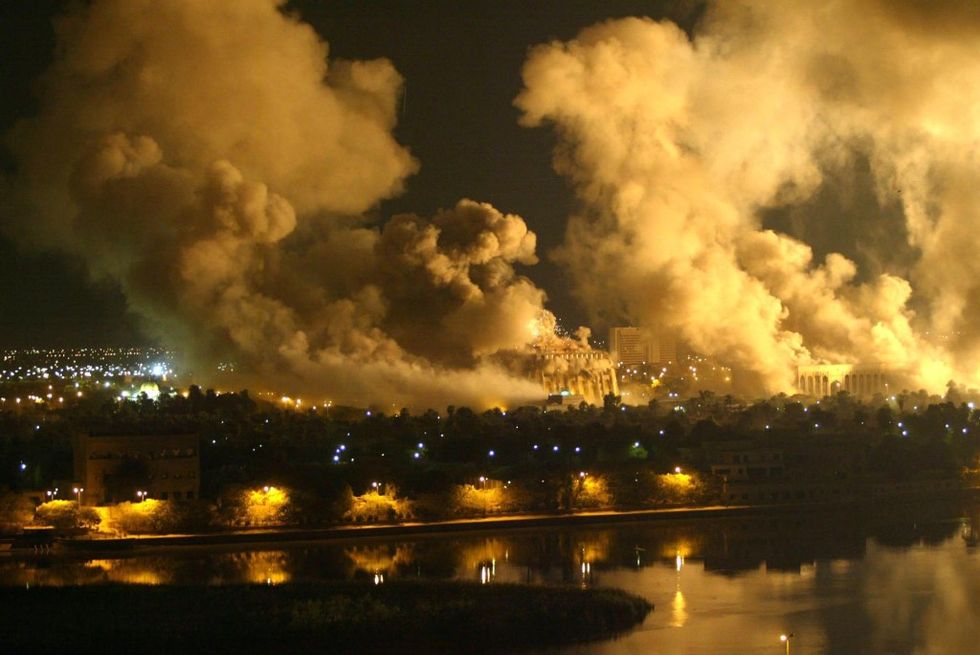
But if the meeting was, even in part, designed to lift Lagunas’ spirits, it didn’t work. He downplayed its significance to colleagues. His reaction was “Yeah, I met the president, but now I’ve got to go back, and hopefully I get to sit next to a hot girl on the flight over,” recalls a former agency official.
Some had already begun to notice a certain drift in his bearing. The man with the uncanny ability to detach from his “real” life, to fully inhabit another, no longer seemed quite so sure what his real life even was anymore. CIA officials knew that spending too much time so deep undercover could sometimes sever a person from himself. And that, generally, was when it was time to bring a NOC in from the cold.
In such a case, a NOC’s entire value system could become impalpably, but profoundly, reordered — a dangerous psychic shift for an undercover intelligence officer. “As you detach from who you may actually be, as that becomes your new reality, the things that would normally have impressed you before no longer do,” says a former senior official. “The things that would have normally frightened you before, no longer do. Bureaucratic rewards that someone might want to give you no longer have the meaning they once would have had.”
Bureaucratic rewards like, say, meeting the president. But, for a NOC that far gone, it’s not going to matter. “You’re trying to reward them in a system to which they no longer belong,” says the former senior official. At that point in his deployment, Lagunas “didn’t identify with the value system that would have made that [event] a significant mark in his life,” says the former official. Lagunas’ muted reaction to meeting the president was evidence of a deeper dysfunction, believes this former official.
By the late 2000s, concerns about Lagunas’ deteriorating psychic health — as well as the acute physical danger of his assignment — percolated upward to the highest reaches of the agency. Lagunas, CIA officials concluded, needed to come home.
FAIRLY OR NOT, many within the CIA view the agency’s domestically-focused office, called the National Resources (NR) division, as an institutional backwater. As an intelligence service primarily empowered to operate abroad, the CIA has a built-in bias toward the foreign — and many of its operations officers, in particular, gauge the success of their careers by the geopolitical import of the countries to which they are posted.
But the CIA has a sizable, if generally hush-hush, presence within the U.S. itself, with NR offices dotting America’s major cities. Domestic CIA stations have produced important intelligence for the agency. But the CIA has also used these offices as rest stops — temporary or final — for agency operatives who can no longer cut it in the foreign arena. Some within the CIA have even derisively referred to NR as the “Near Retirement” division. Postings there can serve as unofficial decompression or cooling-off periods, time-outs of sorts.
“He was a good guy, but he was just kind of ate up” by the “baggage from that operation,” says a former CIA official. “He got into some shit, and it was bad.”
Such, it appears, was the case of Anthony Lagunas in Los Angeles. By the early 2010s, he was working at the agency’s large NR office there. No longer undercover as an Islamist radical, but still operating as a deep-cover intelligence officer, his new assignment had him placed somewhere in the entertainment industry — that is, Hollywood.
It’s not clear what Lagunas actually accomplished in Tinseltown. But the psychic hangover, the trauma of his time deep undercover as a jihadist was clear. “He was just not the same” after he returned stateside, says a former CIA official. His woes were compounded by a rough romantic breakup he was also navigating at the time.
“He was a good guy, but he was just kind of ate up” by the “baggage from that operation,” says another former agency official. Even if Lagunas’ CIA colleagues weren’t aware of the details of his time abroad, they understood “it was heavy, he got into some shit, it was bad, it was rough on him, [and] he was all fucked up,” says the former official.
At this point, it might have been best for Lagunas to leave the CIA altogether. “How many times can you invade Normandy before you have to do something else?” asks the former official. But he didn’t. What is crystalline, in hindsight, however, is his mounting psychological fragility and a rocky transition for the deep-cover spy, who may have been experiencing a sense of erasure.
He “came in from the cold to no reception,” says a former CIA official. “‘Oh, you did what? Well, that’s great. Make sure you log in at nine, buddy.’ It didn’t matter.” In the CIA, “people go do amazing things, [and] when you come back, it’s ‘Well, what have you done today for us?’”
But some things are impossible to forget, even if your bosses do.
IN THE FALL OF 2016, a former colleague of Lagunas’ received a call from a mutual friend from the agency. Lagunas was dead. He had passed suddenly in a hotel room in Kuala Lumpur, Malaysia.
It was an utter shock. “My blood went cold,” says a former agency officer. “He was the type of guy … that nothing could ever happen to him. He was bulletproof.”
The precise circumstances surrounding Lagunas’ demise were — and are — hazy. Drug or alcohol abuse likely contributed. Extreme depression and post-traumatic stress disorder, too. Was his death attributable to a sort of suicide by dissipation, colleagues wondered, or perhaps just a gruesome accident fueled by a toxic-chemical misadventure?
Lagunas was still working for the CIA, and the agency rumor mill — a persistent pressure valve in an organization entombed by secrecy — hummed. Theories often abound within the agency when CIA officers die unexpectedly abroad. Is a heart attack really just a heart attack? Do agency executives actually know the cause of death? Would they tell the truth even if they did? An organization adept at executing conspiracies is uniquely susceptible to thinking in terms of them.
For others, whether Lagunas technically died of a heart attack, or suicide, or a drug or alcohol overdose was almost beside the point. He was “fighting some demons,” says a former senior official, and his death was “tragic either way.” His true killers were all upstream, perhaps years upstream, of his solitary demise in Southeast Asia in 2016.
It was “stress [that] translated to cause of death,” says another former official. “The stress of life, what he went through.”
An operation like Lagunas’ “only works well in spy novels and screenplays,” says a former senior CIA official. Undercover spies like him “all come out of it with some sort of PTSD.”
Within the agency, unofficially at least, Lagunas’ story became known as a “cautionary tale,” says another former official, of the strains sometimes faced by CIA officers, and the acute dangers to their mental health.
Being a NOC “is beyond the loneliest job ever,” says a former CIA officer. NOCs are, by necessity, alienated from the CIA at large. They cannot just walk into Langley and pal around with colleagues there. They cannot blow off steam with their co-workers inside the protective confines of a U.S. embassy abroad. Even the barest communication back to their overseers within the CIA can be fraught with peril. If a NOC is struggling with psychic pain, there are just fewer people around with whom that person can talk to, or who would recognize that an operative might need help.
“As far as there is such a thing as ‘normal’ CIA operations, the further removed you are from them, the more difficult it is to get” mental-health help, says Mulroy, the former senior agency official. “And that community is further removed.
“I don’t know how they assisted them with this type of support, because it’s more difficult to do that and maintain their status,” continues Mulroy, who is unfamiliar with Lagunas’ story.
The CIA has a self-protective, insular culture — at times, it operates almost like a secular priesthood, with a body of arcane traditions and holy texts — but there is an intense esprit de corps within the agency. NOCs have far fewer opportunities to partake in this communal institutional life.
Fundamentally, the opaque nature of the work of NOCs like Lagunas, and the experiential chasm that isolates them from fellow agency officers, means the psychic trauma they face just may not register to their “big CIA” colleagues.
At agency headquarters, “you’ve got people who are living in northern Virginia and worried about their mortgage payments, getting their kids to gymnastics, the parent-teacher conference, and meanwhile you’ve got this guy who’s trying to go into a terrorist organization,” recalls a former senior official. “And it just doesn’t work.” The CIA bureaucracy simply “wasn’t equipped for his mission, and it wasn’t equipped for the fallout.”
In truth, Lagunas’ quiet desperation may be more common within the agency’s corps of deep-cover operatives than generally acknowledged or understood. “For that cadre? He was middle-of-the-road for mental health and all that,” says a former senior official.
For NOCs like Lagunas, however, grappling with the psychic aftereffects of time spent deep undercover is often only half the battle. Many agency operations officers view NOCs as “second-tier” spooks, ill-qualified for high-level positions within the organization. NOCs who try to make the switch to “inside” work sometimes find themselves stymied and marginalized, and end up quitting the agency altogether.
These are “people we ask to do the hardest things in the world, with the least amount of support, and then we turn them around and kick them in the teeth when they come back” inside, says another former CIA official.
The CIA faces “deep challenges on the mental-health front,” says Negley, the former officer. “The symptoms are written all over the wall.”
NOCs are not the only CIA officers subject to acute psychic stressors, of course. Many activities undertaken by other agency personnel — like secretly meeting with sources in hostile, surveillance-laden environments, or paramilitary missions — can breed paranoia, tension, and anxiety.
The post-9/11 militarization of the agency brought a generation of CIA officers, most of whom were not trained paramilitaries, into the charnel-houses of Iraq, Afghanistan, and other secret war zones around the globe. Deep scarring of the agency’s War on Terror generation was inevitable.
After the advent of the War on Terror, “it took a while before we realized just how much it was affecting the psyche” of CIA officers, says Kates, the former senior CIA official. (Kates is also unfamiliar with the specifics of Lagunas’ case.)
“This is kind of a tidal wave coming at us,” says Negley, the former CIA officer. The CIA faces “deep, fundamental challenges” on the mental-health front, says Negley, who founded Sound Off, a nonprofit network that provides mental-health support to U.S. military and intelligence-community personnel. “The symptoms of ‘Hey, this community has a problem’ are written all over the wall.”
Some former CIA officials believe the institution, whether by commission or omission, has abandoned its own. “There’s a lot of folks out there that are flapping in the wind,” says one former CIA operative.
The agency provides “zero” psychological care to former spooks, according to Negley. “I know agency officers who are paying for other agency officers’ mental-health support, which is about as fucked as I can think,” he says. But these issues are beginning to burst into the open. “There’s been more discussion of CIA mental health in the last year than I’ve seen in the preceding 15 years.”
Over time, the CIA has at least tried to become more attuned to the psychic health of its current workforce, according to some former officials. In 2022, the agency even announced the appointment of its first-ever chief well-being officer.
The agency has undergone a “notable shift” on the mental-health front since the early post-9/11 years, says Kates. “Will I say that they were perfect? Oh, definitely not. Will I criticize? Certainly. But I will say that there were also a lot of steps taken. I think that there was an acknowledgment that people needed that support,” she says.
The CIA has also long employed a group of in-house psychologists, and as the War on Terror progressed, CTC increased the number of mental-health professionals available to agency officers working there, according to Kates and other former agency officials.
Whenever Lagunas returned to CIA headquarters from the Middle East, his bosses ensured he met with a staff psychologist, according to two former CIA officials. But whatever help the deep-cover spy was receiving, it clearly wasn’t enough.
Maybe Lagunas just wasn’t a good fit for work as a NOC, suggests one former senior official: “I’m not trying to minimize what this guy went through, but to say ‘Oh, the agency killed him’ — you all signed up for that. It’s tragic, but that’s the mission.”
Some CIA officers can go deep undercover, or work in war zones, and then come home and “kiss their wife and children, and life’s good,” says another former senior agency official. But others cannot isolate themselves so cannily from their own lives.
And Lagunas — a man so brilliant at compartmentalizing other aspects of his being — may simply have been unable to dam this particular sort of psychic seepage.
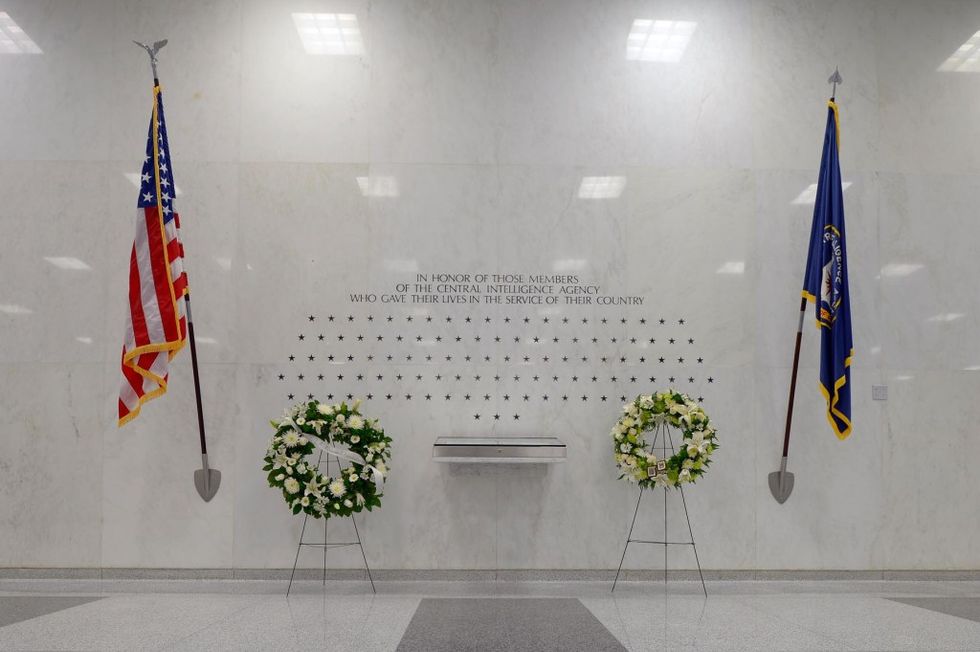
THERE IS A SOMBER MEMORIAL in the lobby of CIA headquarters, conceived as a sort of sacred space for agency employees. One hundred forty black stars are carved into a white marble wall, each representing a CIA employee who perished in the line of duty.
Many of the names of these CIA employees are public; some are still classified. A black leather book, known as the Book of Honor, sits encased in glass beneath the stars, the appellations of publicly-acknowledged CIA operatives inscribed within it.
Lagunas’ story may be an extreme one, but it isn’t unique. He was part of a select corps of intelligence officers pushed beyond their limits during a bloody shadow war, one fought with a secret and amorphous logic, in a conflict whose higher mathematics still constitutes forbidden knowledge to the American people.
Lagunas may not have been killed on the job, say former colleagues, but he was absolutely killed by it. He “won’t get a star on the wall,” says a former CIA officer, “but he should have.”
It’s a question of obligation: of what is owed to CIA officers like Lagunas when they’re in the field, burrowed undercover, and in mortal danger; and afterward, when their psychic scars begin to harden. And how an intelligence bureaucracy that must, at some level, approach people as interchangeable and replaceable — as cogs in a fearsome machine — must also account for individual humanity, especially when institutional and political incentives cut in the opposite direction.
Or, as a former agency officer tells me during a long discussion about Lagunas’ life: “To some, you’re a briefing point. To others, you’re a real person.”








Vladimir Putin addressing the audience during the Valdai Discussion Club meeting on Oct. 1
As Trump Dithers, Ukraine War Is Approaching a ‘Fatal Point of No Return’
The war in Ukraine is becoming increasingly dangerous, with the risk of escalation spilling further into Europe. As Russia and European governments trade explicit warnings that the conflict is spreading, the United States is pursuing diplomacy aimed less at stopping the carnage than restoring ties with Moscow.
With the Russian military making little progress on the ground in eastern Ukraine despite nearly five years of war and more than a million casualties, the Kremlin is intensifying aerial attacks. Ukraine, which has been the target of Russian missiles and drones since the war began in February 2022, is now experiencing a sharp uptick in attacks on infrastructure and populated areas that threaten to plunge parts of the country into cold and darkness over the winter.
The aerial blitzkrieg is intended to destroy Ukraine’s morale, infrastructure, and economy, President Volodymyr Zelenskyy recently told the Financial Times, citing intelligence intercepted by his country’s security services.
Zelenskyy told the paper that Russian President Vladimir Putin, in discussions with top Kremlin officials, had removed constraints on the bombardment campaign: “He said there are no rules now.”
U.S. disengagement from the conflict during Trump’s second term, coupled with the American president’s animosity toward Zelenskyy and Ukraine more generally, has only emboldened Putin. After promising he would stop the war “within 24 hours” after reelection, Trump’s tepid support for Ukraine and its European allies has increasingly convinced the Kremlin it has a chance to permanently rupture the NATO alliance.
At the Valdai Discussion Club on Thursday — an annual high-profile international summit in St. Petersburg — Putin said that continued European support for Ukraine was pushing the conflict toward a “fatal point of no return.”
The Kremlin has long described the war as an extension of a confrontation with the collective West. With more than 1.5 million active service members in the Russian military, about 44 percent of Moscow’s budget for 2027 is dedicated to defense and security spending. Around 700,000 Russian soldiers are serving on the front lines in Ukraine, where casualties remain staggeringly high.
Editor’s picks
The 250 Greatest Albums of the 21st Century So Far
The 100 Best TV Episodes of All Time
The 500 Greatest Albums of All Time
100 Best Movies of the 21st Century
Meanwhile, Moscow is conducting a campaign of so-called “hybrid warfare” — with officials in multiple countries alleging that a series of drone attacks, arsons, and sabotage originated with Russian intelligence services. The Kremlin also continues to carry out targeted killings on European soil — and has even attempted to assassinate political dissidents in the United States, according to the FBI.
Russia’s belligerent activity has set alarm bells ringing across Europe.
Speaking at a NATO event on Thursday, German Chancellor Friedrich Merz said that the continent must brace for “severe hybrid attacks,” as Russia targets production facilities and logistics hubs by which Ukraine’s allies supply the beleaguered country with arms. Europe must be prepared to “respond quickly and very clearly” to Russian provocations, Merz said.
For its part, Moscow asserts that NATO is provoking conflict, citing recent unannounced military exercises near Kaliningrad — a Russian exclave on the Baltic coast. In a communiqué to NATO this week, Russian officials warned that action against Kaliningrad would initiate a serious response, “including nuclear weapons” in order to defend its territory, and “Russian strikes against decision-making centers in the alliance’s member states.”
“This is a war that Europe is waging against us,” Russian Foreign Minister Sergey Lavrov told reporters at the Valdai forum. When asked about hybrid attacks outside Ukraine that European leaders have attributed to Russia, he said his country was only targeting support for what it dubs the “Nazi regime” in Kyiv.
Related Content
California Leaders Erupt After Trump Suggests Letting Iran ‘Take Out’ Cities
Jon Stewart Breaks Down the Threat of AI: ‘Why Can’t We Just Slow This Down?’
Dolly Parton Estate Claims Nephew Used Caution Tape and Barbed Wire to Dodge Lawsuit Service
Hayley Williams Responds to DHS’ Suggestion to Thank Officers After ICE Comments: ‘Nazi Bitches’
As the sabers rattle louder, American engagement with Moscow and Kyiv comes in fits and starts, with no apparent overarching strategy.
Critics of the White House’s approach point to a recent trip by Trump’s friend and special envoy to the Middle East, real estate attorney Steve Witkoff, and son-in-law Jared Kushner, to Moscow and Kyiv. Their tour yielded headlines, but little progress toward negotiations between the warring parties — let alone toward ending the conflict.
“I hope they had a great discussion about opening a hotel or something,” one European official told Rolling Stone. “Because it was useless otherwise.”
Diplomacy via haphazard tête-à-têtes with the president’s personal envoys is almost certainly viewed as a sign of weakness by Putin, who is well aware that Trump hopes to claim normalized ties between the United States and Russia as a crowning foreign policy achievement.
The White House is considering a range of unprecedented diplomatic deals that would help keep Russia’s economy functioning while doing little to benefit Ukraine.
These proposals reportedly include an easing of economic sanctions if Putin agrees to release some political prisoners, and a potential multibillion-dollar oil deal ostensibly aimed at stabilizing energy markets and reducing gas prices.
With gas prices rising amid the U.S.-Israeli war on Iran and midterm elections around the corner, Trump has made energy central to his Russia policy. Washington has called for an “energy ceasefire” — while Trump has blamed Kyiv for rising diesel prices in the United States.
While high oil prices are the result of a concatenation of crises, Ukraine has been targeting Russian oil refineries, producing fuel shortages and long queues for gasoline — in one of the world’s largest oil producers — over the summer.
Ukraine is also developing its own domestically produced tactical ballistic missiles. Ukrainian officials said Friday that one type of missile, the FP-7, had been successfully used in combat for the first time. But whether Kyiv can produce enough of them to create a meaningful deterrent is unclear.
As winter nears, the outlook for Ukraine is bleak. A recent attack on Kyiv consisted of nearly a dozen ballistic missiles and hundreds of drones in a single night. That many munitions slip through highlights the dire situation faced by Ukrainian defenders, who are running out of advanced missile interceptors. They also struggle to shoot down drones that are becoming increasingly numerous, sophisticated, and effective as the war drags on.
In recent months, Russia has adopted widespread use of an advanced drone, the Geran-5 — a jet-powered drone that bears an uncanny resemblance to the V-1 “buzz bombs” used by the Nazis to bombard London toward the end of World War II.
As with the German V-1 campaign against London 80 years ago, the targets are often indiscriminate. Even before the ramping-up of attacks this fall, 2026 was on track to be the deadliest year for Ukrainian civilians since the early months of the full-scale war in 2022.
The proliferation of Russian attack drones and ballistic missiles means that cities like Kyiv now spend much of each day under air alert. Even aside from the human toll and physical damage that the weapons inflict, officials estimate that the disruptions to daily life are costing the country as much as $45 million per hour in lost economic activity.
Since Friday, a series of drone attacks has targeted two of Kyiv’s major bridges spanning the Dnieper River. The damage has disrupted traffic between the capital’s “Right Bank” — with its historic core and city center — and its “Left Bank,” with its sprawling Soviet-era industrial and residential developments.
Ukraine is already experiencing a severe financial squeeze. Prime Minister Sergii Koretskyi says the country is facing a $27 billion “funding gap” before the end of the year.
Ukrainian lawmakers warn the government could even run out of funds to pay soldiers. One serving member of the Ukrainian military, who spoke to Rolling Stone on background, said by the end of the summer, members of his unit had already begun experiencing “delays” in receiving their pay.
The Ministry of Defense disputes that soldier’s salaries could go unpaid, but acknowledges that “technical issues” had caused some delays.
Meanwhile, Zelenskyy is under pressure from corruption scandals and resignations involving members of his inner circle. Polls show him potentially losing hypothetical match-ups against rivals, including former Ukrainian Armed Forces commander Valerii Zaluzhny. The country’s “long-admired cohesion” has begun to crack — an outcome that aligns with Russia’s strategic objectives.
But after nearly five years of war, both combatants are showing signs of political and economic strain.
Russia’s regular military conscription process — 120,000 new recruits are expected over the next three months — barely offsets the grievous casualties its military is experiencing at the Ukrainian front, with high estimates exceeding 1,000 casualties per day.
Some analysts believe the Kremlin is considering a massive mobilization in the wake of parliamentary elections. But Putin so far has merely called for an increase in the total number of active-duty military members by a little more than 15,000. Russia’s president remains wary of generating a meaningful anti-war movement inside Russia, while also facing pressure from hard-line nationalists expecting him to deliver victory.
Across Europe, governments are no longer treating a direct confrontation with Russia as a remote possibility. They are preparing for worst-case scenarios, particularly in the Baltic states and other countries that experienced Russian rule under the Soviets. Meanwhile, NATO insists that all members — including the United States — have an “ironclad commitment” to collective defense.
In 1914, at the outset of the First World War, few leaders understood how faulty strategic assumptions, entangling alliances, and lethal technologies were pushing the continent toward cataclysm.
But some did. On the eve of war, U.K. Foreign Secretary Sir Edward Grey famously wrote that “The lamps are going out all over Europe.”
Trending Stories
Brian May Says Queen Won’t Tour Again: ‘50 Years Is Enough’
Dolly Parton Estate Claims Nephew Used Caution Tape and Barbed Wire to Dodge Lawsuit Service
See Jack Black’s Black Sabbath Cover Band Perform With Geezer Butler at Power to the People Festival
See Bruce Springsteen Cover Neil Young With Dave Grohl at Power to the People Fest
Across Ukraine, darkness will again become a feature of daily wartime life amid rolling blackouts as a hard winter looms. And the shadows are lengthening, far beyond its borders.
But in America, the White House dithers as the president has his attention elsewhere. Perhaps Trump’s new ballroom, at least, should be well lit.